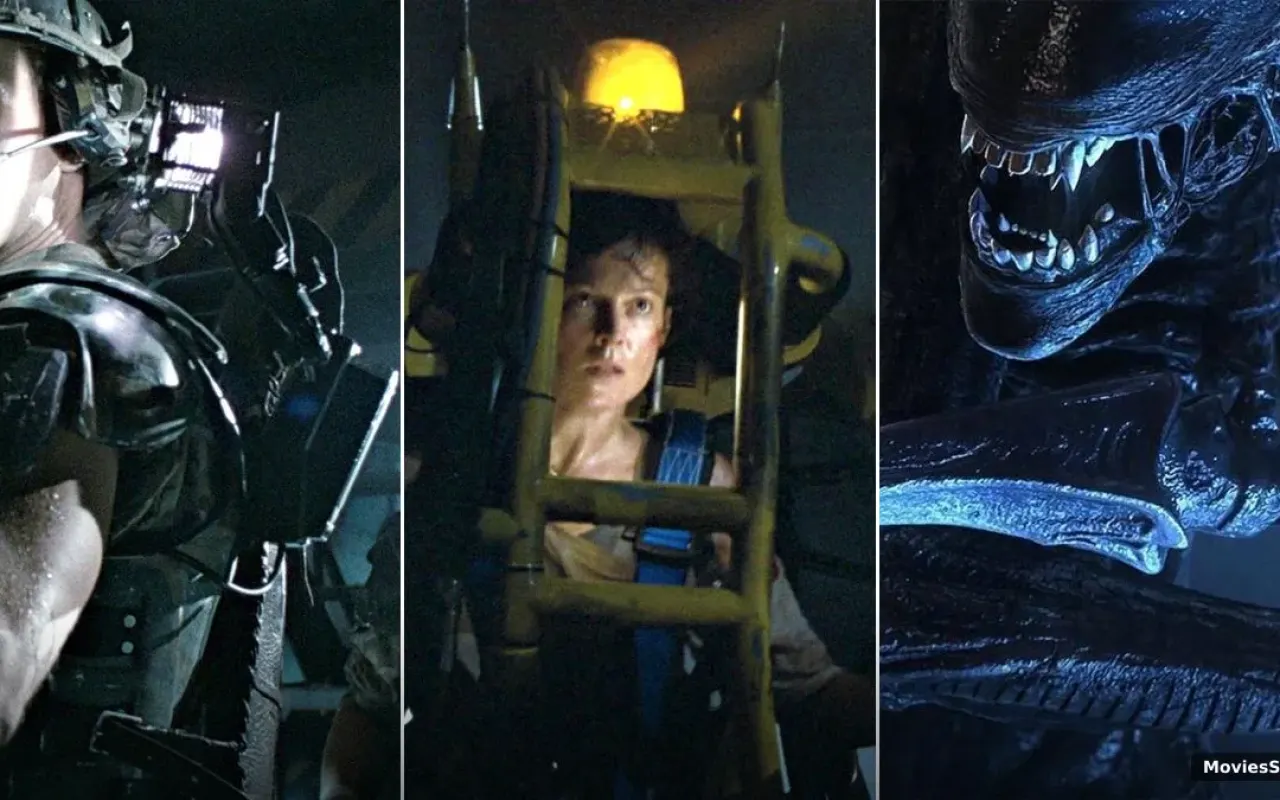
James Cameron, the visionary architect behind the modern 3D revolution, has officially confirmed that a high-tech Aliens 3D conversion is in the works. Speaking during a recent interview with Letterboxd, the director revealed that the 1986 sci-fi action masterpiece is being prepared for a stereoscopic overhaul to coincide with its upcoming 40th anniversary. This move signals a major technical milestone for one of cinema's most "evergreen" franchises, promising to bring the terrifying Xenomorph Queen and the gritty world of LV-426 into a new dimension.
Is James Cameron making an Aliens 3D version?
Yes. James Cameron confirmed in a May 2026 Letterboxd interview that he is planning to convert the 1986 classic 'Aliens' to 3D, citing improved 'depth map' tools as the primary reason for the project. The director intends to leverage cutting-edge AI-assisted technology to ensure the Aliens 3D conversion meets the high standards of his previous stereoscopic work.
The Letterboxd Reveal: James Cameron on 'Evergreen' Aliens
The announcement came as a surprise during the promotional cycle for Cameron’s latest venture, the Billie Eilish concert film, Hit Me Hard and Soft: The Tour (Live in 3D). When asked about his enduring legacy and his penchant for revisiting his filmography, Cameron noted that Aliens remains a unique "creature of its time" that continues to captivate new generations of viewers.
“We are thinking about converting Aliens [to 3D], because I know now that the tools are so much better than they were for creating depth maps,” Cameron stated. He emphasized that the film’s longevity justifies the effort, noting that if audiences are still discussing a movie he made nearly four decades ago, he has "already won the argument" regarding the film's artistic staying power. The project is expected to be a centerpiece of the Aliens 40th anniversary re-release strategy in 2026.
For Cameron, 3D is not merely a gimmick but a "superior format" for immersion. Having successfully steered 20th Century Studios through the record-breaking releases of the Avatar franchise, including the upcoming Avatar: Fire and Ash, the director views stereoscopic 3D as the definitive way to experience high-stakes action and atmospheric horror.
The Science of Aliens 3D Depth Maps: How 2026 Tech Changes the Game
The core of the Aliens 3D conversion lies in the evolution of Aliens 3D depth maps. In the early 2010s, 2D-to-3D conversion was a painstaking, manual process that often resulted in a "cardboard cutout" effect. However, the landscape has shifted dramatically thanks to AI-assisted rotoscoping and spatial analysis tools used by facilities like Park Road Post Production.
Modern depth mapping utilizes machine learning to analyze every pixel in a 2D frame, calculating the distance between objects with surgical precision. For a film like Aliens, this technology is particularly transformative. The Colonial Marines moving through the cramped, industrial corridors of the Hadley's Hope colony provide the perfect geometry for 3D. The depth maps can now distinguish between the steam rising from a floor grate, the texture of a pulse rifle, and the glistening hide of a Xenomorph lurking in the shadows.
Overcoming the "Light Loss" Challenge
One of the primary hurdles for any Aliens 1986 3D project is the film's inherently dark cinematography. Traditional 3D projection often results in a significant loss of brightness (light loss) due to the polarized glasses. To counter this, Cameron is expected to utilize high-dynamic-range (HDR) mastering and potentially Dolby Cinema Aliens re-release specifications, which use dual-laser projection to maintain vibrant colors and deep blacks even in 3D.
- Spatial Geometry: The film's use of long lenses and practical sets provides a rich "z-axis" for conversion.
- Atmospheric Effects: Smoke, fire, and acid spray will benefit from volumetric 3D rendering.
- Scale: The scale of the Xenomorph Queen battle will be enhanced by stereoscopic depth, making the creature appear more imposing than ever.
Aliens 40th Anniversary: When Can We Expect the Release?
While an exact date has not been set, the Aliens 40th anniversary re-release is logically slated for July 2026, marking four decades since the film's original theatrical debut. This timeline allows Cameron to balance the conversion with his massive production slate, which currently includes Avatar 4 and the historical drama Ghosts of Hiroshima.
The release is expected to follow the successful blueprint of Titanic 3D and Terminator 2 Judgment Day 3D. These previous conversions were not just home video updates but major theatrical events. For context, the 2012 3D re-release of Titanic earned over $350 million globally, proving that there is a massive commercial appetite for seeing classic blockbusters in an enhanced format. RealD 3D Aliens screenings in premium large formats like IMAX are almost a certainty, given Cameron's history with the platform.
Addressing the 4K Controversy: Will 3D Be "Waxy"?
The announcement of James Cameron's Aliens 3D has reignited a fierce debate among film purists. Recent 4K remasters of Cameron’s work, specifically True Lies and The Abyss, faced criticism for their use of Topaz Video AI and other upscaling tools. Some fans argued that the heavy digital noise reduction (DNR) resulted in a "waxy" look that stripped away the original 35mm film grain.
Aliens was famously shot on high-speed Eastman 400T 5294 stock, known for its heavy grain—a texture that many fans believe is essential to the film's "used future" aesthetic. However, 3D conversion generally requires a cleaner image to prevent "retinal rivalry," where the brain struggles to fuse two grainy images into a single 3D object. This suggests that the 3D version may lean into the cleaner, AI-processed look that Cameron has recently championed.
"If people remember a movie that I did 38 years ago, I think I’ve already won an argument," Cameron told Letterboxd, dismissively addressing critics of his "revisionist" filmmaking.
The 3D version may actually solve some of the 4K remaster's perceived issues. The added layer of stereoscopic depth can often mask the "flatness" that comes with excessive DNR, providing a more tactile and immersive experience that feels "real" despite the lack of traditional grain.
The Legacy of Cameron’s Stereoscopic Conversions
James Cameron’s track record with 3D conversions is unparalleled. He doesn't just outsource the work; he oversees the "depth grade" personally, often spending months tweaking the placement of objects in the 3D space. This attention to detail is what separated Titanic 3D from the "rush jobs" of the early 2010s.
| Film | Original Release | 3D Release | Key Technical Focus |
|---|---|---|---|
| Titanic | 1997 | 2012 | Epic scale and emotional intimacy |
| Terminator 2 | 1991 | 2017 | High-speed action and liquid metal effects |
| Aliens | 1986 | 2026 (Est.) | Claustrophobia and creature horror |
The Aliens 3D conversion will likely be based on the 4K restoration, but it remains to be seen if Cameron will convert the original theatrical cut or the fan-favorite 1991 Special Edition, which includes the iconic sentry gun sequence and Ellen Ripley’s backstory regarding her daughter. Most signs point to the Special Edition being the primary candidate for the 40th-anniversary treatment.
Key Takeaways for Fans
- Confirmed Project: James Cameron is officially planning an Aliens 3D conversion using advanced AI depth mapping.
- 40th Anniversary: The release is expected in 2026, marking 40 years since the original film.
- Technical Evolution: The conversion will utilize tools far superior to those used for Titanic (2012), focusing on spatial accuracy.
- Theatrical Focus: Expect a limited IMAX and Dolby Cinema run before a potential 4K 3D Blu-ray release.
- Director's Vision: Cameron continues to defend his use of modern digital tools to "refresh" his classic works for contemporary screens.
Conclusion: A New Dimension of Terror
The prospect of seeing Sigourney Weaver face off against the Queen in 3D is a mouth-watering proposition for sci-fi enthusiasts. While the debate over film grain and "revisionist" digital processing will likely continue, James Cameron’s commitment to the 3D format ensures that the Aliens 40th anniversary re-release will be anything but a standard nostalgia trip. By leveraging the latest depth map technology and the expertise of Park Road Post Production, Cameron is poised to prove once again why Aliens is a masterpiece that refuses to stay in the past. Whether you are a "grain purist" or a 3D advocate, 2026 is shaping up to be the year of the Xenomorph.