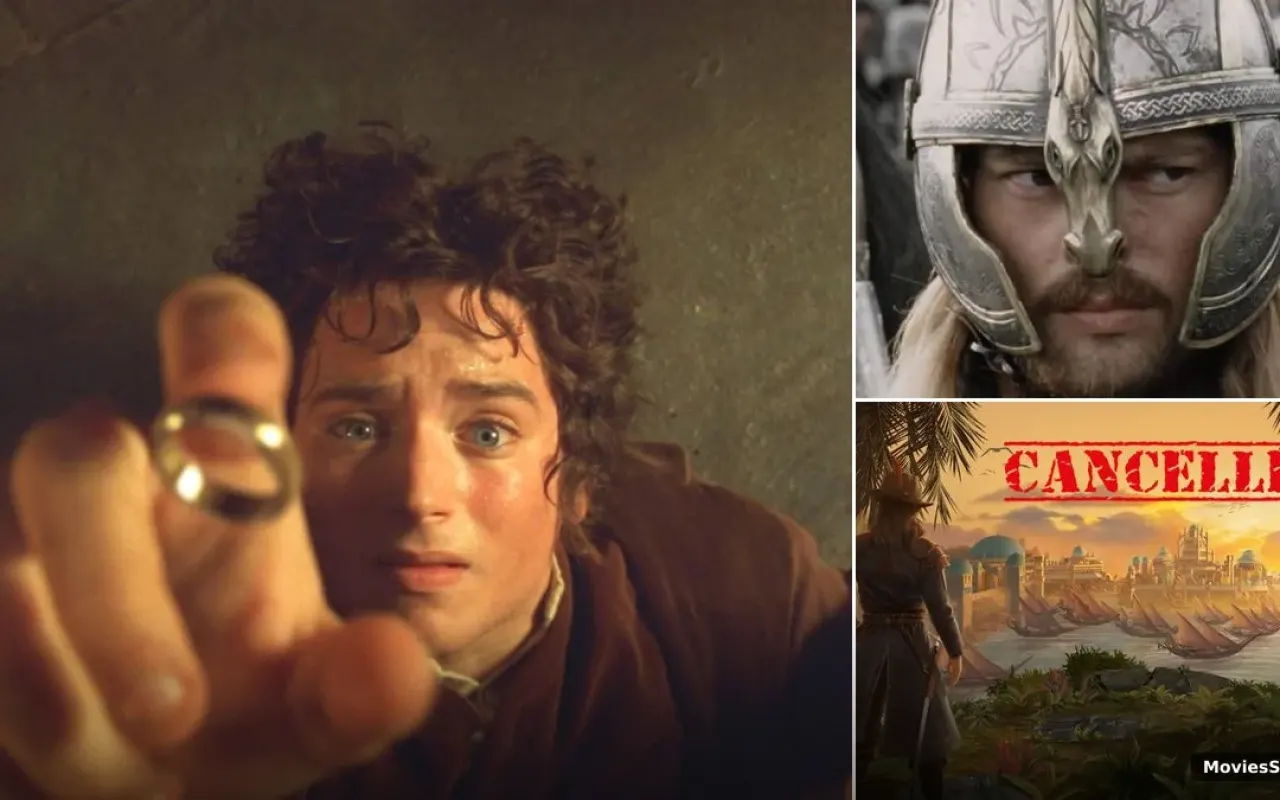
One does not simply walk into Mordor, and apparently, one does not simply build a video game there either—at least if you’re Amazon. For the second time in five years, the dream of a massive, big-budget journey through Middle-earth has evaporated. The Amazon Lord of the Rings MMO cancelled news isn't just a blow to Tolkien fans; it’s a massive signal that Amazon Games is fundamentally shifting its DNA away from the very genre that put them on the map.
Yes, Amazon Games has officially shelved its Lord of the Rings MMO as of May 2026. While Amazon's Head of Games, Jeff Grattis, confirmed the project is no longer moving forward in its original form, he stated the company is still exploring a "compelling new game experience" within the Tolkien universe. The cancellation follows significant layoffs and a strategic shift away from large-scale MMO development.
Official Confirmation: Jeff Grattis on the Death of the LOTR MMO
The news broke after months of "radio silence" that felt increasingly ominous to those tracking the project's development. Jeff Grattis, who recently succeeded Christoph Hartmann as the primary spokesperson for the division, finally addressed the elephant in the room. He framed the decision as a pivot rather than a total surrender, claiming the "creative team continues to explore a compelling new game experience that does justice to Tolkien’s world."
But let’s be real: "exploring an experience" is corporate-speak for "we went back to the drawing board because the old plan wasn't working." This project was supposed to be the crown jewel of Amazon’s AAA game development pipeline, intended to create a "synergy" (a word they love, even if we don't) with their Rings of Power series. Instead, it’s joined the growing graveyard of ambitious projects that couldn't survive the reality of the MMO market saturation 2026 is currently facing.
Why Was the Amazon Lord of the Rings MMO Cancelled?
To understand why this happened, you have to look at the math and the tech. This wasn't just a "creative differences" situation; it was a structural collapse. Here are the three main factors that killed the project:
- The 14,000-Person Purge: In October 2025, Amazon executed a massive wave of layoffs. While the headlines focused on the sheer number, the internal damage to the gaming division was surgical. Significant cuts hit the Irvine and San Diego offices, which were the engines behind their MMO tech.
- The Pivot to Project Trident: Internal reports suggest that Amazon’s obsession with generative artificial intelligence disrupted the workflow. Known internally as Project Trident, this initiative mandated the integration of GenAI into development cycles. For a game as lore-heavy and mechanically complex as a massively multiplayer online RPG, trying to swap engines or workflows mid-stream for AI-generated assets reportedly created "technical debt" the team couldn't pay off.
- The New World Aeternum Factor: Amazon’s first-party studios learned a hard lesson with New World. Despite a massive launch, maintaining a traditional MMO is a marathon that Amazon seems tired of running. With the transition of New World into New World Aeternum, the company signaled a move toward "action-RPG" frameworks rather than the "forever-game" MMO model.
Industry analysts point out that the Amazon Games business strategy 2026 is now focused on shorter development cycles and lower-risk titles. Spending five years and an estimated $150M+ on a project that might fail at launch is no longer the Andy Jassy way.
A History of Failure: Amazon’s Troubled Relationship with Middle-earth
This isn't Amazon's first time fumbling the Ring. If you feel like you’ve read this headline before, it’s because you have. In 2021, Amazon cancelled its first attempt at a Middle-earth MMO following a high-profile Tencent contract dispute. That project was a collaboration with Leyou (which Tencent acquired), and when the lawyers couldn't agree on the terms, Amazon simply walked away.
The 2023 reboot felt different because Amazon partnered directly with Embracer Group and Middle-earth Enterprises. It was supposed to be the "clean" version of the project, free from third-party drama. However, the timeline of Amazon Games layoffs and the financial instability of the Embracer Group—which has been selling off assets like Warhorse Studios and Crystal Dynamics IP—likely made the licensing agreement more of a headache than a help.
Amazon’s gaming history is now defined by these high-profile exits. From Breakaway to Crucible, and now two separate Lord of the Rings projects, the company has proven it has the money to start anything, but rarely the stamina to finish it.
What’s Next? Rumors of Warhorse and Crystal Dynamics Projects
If you're a Tolkien fan, don't lose hope just yet. While the Amazon Lord of the Rings MMO cancelled news is a bummer, the Tolkien IP gaming rights 2026 landscape is actually getting crowded. Because Embracer Group is desperate for hits, they’ve spread the license across several high-tier studios.
- The Warhorse Rumor: There are heavy Lord of the Rings RPG rumors suggesting that Warhorse Studios (the team behind Kingdom Come: Deliverance II) is working on a gritty, hyper-realistic Middle-earth game. Imagine a Tolkien world where you actually have to worry about your armor weight and sword maintenance.
- The Crystal Dynamics Project: Reports indicate that Crystal Dynamics is heading up a $100M action-RPG. Given their work on Tomb Raider, this is expected to be a cinematic, narrative-driven experience—potentially even a tie-in for the upcoming film, The Hunt for Gollum.
- The "Compelling Experience": Amazon still holds certain rights and could be pivoting toward a single-player RPG or a smaller-scale co-op game. There is even talk of Amazon Luna LOTR integration, where a cloud-native game could bypass the technical hurdles that killed the MMO.
Meanwhile, Standing Stone Games continues to operate The Lord of the Rings Online (LOTRO). Despite being nearly 20 years old, it remains the gold standard for lore accuracy, proving that you don't need a billion-dollar budget to capture the "vibe" of the books.
Key Takeaways: The Death of the Amazon LOTR MMO
- The Cancellation is Final: Jeff Grattis confirmed the MMO is dead, citing a shift in creative direction and company strategy.
- AI Disruption: Project Trident and the mandate for generative artificial intelligence played a major role in the development friction.
- Layoff Impact: The loss of 14,000 employees in 2025 gutted the specialized teams needed for AAA game development.
- The License Lives On: Middle-earth Enterprises and Embracer are still working with other studios like Warhorse and Crystal Dynamics.
- Amazon’s New Goal: The company is moving away from the "MMO" label toward more contained "compelling experiences" to avoid market saturation.
The wild part? Amazon has the Rings of Power TV show, a massive cloud infrastructure, and more money than some small nations, yet they still can't ship a game set in the most famous fantasy world ever created. It turns out that building a virtual world is harder than delivering a package in 24 hours. As Amazon pivots toward GenAI and smaller projects, the era of the "Amazon Mega-MMO" might be officially over before it ever truly began.