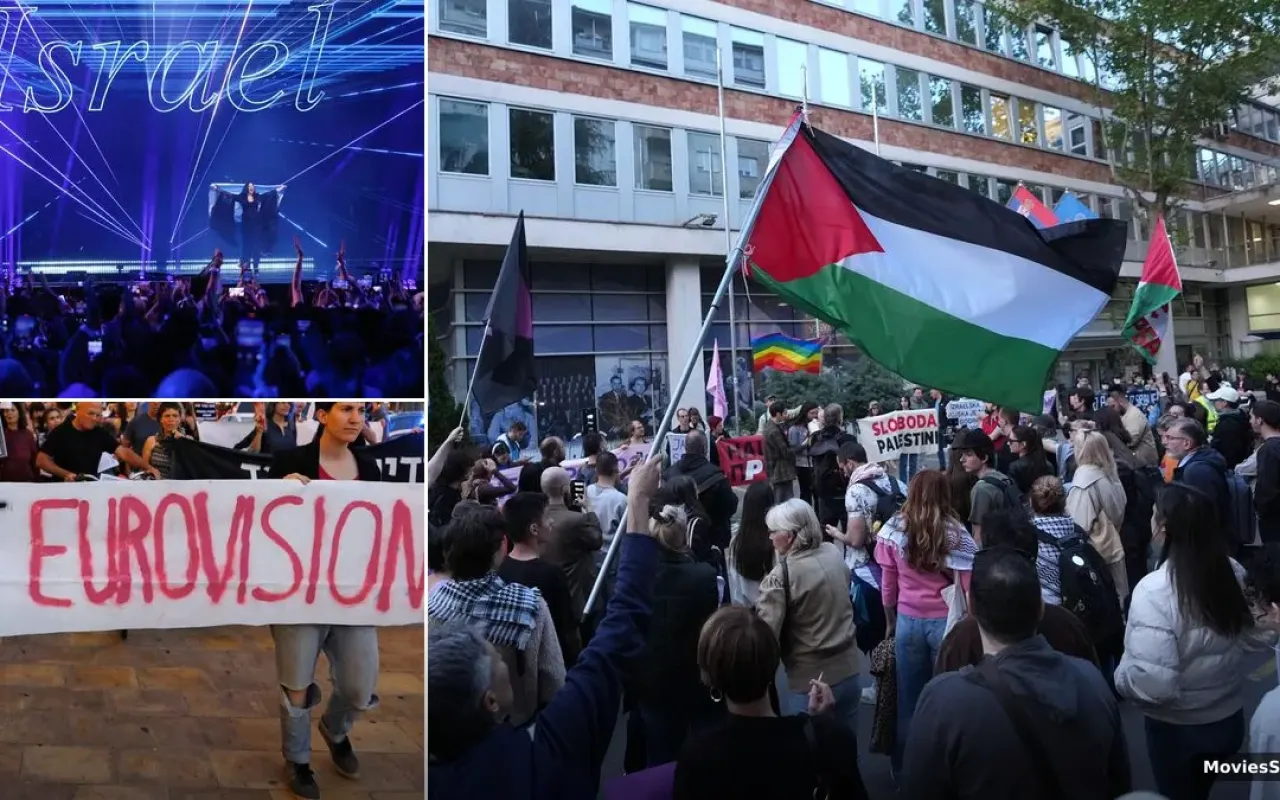
The 70th anniversary of the Eurovision Song Contest was intended to be a continental celebration of music and unity in Vienna. Instead, the Eurovision 2026 boycott has transformed the event into a geopolitical lightning rod, triggering the most significant broadcasting blackout in the competition's seven-decade history. As the May 2026 start date approaches, the European Broadcasting Union (EBU) faces a crisis of legitimacy, with major national broadcasters and over 1,100 artists demanding the exclusion of Israel’s KAN broadcaster.
Which countries are boycotting Eurovision 2026?
The movement to withdraw from the competition has split into two camps: those refusing to participate and those implementing a total broadcasting blackout. The following countries have officially confirmed their boycott of the 2026 event:
- Slovenia (Blackout): RTV Slovenia will not broadcast the event and has withdrawn its entry.
- Ireland (Blackout): RTÉ will neither participate nor air the semi-finals or final.
- Spain (Blackout): RTVE has implemented its first blackout since joining the contest in 1961.
- Netherlands (Non-participation): NPO has withdrawn its entry but will still air the contest.
- Iceland (Non-participation): RÚV has withdrawn its entry but maintains broadcasting rights.
The 2026 Broadcasting Blackout: Slovenia, Spain, and Ireland
The most severe blow to the EBU’s "United by Music" slogan came when Ksenija Horvat, Director of RTV Slovenia, confirmed that the national broadcaster would go dark during the Vienna 2026 finals. In a move that has reverberated across the Balkans, Slovenia is not merely skipping the competition; it is actively replacing it with counter-programming. The Slovenia Eurovision blackout will see the airwaves filled with the Voices of Palestine RTV Slovenia film series, a curated selection of documentaries and feature films highlighting the humanitarian crisis in Gaza.
This decision aligns with the broader political stance of Robert Golob’s administration. Following a settlement product ban enacted in August 2025, Slovenia has positioned itself as one of the most vocal critics of Israel’s military conduct. The replacement of a pop music spectacle with Palestinian cinema marks a historic shift in how public broadcasters utilize their "prime time" slots to signal national values.
In Western Europe, the RTVE Spain decision has sent shockwaves through the "Big Five" financial contributors. For the first time since 1961, Spanish viewers will be unable to watch the contest on terrestrial television. While fans in Spain may attempt to circumvent the blackout via the official Eurovision YouTube channel or mobile app, the EBU’s geoblocking music protocols may restrict access to performance clips within Spanish territory. Similarly, RTÉ Ireland confirmed its withdrawal early in the cycle, citing the EBU’s refusal to apply the same standards to Israel as it did to Russia in 2022.
The 'No Music for Genocide' Campaign: 1,100+ Artists Speak Out
Parallel to the broadcaster withdrawals is a massive grassroots movement led by the No Music for Genocide letter. This open letter, signed by a coalition of over 1,100 musicians and cultural workers, argues that the contest is being used to "whitewash and normalize" ongoing violence. High-profile signees include electronic pioneer Brian Eno, trip-hop legends Massive Attack, and the Icelandic band Sigur Rós. Other notable figures such as Paloma Faith, Macklemore, and the Irish band Kneecap have also lent their names to the cause.
The campaign’s core demand is the suspension of the KAN broadcaster. The artists argue that allowing Israel to compete while Russia remains banned constitutes a glaring double standard. "Russia was banned in 2022 for an illegal invasion. Israel’s actions in Gaza have been characterized by the UN as a genocide. To welcome one and ban the other is not neutrality; it is a choice," stated a representative for the campaign.
Beyond the letter, many artists have begun geoblocking music on streaming platforms within Israel as a form of "digital strike." This tactic, previously used by artists like Björk and Hayley Williams, aims to put economic and cultural pressure on the EBU by complicating the licensing required for the contest’s official promotional materials.
EBU's Response: New Rules for the 70th Anniversary in Vienna
Faced with a fractured membership, the European Broadcasting Union has introduced a series of stringent measures for Vienna 2026. These updates are primarily focused on voting integrity and the suppression of political expression within the venue. Following the 2024 and 2025 contests, where Israel topped the public vote despite low jury scores, the EBU has implemented new "anti-promotion" rules.
These 2026 voting integrity measures are designed to prevent governments or third-party organizations from using targeted social media advertising to influence the "Rest of the World" vote. Additionally, the EBU has expanded its "political flag" ban. While the Palestinian flag has long been restricted under "non-state" rules, the 2026 protocols specifically classify any symbols related to the Gaza conflict as prohibited "political statements," a move that has drawn fire from human rights groups.
From a technical standpoint, the Vienna security protocols for Eurovision 2026 are expected to be the most expensive in the history of the event. Austrian Public Broadcasting (ORF) has reportedly requested additional federal funding to manage the anticipated protests outside the Wiener Stadthalle. Security experts are preparing for "unprecedented" levels of civil disobedience, including attempts to disrupt the live broadcast signal.
Russia vs. Israel: Analyzing the EBU 'Double Standard' Debate
The central pillar of the Eurovision 2026 Israel controversy is the comparison to the 2022 expulsion of Russia. The EBU’s legal defense rests on the "non-political" nature of its organization, arguing that Russia was suspended because its invasion of Ukraine violated the "public service values" of the union and created a security risk that made its participation impossible.
However, critics point to the United Nations inquiry report released in September 2025, titled "The Systematic Destruction of Palestinian Cultural Infrastructure." The report details the leveling of music schools, libraries, and theaters in Gaza—the very institutions that the EBU claims to champion. For broadcasters like RTV Slovenia and RTÉ, the UN’s findings provide the legal and moral ground to argue that the EBU's "neutrality" has become a form of complicity.
"We refuse to be silent when the world’s biggest music event is used to soundtrack the destruction of a people," the No Music for Genocide letter concludes. "The EBU has a choice: uphold its values or become a platform for propaganda."
Historical Context: The Legacy of Eurovision Boycotts
While the 2026 crisis is unprecedented in scale, Eurovision has weathered boycotts before. In 1969, four countries (Austria, Norway, Portugal, and Switzerland) withdrew to protest the four-way tie of the previous year and the fact that the contest was being held in Franco’s Spain. In 1975, Greece withdrew in protest of Turkey’s debut following the invasion of Cyprus.
The difference in 2026 is the financial implication for the EBU. The withdrawal of Spain, a "Big Five" funder, creates a multi-million euro hole in the production budget. There is also the matter of EBU participation agreement legalities. Typically, member broadcasters are contractually obligated to air the final if they are active members. By implementing a total blackout, Slovenia and Spain are testing the EBU's willingness to issue fines or even suspend their memberships—a move that could lead to a permanent fracturing of the European media landscape.
Voices of Palestine: What’s Replacing the Glitz?
Instead of the high-energy pop of Eurovision, Slovenian viewers will be presented with a somber and educational alternative. The Voices of Palestine series on RTV Slovenia is set to include award-winning documentaries such as "Gaza is Our Home" and "The Last Note in Khan Younis." These films focus on the survival of Palestinian artists and the role of music as resistance, directly counter-programming the "United by Music" theme of the Vienna contest.
This shift has seen a surge of support on Eurovision forums and fan communities. While many "hardcore" fans are devastated by the loss of their favorite national entries, a significant portion of the "Eurovision Bubble" has expressed solidarity with the boycotting nations. Sentiment analysis of social media platforms suggests that viewership for the 2026 final could drop by as much as 25% across Europe due to the combined impact of official blackouts and personal boycotts by fans.
Key Takeaways
- Broadcaster Blackouts: Slovenia, Spain, and Ireland will not air the 2026 contest, citing the inclusion of Israel.
- Artist Resistance: Over 1,100 artists, including Brian Eno and Massive Attack, have signed the "No Music for Genocide" letter.
- Counter-Programming: RTV Slovenia is replacing the contest with the "Voices of Palestine" film series.
- New 2026 Rules: The EBU has introduced strict new voting integrity measures and flag bans to curb political disruption.
- Financial Strain: The loss of Spain’s broadcasting revenue and the cost of Vienna’s security protocols pose a major threat to the EBU’s budget.
Conclusion: A Contest at a Crossroads
As the 35 remaining countries prepare their acts for Vienna 2026, the Eurovision Song Contest finds itself at a crossroads. The Eurovision 2026 boycott is no longer just a fringe movement; it is a systemic challenge to the EBU’s authority. Whether the contest can survive as a "non-political" entity in an increasingly polarized world remains to be seen. For now, the "Voices of Palestine" in Slovenia and the silent screens in Spain serve as a powerful reminder that music, no matter how catchy, can never truly be separated from the world that creates it.