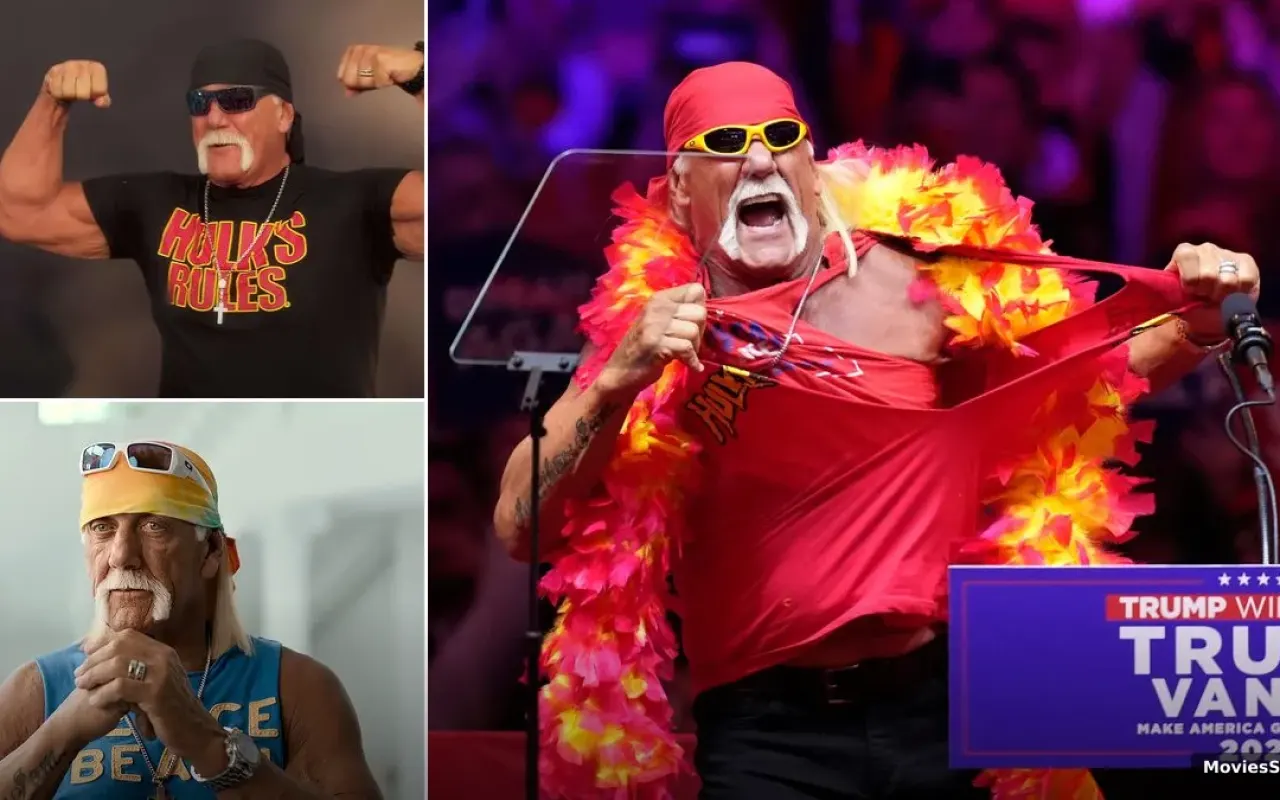
When the world lost Terry Bollea on July 24, 2025, the professional wrestling industry didn't just lose a performer; it lost its most enduring myth. The Hulk Hogan Real American Netflix documentary, released posthumously, serves as the final testament of a man who spent four decades blurring the lines between a yellow-and-red superhero and a flawed human being. Recorded just months before his death at age 71 from a heart attack, the four-part series offers a hauntingly raw look at the "Immortal" one, unmasking the man behind the mustache in a way that has left fans and colleagues reeling.
The Biggest Revelations in the Hulk Hogan Netflix Documentary
The Hulk Hogan Real American Netflix documentary has stunned audiences with several high-stakes disclosures. Here are the most significant bombshells from the series:
- Secret Health Battle: Hogan privately fought Chronic Lymphocytic Leukemia (CLL) for years without public knowledge.
- Suicidal Ideation: Following his 2009 divorce from Linda Hogan, he contemplated suicide, specifically recalling sitting with a gun in his mouth.
- Extreme Fentanyl Use: To manage chronic pain, Hogan consumed massive doses of fentanyl, including 80mg oral doses and 1500mg "lollipops."
- O.J. Simpson Regrets: He expressed deep remorse over his infamous 2009 comments comparing his life to the O.J. Simpson tragedy.
- Estate Exclusion: His final will excludes his daughter, Brooke Hogan, leaving his $5 million liquid estate entirely to his son, Nick.
The Final Interview: Terry Bollea Unmasked
The documentary, directed by Bryan Storkel, functions as a deep-dive psychological profile. For years, critics argued that Terry Bollea had been consumed by the Hulk Hogan persona—a phenomenon often described as "Superman forgetting how to be Clark Kent." In this final interview, however, the persona finally cracks. The Hulk Hogan final interview shows a man grappling with the physical and emotional cost of being an icon.
The series explores the "Real American" through the lens of a man who achieved the highest peaks of pop culture only to face a series of devastating personal nadirs. From his "rough" childhood to the Gawker lawsuit that redefined privacy in the digital age, the documentary attempts to reconcile the "Immortal" wrestling legend with the mortal man who was increasingly fragile in his final days.
Medical Shock: Leukemia and the Fentanyl Crisis
Perhaps the most startling aspect of the documentary is the detailed account of Hulk Hogan fentanyl use. By 2009, the cumulative damage of thousands of leg drops had left Hogan in a state of constant agony. His description of his medication regimen is nothing short of harrowing. "I was taking 80-milligram fentanyl, two in the morning, stuffing them under my gums," Hogan admitted in the footage.
Medical professionals note that such dosages are astronomically high. Standard fentanyl patches are typically measured in micrograms (mcg), not milligrams (mg). Hogan further detailed using two 300mg fentanyl patches on his legs and consuming 1500mg fentanyl lollipops. A pharmacist's reaction captured in the doc says it all: "You should be dead. We have never seen a human being take this much fentanyl." This level of chemical dependency highlights the "quiet crisis" of pain management that has plagued the professional wrestling industry for decades.
Understanding Hogan's Secret CLL Battle
Adding to his physical burden was a secret diagnosis of Chronic Lymphocytic Leukemia (CLL). CLL is a type of cancer that starts in the white blood cells (lymphocytes) in the bone marrow. While it is often slow-growing, it compromises the immune system and can lead to severe fatigue and secondary infections. Hogan kept this diagnosis hidden from the public, choosing to maintain the image of the "Immortal" powerhouse even as his body fought a cellular war. The timeline suggests he was battling the disease during his final marriage to Sky Daily, whom he wed in September 2023.
The $25 Million Estate: Why Brooke Hogan Was Left Out
The Hulk Hogan net worth at death was estimated at approximately $25 million, a fortune built on WWE Hall of Famer royalties, reality TV, and his landmark settlement with Gawker. However, his will has sparked immediate controversy. While his total assets are significant, his liquid estate—valued at roughly $5 million—was left solely to his son, Nick Hogan.
Notably absent from the will is his daughter, Brooke Hogan. The two had been estranged for years, a rift that the documentary touches upon but does not fully resolve. Under Florida probate law, children do not have an inherent legal right to inherit if they are intentionally disinherited in a valid will. However, legal experts suggest this could lead to a protracted family feud if Brooke chooses to contest the document on the grounds of undue influence or lack of capacity, especially given Hogan's heavy medication use during his final years.
The Rights of Sky Daily
While the liquid estate was left to Nick, Hogan’s widow, Sky Daily, remains a central figure in the financial aftermath. Under Florida’s "elective share" statutes, a surviving spouse is generally entitled to 30% of the elective estate, regardless of what the will says. This ensures that Daily is legally protected, even if the primary liquid assets were directed elsewhere. This financial complexity adds a layer of tension to a family already fractured by decades of public drama.
Industry Backlash: The Kevin Nash Reaction
While the documentary has drawn significant viewership—ranking fifth globally on Netflix with 3 million views in its debut week—it has not been without its critics. The most vocal among them is Kevin Nash. The Kevin Nash Hulk Hogan reaction has been one of frustration, specifically regarding the documentary's editorial choices.
Nash revealed that he sat for a three-hour interview, providing deep context on Hogan’s life, including the infamous "race incident" that led to Hogan's temporary exile from WWE. However, Nash’s contribution was edited down to a mere 30 seconds. "Surface is the intent and wasting people who were close. Their time," Nash remarked, echoing the sentiments of MMA journalist Ariel Helwani, who described the series as "surface-level" compared to recent gritty sports documentaries like The Last Dance or Netflix’s own Mr. McMahon series.
Hulk Hogan vs. Mr. McMahon: A Documentary Comparison
When comparing Real American to the Vince McMahon documentary, the differences in tone are stark. While the McMahon doc was viewed as a clinical, often adversarial examination of power, the Hogan doc is seen by some as a more sanitized, "entertainment-first" production. The viewership reflects this; the McMahon series drew 4.9 million views in its first four days, significantly outperforming Hogan's 3 million. This suggests that while Hogan remains a household name, the audience's appetite for a deeper, perhaps more critical investigation was not fully met by this four-part series.
The Psychological Toll: Divorce and the O.J. Comment
The documentary spends considerable time on the Linda Hogan divorce in 2009. Hogan described the split as his "rock bottom," claiming he handed over 70% of his wealth to finalize the separation. "I was broke," he recalled, noting that TNA Wrestling (Total Nonstop Action) and Eric Bischoff essentially saved him by providing a platform to earn a living again.
It was during this period of financial and emotional ruin that Hogan made his infamous comment to Rolling Stone in 2009, referencing the O.J. Simpson case. The documentary captures his profound regret over the remark. The backlash from that interview, combined with the loss of his fortune, led Hogan to a dark night of the soul. He recounted sitting in his bathroom with a firearm, a moment of suicidal ideation that was only interrupted by a phone call from a friend. This revelation adds a somber layer to the "Real American" mythos, showing that even the strongest man in the world was not immune to the crushing weight of public shame and personal loss.
The Cultural Legacy of the Wrestling Boot Band
In an effort to provide a comprehensive look at his career, the documentary also revisits the more eclectic chapters of his life, including the Wrestling Boot Band. While often mocked by wrestling purists, the band’s album Hulk Rules actually reached number 12 on the Billboard Top Kid Audio chart in 1995. This era represents the peak of "Hulkamania" as a multi-media brand, proving that Hogan's influence extended far beyond the squared circle into music, film (Rocky III, Suburban Commando), and reality television.
The psychological analysis of the Terry Bollea vs. Hulk Hogan split remains the documentary's most compelling thread. Throughout the four episodes, it becomes clear that Bollea often used the Hogan persona as a shield against the realities of his health, his failing marriage, and his aging body. By the time the cameras stopped rolling for the Hulk Hogan final interview, the shield had been discarded, leaving only a man reflecting on a life of "the highest highs and the lowest lows."
Key Takeaways
- Final Interview Impact: Recorded just before his death in July 2025, the documentary provides the most candid look at Terry Bollea’s true self.
- Medical Crisis: Hogan’s battle with Chronic Lymphocytic Leukemia and his reliance on "lethal" levels of fentanyl highlight the physical toll of his career.
- Financial Fallout: Despite a $25M net worth, his $5M liquid estate goes to his son, Nick, leaving daughter Brooke Hogan and ex-wife Linda excluded.
- Industry Critique: Legends like Kevin Nash have criticized the documentary for being too "surface-level" and ignoring deeper controversies.
- Survival and Redemption: The series details Hogan’s journey back from the brink of suicide in 2009, credited largely to his time in TNA Wrestling.
Conclusion: The Immortal's Mortal End
The Hulk Hogan Real American Netflix documentary doesn't just chronicle the life of a wrestler; it documents the slow, painful dismantling of an American icon. While the Hulk Hogan cause of death was officially a heart attack, the documentary suggests a man who had been physically and emotionally spent for years. Whether he was a hero, a cautionary tale, or a mix of both, the series ensures that the conversation around Terry Bollea will continue long after the final bell has rung. As the estate battle looms and the industry reflects on his complicated legacy, one thing is certain: there will never be another Hulk Hogan.