The first Monday in May has long been the undisputed pinnacle of the global fashion calendar, but the latest iteration of the Costume Institute fundraiser has sparked a firestorm of criticism. The Met Gala 2026 Jeff Bezos controversy has transformed the steps of the Metropolitan Museum of Art from a runway into a battlefield of class warfare and labor activism. While the event raised a record-breaking $42 million, the evening was defined less by the "Fashion is Art" theme and more by the "billionaire circus" label bestowed upon it by critics and protesters alike.
Why was the 2026 Met Gala controversial?
The 2026 Met Gala faced significant controversy primarily due to the involvement of Jeff Bezos and Lauren Sánchez Bezos as lead sponsors and honorary chairs. Protests led by groups like 'Everyone Hates Elon' highlighted Amazon's labor conditions, specifically the 'urine bottle' allegations, while high-profile celebrities like Meryl Streep and Zendaya reportedly boycotted the event in protest of billionaire influence on culture.
The $42 Million Record: Silicon Valley and the Met Gala 2026 Jeff Bezos Controversy
The financial scale of this year’s event was unprecedented, largely driven by a massive influx of capital from the tech sector. Jeff Bezos personally contributed a reported $10 million to secure his and Lauren Sánchez Bezos’s roles as honorary chairs. This contribution helped the gala shatter the previous fundraising record of $31 million, reaching a staggering $42 million total.
However, the Silicon Valley sponsors didn't stop with the Amazon founder. Tech giants including OpenAI, Meta, and Snap reportedly purchased tables at the $350,000 price point, while individual tickets soared to $100,000. This "tech-over" of a traditionally fashion-centric event has raised questions about the Met Gala 2026 ethical fashion standards. Critics point out that while $42 million is a windfall for the Costume Institute—covering the salaries of its 29-person staff and the maintenance of 33,000 historical objects—it represents a mere fraction of the wealth generated by the companies involved.
- Amazon Sponsorship: $10 million vs. Average Worker Salary: Approximately $39,000 (meaning Bezos's donation equals the annual wages of over 250 warehouse staff).
- Table Costs: $350,000 (equivalent to the cost of a modest family home in many U.S. markets).
- Bezos's Net Worth: Estimated at $224 billion, making his $10 million donation roughly equivalent to $20 for an average American household.
This shift toward tech-heavy funding is part of a broader historical trend. The Metropolitan Museum of Art has previously leaned on Apple (2016), Yahoo (2015), and TikTok (2024) to underwrite its exhibitions. However, the 2026 gala felt different to many observers, as it appeared to offer the Bezos couple a fast track to cultural credibility that many believe should be earned through artistic contribution rather than capital.
The Met Gala Urine Bottle Protest: Labor Issues Take Center Stage
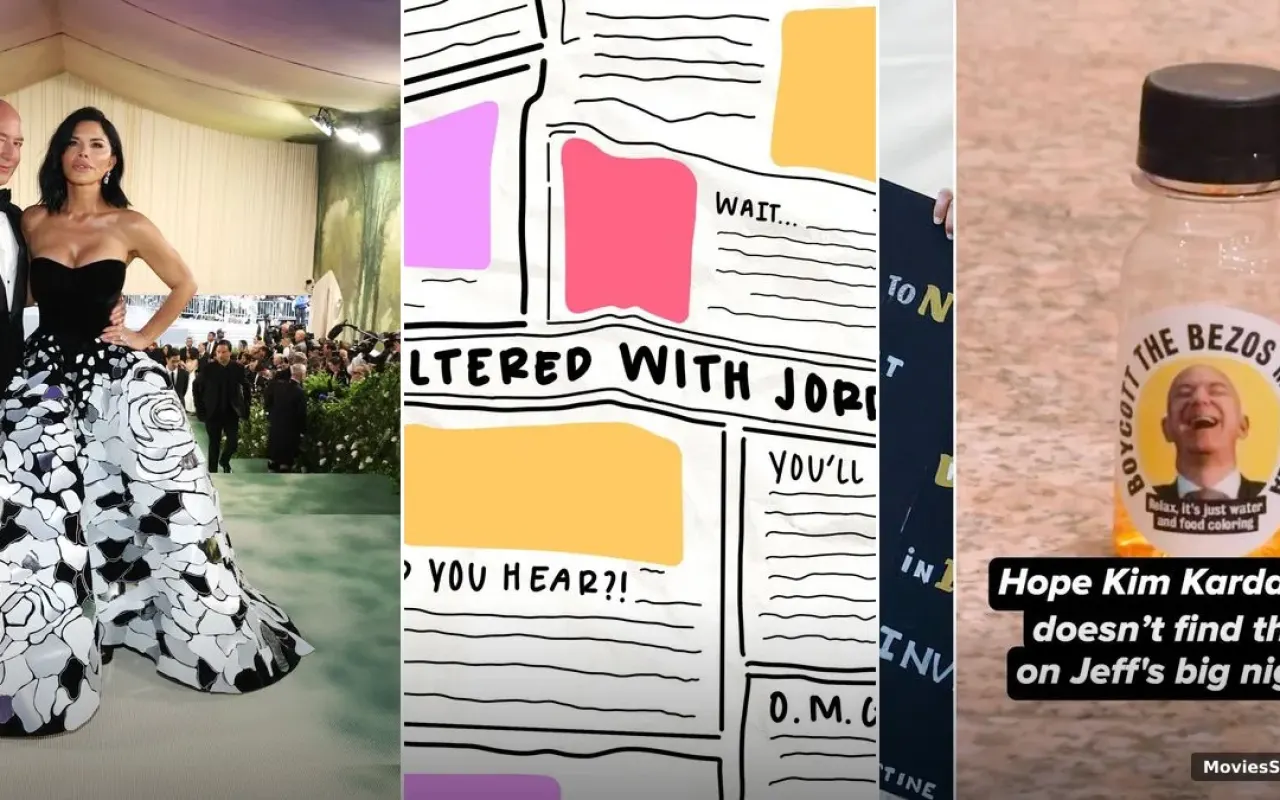
The most visceral display of dissent came from the Everyone Hates Elon Met Gala activist group. In a coordinated guerrilla campaign, protesters placed hundreds of miniature plastic bottles filled with yellow liquid throughout the museum and on nearby lampposts. This Met Gala urine bottle protest served as a grim reminder of the Amazon warehouse workers who have alleged they are forced to urinate in bottles to meet aggressive "pick and pack" quotas.
The symbolism was unavoidable. Signs featuring the Amazon logo were installed on New York City lampposts with the message: "Met Gala VIP toilet installed in honor of Met Gala chair Jeff Bezos. Go ahead, it’s good enough for his staff." The group also projected interviews with disgruntled employees directly onto Bezos’s Manhattan penthouse in the days leading up to the event.
The Amazon Labor Union and other activists have been vocal about the Amazon ESG rating Met Gala implications, arguing that the museum's acceptance of these funds facilitates "artwashing." While Anna Wintour praised Sánchez Bezos as a "wonderful asset" to the event, the presence of the "urine bottles" inside the museum's perimeter suggested a significant security failure or a deliberate oversight by staff, 91% of whom recently reported earning less than a living wage.
The Ball Without Billionaires 2026: A Counter-Cultural Runway
While the elite gathered uptown, a different kind of fashion show took place in downtown Manhattan. The Ball Without Billionaires 2026, organized by the SEIU, the Strategic Organizing Center, and the Amazon Labor Union, provided a sharp contrast to the main event. Emceed by Abbott Elementary star Lisa Ann Walter, the event featured labor rights activism as its core aesthetic.
Instead of supermodels, the runway featured Amazon warehouse workers, Whole Foods employees, and staff from the Washington Post and Starbucks. They wore designs by ethically-minded immigrant designers like Cindy Castro, who argued that if there is money for a $10 million sponsorship, there is money for fair wages. The theme of the evening, "Labor is Art," directly challenged the official "Fashion is Art" theme of the Met.
"They can try to take our rights, but they will never be able to replicate the brilliance and resilience of the people they are trying to hold down. This ball is about power," stated SEIU President April Verrett.
The event highlighted the billionaire backlash that has been simmering for years. Activists noted that a simple 2% tax on just three of the high-end necklaces worn at the Met Gala could fully fund New York City’s home energy assistance program for an entire year. This stark economic disparity has led many to compare the gala's aesthetic to the dystopian "Capitol" from The Hunger Games.
The Celebrity Boycott: Why Meryl Streep and Zendaya Stayed Away
The Meryl Streep Met Gala boycott was perhaps the most surprising development for the general public. Streep, a frequent attendee and titan of the industry, reportedly declined her invitation in a move many interpreted as a political stance against the "billionaire circus." She was joined in her absence by Zendaya, who has been a staple of the red carpet for years. While Zendaya's team cited "overexposure" and scheduling conflicts, the Everyone Hates Elon Met Gala group claimed her absence was a silent nod to the labor protests.
Other notable absences included:
- Bella Hadid: Hinted at her reasons by liking social media videos criticizing the Bezos-backed event and the involvement of ICE-contracting companies.
- Taraji P. Henson: Publicly questioned the ethics of the event on social media, asking, "WTF ARE WE DOING!?!?!?!"
- Billie Eilish and Ariana Grande: Both sat out the 2026 event despite being high-profile regulars in previous years.
Even within the fashion establishment, cracks appeared. Lauren Santo Domingo, a longtime Vogue editor and co-founder of Moda Operandi, was notably absent. The billionaire tax New York Met Gala conversation has clearly permeated the highest levels of celebrity culture, making attendance a potential liability for stars who wish to maintain a "man of the people" brand.
Fashion Critique: The Lauren Sanchez Schiaparelli Dress Roast
In the world of high fashion, the Lauren Sanchez Schiaparelli dress roast became the viral moment of the night. Sánchez Bezos wore a custom creation by Daniel Roseberry for Schiaparelli, inspired by John Singer Sargent’s famous painting, Madame X. The choice was intended to be a nod to the painting's historical controversy, but it backfired spectacularly on social media.
Critics, led by Sex and the City costume designer Molly Rogers, slammed the look as "tacky" and "fast fashion in couture's clothing." Rogers' critique went viral, suggesting the dress "cheapened" the storied house of Schiaparelli. The irony was not lost on fashion historians: Elsa Schiaparelli was a fierce anti-fascist, making her brand's association with a billionaire who has faced criticism for Amazon ESG rating issues and labor practices particularly jarring.
The Costume Art exhibition review segments by independent bloggers noted that while the exhibition itself was a brilliant display of 5,000 years of the "dressed body" curated by Andrew Bolton, the red carpet felt "gutted of meaning." The attempt to frame Lauren Sanchez Bezos as a new fashion icon—complete with a Vogue cover and Law Roach on the payroll—has been met with significant resistance from the "notoriously fortified" fashion elite.
The Institutional Dilemma: Does the Met Need Billionaire Funding?
From a neutral perspective, the Metropolitan Museum of Art finds itself in an impossible position. Max Hollein, the museum’s director, defended the acceptance of Bezos's funds, citing the "history of American philanthropy." He emphasized that the money supports the preservation of a collection that is "more challenging and expensive" to maintain than paintings or sculptures.
However, the billionaire tax New York Met Gala debate continues to rage. If the wealthy paid a higher tax rate, would public institutions like the Met still be forced to rely on "artwashing" funds from controversial figures? The 2026 gala proved that as long as public funding for the arts remains scarce, the Costume Institute fundraiser will remain beholden to the Silicon Valley elite.
Key Takeaways from the 2026 Met Gala Controversy
- Record Funding: The event raised $42 million, but the source of the funds (Jeff Bezos) sparked national protests.
- Urine Bottle Symbolism: The "Everyone Hates Elon" group successfully used the "urine bottle" narrative to highlight Amazon's labor issues.
- Alternative Events: The Ball Without Billionaires 2026 emerged as a legitimate cultural competitor, highlighting "Labor is Art."
- Celebrity Dissent: Major stars like Meryl Streep and Bella Hadid used their absence to signal political and ethical disagreements.
- Fashion Backlash: The Lauren Sanchez Schiaparelli dress roast highlighted a disconnect between new money and traditional fashion credibility.
Looking Forward: The Future of the Met Gala
As the dust settles on the Met Gala 2026 Jeff Bezos controversy, the future of the event remains uncertain. Will Amazon continue to sponsor the gala in 2027? While the museum remains "grateful for the support," the PR nightmare of 2026 may force a pivot. There are already calls for the Met to implement stricter "ethical vetting" for lead sponsors, similar to how other major museums have distanced themselves from the Sackler family.
The 2026 gala will be remembered as the year the "Hunger Games" aesthetic became too real to ignore. Whether the event can reclaim its status as a celebration of art without the shadow of labor rights activism remains to be seen. For now, the "common thread" of the museum isn't just fashion—it's the increasingly loud demand for economic justice in the heart of the world's most exclusive party.