If you think the most intense thing to come out of 1970s Britain was punk rock, you’ve been reading the wrong history books. Before the safety pins and the mohawks, there was a movement fueled by rare American soul, high-waisted Oxford bags, and enough amphetamine to power a small city. In his latest feature, director Alan Byron takes us back to the sweat-soaked floorboards of the North. This Northern Soul: Still Burning review breaks down why this 2026 documentary is more than just a nostalgia trip—it’s a masterclass in how a "failed" American genre became a British religion.
Northern Soul: Still Burning – A Fever Dream of 1970s Britain
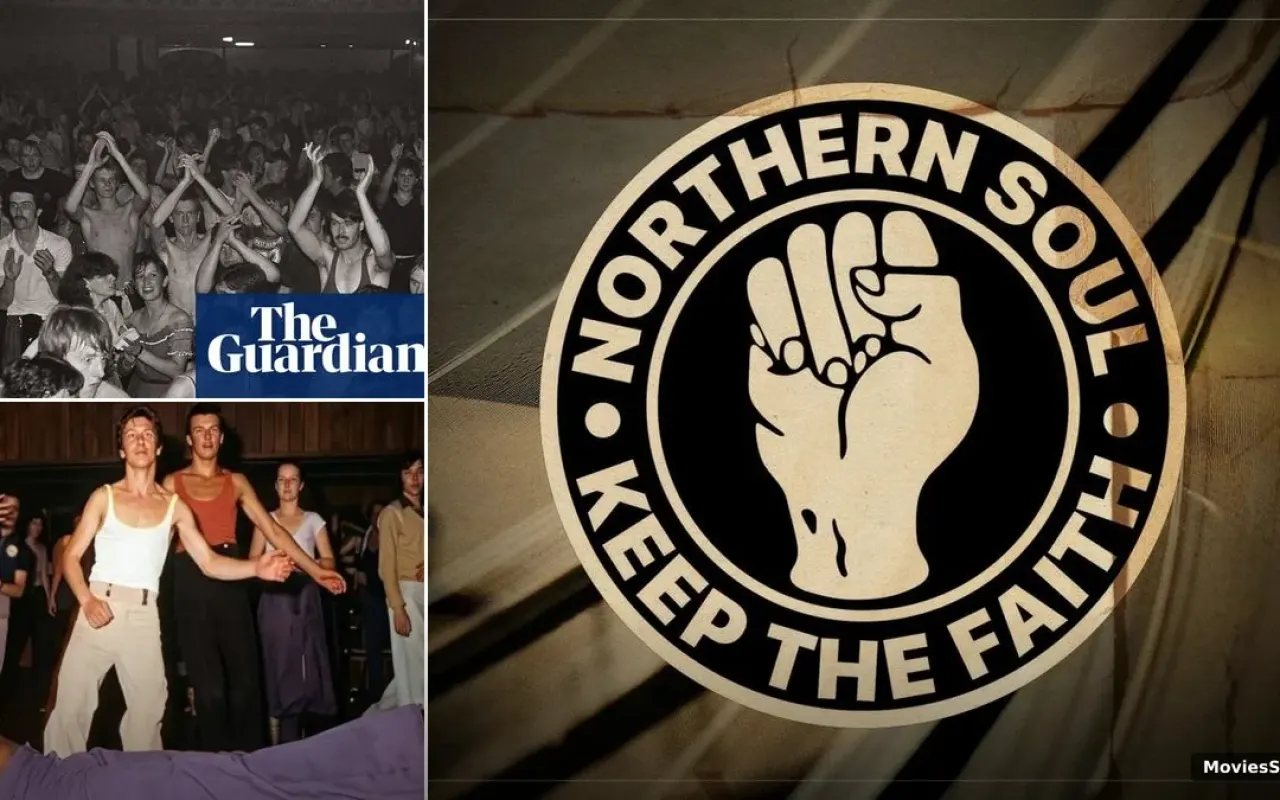
Released on May 15, 2026, Northern Soul: Still Burning isn't your typical dry, talking-head documentary. It functions more like a sensory overload. Byron uses restored archive footage that transitions from the monochrome grit of industrial Wigan to sudden, kaleidoscopic bursts of saturated color, mimicking the "transcendence" felt by dancers at 3:00 AM. Unlike Elaine Constantine’s 2014 film Northern Soul, which was a scripted drama, this 2026 release is the definitive documentary record, capturing the "children of the night" in their natural habitat.
What is Northern Soul: Still Burning about?
Northern Soul: Still Burning is a 2026 documentary directed by Alan Byron that explores the British Northern Soul subculture, specifically focusing on the legendary Wigan Casino all-nighters, rare vinyl collecting, and the movement's enduring intergenerational legacy. It features interviews with iconic DJs like Richard Searling and Russ Winstanley alongside modern devotees.
The film’s technical achievement lies in its restoration. We aren't just looking at grainy 16mm film; we are seeing the sweat rain from the ceilings of the Wigan Casino in high definition. It captures the "improvised ballets" of the soulies—working-class teens who escaped the grey malaise of Thatcher-era unemployment through high-speed dancing and 7-inch vinyl.
The Legend of Wigan Casino: Heart of the Movement
While the documentary covers the entire timeline, it rightfully treats the Wigan Casino as the movement's Mecca. But here’s the thing: the scene didn't start there. Real heads know the story began at Manchester’s Twisted Wheel and moved through Stoke’s Golden Torch before landing in Wigan in 1973. Byron’s film expertly charts this transition, showing how the closure of earlier clubs created a vacuum that the Casino filled with its iconic 2:00 AM to 8:00 AM Northern Soul all-nighters.
The wild part? The music industry had zero control over this. These weren't the hits you'd hear on the radio. The tracks were often "failures"—records that flopped in the US but were "rediscovered" by British DJs who acted like musical prospectors. This was a scene built on crate-digging scholarship. When the Wigan Casino eventually succumbed to a mysterious fire in 1981, it wasn't just a building that burned; it was the end of an era that had defined a generation’s identity.
Rare Vinyl and the £100,000 Record: The 'Holy Grails'
If you're into the economy of coolness, the section on record collecting is a must-watch. The film highlights the "Holy Grail" of the scene: Frank Wilson’s "Do I Love You (Indeed I Do)." In a world of digital streaming, it’s hard to wrap your head around the fact that a single 7-inch vinyl can fetch £100,000 at auction (as a copy famously did in 2020).
The Alan Byron Northern Soul film explores the American perspective that most other documentaries miss. Many of the original artists, like those on Motown or Okeh Records, had no idea their music was being worshipped across the Atlantic. To them, these songs were tax write-offs or forgotten B-sides; to a kid in a Blackpool Mecca dance-off, they were the soundtrack to salvation. The film features rare insights into how artists like Talmadge Armstrong felt when they realized they were legends in a country they’d never visited.
The Soundtrack: Essential Tracks from the Film
- Frank Wilson – "Do I Love You (Indeed I Do)"
- Gloria Jones – "Tainted Love"
- The Professionals – "That’s Why I Love You"
- Lou Pride – "I’m Com’un Home in the Morn’un"
- Bob & Earl – "Harlem Shuffle"
Beyond the Dancefloor: Drugs, Fashion, and Identity
Let’s talk about the "look." The Northern Soul subculture history is inseparable from its uniform: Oxford bags (trousers so wide they looked like skirts when you spun), bowling shirts, and leather-soled shoes designed for sliding. But the film doesn't shy away from the darker side of the "euphoria." Amphetamine use was rampant, providing the chemical energy needed to dance for eight hours straight without a break. Even mainstream figures like Tony Blackburn weigh in on the "singular attitude" and pills that defined the halls.
One of the best parts of the film is how it debunks the myth that this is just a "boomer" hobby. Byron introduces us to "Younger DJs" like Levanna McLean, who prove the ritual is still alive. These aren't people playing "retro kitsch"; they are part of a living, breathing community that has influenced everything from the 90s rave scene to modern artists like Sam Smith and Paul Weller.
Fact vs. Fiction: Debunking Northern Soul Myths
The documentary spends considerable time correcting the record on common misconceptions that have plagued the scene for decades.
| The Myth | The Reality |
|---|---|
| It’s only for "old" people. | The scene is intergenerational. 20-somethings are currently some of the most active soulies and DJs. |
| Wigan Casino was the only important club. | The Twisted Wheel and Golden Torch were the actual blueprints. |
| There is a "correct" way to dance. | Dancing was always improvised and personal. Pricey dance lessons are a modern (and controversial) invention. |
| Every Northern Soul record is worth a fortune. | Most classics have been reissued. Unless you have a verified original, it’s probably not your pension fund. |
| The scene died in 1981. | True all-nighters still happen at venues like The 100 Club in London. |
Where to Watch and Future Releases
Currently, Northern Soul: Still Burning is enjoying a limited theatrical run in UK cinemas. If you're looking for the Northern Soul Still Burning streaming release, industry insiders suggest it will hit major platforms like Netflix or MUBI in late 2026. There are also rumors of a special edition Blu-ray release featuring the full 100-minute director's cut and a bonus vinyl 45 of a previously unreleased track discovered during filming.
For those asking "where can I find a local Northern Soul night today?", the film serves as a call to action. From the Wigan Casino 50th anniversary events to monthly nights in London and Manchester, the floor is still open. You don't need a tutorial; as one veteran says in the film, "your heart leads the pace."
Key Takeaways
- Northern Soul: Still Burning is the definitive 2026 documentary on the movement, directed by Alan Byron.
- The film highlights the Wigan Casino but acknowledges the Twisted Wheel and Golden Torch as essential predecessors.
- It features the legendary Frank Wilson track "Do I Love You (Indeed I Do)," which is valued at over £100,000.
- The documentary addresses the reality of amphetamine use and the "escape" from the economic despair of the 1970s.
- The subculture remains vibrant today, with a new generation of DJs and dancers keeping the all-night dancefloor alive.
In the end, Northern Soul: Still Burning proves that while the buildings might burn down and the hair might turn grey, the beat doesn't stop. It’s a thumping, sweaty, and deeply moving tribute to a time when a 7-inch record was the only thing that mattered. Whether you're a veteran or a newcomer, this film is a reminder that some fires never go out—they just wait for the next person to step onto the floor.