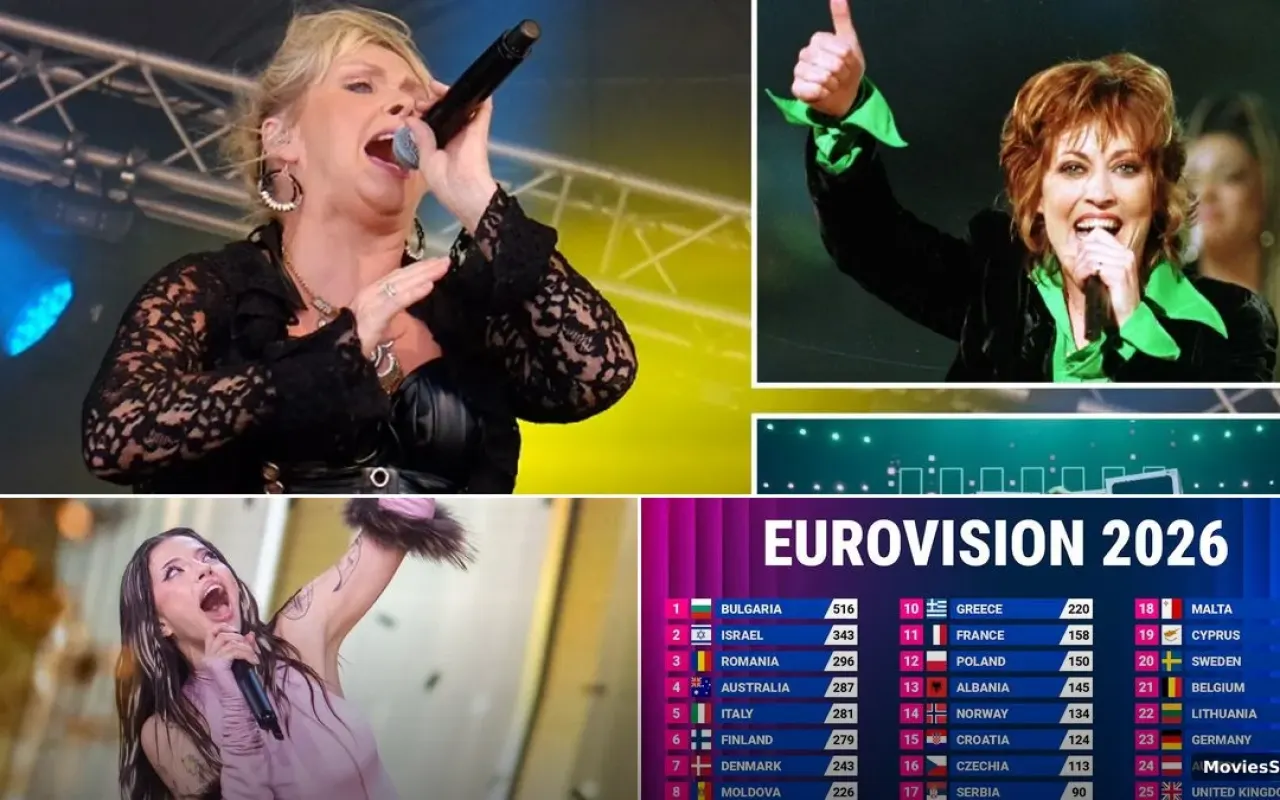
Vienna was supposed to be the moment the UK finally stopped being the punchline of the European Broadcasting Union. Instead, the 2026 Eurovision Grand Final at the Wiener Stadthalle felt like a glitch in the simulation. After years of trying to find the "perfect" formula, the UK’s latest entry, Sam Battle (performing as Look Mum No Computer), walked away with a result that has left the BBC delegation reeling and fans wondering if we’re cursed. Despite a rich history of UK Eurovision winners, the gap between our golden era and the modern "nul points" reality is becoming a canyon.
The 2026 results were brutal: 1 point from the jury and a devastating 0 from the televote. It’s a pattern that’s becoming uncomfortably familiar. While the rest of Europe embraces high-concept art or polished pop, the UK seems stuck in a cycle of "Marmite" entries that either soar like Space Man Sam Ryder or crash like a lead balloon. To understand how we got here—and if we have any hope for Sofia 2027—we have to look at the data, the history, and the messy geopolitics of the world’s biggest song contest.
How many times has the UK won Eurovision?
The United Kingdom has won the Eurovision Song Contest 5 times. The winning years and acts were 1967 (Sandie Shaw), 1969 (Lulu - tied), 1976 (Brotherhood of Man), 1981 (Bucks Fizz), and 1997 (Katrina and the Waves). Despite these wins, the UK has also finished in last place 6 times, most recently in 2026.
Eurovision 2026: What Happened to Look Mum No Computer in Vienna?
The Eurovision 2026 UK entry was, by all accounts, a massive swing. Sam Battle brought "Eins, Zwei, Drei"—a neon-soaked, 90s-inspired techno anthem—to the Wiener Stadthalle. It was kitsch, it was loud, and it featured a wall of DIY synthesizers. Andrew Cartmell, the UK’s Head of Delegation, defended the choice as a "Marmite" song—something distinctive that people would either love or hate.
The problem? Europe mostly chose the latter. The televote vs jury split was a massacre. While the juries gave a pity point for the technical complexity of the staging, the public televote returned a cold, hard zero. This marks a significant failure for the BBC Introducing selection model, which aimed to find "authentic" underground talent but arguably ignored the "radio-friendly" pop requirements that make a song competitive on a first listen.
The staging directors for the 2026 performance reportedly spent a significant portion of the budget on the "analog synth wall," but critics argue the performance lacked the emotional connection needed to translate through a TV screen. When you’re competing against countries like Sweden—who use the Melodifestivalen system to battle-test their songs for months—the UK’s "internal selection" often feels like bringing a DIY synth to a laser fight.
The Golden Era: All 5 UK Eurovision Winners
It’s easy to forget that for a long time, the UK was the final boss of Eurovision. We didn't just participate; we dominated. Our history of most successful UK Eurovision acts is a blueprint for what works, even if the BBC seems to have lost the manual.
- 1967: Sandie Shaw – "Puppet on a String": The first win. Shaw’s barefoot performance was a cultural reset, proving that the UK could do "cool" better than anyone else.
- 1969: Lulu – "Boom Bang-a-Bang": A chaotic four-way tie with France, Spain, and the Netherlands. It was the peak of 60s pop energy.
- 1976: Brotherhood of Man – "Save Your Kisses for Me": This remains one of the best-selling Eurovision singles of all time. It was pure, unadulterated catchy pop.
- 1981: Bucks Fizz – "Making Your Mind Up": Cheryl Baker and the gang delivered the ultimate Eurovision "moment" with the skirt-rip choreography. This is the gold standard for "theatricality with a purpose."
- 1997: Katrina and the Waves – "Love Shine a Light": Our last victory. A massive, anthemic ballad that united the continent.
Beyond the wins, the UK holds a record that is arguably more impressive: 16 second-place finishes. We are the masters of the "near-miss," a trend that Sam Ryder briefly revived in 2022. But since 1997, the trophy has stayed firmly out of reach, leading to a 30-year drought that is starting to feel permanent.
The Nul Points Hall of Shame: A History of UK Flops
While we love to talk about our winners, the UK Eurovision nul points history is where the real drama lives. Getting zero points isn't just bad luck; it’s a total systemic failure.
The "Hall of Shame" started in 2003 with Jemini and "Cry Baby." The performance was infamously off-key, which the duo blamed on technical monitor issues. Then came 2021, where James Newman and "Embers" achieved the "double zero"—nothing from the juries and nothing from the public. It was a wake-up call that "fine" isn't enough for Eurovision; if you aren't someone's favorite, you are nobody's.
Recent years haven't been much better. In 2024, Olly Alexander brought "Dizzy" to Malmö. Despite his star power, he received 0 points from the public. In 2025, the musical theatre trio Remember Monday performed "What The Hell Just Happened?" and, ironically, the answer was another public zero. By the time Sam Battle hit the stage in 2026, the "UK gets zero points" narrative was already baked into the European consciousness.
UK Eurovision Results by Year (Recent Struggles)
- 2021: James Newman (26th/Last) - 0 Points
- 2022: Sam Ryder (2nd) - 466 Points
- 2023: Mae Muller (25th) - 24 Points
- 2024: Olly Alexander (18th) - 46 Points (0 Public)
- 2025: Remember Monday (19th) - 88 Points (0 Public)
- 2026: Look Mum No Computer (26th/Last) - 1 Point
Why Does the UK Struggle? Expert Analysis & Geopolitics
So, why does the UK lose Eurovision so consistently now? It’s not just about the music. There are three major factors at play: the "Big Five" trap, the selection strategy, and the geopolitical climate.
The 'Big Five' Financial Burden
As one of the Big Five countries (along with France, Germany, Italy, and Spain), the UK pays a massive financial contribution to the European Broadcasting Union. In exchange, we get a guaranteed spot in the Grand Final. But this "privilege" is a double-edged sword. While other countries have to fight through the semi-finals—perfecting their staging and building a fanbase along the way—the UK entry is heard for the first time by many viewers on the final night. We are essentially skipping the gym and wondering why we aren't winning the marathon.
TaP Music vs. BBC Introducing
There is a clear correlation between our selection method and our success. In 2022, the BBC partnered with TaP Music (the management behind Dua Lipa and Lana Del Rey) to find Sam Ryder. They treated Eurovision like a global record launch. Since then, the BBC has pivoted back to internal selections and BBC Introducing, focusing on "niche" artists. While this supports the UK music scene, it often fails to produce the "stadium-filling" energy required to win over 200 million viewers.
The Geopolitical Pariah Factor
Real talk: Eurovision has always been political. Following various global conflicts and the post-Brexit landscape, some analysts suggest the UK is operating as a "geopolitical pariah." While the European Broadcasting Union insists the contest is non-political, the televote vs jury data suggests otherwise. If the public doesn't "like" a country's brand, they won't pick up the phone, regardless of how good the song is. This is why the UK needs a song that is undeniable—a song like "Space Man"—to overcome the baseline "anti-UK" sentiment.
The Data Gap: Viewer Demographics and Chart Success
The BBC is also facing a domestic crisis. Reports suggest a shift in viewer demographics, with the UK losing nearly 2 million viewers between 2023 and 2026, particularly in the 16-24 age bracket. This Gen Z audience is "deeply online" and has little patience for the "dated" or "cringe" entries the UK often puts forward.
There is also a shrinking correlation between UK chart success and Eurovision placement. In the 80s, a Eurovision entry was a guaranteed Top 10 hit. Today, entries like "Eins, Zwei, Drei" struggle to even break the Top 40, suggesting that the British public is as disconnected from our entries as the European voters are.
What’s Next? Sofia 2027 and Beyond
The big question on everyone’s mind: Will the UK participate in Sofia 2027? Despite the 2026 disaster, the BBC remains committed to the contest, largely because the broadcast still pulls in significant (if declining) numbers. However, expect Eurovision voting reform 2026 post-mortems to spark changes in how the UK selects its act.
Rumors are swirling that the BBC might finally adopt a Melodifestivalen-style public selection show to give the British public a say in who represents them. After all, if we're going to lose, we might as well lose with a song we actually liked. The impact of BBC Introducing on Eurovision will likely be scaled back in favor of a more "pop-forward" commercial strategy for the Eurovision 2027 host city Sofia.
Key Takeaways
- The UK has 5 wins but has finished last 6 times, showing a massive volatility in results.
- The 2026 Vienna entry, "Eins, Zwei, Drei," failed due to a "Marmite" sound that didn't translate to the televote.
- The Big Five status allows the UK to skip semi-finals, which often results in "under-cooked" performances on the final night.
- Success like Sam Ryder's in 2022 proves that high-quality, radio-friendly pop can still win over Europe.
- Future strategies for Sofia 2027 may involve moving away from internal selection to a more transparent, public-facing model.
The road to Sofia 2027 is going to be long. If the UK wants to move from the "Nul Points" hall of shame back to the winner's circle, it needs to stop playing it safe with "quirky" entries and start treating Eurovision like the world-class pop competition it is. Until then, we’ll just be the country that pays for the party but never gets invited to the after-party.