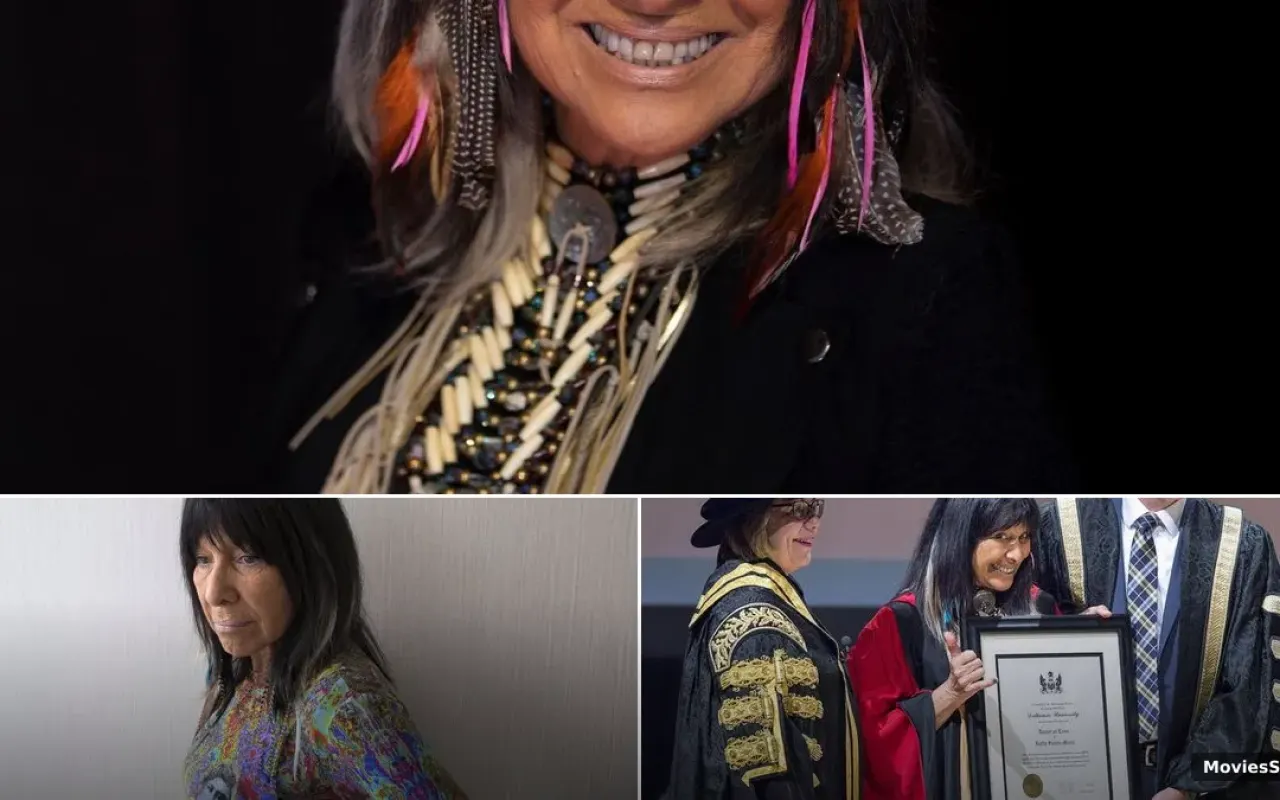
The fall of a folk icon is officially complete. In a move that signals a massive shift in how institutions handle academic integrity and Indigenous identity, the University of Toronto has formally stripped Buffy Sainte-Marie of her 2019 honorary degree. This isn't just another headline; it’s the culmination of a multi-year investigation that has fundamentally shaken the Canadian arts and academic landscapes.
The Buffy Sainte-Marie honorary degree revoked status comes after the university’s Governing Council voted on May 13, 2026, to rescind the honor. For decades, Sainte-Marie was the face of Indigenous activism and music, but the "receipts" provided by investigative journalists and genealogists eventually became too loud for the administration to ignore.
Why did U of T revoke Buffy Sainte-Marie's degree?
The University of Toronto revoked Buffy Sainte-Marie's honorary Doctor of Laws degree in May 2026 following a 2023 CBC investigation that questioned her Indigenous ancestry. The investigation uncovered a Massachusetts birth record indicating she was born to Italian-American parents, contradicting her claims of being Cree. The university's Governing Council approved the rescindment after a review by the Standing Committee on Recognition.
The 2025 Petition and the Policy on Honorary Degrees
While the CBC Fifth Estate Buffy Sainte-Marie investigation in 2023 started the fire, the legal mechanism that led to this week's decision was a formal petition filed in February 2025. The petition, which reportedly garnered over 1,000 signatures from Indigenous students, faculty, and alumni, specifically cited the university’s Policy on Honorary Degrees regarding the "rescindment of honors in cases of significant controversy or misrepresentation."
The Standing Committee on Recognition Bylaws allow for a degree to be rescinded if the recipient's actions or claims are found to be "detrimental to the reputation of the University" or involve "fraudulent representation." Real talk: U of T is trying to protect its brand. By allowing the degree to stand, the university risked devaluing the Doctor of Laws for every other recipient. The Indigenous Pathways Program at the university was also instrumental in this process, pushing for a review of how Indigenous identity is verified in institutional spaces.
The Evidence: A Massachusetts Birth Record vs. Piapot First Nation
The core of the Buffy Sainte-Marie Indigenous identity controversy lies in a 1941 Massachusetts birth certificate. For years, Sainte-Marie claimed she was born on the Piapot First Nation in Saskatchewan and was part of the "Sixties Scoop," taken from her biological parents as an infant.
However, the CBC Fifth Estate investigation presented a different reality:
- The Birth Record: A document showing "Beverley Jean Santamaria" was born to Albert and Winifred Santamaria in Stoneham, Massachusetts.
- The Parentage: Family members confirmed she was of Italian-American descent, not Indigenous.
- The "Adoption" Claim: While Sainte-Marie was culturally adopted into a Cree family as an adult, she has consistently represented herself as biologically Indigenous to secure awards, grants, and honors reserved for First Nations people.
Sainte-Marie has pushed back, calling the evidence "fabricated" and insisting her Cree family "adopted me forever." But in the eyes of the university, "cultural adoption" doesn't replace biological facts when those facts were the basis for the award in the first place.
Historical Precedent: Buffy Sainte-Marie and Duncan Campbell Scott
This isn't the first time the University of Toronto has had to scrub its record. In 2023, the school revoked an honorary degree from Duncan Campbell Scott, the high-ranking official who was a primary architect of the residential school system.
By revoking Sainte-Marie’s degree, U of T is drawing a clear line in the sand regarding settler colonialism and the "Pretendian" controversy. While Scott was revoked for his role in systemic harm, Sainte-Marie was revoked for what many call "identity fraud." Both cases represent a new era where universities are being forced to reckon with their past choices in the name of academic integrity.
"The harm of 'Pretendianism' isn't just about a single person; it's about the space and resources taken from actual Indigenous scholars and artists who have lived the reality of these communities."
A Growing List: Every Honor Buffy Sainte-Marie Has Lost
The Buffy Sainte-Marie honorary degree revoked news at U of T is just the latest domino to fall. She once held over 15 honorary degrees, but that number is shrinking fast. Here is the current status of her most major honors:
| Institution/Organization | Award/Honor | Current Status (as of 2026) |
|---|---|---|
| University of Toronto | Doctor of Laws | Revoked (May 2026) |
| Order of Canada | Officer / Companion | Terminated (2025) |
| Juno Awards | 7 Awards | Stripped (March 2025) |
| Dalhousie University | Honorary Degree | Revoked (January 2026) |
| University of British Columbia | Honorary Degree | Under Review |
| Carleton University | Honorary Degree | Pending Investigation |
The fallout has also raised questions about scholarship funds. While there is no current move by U of T to recover financial awards associated with the 2019 degree, Indigenous student groups are calling for any past prize money to be redirected to Piapot First Nation youth programs.
The "Pretendian" Controversy and Academic Fraud Consequences
The Sainte-Marie case is being compared to that of Carrie Bourassa, a high-profile health researcher who was ousted from the University of Saskatchewan after her claims of Indigenous ancestry were debunked. This Buffy Sainte-Marie 2026 update proves that no level of fame or "legend" status provides immunity from Indigenous identity verification policies.
For students at U of T, the reaction is mixed. Some feel the university acted too slowly, waiting nearly three years after the initial CBC News report to take action. Others see it as a necessary, if painful, step toward reconciliation. The Standing Committee on Recognition has hinted that they are looking at other historical honors, signaling that more "rescindments" could be on the horizon as institutions audit their past through a modern lens.
Key Takeaways: The End of the Buffy Sainte-Marie Era
- The Vote: The U of T Governing Council unanimously voted to revoke the degree on May 13, 2026.
- The Catalyst: A February 2025 petition from the university community triggered the official review.
- The Evidence: A 1941 birth certificate from Massachusetts was the "smoking gun" that undermined her Cree identity claims.
- The Precedent: This follows the revocation of honors from Duncan Campbell Scott and Carrie Bourassa.
- The Future: Other institutions like UBC and Carleton are now under intense pressure to follow suit.
The conversation around Buffy Sainte-Marie is no longer just about music; it’s a case study in the ethics of identity in the 21st century. As more institutions adopt strict Indigenous identity verification policies, the era of "self-identification" without documentation in academia appears to be over. Whether Sainte-Marie’s legacy can survive as a "culturally adopted" figure remains to be seen, but her status as an Indigenous icon in the eyes of Canada’s top universities is officially a thing of the past.