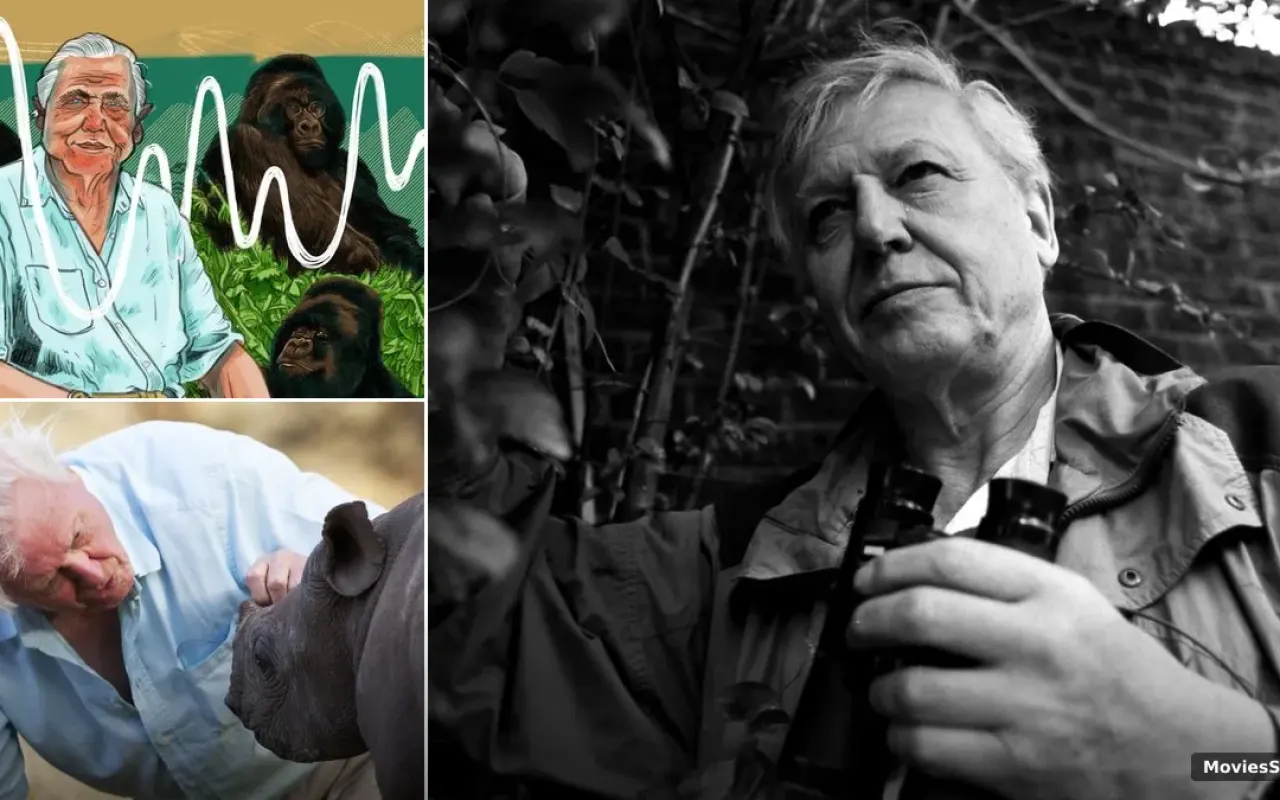
On May 8, 2026, the world paused to celebrate a milestone that felt both impossible and inevitable: the David Attenborough 100th birthday. For a century, Sir David has served as the eyes and ears of humanity, translating the complexities of the natural world into a language of universal awe. From the early days of black-and-white television to the immersive 8K landscapes of today, his career has not just documented life on Earth—it has defined our relationship with it. As tributes pour in from Buckingham Palace to the furthest reaches of the scientific community, the centenary of this broadcaster and conservationist marks more than a personal achievement; it signifies a century of progress in evolutionary biology and environmental advocacy.
The World Celebrates: Royal and Global Tributes for a National Treasure
The celebration of the David Attenborough 100th birthday reached its zenith at the Royal Albert Hall, where a 90-minute gala brought together the biggest names in science, entertainment, and royalty. King Charles III and Queen Camilla shared a deeply personal video message, featuring a montage of wildlife "delivering" a birthday card to the naturalist. The King, a long-time friend and fellow environmental advocate, praised Sir David’s "unfailing ability to remind us of the wonder of the world we call home."
The event, hosted by Kirsty Young, featured performances by the BBC Concert Orchestra, playing scores from Planet Earth and Blue Planet. Prince William, who has often cited Attenborough as a mentor for the Earthshot Prize, delivered a poignant speech. "Your friendship has been profound," the Prince noted. "You have strengthened my own determination to act." The night was peppered with tributes from global icons like Leonardo DiCaprio, Dame Judi Dench, and Michael Palin, who presented Sir David with a fragment of Mount Everest dating back to 1926—the year of his birth.
A New Species for a New Century: Meet Attenboroughnculus tau
In perhaps the most fitting tribute to a man who has dedicated his life to taxonomy and evolutionary biology, the Natural History Museum announced the discovery of a new species in his honor. The Attenboroughnculus tau is a unique parasitic wasp discovered in the remote regions of Chile. Researchers described the wasp as a "master of the intimate and overlooked," echoing Attenborough’s own career focus on the smaller, often ignored wonders of nature.
This "bodysnatcher" wasp represents a significant find for the scientific community. Unlike many other parasitic species, Attenboroughnculus tau exhibits specialized genetic markers that provide new insights into the evolution of Hymenoptera. Sir David, known for his humor, reportedly delighted in the gift, noting that being a "parasite" was a refreshing change of pace from his usual accolades. This discovery adds to the David Attenborough legacy, ensuring his name remains at the forefront of biological research for centuries to come.
How Many Species are Named After David Attenborough?
Over 50 species are named after Sir David Attenborough, reflecting his immense contribution to taxonomy and global biodiversity awareness. Notable examples include:
- Attenboroughnculus tau: A newly discovered parasitic wasp from Chile.
- Attenborosaurus: A prehistoric plesiosaur from the Early Jurassic.
- Nepenthes attenboroughii: A giant, shrew-eating pitcher plant found in the Philippines.
- Euptychia attenboroughi: A rare butterfly from the upper Amazon basin.
- Attenborough’s Ghost Shrimp: A delicate crustacean discovered in the reefs of Madagascar.
The Attenborough Species List: A Master Catalog of Life
While most are familiar with the David Attenborough species count reaching over 50, the sheer diversity of these organisms is staggering. From extinct predators to living fungi, the "Attenborough" nomenclature covers nearly every branch of the tree of life. This naming convention is not merely honorary; it highlights the biodiversity loss he has fought to prevent.
| Category | Notable Species | Description |
|---|---|---|
| Prehistoric | Attenborosaurus conybeari | A long-necked plesiosaur. |
| Plants | Hieracium attenboroughianum | A rare species of Hawkweed found in the Brecon Beacons. |
| Insects | Electrotettix attenboroughi | A fossil grasshopper preserved in amber. |
| Mammals | Zaglossus attenboroughi | The long-beaked echidna, once thought extinct. |
| Fungi | Spongiforma squarepantsii | While not named after him, he pioneered the filming of this "zombie fungus." |
From Naturalist to Activist: The Evolution of a Climate Voice
The David Attenborough 100th birthday is a time to reflect on his transition from a passive observer to a fierce conservationist. In the 1950s, during BBC Zoo Quest, the goal was to capture animals for display. By the time he produced the Life on Earth documentary in 1979, the focus had shifted to understanding animals in their natural habitats. However, it wasn't until the 21st century that Attenborough became the "voice of the planet" regarding climate change.
His impact on global policy is undeniable. From addressing the World Economic Forum to his influential presence at the United Nations Climate Change Conference (COP), he has pushed world leaders toward actionable sustainability. Younger activists, including Greta Thunberg, have acknowledged his role in bridging the generational gap. While Thunberg represents the urgency of the youth, Attenborough provides the historical weight and scientific authority that forces elder statesmen to listen. His 2017 series Blue Planet II is credited with the "Attenborough Effect," which led to a massive reduction in single-use plastic consumption across the UK and Europe.
A 100-Year Timeline of a Legend
- 1926: Born in Isleworth, London.
- 1950: Marries Jane Elizabeth Ebsworth Owsley; joins the BBC.
- 1954: Zoo Quest premieres, launching his career as a presenter.
- 1965: Becomes Controller of BBC Two, introducing color television to Europe.
- 1967: Oversees the change from white to yellow tennis balls at Wimbledon for better visibility.
- 1979: Life on Earth airs, watched by an estimated 500 million people.
- 1985: Knighted for the first time by Queen Elizabeth II.
- 2015: Dives 100 feet in a submersible at the Great Barrier Reef (age 89).
- 2021: Joins Instagram, breaking the record for the fastest time to reach 1 million followers.
- 2026: Celebrates 100th birthday with the discovery of Attenboroughnculus tau.
The Science of 100: How David Attenborough Became a 'Superager'
One of the most searched topics surrounding this milestone is David Attenborough longevity. How does a man who has spent decades in malaria-ridden jungles and extreme polar climates maintain such mental acuity at 100? Scientists point to a combination of genetics and lifestyle factors. Research into "Superagers" often highlights the FOXO3 longevity gene, which is linked to a reduced risk of age-related diseases. While Sir David has never confirmed his genetic profile, his lifestyle offers clues.
Attenborough’s "diet and exercise" routine is famously modest. He has often joked that he "runs only when necessary," but his "sense of purpose" is a documented biological driver of health. His refusal to retire has kept his cognitive pathways active. He still receives approximately 70 letters a day and insists on hand-writing many of his replies. This mental engagement, combined with a largely vegetarian diet adopted in his later years, has allowed him to remain a "voiceover machine," narrating Planet Earth III well into his 90s and Ocean at age 99.
Technical Mastery: From 35mm to 8K and Infrared
The David Attenborough legacy is also one of technological pioneering. In the 1950s, filming wildlife meant carrying heavy 35mm cameras and hoping for a glimpse of an animal. Attenborough pushed for the development of specialized lenses and thermal imaging. During his 100th birthday special, the BBC showcased infrared technology that allows naturalists to film in total darkness without disturbing the animals—a feat that was a "nightmare" during his early career.
Throughout his career, he has produced over 1,000 hours of footage and visited an estimated 150 countries. His archive is now considered one of the most valuable biological records in existence. As for the future of this archive, the BBC and the Natural History Museum are reportedly working on a permanent digital exhibit to ensure that his century of work remains accessible to future generations of scientists and filmmakers.
Key Takeaways
- The Centenary Milestone: Sir David Attenborough celebrated his 100th birthday on May 8, 2026, with global tributes and a Royal Albert Hall gala.
- Scientific Legacy: A new species of parasitic wasp, Attenboroughnculus tau, was named in his honor by the Natural History Museum.
- Taxonomic Impact: Over 50 species carry his name, spanning from prehistoric dinosaurs to modern-day plants and insects.
- Global Policy: Attenborough transitioned from a broadcaster to a powerful advocate for climate change policy, influencing COP and UN initiatives.
- Longevity Science: His mental acuity at 100 is attributed to a strong "sense of purpose" and continued cognitive engagement.
- Technological Pioneer: He oversaw the transition to color TV and pioneered the use of 4K, 8K, and infrared photography in wildlife documentaries.
Conclusion: A Century of Inspiration
As we look back on 100 years of David Attenborough, we see more than just a famous voice. We see a man who evolved alongside the planet he sought to protect. From the curiosity of a young boy selling newts to the University College Leicester, to the wisdom of a centenarian advising kings, Sir David has taught us that to save the world, we must first learn to love it. His 100th birthday is not the end of an era, but a reminder that the work of conservation is a lifelong journey. As he often says, "The future of life on Earth depends on our willingness to act." With a century of evidence behind him, that message has never been more vital.