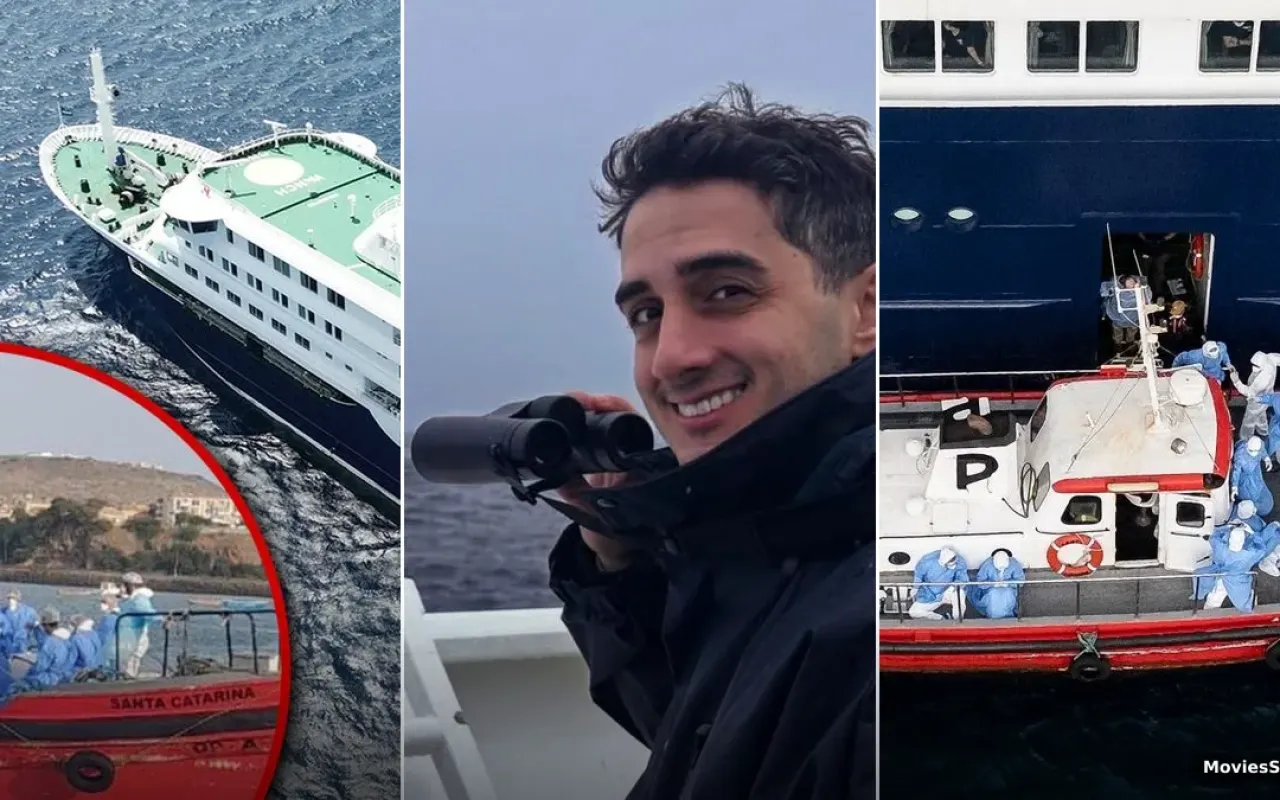
The global travel community was recently rocked by a deadly health crisis aboard the MV Hondius, an expedition vessel navigating the remote Atlantic. At the center of the unfolding drama is Ruhi Çenet, a prominent Turkish YouTuber with over 18 million subscribers, whose attendance at a crowded wedding in Istanbul following his disembarkation has sparked a firestorm of public health concerns. With a mortality rate of 40% and a uniquely dangerous transmission profile, the Ruhi Çenet Hantavirus controversy has evolved from a travel vlog gone wrong into a complex international medical investigation involving the World Health Organization (WHO) and the Turkish Ministry of Health.
What is the MV Hondius Hantavirus outbreak?
The MV Hondius Hantavirus outbreak is a significant public health event involving an expedition ship that experienced a cluster of Andes virus strain infections during an Atlantic voyage in April 2026. The outbreak resulted in three confirmed deaths and triggered a massive international response by the WHO, monitoring passengers across 12 countries to prevent further person-to-person transmission.
The MV Hondius Outbreak: A Timeline of the Crisis
The journey began on April 1, 2026, when the MV Hondius, operated by Oceanwide Expeditions, departed from Ushuaia, Argentina. The vessel was slated for a multi-week expedition across the Atlantic toward Cape Verde, carrying 114 guests and a full crew. The primary objective for many on board, including Ruhi Çenet and his cameraman, was to document the remote island of Tristan da Cunha, often cited as the most isolated inhabited place on Earth.
The crisis first manifested on April 11, when a 70-year-old Dutch passenger died suddenly. In a move that is now under heavy legal and medical scrutiny, the ship’s captain reportedly announced to the passengers that the death was due to "natural causes" and that the illness was not infectious. This misclassification allowed life on the ship to continue as normal; passengers shared meals, socialized in confined spaces, and did not adhere to quarantine protocols or wear masks.
The situation escalated rapidly after the ship reached St. Helena island on April 24. By this time, two additional deaths had occurred, and several more passengers were exhibiting symptoms of pulmonary syndrome. It was only after these fatalities that the true nature of the pathogen—the Andes Orthohantavirus—was identified. The ship was subsequently placed under international monitoring as it charted a course toward Tenerife in the Canary Islands, where it is expected to dock for further medical clearance on May 10.
Ruhi Çenet and the Istanbul Wedding Controversy
While the MV Hondius was still at sea grappling with the outbreak, Ruhi Çenet had already disembarked at St. Helena on April 24 and traveled back to Turkey. On May 3, images surfaced on social media showing Çenet attending a high-profile, crowded wedding in the Çatalca district of Istanbul. The timing could not have been worse; the wedding took place the same day the WHO officially announced the MV Hondius outbreak and confirmed the presence of the Andes strain.
The backlash was immediate. Critics pointed out that the Hantavirus incubation period can last up to eight weeks, meaning an asymptomatic carrier could unknowingly spread the virus. Çenet’s defense centered on the lack of information provided by the cruise line. "We were not well informed," Çenet stated, explaining that for 12 days following the first death, no safety precautions were suggested by the crew. He claimed that upon returning to Turkey, he was told by health authorities that quarantine was unnecessary unless symptoms appeared.
Despite these claims, the risk of Andes virus human transmission at a large social gathering like a wedding is a nightmare scenario for epidemiologists. While Çenet has since tested negative and remains asymptomatic, the decision to attend a public event while potentially within the incubation window has raised serious questions about traveler responsibility and the adequacy of International Health Regulations (IHR) for cruise ships.
Andes Virus vs. Standard Hantavirus: Why This Strain is Different
To understand the severity of the Ruhi Çenet Hantavirus situation, one must distinguish between the common Hantavirus strains found in North America and the specific Andes virus strain involved in this outbreak. Most Hantaviruses are transmitted solely through contact with rodent droppings, urine, or saliva—specifically the Oligoryzomys longicaudatus (long-tailed pygmy rice rat) in South America. However, the Andes strain is the only known Hantavirus capable of person-to-person transmission.
Medical Fact Check: The Andes Strain Profile
- Transmission: Primarily through respiratory droplets during close, prolonged contact.
- R0 Value: The reproduction number (R0) for the Andes virus is estimated between 0.7 and 1.2, meaning it has the potential to cause clusters of infection in crowded environments.
- Mortality Rate: Approximately 40%, significantly higher than most seasonal flus or even COVID-19.
- Symptoms: Initial symptoms mimic the flu (fever, muscle aches, fatigue) but can rapidly progress to Hantavirus pulmonary syndrome survival rate-threatening respiratory distress and kidney failure.
The unique ability of this strain to jump between humans is what makes the Oceanwide Expeditions Hantavirus incident a global concern. Unlike "Old World" Hantaviruses that cause hemorrhagic fever with renal syndrome (HFRS), the "New World" Andes strain targets the lungs, causing fluid accumulation that can lead to death within days of symptom onset.
Conflicting Accounts: Ruhi Çenet vs. Emin Yoğurtçuoğlu
The narrative of the outbreak has been further complicated by conflicting reports from passengers. While Ruhi Çenet has been vocal about the lack of information, fellow passenger and renowned birdwatcher Emin Yoğurtçuoğlu provided a different perspective from the ship. Yoğurtçuoğlu, who remained on the MV Hondius as it headed toward the Canary Islands cruise port, suggested that the situation was being managed and that "everything is fine" regarding the remaining passengers.
This discrepancy highlights a potential "information gap" between those who disembarked early and those who stayed on board. Legal experts suggest that the cruise line may face significant liability if it is proven that they knowingly misclassified the first death as "natural causes" to avoid a costly quarantine protocol. The distance from St. Helena to the nearest advanced medical facility in South Africa or Europe is thousands of miles, making any delay in diagnosis potentially fatal.
Official Response: Turkey Health Ministry and WHO
In response to the viral controversy, Turkish Health Minister Kemal Memişoğlu issued a statement to calm the public. "No positive case has yet been detected in our country," Memişoğlu confirmed, emphasizing that the Ministry is following scientific protocols to monitor all Turkish nationals who were on the ship. This includes not just Çenet, but also his cameraman and other passengers like Melike Güner.
The WHO has taken a broader approach, coordinating with 12 countries—including the United States, United Kingdom, and Germany—to track passengers. There are currently several US passengers being monitored by the CDC, as the Hantavirus incubation period remains the primary obstacle to declaring the outbreak over. The WHO has also deployed 2,500 diagnostic kits from Argentina to laboratories worldwide to ensure rapid testing capability.
Legal and Industry Implications for Expedition Cruising
The Ruhi Çenet Hantavirus incident is likely to have lasting effects on the expedition cruise industry. Unlike standard Caribbean cruises, expedition voyages often visit remote areas like Ushuaia Argentina or Tristan da Cunha, where medical facilities are non-existent. The failure to identify a public health emergency early on board the MV Hondius may lead to stricter IMO (International Maritime Organization) regulations regarding onboard diagnostic capabilities.
Furthermore, the legal analysis of passenger liability is entering uncharted territory. Can a passenger be held liable for breaking an "unofficial" quarantine if they were told by the ship's captain that there was no danger? Most legal experts believe the burden of proof lies with the cruise operator, but the ethical debate over Çenet's wedding attendance continues to divide public opinion.
Key Takeaways
- The Virus: The Andes strain is uniquely dangerous due to its person-to-person transmission and 40% mortality rate.
- The Controversy: Ruhi Çenet attended a crowded wedding in Istanbul while potentially incubating the virus, sparking a debate on travel ethics.
- The Failure: The ship's captain initially labeled the first death as "natural causes," delaying critical quarantine protocols.
- Current Status: The Turkish Health Ministry reports zero confirmed cases in Turkey, but the 8-week incubation period requires continued vigilance.
- Global Reach: The WHO is monitoring passengers in 12 countries, including the US, UK, and Singapore.
Conclusion: A Warning for the Future of Travel
The Ruhi Çenet Hantavirus story serves as a stark reminder of the fragility of global health in an era of high-speed travel. While the risk to the general public in Istanbul remains low, the incident underscores the necessity for transparent communication from travel operators and a more cautious approach from global influencers. As the MV Hondius nears its final destination in Spain, the focus shifts from crisis management to long-term accountability. Whether through improved genomic sequencing on ships or more rigorous international health reporting, the lessons learned from this Atlantic tragedy will undoubtedly reshape the safety standards of expedition cruising for years to come.