If you thought the drama on screen during the Yellowstone spinoff was intense, the behind-the-scenes reality of Dutton Ranch filming in Texas makes the fictional ranch wars look like a summer camp. While fans were busy obsessing over the power couple dynamic of Rip Wheeler and Beth Dutton, the cast and crew were quite literally fighting for their lives against the elements. We’re talking triple-digit heat, practical fire stunts that would make a stunt double sweat, and a rattlesnake count that sounds like a biblical plague.
The transition from the cool, blue-tinted mountains of Montana to the harsh, saturated landscape of the Lone Star State wasn't just a plot point—it was a physical gauntlet. From Cole Hauser’s weight loss on the Dutton Ranch set to the 3,400 venomous co-stars the production team had to relocate, the making of this series is a masterclass in "doing it for the shot." Here is the deep dive into how the production survived the North Texas wild.
The Rattlesnake Infestation: 3,400 Reasons to Watch Your Step
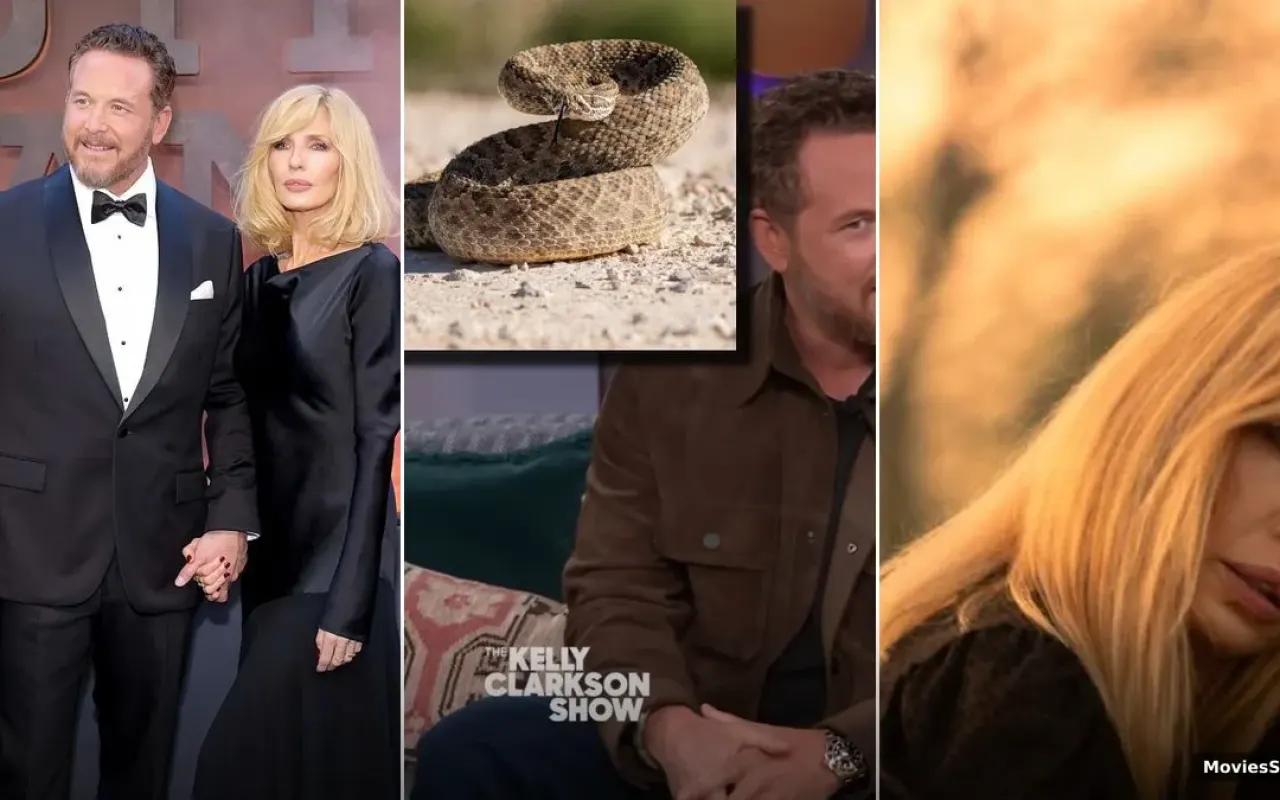
The most viral stat to come out of the production is, without a doubt, the snake count. During the eight-month filming schedule, the production team reportedly caught and relocated 3,400 rattlesnakes. For context, that is roughly 14 snakes a day, every single day, for nearly three-quarters of a year. The Dutton Ranch rattlesnakes weren't just a minor nuisance; they were a constant logistical hurdle that required a dedicated team of six professional snake wranglers to clear the brush before every single take.
The Western Diamondback is the primary suspect here. These snakes are notorious for their defensive nature and their love for the tall grasses of North Texas. The danger was particularly high for Kelly Reilly, whose character, Beth Dutton, isn't exactly known for sensible footwear. Reilly spent a significant portion of the shoot running through unmanicured fields in stilettos, essentially playing a high-stakes game of "the floor is lava," but with venomous reptiles.
- The Den Incident: One night, production was halted when wranglers discovered a single den containing between 40 and 50 rattlesnakes right where a scene was scheduled to be filmed.
- Relocation Ethics: While the "catch and release" method was used to move the snakes "somewhere far away," ecological experts note that relocating 3,400 snakes in a single season is a massive undertaking. These snakes were moved to ensure both cast safety and the preservation of the local ecosystem, though the sheer volume suggests the Saunders Ranch area is one of the most densely populated snake habitats in the region.
- The "Stiletto Survival": Reilly has been vocal about the anxiety of filming in the brush, noting that while the wranglers were thorough, the fear of a missed snake was a constant mental tax.
Cole Hauser’s Physical Transformation: Losing 25 Pounds in 106 Degrees
In the original Yellowstone series, Rip Wheeler is a "big man" in every sense of the word. To maintain that imposing, rugged physique, Cole Hauser typically puts on about 25 pounds of muscle and mass before filming begins. However, Dutton Ranch filming in Texas made that physical baseline impossible to maintain. The culprit? A relentless Texas heatwave that saw temperatures hover around 106 degrees, occasionally spiking to a staggering 118 degrees on the tarmac and in the fields.
Hauser revealed that he struggled to keep weight on because he was quite literally "sweating it out" every day. This Cole Hauser weight loss on the Dutton Ranch set wasn't a choice for the character; it was a byproduct of the environment. Filming in heavy denim, leather boots, and cowboy hats in the Texas sun is essentially a 12-hour hot yoga session with a side of heavy lifting. This physical toll adds a layer of authenticity to the "weathered" look of the characters as they attempt to build a life in Rio Paloma.
The weather in North Texas is also notoriously bipolar. Hauser and the crew dealt with the "beast" of the environment, which included not just the blistering heat, but also sudden ice storms and snow. This volatility meant the crew had to be ready to pivot from heatstroke protocols to winter gear in the span of a single week.
Where Was Dutton Ranch Filmed? Real Texas Locations Revealed
While the story is set in the fictional town of South Texas town of Rio Paloma, the actual production was centered in North Texas, taking advantage of Texas film tax incentives and Taylor Sheridan’s deep roots in the region. If you're looking to take a road trip to see the world of Beth and Rip, here is the breakdown of the Yellowstone spinoff locations:
Featured Snippet: Where was Dutton Ranch filmed?
- Ferris, Texas: Served as the primary stand-in for the fictional town of Rio Paloma.
- Weatherford, Texas: Home to the Saunders Ranch, which portrays the pivotal Edwards Ranch.
- Boyd & Cleburne: Used for various rural landscapes and ranching exteriors.
- Dallas & Fort Worth: Utilized for urban scenes and production hubs.
- Mineral Wells: Featured for its unique North Texas topography.
The Saunders Ranch in Weatherford is perhaps the most significant location. Much like the fictional Edwards Ranch, the Saunders property has been owned by the same family for five generations. This legacy adds a layer of "ranching royalty" to the production that CGI simply can't replicate. While the Chief Joseph Ranch in Montana has become a massive tourist destination, the Saunders Ranch remains a working operation, though the "Sheridan effect" is already bringing increased notoriety to the Weatherford area.
Christina Alexandra Voros and the Visual Language of the Lone Star State
Director and Executive Producer Christina Alexandra Voros had a specific challenge: how to make a Yellowstone spinoff feel familiar to fans while establishing a completely different visual identity. Voros, who has been a staple in the Sheridan-verse, noted that the light in Texas is fundamentally different from the "blue mountaintops and green valleys" of Montana.
The Texas aesthetic is "rich, saturated, and hot." To lean into this, the production avoided soundstages as much as possible. Aside from interior house shots, the vast majority of the show was filmed on location. This commitment to realism extended to the lighting—Voros utilized the harsh midday sun and the "golden hour" of the plains to create an environment that feels lived-in and punishing.
This visual shift also highlights the "outsider" status of Rip and Beth. In Montana, they were the "top dogs" who knew every inch of the land. In Texas, they are strangers in a land that is actively trying to kill them—whether via the heat, the snakes, or the rival ranchers.
Practical Effects: The "Obstacle Course of Fire"
One of the most intense sequences in the pilot episode involves a massive fire that Rip, Beth, and Finn must escape. While most modern productions would lean heavily on CGI for fire safety, the Dutton Ranch filming in Texas utilized practical effects. This means the fire you see on screen was real, controlled, and very, very hot.
Cole Hauser performed his own stunts for these scenes, riding his horse through what he described as an "obstacle course of fire and smoke." The safety protocols for these scenes were immense, particularly regarding the horses. Veterinary experts were on-site to monitor the animals' stress levels and ensure their coats and hooves were protected from the heat. Hauser’s condition for doing the stunts was simple: if the horse is comfortable, he’s comfortable. The result is a visceral, high-stakes sequence that anchors the pilot's emotional weight.
The Economic Impact: The "Sheridan Effect" in North Texas
The arrival of King Street Productions in towns like Ferris and Weatherford isn't just a "cool story" for the locals; it's a massive economic engine. Ferris City Manager Brooks Williams noted that when the production first reached out in August 2025, the town didn't even know it was for a Yellowstone spinoff. The "sleepy" town has since seen a surge in name recognition and local spending.
While the exact Dutton Ranch production budget remains under wraps, the scale of the shoot—thousands of snakes, hundreds of crew members, and months of location rentals—suggests a massive investment in the North Texas economy. This is a strategic move, as the Texas Film Commission has been working to lure big-budget productions away from traditional hubs like Georgia or New Mexico. By showcasing the raw beauty (and danger) of the North Texas landscape, Sheridan is effectively making the state the new center of the Neo-Western genre.
Key Takeaways: Why the Texas Shoot Was Different
- Extreme Wildlife: 3,400 rattlesnakes were relocated during the eight-month shoot, requiring six full-time wranglers.
- Physical Toll: Cole Hauser struggled to maintain his "Rip Wheeler" physique, losing significant weight due to the 106+ degree heat.
- Authentic Locations: The show used the 150-year-old Saunders Ranch in Weatherford to ground the story in real Texas history.
- Practical Over Digital: Major fire sequences were filmed using real fire and live stunts to maintain the show's gritty aesthetic.
- Visual Identity: Director Christina Alexandra Voros traded Montana's cool blues for Texas's hot, saturated oranges and browns.
The Future of Dutton Ranch: Season 2 and Beyond
With the first season pulling in nearly 13 million viewers—outperforming almost every other spinoff in the franchise—the Dutton Ranch Season 2 filming schedule is already the subject of intense speculation. Rumors suggest the production may move even further west into the harsher desert climates to continue the "Texas vs. The World" theme.
As the series continues, the question remains: can Rip and Beth tame a land that seems designed to repel them? If the production's real-life battle with 3,400 snakes and 118-degree heat is any indication, the answer is that they might survive, but they won't come out the other side unchanged. Texas doesn't just host you; it tests you. And for the cast of Dutton Ranch, that test was very, very real.