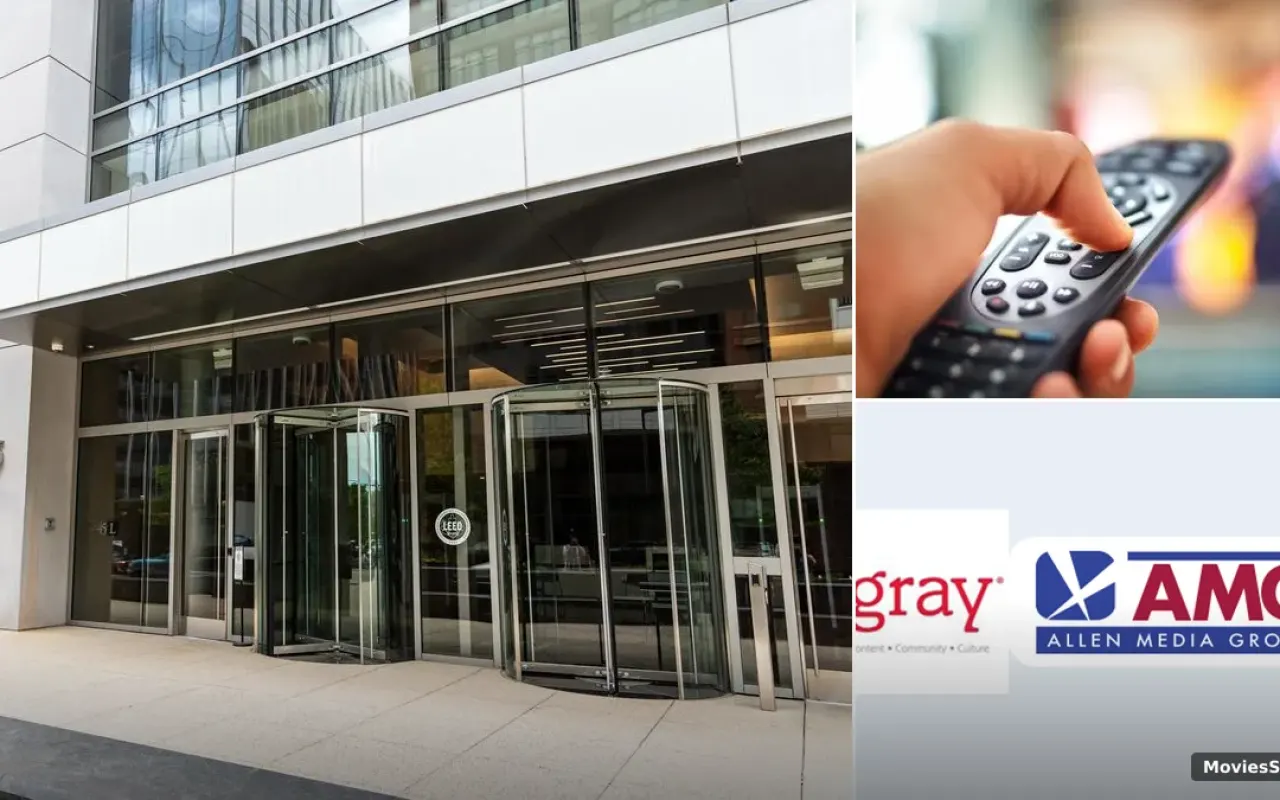
The landscape of American broadcasting reached a definitive turning point on May 6, 2026, as Gray Media, Inc. finalized a massive $251 million expansion effort. By successfully closing two separate multi-million dollar deals with Allen Media Group and Block Communications, the Atlanta-based multimedia company has solidified its position as the nation’s largest owner of top-rated local television stations. These Gray Media acquisitions 2026 represent a calculated aggressive growth strategy, bringing the company’s reach to approximately 37% of all U.S. television households across 120 full-power television markets.
Overview of Gray Media’s 2026 Expansion Strategy
The 2026 expansion was not merely about increasing station counts; it was a strategic masterstroke in local TV station consolidation. Gray Media targeted mid-sized markets where it could establish dominant market duopolies or triopolies, allowing for shared resources in news, weather, and sales. With the finalization of these deals, Gray now operates in 119 markets measured by Nielsen, holding the top-rated station in 81 of those regions.
Financially, the move comes at a critical time. Despite GTN stock news 2026 showing a Q4 2025 revenue of $792 million—a 24.21% decrease from the previous year’s political-heavy cycle—the company is doubling down on its "strong local news" mandate. By integrating these new assets into the Gray Digital Media ecosystem, the company aims to offset traditional linear declines with advanced digital marketing strategies and increased retransmission consent fees impact.
The $171 Million Allen Media Group Acquisition
The most significant pillar of the 2026 expansion was the Gray Media Allen Media Group deal. Valued at $171 million, this transaction involved 10 full-power broadcast stations. The acquisition was executed in two distinct phases to accommodate regulatory timelines. The first phase, completed in late March 2026, saw the transfer of licenses for WLFI-TV (West Lafayette), WTHI-TV (Terre Haute), and WTVA (Tupelo). The remaining seven stations, including the high-profile WAAY-TV in Huntsville, officially joined the Gray portfolio on May 1, 2026.
This deal was not without its hurdles. Byron Allen, the media entrepreneur behind Allen Media Group, had faced significant scrutiny in 2025 following a controversial proposal to replace local meteorologists with centralized forecasts from The Weather Channel. Although Allen reversed this decision after intense advertiser backlash, the transition to Gray Media is seen by many industry analysts as a "return to localism." Gray has already committed to expanding newsroom resources in these markets, leveraging its multimedia company infrastructure to bolster 24/7 coverage.
What Stations Did Gray Media Acquire in 2026?
The following table provides a comprehensive breakdown of the primary television stations acquired by Gray Media during the first half of 2026 from both Allen Media Group and Block Communications.
| Station Call Sign | Market / City | Previous Owner |
|---|---|---|
| WAAY-TV | Huntsville, AL | Allen Media Group |
| WDRB / WBKI | Louisville, KY | Block Communications |
| WAND-TV | Springfield-Decatur, IL | Block Communications |
| WLIO-TV | Lima, OH | Block Communications |
| WTVA-TV | Tupelo, MS | Allen Media Group |
| WLFI-TV | West Lafayette, IN | Allen Media Group |
| WTHI-TV | Terre Haute, IN | Allen Media Group |
| WTVM / WLTZ | Columbus, GA | SagamoreHill / Allen |
The $80 Million Block Communications Purchase
While the Allen deal provided volume, the Block Communications station sale provided strategic depth in high-value DMAs (Designated Market Areas). Closing on May 6, 2026, the $80 million deal included pivotal assets in Louisville, Kentucky; Springfield-Decatur, Illinois; and Lima, Ohio.
The acquisition of WLIO-TV in Lima is particularly historic. Block Communications had owned the station since 1972, making this the first ownership change in over half a century. For Gray, this represents its first full-power entry into the Lima market (DMA 190). In Louisville, the deal is even more transformative. By adding Fox affiliate WDRB and CW affiliate WBKI to its existing NBC affiliate WAVE-TV, Gray has created a powerful market duopoly (and in some respects, a triopoly) that will likely dominate local advertising and Nielsen ratings 2025 benchmarks.
Regulatory Battles: The FCC and DirecTV
The path to these Gray Media acquisitions 2026 was paved with legal friction. DirecTV filed a formal petition to deny the Allen Media transaction, arguing that the consolidation would give Gray undue leverage in retransmission negotiations, leading to higher costs for satellite subscribers. DirecTV’s legal team specifically pointed to the risks of "coordinated negotiations" in markets where Gray would control multiple top-four stations.
However, the Federal Communications Commission (FCC) Media Bureau dismissed these concerns. In its ruling, the FCC stated that "no material public interest harms" were found. Instead, the commission highlighted the "transaction-related public interest benefits," specifically Gray’s track record of maintaining high-quality local news. To facilitate the deals, the FCC granted specific waivers of ownership rules, particularly in markets like Columbus, Georgia, and Louisville, allowing Gray to exceed standard ownership caps under the premise of maintaining failing stations or enhancing service quality.
Market Impact: Consolidation and Local News
The primary concern for viewers in markets like Rockford, Illinois, and Huntsville, Alabama, is whether local media monopoly risks will lead to newsroom layoffs. In Huntsville, Gray now operates both WAAY and WAFF 48. While corporate leadership suggests that "working capital adjustments" and shared back-end infrastructure will save money, they insist that front-facing news talent will remain distinct to maintain competition.
Strategic Comparison of Deals:
- The Allen Deal: Focused on geographic spread and acquiring broadcast licenses in under-served mid-sized markets. The price per station averaged roughly $17.1 million, which is considered highly efficient compared to the $25M+ industry averages for full-power assets in 2025.
- The Block Deal: Focused on "clustering." By acquiring stations in markets where they already had a presence or adjacent strength, Gray can maximize its Telemundo Affiliate group reach and its digital sales force.
Financial Outlook and E-E-A-T Analysis
From an investment perspective, Gray Media’s aggressive 2026 expansion is a high-stakes bet on the resilience of local broadcast. Media analysts have noted Gray’s rising debt-to-equity ratio, yet many remain optimistic. The company’s ability to integrate AI in local news production Gray Media initiatives—such as automated closed captioning and data-driven weather graphics—is expected to drive significant operational efficiencies by 2027.
Furthermore, the integration of Assembly Atlanta and Third Rail Studios into the broader corporate strategy suggests Gray is moving beyond just "owning stations" and into becoming a full-scale content production powerhouse. This diversification is essential as the company navigates the Gray Media vs Nexstar 2026 rivalry for dominance in the domestic television market.
Key Takeaways
- Total Investment: Gray Media spent $251 million in the first half of 2026 to acquire over 13 television stations.
- Regulatory Win: The FCC denied petitions from DirecTV and various cable associations to block the deals, granting necessary ownership waivers.
- Market Dominance: Gray now reaches 37% of U.S. households, with a presence in 120 full-power markets.
- Strategic Duopolies: Major consolidations occurred in Huntsville (WAAY/WAFF) and Louisville (WDRB/WAVE/WBKI).
- Historical Exit: Block Communications ended its 54-year ownership of WLIO-TV in Lima, Ohio.
The Future of Local Media Consolidation
As Gray Media integrates these new assets, the industry will be watching closely to see if the promised "public interest benefits" materialize. With broadcast television licensees facing increased competition from streaming giants, Gray’s strategy relies on the one thing Netflix and YouTube cannot replicate: hyper-local relevance. Whether through its Telemundo expansion or its commitment to local sports via Raycom, Gray Media’s 2026 acquisitions have set the stage for a new era of consolidated, digital-first local broadcasting. The next target for expansion? Industry insiders suggest Gray may soon look toward the Pacific Northwest to fill remaining gaps in its national footprint.