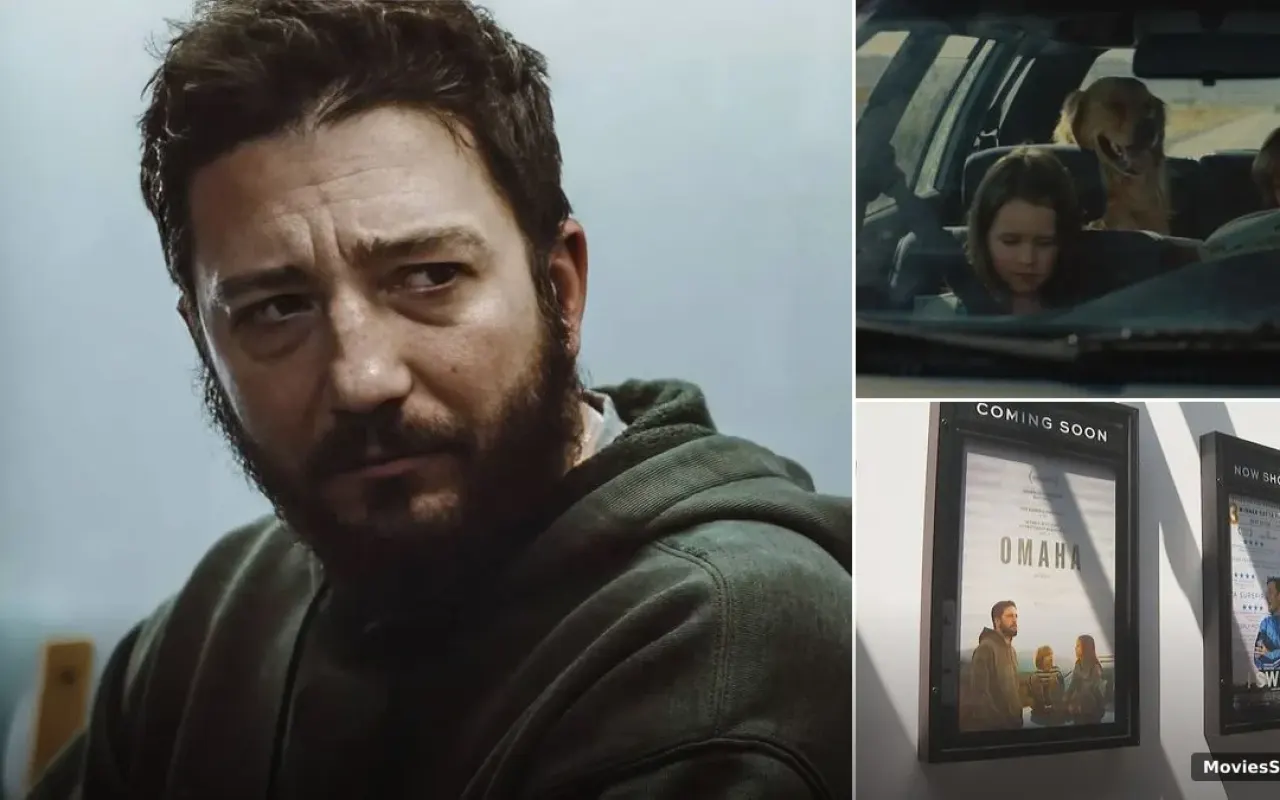
In the quiet opening moments of the new indie drama Omaha, a father wakes his children in the pre-dawn darkness of their Utah home. What follows isn't a typical family vacation, but a 1,000-mile journey fueled by absolute desperation. The Omaha movie Nebraska Safe Haven Law connection serves as the narrative’s backbone, tracing a path from economic ruin to a controversial legislative loophole that shocked the nation in 2008. Starring John Magaro, the film explores the "unintended consequences" of a law that was meant to protect infants but ended up opening a door for parents of teenagers and older children who had nowhere else to turn.
The Plot of 'Omaha': A Father’s Desperate Choice
The movie 'Omaha' is a 2025 dramatic feature directed by Cole Webley and written by Robert Machoian. It follows a widowed father (John Magaro) who takes his two children on a road trip to Nebraska to utilize the state's 2008 Safe Haven Law, which at the time allowed for the legal surrender of children of any age.
John Magaro delivers a career-defining performance as Martin, a man navigating the wreckage of a foreclosed life. Alongside his children, Ella (Molly Belle Wright) and Charlie (Wyatt Solis), Martin embarks on an indie film road trip across the desolate landscapes of Utah and Wyoming. While the children believe they are on a grand adventure—complete with a visit to the Henry Doorly Zoo—the audience slowly realizes that Martin is driving toward a final, heartbreaking solution to their poverty.
Critics have already drawn comparisons to the emotional depth of Aftersun, noting how the film captures the "growing up too fast" theme through the eyes of nine-year-old Ella. As the family's Toyota wagon sputters along I-80, the tension between parental love and economic survival creates a psychological impact that lingers long after the credits roll.
Fact vs. Fiction: The 2008 Nebraska Safe Haven Law History
While the characters in the film are fictional, the Nebraska Safe Haven Law 2008 history is startlingly real. When the Nebraska legislature passed the original bill, introduced by Senator Arnie Stuthman and signed by Governor Dave Heineman, it was intended to prevent infant surrender in dangerous locations like dumpsters or public restrooms.
However, a critical drafting error occurred. Unlike laws in the other 49 states, Nebraska’s version used the word "child" without specifying an age limit. This created a legal "safe haven" for anyone under the age of 19. The result was 127 days of legislative and social chaos:
- 36 children were surrendered at Nebraska hospitals between July and November 2008.
- Over 50% of the children came from out-of-state, including families who drove from as far as Georgia and California.
- The majority were not infants, but teenagers, some as old as 17.
- Creighton University Medical Center became a primary site for these surrenders, putting an immense psychological toll on hospital staff who had to witness the traumatic separation of families.
The Real-Life "Father of Nine" Case
The John Magaro Omaha movie character, Martin, mirrors the real-life case of Gary Staton, a widowed father who surrendered nine of his children at a Nebraska hospital in September 2008. Like Martin, Staton was overwhelmed by grief and a lack of resources following his wife's death. These parents weren't "abandoning" their children out of malice; most cited a total lack of mental health services and economic hardship as their primary motivation. They believed the foster care system was the only way their children could receive the help or food they could no longer provide.
Behind the Lens: Cole Webley and Robert Machoian
The Robert Machoian Omaha script was born from the writer's own connection to the state, having served a mission in Nebraska as a young man. Machoian originally titled the project Nebraska, but changed it to Omaha after the 2013 Alexander Payne film was released. Cole Webley director of the film, worked closely with cinematographer Paul Meyers to capture what he calls the "far horizons" of the Great Plains.
To achieve the film's authentic, gritty look, the production utilized a blend of 16mm film stock and digital sensors to emphasize the vast, uncaring distance of the American West. Most of the filming took place on location in Utah and Wyoming, with the final act shot in Omaha to ground the story in its historical reality. The film was produced by Sanctuary Content and has seen significant awards buzz for Magaro’s understated portrayal of a man at his breaking point.
The 2024 Legislative Update: Where the Law Stands Today
The "loophole" that allowed the surrender of older children was closed during a special legislative session in late 2008, which restricted the law to infants 30 days old or younger. However, the Omaha movie Nebraska Safe Haven Law relevance has been renewed by a 2024 legislative expansion.
Under the new 2024 guidelines, Nebraska has expanded the infant surrender window to 90 days. This change aims to provide more time for parents suffering from postpartum depression or extreme crisis to make a safe choice. According to the Nebraska Department of Health and Human Services (DHHS), since this expansion, only two babies have been surrendered, suggesting that the "floodgate" effect of 2008 was a unique byproduct of the age-limit omission.
Safe Haven Resources for Struggling Parents
If you or someone you know is in crisis, modern Safe Haven laws provide a legal, anonymous alternative to abandonment. Unlike the 2008 "crisis" period, current resources focus on support before surrender becomes necessary.
- National Safe Haven Alliance: Provides a 24/7 crisis hotline for parents.
- Safe Haven Baby Boxes: Some states have installed climate-controlled boxes at fire stations, though Nebraska currently focuses on hand-to-hand surrenders at hospitals.
- DHHS Assistance: Nebraska offers "Alternative to Abandonment" programs that provide immediate economic and mental health support to keep families together.
Comparison: Safe Haven Age Limits by State (2024)
| State | Age Limit for Surrender | Legal Safe Locations |
|---|---|---|
| Nebraska | Up to 90 days | Hospitals, Fire/Police Stations |
| California | Up to 72 hours | Hospitals, Fire Stations |
| Texas | Up to 60 days | Hospitals, EMS Stations |
| North Dakota | Up to 1 year | Hospitals, Local Social Services |
Key Takeaways
- The Movie: Omaha (2025) is a fictional road trip drama starring John Magaro, inspired by the real 2008 Nebraska Safe Haven crisis.
- The Loophole: In 2008, Nebraska accidentally allowed the surrender of children up to age 19, leading to 36 abandonments in just 127 days.
- The Motivation: Most parents who used the law were not negligent but were struggling with extreme poverty and a lack of mental health resources.
- The Current Law: As of 2024, Nebraska allows the legal surrender of unharmed infants up to 90 days old.
- Where to Watch: Following its premiere at Film Streams Dundee, the film is set for a nationwide theatrical release on May 8, 2026.
Conclusion: A Legacy of Empathy
The film Omaha does not offer a simple solution to the poverty it depicts, nor does it seek to demonize the parents who found themselves at the steps of Nebraska hospitals in 2008. Instead, Cole Webley and Robert Machoian have created a mirror for a system that often fails its most vulnerable members. While the 2024 law expansion provides a wider safety net for newborns, the film serves as a haunting reminder of the 36 children who became wards of the state nearly two decades ago. As Omaha moves toward its nationwide premiere, it challenges audiences to look past the statistics and see the human faces behind the headlines.