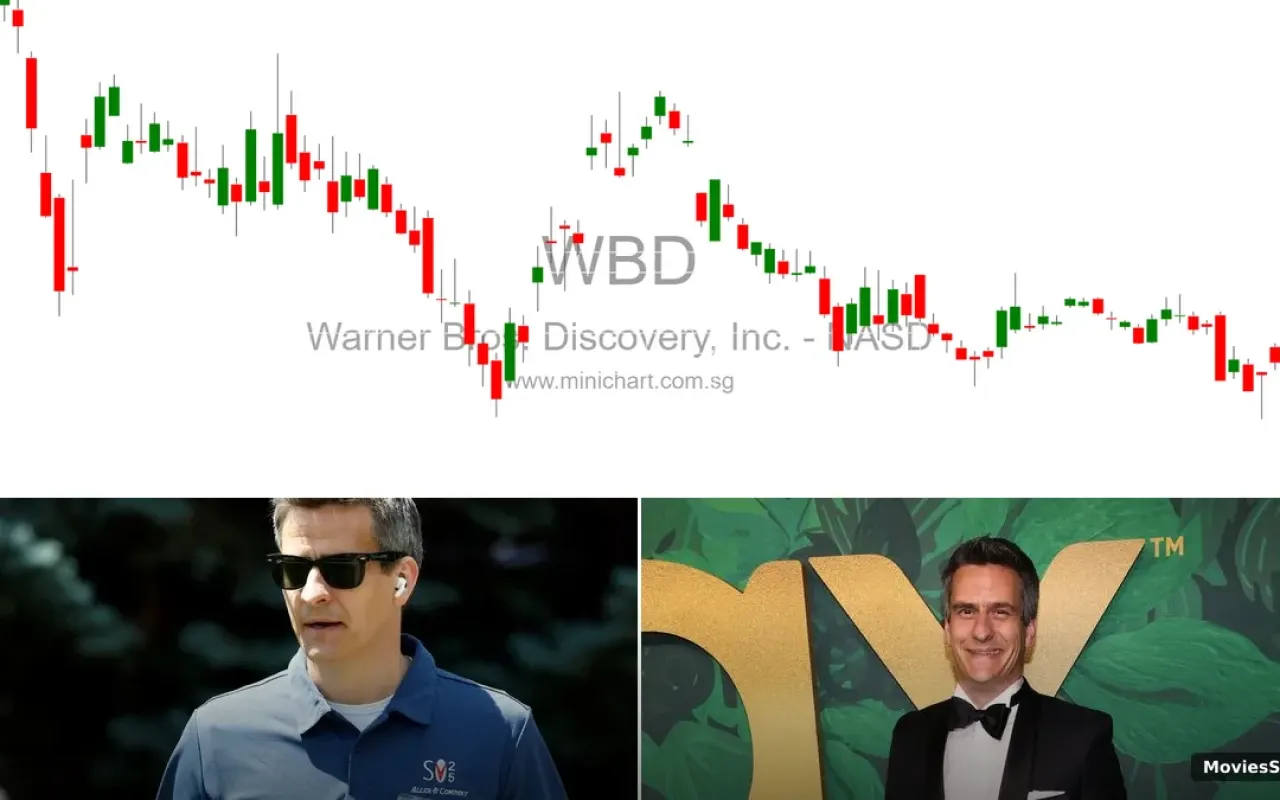
In a strategic move to ensure leadership continuity during one of the most transformative periods in media history, Warner Bros. Discovery (WBD) has officially finalized the Gunnar Wiedenfels contract renewal. The agreement, disclosed in a recent SEC 8-K filing, extends the Chief Financial Officer’s tenure through April 2028, signaling a firm commitment to financial stability as the company navigates its massive $110 billion merger with Paramount Global and Skydance Media.
Wiedenfels, a long-time lieutenant of CEO David Zaslav, has been the primary architect of WBD’s aggressive cost-cutting and debt-reduction strategies following the 2022 merger of Discovery and AT&T’s WarnerMedia. This new deal, which officially commences on July 11, 2026, replaces his prior four-year agreement and reinforces his role as the financial anchor for the entertainment giant.
Key Terms of the 2026 Employment Agreement
The Gunnar Wiedenfels contract renewal comes with a significant compensation package designed to retain his expertise through the completion of the Paramount merger and the subsequent integration phase. The Warner Bros Discovery CFO salary has been set at a base of $2.5 million annually, reflecting his increased responsibilities in a rapidly consolidating industry.
Beyond the base salary, the agreement outlines a robust incentive structure. Wiedenfels remains eligible for an annual cash bonus with a target of 175% of his base salary. However, these payouts are strictly tied to the achievement of preset performance objectives, which typically include free cash flow targets, debt reduction milestones, and EBITDA growth for the Max streaming service and linear networks.
Gunnar Wiedenfels New Contract Terms at a Glance
| Contract Component | Details & Value |
|---|---|
| Base Salary | $2.5 Million |
| Annual Bonus Target | 175% of Base Salary |
| Annual Equity Target | $10 Million |
| One-time RSU Grant | $2 Million (August 17) |
| Contract Expiration | April 28, 2028 |
In addition to the annual targets, the Gunnar Wiedenfels SEC filing reveals a one-time award of restricted stock units (RSUs) valued at $2 million, scheduled for grant on August 17. This serves as a "stay bonus," incentivizing the CFO to remain with the entity through the critical regulatory approval window for the pending Paramount transaction.
The Paramount-Skydance Merger Connection
A critical component of this contract extension is its relationship to the WBD Paramount merger update 2026. While the contract is a standalone agreement not explicitly conditioned on the merger's closing, it provides a "stability signal" to Wall Street. Investors often view the retention of a CFO during a mega-merger as a sign that the financial plumbing of the deal is in capable hands.
The merger, which is expected to close by the third quarter of 2026 pending regulatory approval from the FTC and DOJ, includes several protections for WBD. If the deal faces delays, Paramount has agreed to pay a ticking fee of 25 cents per share to WBD shareholders for each quarter until the closing. Furthermore, a staggering $7 billion termination fee is in place should the deal collapse due to regulatory hurdles.
Perhaps most notable is the golden parachute provision. Wiedenfels is eligible for a payout of approximately $120 million tied to the successful closing of the Paramount deal. This figure has drawn scrutiny from some quarters; during a recent shareholder meeting, an advisory vote on WBD executive compensation packages was rejected. However, because the vote was non-binding, the board has proceeded with the renewal to ensure WBD financial leadership stability.
Comparative Analysis: WBD vs. Paramount Executive Pay
When analyzing media executive retention strategies, Wiedenfels’ new deal places him at the upper echelon of industry CFOs. For comparison, Disney’s CFO Hugh Johnston recently joined with a package that similarly emphasizes equity over base cash, though WBD’s performance-based incentives are considered more aggressive given the company’s higher leverage ratios.
- WBD vs. Disney: While Johnston’s base is competitive, Wiedenfels’ $10 million in annual equity awards is specifically structured to reward long-term debt reduction—a metric less critical for Disney than for the debt-heavy WBD.
- Internal Parity: The renewal keeps Wiedenfels’ compensation in line with other top lieutenants under David Zaslav, ensuring a unified front during the integration of Skydance Media assets.
- Performance Focus: Unlike fixed-term contracts at some legacy media firms, Wiedenfels’ bonus is "at-risk," meaning a failure to hit Max subscriber targets or advertising revenue goals could significantly diminish his total take-home pay.
In 2025, Wiedenfels earned a total of $17.67 million. This included $8.2 million in stock awards and $2.09 million in option awards, demonstrating that the bulk of his wealth is tied directly to the appreciation of WBD’s share price.
Termination Clauses and Repatriation Benefits
The technical details of the Gunnar Wiedenfels SEC filing include specific protections for both the executive and the company. In the event of a termination without cause, Wiedenfels is entitled to a base salary continuation for up to 24 months, along with his annual target bonus for each full year in the severance period.
A unique provision in the contract involves repatriation benefits. Should his employment end under certain conditions, the company will cover the costs of returning Wiedenfels and his family to Germany. This clause highlights the personal stakes involved for the executive, who moved his life to the U.S. to oversee the Discovery Global initiatives and the subsequent WarnerMedia integration.
The contract also includes a "change in control" clause. If Wiedenfels resigns for "good reason"—such as a significant reduction in his role or a relocation of the corporate headquarters—within 12 months of the Paramount merger closing, his equity awards will vest immediately. This ensures that if the combined WBD-Paramount entity chooses a different financial path, the CFO is protected from the volatility of the transition.
Historical Context: From AT&T to Paramount
To understand the value WBD places on Wiedenfels, one must look at his historical performance during the AT&T/WarnerMedia merger. He was tasked with finding $3.5 billion in "synergies"—a corporate euphemism for cost-cutting. He exceeded those targets, which allowed WBD to begin paying down its massive debt load faster than analysts predicted.
Interestingly, the new contract comes after the quiet cancellation of the 'Discovery Global' spinoff plan. Originally, there was speculation that Wiedenfels might lead a separate international entity, but the board ultimately decided that his expertise was more valuable at the core of the parent company, especially with the complexities of merging two global streaming footprints in Max and Paramount+.
Key Takeaways
- Extended Tenure: Gunnar Wiedenfels is now under contract as WBD’s CFO through April 2028.
- Compensation Boost: His base salary rises to $2.5 million, with a $10 million annual equity target.
- Merger Stability: The renewal is a strategic move to reassure investors during the $110 billion Paramount-Skydance merger.
- Shareholder Friction: Despite a rejected advisory vote on pay, the board prioritized leadership continuity.
- Regulatory Safeguards: The contract includes protections against termination during the "change in control" period following the merger.
Conclusion: A Future Defined by Consolidation
The Gunnar Wiedenfels contract renewal is more than just a personnel update; it is a declaration of intent. By locking in their CFO through 2028, Warner Bros. Discovery is signaling to the market that they have a long-term plan for the post-merger landscape. Whether Wiedenfels will eventually become the CFO of the combined WBD-Paramount empire remains to be seen, but for now, he is the man holding the checkbook for the most ambitious consolidation effort in Hollywood history.
As the industry watches for regulatory approval in the coming months, Wiedenfels’ focus will likely remain on the "performance objectives" that govern his bonus: scaling Max to profitability and managing the "ticking fee" dynamics that will define WBD’s balance sheet for the next two years.