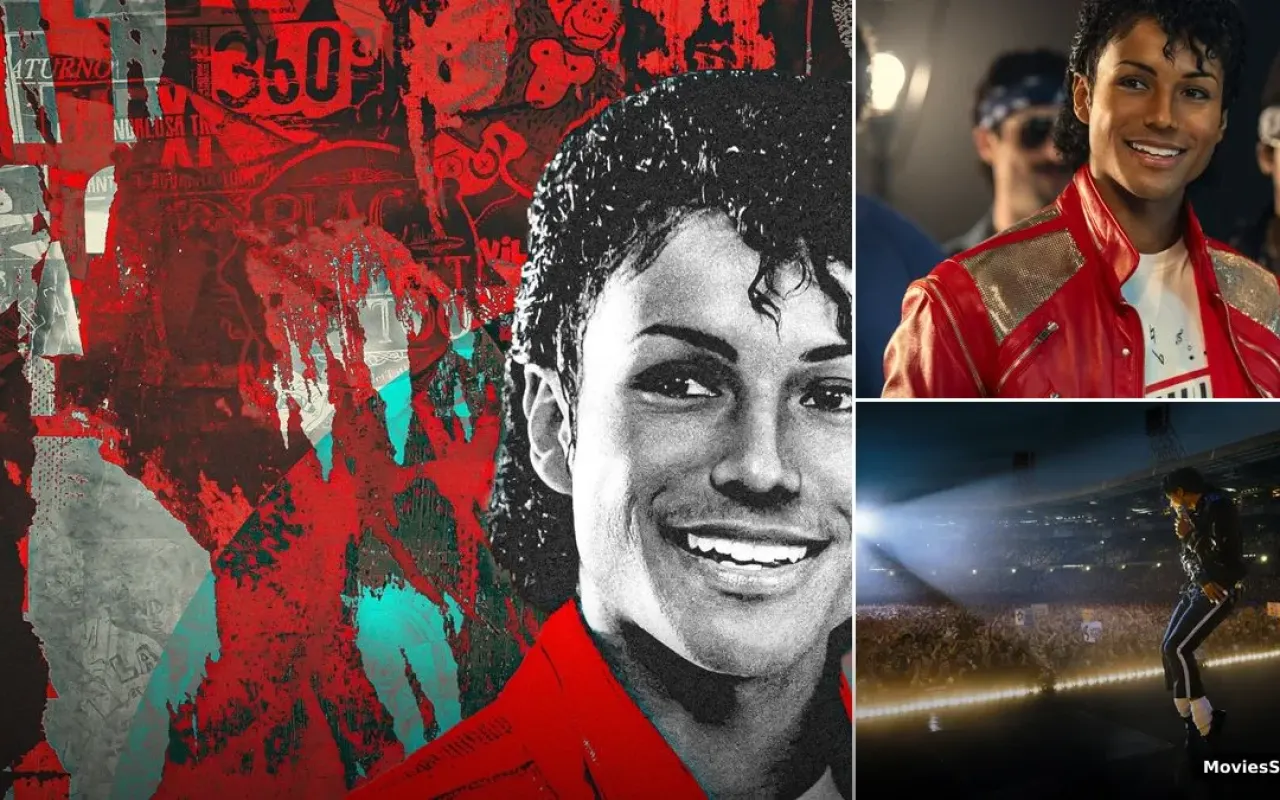
The global cinematic landscape shifted this weekend as the Michael Jackson biopic box office numbers defied every industry projection, cementing the film's status as a cultural phenomenon. Despite a production plagued by legal hurdles and a staggering $50 million reshoot bill, the film, titled Michael, has moonwalked past its predecessors to claim the throne of the music biopic genre. Within its first few days of release, the feature has not only revitalized the theatrical market but has also sparked a fierce debate over historical accuracy, the ethics of estate-authorized narratives, and the enduring power of the King of Pop’s legacy.
Breaking Records: The 'Michael' Box Office Explosion
The Michael Jackson biopic 'Michael' set a new record for music biopics with a $97.2 million domestic opening and a $218.8 million global debut, surpassing previous record-holders like Bohemian Rhapsody and Straight Outta Compton. This explosive start represents a significant overperformance; early tracking had suggested a domestic bow closer to $50 million, a figure the film nearly doubled by Sunday evening.
The film’s dominance was not limited to North America. Distributed internationally by Universal, Michael captured $121.6 million across 84 foreign markets. In the United Kingdom and Ireland, it secured an £8.4 million opening weekend, accounting for a massive 68% of the total box office in those territories. This performance is even more impressive considering it outpaced the debut of Oppenheimer ($80 million domestic), making it the biggest opening for any biopic in history, regardless of subject matter.
Lionsgate executives noted that the film’s success was driven by "massive engagement" across every conceivable demographic. While the film over-indexed with Black moviegoers (40%), it saw balanced support from Latino (26%) and white (26%) audiences. The broad appeal suggests that the Jaafar Jackson Michael Jackson movie has successfully tapped into a multi-generational nostalgia that transcends the controversies surrounding its subject.
The $50 Million Secret: Why the Third Act Was Scrapped
Behind the glittering box office numbers lies one of the most expensive and legally complex productions in modern Hollywood history. The Michael movie reshoots were not merely for aesthetic polish; they were a mandatory pivot necessitated by a decades-old legal document. Originally, the film’s third act was designed to tackle the 1993 child sexual abuse allegations, specifically focusing on the accusations made by Jordan Chandler.
However, during the post-production phase, legal teams rediscovered the specific terms of the Jordan Chandler NDA Michael Jackson signed during the 1994 settlement. That agreement, which included a reported $23 million payment, contained a restrictive clause prohibiting the Jackson estate from ever portraying or mentioning Chandler in any future film or media production. This discovery effectively rendered the final third of the existing film legally unreleaseable.
- The Pivot: Director Antoine Fuqua and producer Graham King were forced to scrap the Chandler-centric footage entirely.
- The Reshoots: The production underwent a 20-day reshoot period to restructure the narrative.
- The Cost: These reshoots added approximately $50 million to the budget, bringing the total production cost to roughly $200 million.
- The Narrative Shift: The film was reworked to conclude in 1988, ending with the Bad World Tour, thereby avoiding the 1990s and 2000s controversies altogether.
This Michael biopic controversy has led to accusations of "sanitization," but from a studio perspective, it was a necessary $50 million insurance policy against a potentially catastrophic breach of contract lawsuit.
Critics vs. Fans: The 38% to 97% Disconnect
Few films in recent memory have exposed such a cavernous divide between professional critics and the general public. On Rotten Tomatoes score metrics, Michael sits at a dismal 38% from critics, who have largely labeled the film a "whitewash" that ignores the darker chapters of Jackson’s life. Conversely, the audience score stands at a near-perfect 97%, the highest ever recorded for the music biopic genre.
Critics argue that by ending the story in 1988, the film functions as a high-budget promotional tool for the Jackson estate rather than an objective biography. They point to the involvement of estate co-executors like John Branca and family members as evidence of a controlled narrative. However, moviegoers have responded with an CinemaScore A-, signaling that the public is more interested in the "King of Pop" persona and the technical brilliance of the performances than a judicial re-examination of his personal life.
This disconnect highlights a growing trend in the "authorized biopic" sub-genre, where the emotional resonance of the music—anchored by hits like "Billie Jean," "Beat It," and "Smooth Criminal"—outweighs the demand for investigative depth. For many fans, the film serves as a 160-minute celebration of a talent they feel has been unfairly maligned by documentaries like Leaving Neverland.
Jaafar Jackson: More Than Just a Resemblance?
The weight of the film rests on the shoulders of Jaafar Jackson, Michael’s real-life nephew. His casting was initially viewed with skepticism, but his performance has become the film’s most praised element. To prepare for the role, Jaafar underwent a rigorous vocal training and physical transformation process, reportedly studying his uncle’s movements with the intensity of a method actor.
One of the film's technical highlights is the recreation of the 1988 "Bad" concert scene. This sequence utilized over 1,000 extras to capture the frenetic energy of Jackson’s peak touring years. While the film uses Michael’s original vocals for the studio tracks, Jaafar’s live performance singing and his uncanny ability to mimic the "Peter Pan" energy of his uncle have provided the film with its emotional core.
Interestingly, the film’s release has triggered a massive Spotify streaming lift for both Michael Jackson’s catalog and Jaafar Jackson’s own digital presence. This "biopic effect" is a key reason why major labels and estates are increasingly turning to cinema to monetize legacy acts. The Jaafar Jackson dance sequences, in particular, have gone viral on social media, acting as a secondary marketing engine that Lionsgate didn't have to pay for.
The Missing Years: A Timeline of the 1988-1993 Transition
By choosing to end the film in 1988, the production leaves a significant historical gap that many viewers are now researching independently. This five-year window was arguably the most transformative of Jackson's life. Following the Bad tour, Jackson began his transition from a global superstar into a more isolated, eccentric figure at Neverland Ranch.
During this period, Jackson released the Dangerous album, signed a record-breaking deal with Sony, and performed his legendary Super Bowl XXVII halftime show. It was also the era when his friendship with Macaulay Culkin became a media fixture and the Pepsi commercial incident injuries began to take a visible toll on his health and appearance. By skipping these years, the film avoids the complexities of his changing skin color and the initial 1993 investigation, a move that legal experts suggest was the only way to keep the film "family-friendly" and protect the Jordan Chandler settlement terms.
"The decision to cut the story off at 1988 is a strategic retreat," says one legal analyst. "In 2026, the enforceability of the 1994 NDA is still ironclad. If the estate had included even a fictionalized version of those events, they would have opened themselves up to massive litigation from the Chandler family."
Global Strategy: Why Japan is the Key to $1 Billion
While Michael is already a massive hit in the U.S. and Europe, its path to the elusive $1 billion mark depends heavily on its international marketing strategy, particularly in Japan. Unlike the simultaneous global launch in other territories, the Japanese release is scheduled for June. This is a calculated move by Lionsgate and local distributors to capitalize on the anniversary of Jackson's death.
Jackson’s fanbase in Japan is historically among the most loyal in the world. For context, the 2009 documentary This Is It earned $57 million in Japan alone. By staggering the release, the studio can build a second wave of global box office momentum just as the domestic run begins to taper off. This strategy, combined with the film’s strong performance in South Asia and Latin America, puts Michael in a position to potentially double the lifetime gross of Bohemian Rhapsody.
Psychological Depth: The Peter Pan Syndrome and Symbolism
Beyond the music, Michael attempts a psychological analysis of the "Peter Pan Syndrome" that defined Jackson's public persona. The film uses Neverland Ranch not just as a setting, but as a symbol of Jackson’s refusal to grow up—a direct reaction to the "lost childhood" he experienced under the overbearing Joseph Jackson (played by Colman Domingo).
The narrative explores his relationships with industry titans like Quincy Jones and Berry Gordy, framing them as the professional father figures he sought to replace his biological father. However, the film’s portrayal of these relationships has drawn criticism from family members like Paris Jackson, who famously distanced herself from the production, calling the film's depiction of their family life "fantasy land." This internal family friction adds a layer of irony to a film that is otherwise presented as a unified family tribute.
Key Takeaways
- Record-Breaking Start: Michael is the highest-grossing biopic opening of all time with $218.8M globally.
- The NDA Hurdle: A $50M reshoot was required to remove all references to Jordan Chandler due to a 1994 legal settlement.
- Audience Approval: Fans have largely ignored the 38% critic score, giving the film a 97% audience rating and an A- CinemaScore.
- Technical Mastery: The film utilized 1,000 extras for concert scenes and features a breakout performance by Jaafar Jackson.
- Future Prospects: With a sequel already in development, the "Michael Jackson Cinematic Universe" is just beginning.
The Road Ahead: Will There Be a Biopic Sequel?
As the Michael Jackson biopic box office continues to climb, the question is no longer *if* there will be a sequel, but *when*. Lionsgate chairman Adam Fogelson has already confirmed that a follow-up is in development, which will likely tackle the 1990s and the 2005 trial. This presents a massive creative challenge: how does the estate tell the story of the most controversial years without violating the NDAs that forced the first film to be reshot?
The success of Michael proves that the public's appetite for the King of Pop is undiminished. Whether the sequel will offer the Michael Jackson biopic historical accuracy that critics crave, or continue the celebratory path of the original, remains to be seen. For now, the film stands as a testament to the fact that in the world of entertainment, the music often speaks louder than the man’s complicated reality. The "story continues," and the world will undoubtedly be watching.