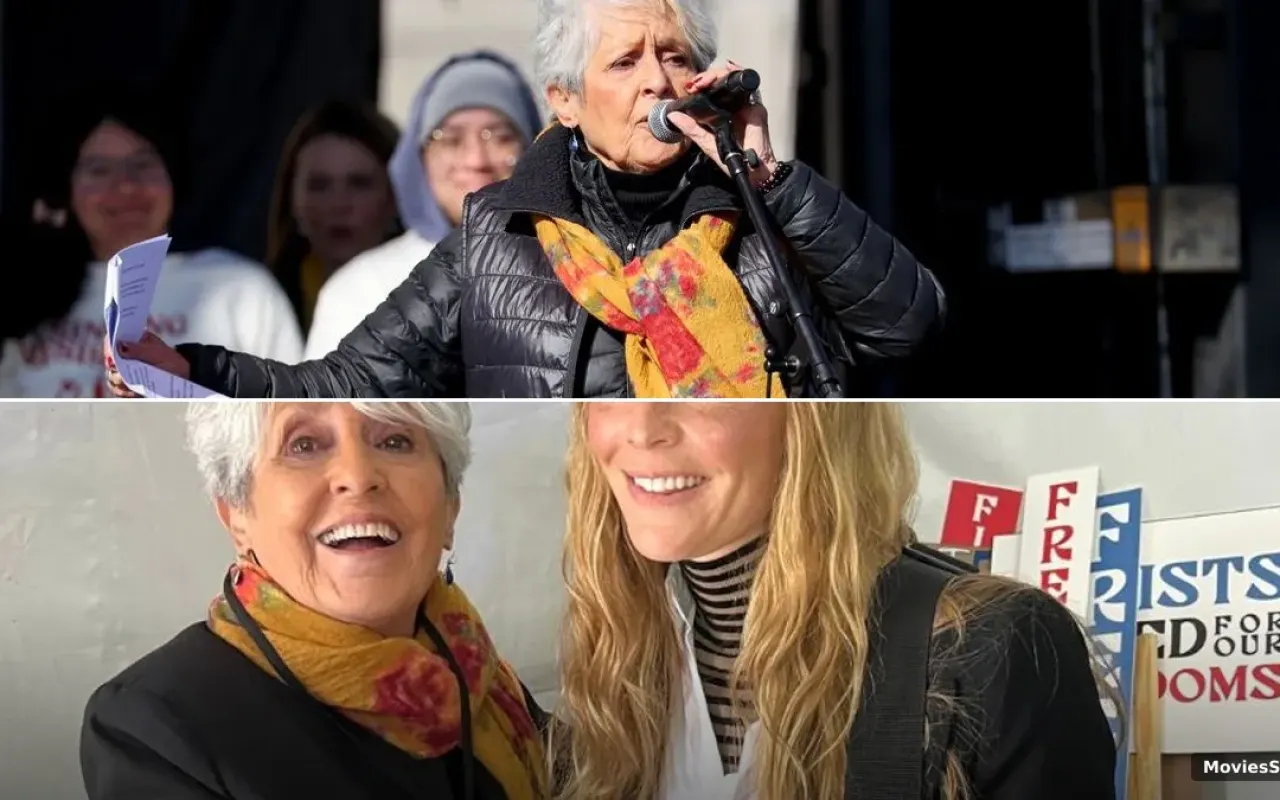
Joan Baez isn’t just a legend; she’s the blueprint for what it means to be a "disruptor" before the term was hijacked by tech bros. From marching with Martin Luther King Jr. to being arrested for blocking draft induction centers during the Vietnam War, her life has been a masterclass in putting skin in the game. That’s why, when she sits down for an interview and starts talking about Joan Baez pop stars activism, the industry listens—or at least, it should.
In a recent deep-dive conversation, Baez didn't hold back on her disappointment regarding the current crop of "young women songwriters" dominating the charts. While she acknowledges their talent, she’s questioning why the biggest names in music are staying silent while democracy feels like it’s on life support. Her message is simple: you have the money, you have the platform, so why aren't you taking "the step"?
What did Joan Baez say about modern pop stars?
Joan Baez expressed frustration with wealthy modern pop stars (like Taylor Swift and Olivia Rodrigo) for failing to use their massive platforms for political activism, specifically urging them to 'take that little step' beyond their 'richer than God' status. She argued that their immense wealth should provide the security needed to take real risks.
The 'Wiser Than Me' Interview: What Joan Baez Actually Said
The spark for this latest discourse came from the Wiser Than Me Joan Baez interview with Julia Louis-Dreyfus. In a podcast designed to mine wisdom from iconic women, Baez dropped a truth bomb that immediately went viral. When asked about the lack of a political stance from today’s A-listers, Baez admitted she "cocks her head" at the sight of sold-out stadium tours where the messaging remains strictly brand-safe.
“I understand where they’re coming from,” Baez said, offering a moment of grace before the hammer dropped. “The young people right now, some are writing amazing stuff. A few are willing to speak out.” But then came the kicker that’s been echoing across TikTok and X: “Why can’t they just take that little step? Because they’re richer than God, you know, most of them. So, that little step.”
For Baez, "that little step" isn't just a vague suggestion. It’s a call to move past performative activism vs genuine advocacy. She isn't looking for a black square on Instagram or a generic "go vote" Story. She’s looking for the kind of social justice work that actually risks something—whether that’s ticket sales, brand deals, or the comfort of a neutral public image.
Naming Names: The Joan Baez Taylor Swift Critique
While Baez didn't explicitly name Taylor Swift, Olivia Rodrigo, Sabrina Carpenter, or Chappell Roan in the audio, the subtext was loud enough to shatter glass. The Joan Baez Taylor Swift critique is particularly pointed because Swift currently wields more cultural and economic power than perhaps any artist in history. In 2026, a single endorsement or a truly political anthem from Swift could shift national metrics, yet her music remains largely focused on the personal and the confessional.
Here is the reality of the commercial risk:
- The Eras Tour Economy: With a tour grossing over $1 billion, the pressure to maintain a "big tent" fanbase is astronomical.
- Corporate Pressure: Modern celebrity branding is tied to massive entities like Live Nation and Disney. Taking a hard stance can trigger "morality clauses" or insurance hikes for major tours.
- The Algorithm: Spotify algorithms favor "mood" music—songs that fit into "Chill Vibes" or "Confidence Boost" playlists. Hard-hitting protest music in 2026 doesn't exactly make for easy listening while you're at the gym.
Critics of Baez’s view argue that the evolution of the protest song has moved from the lyrics to the logistics. They point to Swift’s massive donations to food banks in every city she visits or Olivia Rodrigo’s "Fund 4 Good," which supports reproductive rights. But to Baez, these are safe, philanthropic moves. They aren't the "step" of standing on a stage and demanding a political stance that might actually alienate half the room.
The Exceptions: How Maggie Rogers and Brandi Carlile are Doing it Right
It wasn't all shade, though. Baez was quick to highlight the artists she believes are carrying the torch. She specifically shouted out Maggie Rogers political activism, calling her a "pal" who is doing the work. Rogers was notably "front and center" at a rally against ICE (Immigration and Customs Enforcement) recently, and she famously shared the stage with Baez at an AOC/Bernie Sanders rally back in April 2025.
Baez also praised Brandi Carlile, a folk music icon in her own right, who has made advocacy work a pillar of her career. Whether it's fighting for LGBTQ+ rights or supporting children in conflict zones, Carlile and Rogers represent a middle ground: they are commercially successful enough to play major venues, but they haven't let their stadium tours sanitize their souls.
1966 vs. 2026: Has the Cost of Activism Become Too High?
To understand why Baez is so frustrated, you have to look at the 1960s. During the civil rights movement and the Vietnam War protest era, being political was the "cool" thing to be. It was the counterculture. Today, the "counterculture" is harder to find because everything is absorbed into the corporate machine.
The music industry corporate pressure 2026 is a different beast than what Baez faced. In the 60s, you might get blacklisted from a radio station. In 2026, you could lose a $50 million partnership with a global brand or face a targeted harassment campaign from bot farms. There’s also the very real issue of security; modern stars face a level of physical threat that makes "taking a step" a literal safety concern for their fans.
However, Baez’s own recent work shows she isn't just stuck in the past. Her poem "Little Green Worm" was a visceral, poetic takedown of the lack of empathy in the Trump administration. Comparing "Little Green Worm" to modern pop lyrics reveals a stark gap. While pop stars write about "The Smallest Man Who Ever Lived" in a metaphorical, romantic sense, Baez writes about the "assault on our democracy" with the directness of a news report.
The Data: Does the Public Actually Want Political Music?
There is a disconnect between what legends like Baez want and what the market rewards. If we look at historical chart data, protest music peaked in the late 60s and early 70s. Today, the Top 10 is dominated by "escapist" pop.
Recent polling suggests that while Gen Z is the most politically active generation in decades, they don't necessarily look to their music for it.
- 62% of Gen Z listeners say they use music primarily as an "escape" from the news.
- 45% say they prefer artists to keep their politics on social media rather than in their lyrics.
- But, 70% say they are more likely to support a brand (or artist) that aligns with their values.
This creates a weird paradox. We want our stars to *be* good people, but we want their music to stay "vibey." Baez is arguing that this "vibey" neutrality is exactly how we lose our rights. The pop star political endorsements impact is real, but Baez is asking for something deeper: for the music itself to become a weapon again.
Key Takeaways
- The "Richer Than God" Argument: Joan Baez believes that because today’s pop stars have unprecedented wealth, they have no excuse to avoid the commercial risk of political activism.
- The "Little Step": This refers to moving beyond safe philanthropy and into direct social justice advocacy and protest music.
- Praise for Rogers and Carlile: Baez identifies Maggie Rogers and Brandi Carlile as the primary exceptions to the "silent" pop star trend.
- The 60s Influence: Baez’s 60-year career of Vietnam War protest and civil rights movement work informs her skeptical view of modern "brand-safe" stars.
- The Corporate Barrier: Modern stadium tours and celebrity branding create a financial ecosystem that discourages artists from taking a political stance.
Conclusion: The Future of the Protest Song
Is Joan Baez pop stars activism a relic of the past, or a necessary wake-up call? While it’s easy to dismiss her as a "folk music icon" who doesn't understand the complexities of the 2026 digital landscape, her core point is hard to argue with: power that isn't used to protect the vulnerable is just vanity.
The "young women songwriters" she mentions—the Swifts and the Rodrigos—are undoubtedly brilliant. They’ve mastered the art of the personal. But as the world becomes increasingly polarized, the "little step" Baez is asking for might become mandatory. Whether through lyrics, advocacy work, or using their stadium tours as town halls, the next era of pop music will likely be defined by who chose to speak and who chose to stay "richer than God" in silence. As Baez proves, the music stays, but the courage is what we remember.