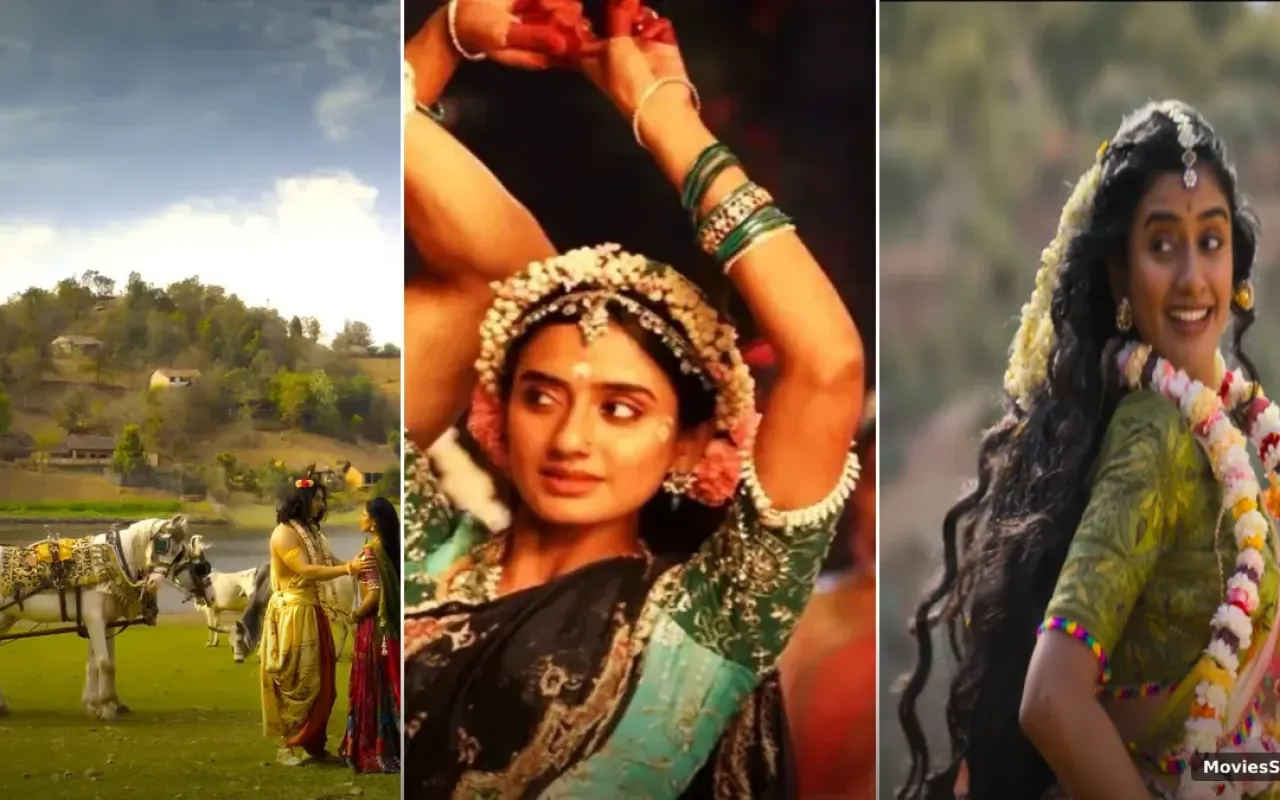
The cinematic landscape of Indian mythology is undergoing a radical transformation, moving away from carbon-copy retellings toward nuanced, character-driven epics. At the forefront of this shift is Krishnavataram Part 1: The Heart (also known as Hridayam), a visually arresting and emotionally charged exploration of the Dwarkadhish. This Krishnavataram Part 1 review examines how director Hardik Gajjar balances divine grandeur with the raw, human complexities of love and duty.
What is Krishnavataram Part 1 about? Krishnavataram Part 1: The Heart is a mythological epic directed by Hardik Gajjar that explores Lord Krishna's journey from Dwarka to Kurukshetra. Unlike traditional retellings, the film is uniquely told through the perspective of Satyabhama, focusing on her devotion and key events like the Syamantaka Mani incident and the Vastraharan.
The Core Premise: Lord Krishna’s Untold World
While most adaptations of the Krishna saga focus on the Bhagavad Gita or his childhood antics in Gokul, Krishnavataram Part 1: The Heart takes a bolder path. It draws heavily from the literary influence of Raam Mori, specifically his book Satyabhama, to present a narrative filtered through the eyes of Krishna’s most spirited and misunderstood consort. The story begins in the golden city of Dwarka, tracing the timeline toward the inevitable Kurukshetra war, but the focus remains internal—exploring the "heart" of the avatar.
This adaptation bridges the gap between the Harivamsa and the Vishnu Purana, offering a theological perspective on the "Satyabhama-centric" narrative. In traditional texts, Satyabhama is often simplified as the "jealous" wife. However, the film provides a Satyabhama character arc analysis that portrays her as a symbol of intense, possessive devotion—a foil to Radha's selfless love. By focusing on her journey, the film explores the weight of being a queen to a god who belongs to everyone but her.
Cast Performances: Siddharth Gupta and the New Faces
The Krishnavataram movie cast is a daring experiment in talent scouting, featuring four major debutants in a high-budget epic. This industry strategy, spearheaded by producer Sajan Raj Kurup of Creativeland Studios, breathes fresh life into roles that are often burdened by the baggage of previous iconic portrayals.
- Siddharth Gupta as Lord Krishna: Taking on a role previously defined by actors like Sourabh Raaj Jain is no small feat. In this Siddharth Gupta Krishna movie debut, the actor finds a unique rhythm. He captures the mischief of the youth and the strategic stillness of the king. His portrayal emphasizes Krishna’s "human" exhaustion and emotional detachment, making the deity relatable.
- Sanskruti Jayana as Satyabhama: Jayana is the film’s emotional anchor. She navigates the transition from a fierce, independent princess to a vulnerable queen with remarkable poise. Her performance validates the film's decision to shift the perspective toward her.
- Sushmitha Bhat as Radha: Bhat brings a quiet, ethereal grace to the Sushmitha Bhat Radha portrayal. Her chemistry with Gupta provides the emotional foundation for the film’s first half, making the eventual separation feel genuinely tragic.
- Nivaashiyni Krishnan as Rukmini: Representing "patience" and "divinity," Krishnan’s Rukmini is the stabilizing force in the Dwarka palace. Her stillness serves as a perfect contrast to Satyabhama’s fire.
Adding a layer of gravitas to the production is Jackie Shroff, whose impactful cameo serves as a narrative bridge, though his presence feels more like a spiritual guide than a traditional character.
Technical Brilliance: VFX, Music, and Direction
Director Hardik Gajjar, renowned for his work on Devon Ke Dev... Mahadev, makes a seamless transition to the big screen. His experience in televised mythology allows him to handle the scale of Indian mythological cinema without losing the intimacy of the characters. The production design is expansive, with Dwarka rendered in a way that feels lived-in rather than just a CGI backdrop.
A VFX Spectacle with Soul
In a Krishnavataram vs Adipurush VFX comparison, Gajjar’s film wins on artistic cohesion. While Adipurush struggled with uncanny valley aesthetics, Krishnavataram uses VFX to enhance the "painting-like" quality of its frames. The internal pipeline at Creativeland Studios Entertainment has focused on lighting and texture, ensuring that the divine elements—like the Sudarshana Chakra—feel integrated into the physical world. While some smaller sequences lack the polish of a Hollywood blockbuster, the overall visual ambition is commendable for an independent studio effort.
The Musical Landscape of Prasad S
The soul-stirring score by Prasad S is perhaps the film’s strongest technical asset. The Krishna Govinda song is already trending as a devotional anthem, but it is the background score that does the heavy lifting. The music doesn't just underscore the action; it translates the emotional subtext of Satyabhama’s longing and Krishna’s divine burden. The use of traditional instruments paired with modern orchestral arrangements creates a timeless soundscape.
Mythological Accuracy: The Syamantaka Mani and Vastraharan
For audiences seeking depth, the film provides a detailed breakdown of the Syamantaka Mani incident. This myth, often glossed over in shorter retellings, is crucial for understanding Krishna’s relationship with Satyabhama. The film depicts the false accusation against Krishna for the theft of the sun-gem, his battle with Jambavan, and his eventual marriage to Satyabhama as a resolution to the conflict. This sequence is handled with historical and theological care, adhering closely to the Bhagavata Purana.
The Vastraharan incident at the Hastinapura court is another pivotal moment. Rather than focusing solely on the spectacle of the miracle, the film highlights the emotional weight of the scene through Krishna's eyes, emphasizing the failure of the Kuru elders. It serves as the narrative pivot that moves the story from the personal "Heart" of Dwarka to the political "Duty" of the upcoming war.
The costume designers deserve a specific shout-out for their "authentic" look. Moving away from the over-the-top, plastic-looking armor of recent epics, the attire in Krishnavataram Part 1 uses organic fabrics, intricate hand-embroidery, and period-accurate jewelry that reflects the Vedic era’s aesthetic without feeling like a costume drama.
The Krishnavataram Trilogy: What’s Next?
With a Krishnavataram release date of May 7, 2026, the film has already begun its journey at the box office. Despite a modest opening of 50 lakh, the 100% growth on the second day indicates that word-of-mouth is working in its favor, particularly among family audiences and the devotional demographic. This bodes well for the Krishnavataram trilogy roadmap.
Producer Sajan Raj Kurup’s business strategy involves building a "Mythology IP" that can sustain multiple installments. Part 2 is expected to delve deeper into the Kurukshetra war and the complex politics of the Pandavas, while Part 3 will likely cover the aftermath and the Mausal Parva (the end of the Yadu dynasty). The "Heart" of the first part has set a high bar for emotional storytelling that the subsequent action-heavy sequels will need to match.
Key Takeaways
- Unique Perspective: The film stands out by telling the story through Satyabhama, based on Raam Mori’s book summary of her complex character.
- Stellar Music: The score by Prasad S and the Krishna Govinda song are highlights that elevate the cinematic experience.
- Visual Artistry: A successful VFX spectacle that prioritizes artistic frames over raw CGI power.
- New Talent: Siddharth Gupta and the three female leads successfully humanize divine figures.
- Theological Depth: Covers the Syamantaka Mani incident with more detail than most previous TV portrayals.
Conclusion: A New Benchmark for Devotional Cinema
Krishnavataram Part 1: The Heart is more than just a mythological epic; it is a meditation on the cost of divinity. By choosing to focus on the interpersonal relationships within the Dwarka palace, Hardik Gajjar has created a film that resonates on a human level while maintaining the awe of the divine. It is a bold, visually stunning start to a trilogy that promises to redefine how we view the life of Lord Krishna. Whether you are a devotee, a student of mythology, or a lover of grand cinema, this film offers a "heart" that beats with genuine emotion and artistic integrity.