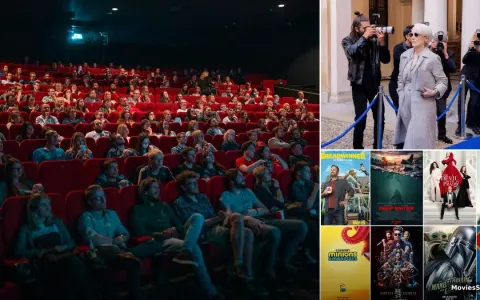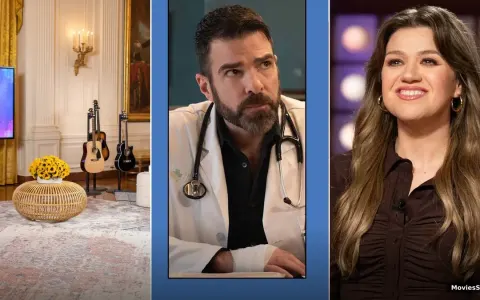
If you thought Jane Schoenbrun was done deconstructing our collective childhood trauma, think again. After making everyone who grew up on the weird side of the internet feel seen with We’re All Going to the World’s Fair and I Saw the TV Glow, Schoenbrun has returned to the Cannes Film Festival 2026 with something even more ambitious, horny, and deeply unsettling. Their latest feature, Teenage Sex and Death at Camp Miasma, is a neon-soaked, meta-textual middle finger to traditional slasher tropes that manages to be both a satire of Hollywood’s "woke" remake machine and a devastatingly personal exploration of queer identity.
The buzz out of the Palais is deafening. This isn't just another Jane Schoenbrun new movie; it’s a full-blown cultural moment. While the title sounds like a grindhouse flick you’d find in a dusty basement, the execution is pure high-art psychological horror. It’s a film that asks: what happens when the "final girl" grows up, goes into hiding, and then has to deal with a millennial filmmaker trying to "reclaim" her trauma for a streaming platform?
The 100% Rotten Tomatoes Debut: Why Critics Love Camp Miasma
As of its premiere, Teenage Sex and Death at Camp Miasma holds a perfect 100% Rotten Tomatoes rating based on 24 initial reviews. Critics are calling it Schoenbrun’s most "mature" work, though that word feels a bit ironic given the title. Where I Saw the TV Glow used a fictional TV show as a metaphor for the trans experience, Camp Miasma takes a chainsaw to the slasher tropes of the 80s to examine the literal bodies we inhabit.
The Camp Miasma review cycle has been dominated by one sentiment: this is "therapy-as-filmmaking" but with a much higher budget and sharper teeth. While some skeptics argue the film is self-indulgent, most agree that the chemistry between the leads and the sheer audacity of the meta-horror structure make it impossible to look away. It’s a queer slasher film that doesn't just feature queer characters—it uses the very mechanics of the genre to discuss sexual awakening and the "hole at the bottom of the lake" that represents our deepest, most repressed desires.
The film’s 112-minute runtime is packed with Schoenbrun’s signature atmospheric dread, but there’s a new, punchy comedic layer here. It’s as if the director decided to take all the "woke remake" discourse from Twitter and put it into a blender with a Gillian Anderson horror movie. The result is a film that is as much about the act of watching horror as it is about the horror itself.
What is Teenage Sex and Death at Camp Miasma about?
Teenage Sex and Death at Camp Miasma is a meta-horror comedy directed by Jane Schoenbrun, starring Hannah Einbinder as Kris, a queer filmmaker tasked with remaking a transphobic 80s slasher franchise. The plot follows Kris as she tracks down the original "final girl," Billy Presley (Gillian Anderson), leading to a surreal sexual awakening and a confrontation with the franchise's legendary villain, Little Death.
Plot Summary: A Film-Within-A-Film Slasher
The narrative follows Kris (played by Hannah Einbinder), a "grown-up intellectual queer filmmaker" whose previous work includes a high-concept short film titled Psycho from the Perspective of the Shower Curtain. Kris is hired by a major studio (implied to be a Neon or A24 style outfit) to reboot Camp Miasma, a fictional 80s franchise that is essentially a stand-in for Friday the 13th or Halloween.
Kris knows she’s being used to "launder" the franchise’s transphobic origins—the original films featured a spear-wielding villain named Little Death who targeted teens for their sexual "transgressions." But Kris has a personal obsession with the series. To her, Camp Miasma wasn't just a movie; it was the spark for her sexual awakening. She travels to the Pacific Northwest (specifically the lush, rainy woods near Snoqualmie) to find the original final girl, Billy Presley, played by a transformed Gillian Anderson.
The "wild part" of the structure is the 20-minute film-within-a-film segment. Schoenbrun actually shot scenes from the fictional 1984 Camp Miasma, complete with period-accurate grain, 16mm fuzziness, and a cast that includes Eva Victor. We see the "Little Death" villain lore in all its glory: a figure who was drowned in the lake by vengeful counselors and returned to hunt anyone seeking pleasure. The "hole at the bottom of the lake" becomes a recurring motif—a literal and metaphorical place where "the movies come from" and where Kris’s own insecurities are buried.
Thematic Deep Dive: Queer Identity and the Slasher Genre
Schoenbrun is clearly interested in how the trans filmmaker perspective can reinvent the "Final Girl" archetype. In Camp Miasma, the Final Girl isn't just a survivor; she's a relic. Gillian Anderson plays Billy Presley as a Norma Desmond-esque figure, living in a house filled with Camp Miasma memorabilia, watching her own films on a loop. It’s a Gillian Anderson career resurgence performance that balances camp with profound loneliness.
The film tackles the transphobic origins of the slasher genre head-on. Kris and Billy watch the original film together, and Kris whispers, "This part is transphobic," to which Billy simply replies, "Shhhhhh." It’s a hilarious but stinging look at how we consume problematic media that nonetheless shaped us. The horror movie meta-commentary here is much more direct than in Schoenbrun’s previous work. They are explicitly comparing this remake to real-life reboots like Halloween (2018), questioning if bringing back these "zombie franchises" actually does anything for the culture or if it’s just a way to avoid dealing with the present.
The core of the movie, however, isn't the kills—it’s the sexual awakening of Kris. The film is obsessed with the idea of "not being able to cum," using the slasher's "interrupted sex" trope as a metaphor for queer sexual insecurity and the shame of the body. There is a "hard-won" intimacy between Kris and Billy that feels both beautiful and deeply awkward, pushing the boundaries of the mentor/protégent relationship into something much more fluid and sapphic.
Cast and Performances: Anderson and Einbinder's Chemistry
Let's talk about the Gillian Anderson of it all. Sporting a voluminous curly hair transformation for the role, Anderson is electric. She plays Billy Presley with a "fading belle" energy that is both alluring and terrifying. She is the object of Kris’s desire, but she’s also a warning of what happens when you let a fictional world consume your real life.
- Hannah Einbinder as Kris: Einbinder brings the same dry, vulnerable wit she has in Hacks, but strips it down for a performance that feels like a Jane Schoenbrun surrogate. Her "breakdown" scene over sexual insecurity is being cited as the film's emotional anchor.
- Gillian Anderson as Billy Presley: The "Final Girl" turned recluse. Her performance is a masterclass in "meta-acting," playing a woman who knows she’s a trope.
- Eva Victor: Appears in the "1984" segments, perfectly capturing the "scream queen" energy of the 80s.
- Justice Smith & Brigette Lundy-Paine: While not the leads, their presence in the Jane Schoenbrun cinematic universe is felt through the film’s aesthetic choices and shared themes of "lonely teens" growing into "lonely adults."
The technical team also deserves flowers. The cinematography style, handled by the same team behind I Saw the TV Glow, shifts between the crisp, digital coldness of modern Hollywood and the warm, bleeding colors of 80s VHS. This visual duality helps ground the film-within-a-film segments, making the transition between "real life" and "the movie" feel like a fever dream.
The "Little Death" Lore: More Than a Slasher
The villain of the Camp Miasma franchise, Little Death, is more than just a guy in a mask. The lore established in the film’s opening montage—a brilliant sequence of VHS stacks, newspaper clippings, and even a fictional arcade game—paints him as a manifestation of sexual repression. He carries a spear, a classic phallic horror weapon, but his "death" by drowning suggests a return to the womb or the subconscious.
In the remake Kris is filming, she tries to subvert this. She wants to turn the villain into something else, but the "real" Camp Miasma set seems to have other plans. The Pacific Northwest setting adds to this; the constant rain and deep greens make the camp feel like a place where the barrier between fiction and reality has completely eroded.
Key Takeaways: Why You Can't Miss This
- A Meta-Masterpiece: It’s a movie about making a movie that is also about the movie it’s remaking. If that sounds confusing, don't worry—Schoenbrun makes it feel intuitive.
- Gillian Anderson’s Best Work: This is a career-defining role that moves her firmly into the "Horror Icon" pantheon.
- The End of a Trilogy: This film concludes Schoenbrun's "lonely teen" trilogy, moving from the internet to TV to the big screen.
- 100% Critical Success: The Rotten Tomatoes rating reflects a film that is challenging but deeply rewarding for those willing to go there.
- Queer Liberation: It’s one of the few horror films to treat sexual awakening and "orgasm issues" with the same gravity as a masked killer.
Conclusion: The Future of Camp Miasma
So, where can you watch it? While Teenage Sex and Death at Camp Miasma just premiered at Cannes 2026, distribution news is still swirling. It’s expected to land a theatrical run via A24 or Neon in late 2026, with a Camp Miasma streaming platform debut (likely Max or MUBI) to follow. There is already talk of a physical media release, which would be fitting given the film's obsession with VHS culture.
Is it appropriate for younger audiences? Despite the title, it’s more of a "think piece" than a "gore-fest," though its frank depiction of sexuality and psychological distress definitely earns its R-rating. Ultimately, Teenage Sex and Death at Camp Miasma is a gift to anyone who has ever looked at a movie screen and seen a version of themselves they weren't ready to face. It’s a film that promises "climaxes other than narrative ones," and honestly? It delivers.