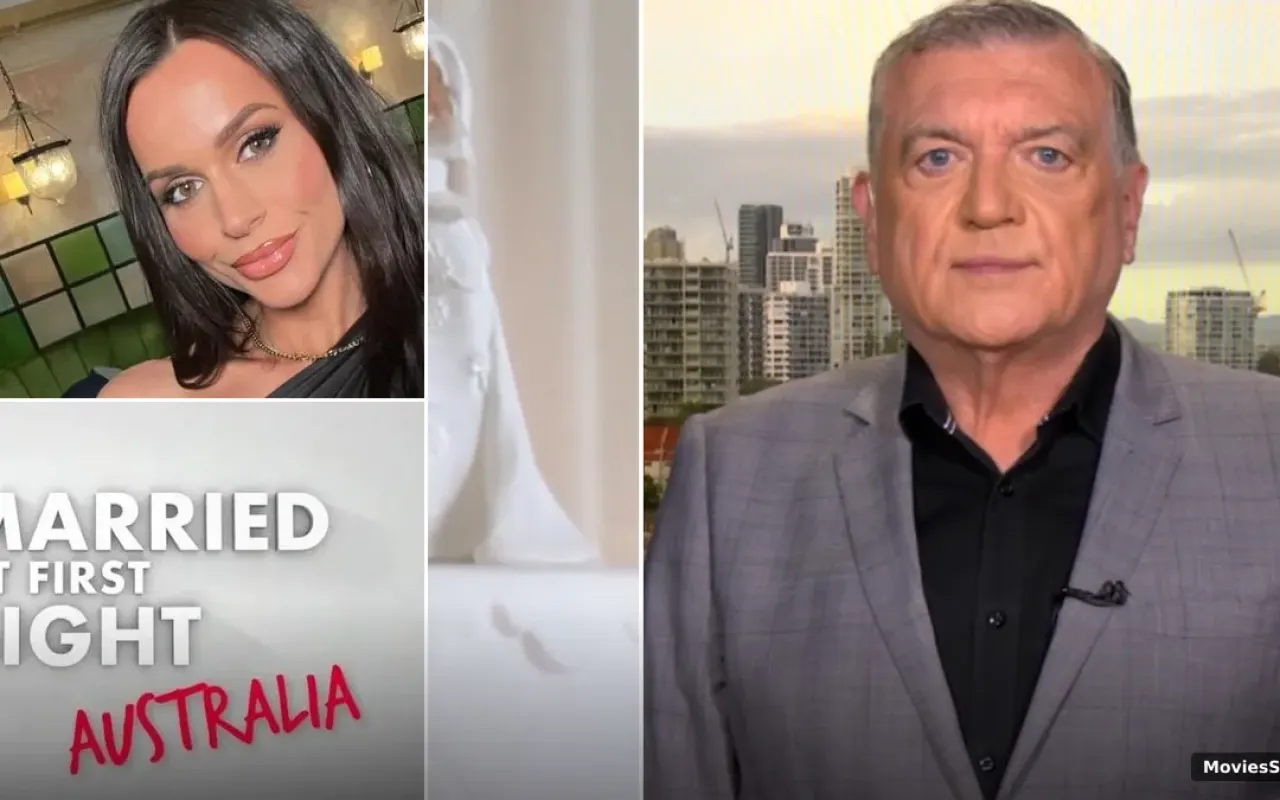
Imagine signing up for a social experiment to find the love of your life, only to realize the "stranger" you’ve been legally tethered to has a history that production forgot to mention. Real talk: the Married at First Sight Australia criminal convictions scandal has officially moved from tabloid gossip to a full-blown safety crisis. What started as a few leaked court documents has spiraled into a cross-continental investigation involving the BBC, SafeWork NSW, and government watchdogs. The central question isn't just who these men are, but why the women matched with them were never given the right to informed consent.
The fallout is massive. We’re seeing a total breakdown in participant wellbeing protocols, with former brides claiming they were "not safe" during filming. While the show thrives on drama, there is a distinct line between "messy reality TV" and "actual physical risk." As Endemol Shine Australia faces heat for their duty of care, the industry is finally having a reckoning about what happens when "good TV" comes at the expense of basic human safety.
The BBC Investigation: Why 'Brides Are Not Safe' on MAFS Australia
The catalyst for this latest storm was a deep-dive investigation by BBC News, which interviewed nine former cast members who all shared a similar, chilling sentiment: the background checks are broken. The most vocal critic, Sierah Swepstone, has been blunt about her experience, stating that participants are essentially being left alone with strangers who have criminal records without their knowledge. "Why is the show accepting that risk on our behalf?" she asked. It’s a valid point—in any other workplace, knowing your partner's history of violence or drug trafficking would be a standard safety requirement.
The investigation also brought to light the testimony of "Anna" (a pseudonym), a bride who claims her partner displayed aggressive behavior on set, including throwing a microphone pack at a wall. She alleges that the groom admitted to a history of aggression during filming, and that production was aware of it. This suggests a "casting for conflict" strategy that intentionally ignores red flags to ensure high-octane dinner party scenes. The psychological toll is real; "Anna" reported being "terrified" throughout the process, highlighting a massive gap in the psychological assessment phase that is supposed to weed out volatile personalities.
Which MAFS Australia contestants have criminal records?
According to the BBC investigation and court records, several Married at First Sight Australia criminal convictions have been identified among recent participants:
- Billy Belcher: 2014 drug offenses in Perth (suspended sentence).
- Adrian Araouzou: 2017 affray conviction ($400 fine) and a 2021 DV acquittal.
- Timothy Smith: Drug trafficking conviction in the US (served one year in prison).
- Chris Nield: Common assault conviction from 11 years ago.
Deep Dive: The Grooms and Their Legal Histories
The specifics of these cases vary, but the common thread is the lack of transparency. Billy Belcher, who was matched with Sierah Swepstone, had a record of drug-related offenses from 2014. While Channel 9 and Endemol Shine Australia claim Billy was "completely honest" about these "life lessons," the issue is that Sierah wasn't the one given the information. In the world of reality TV, honesty with a producer doesn't equate to safety for the participant.
Then there’s Adrian Araouzou, a groom from the 2025 series. Adrian carries a 2017 conviction for affray—a public order offense involving violence or the threat of it. When confronted by the BBC, Adrian’s response was a defensive "none of your business." While production downplayed the conviction as being at the "lowest end of the spectrum" (evidenced by a $400 fine), it’s the combination of this record and his 2021 acquittal on domestic violence charges that has raised red flags for participant wellbeing. Even if a court finds someone not guilty, the existence of such serious allegations usually triggers a "hard pass" in standard corporate hiring—yet for MAFS, it seems to be a footnote.
Perhaps the most shocking oversight involved Timothy Smith. The 2024 fan favorite eventually admitted he had served time in a US federal prison for a drug trafficking conviction. The wild part? Production didn't find this out through their "rigorous" MAFS Australia background checks. Timothy revealed it himself after the show aired. This points to a massive failure in "digital due diligence" and international criminal history checks, which production claims are standard protocol.
The SafeWork NSW Investigation: Behind the Scenes of an Unsafe Set
While the criminal records are grabbing headlines, the most damning evidence of a toxic culture comes from SafeWork NSW. The regulator didn't just "look into" the show; they issued three improvement notices to Nine Entertainment. These aren't just suggestions; they are legal directives issued when a workplace is found to be in breach of health and safety laws.
The details leaked from these notices are harrowing. Allegations include:
- A bride being filmed in the shower without her knowledge or consent.
- Non-consensual touching by a groom that was allegedly ignored by staff.
- Production staff physically blocking exits to prevent distressed cast members from leaving the set.
This transforms the MAFS Australia safety scandal from a casting issue into a workplace rights issue. In Australia, a film set is a workplace. If a manager in a corporate office blocked an exit to stop an employee from leaving a meeting, they’d be fired and potentially charged. On a reality TV set, it’s often dismissed as "producing the moment." SafeWork NSW’s intervention suggests that the "unsafe working environment" classification is finally being applied to the entertainment industry, which has operated in a legal gray area for too long.
Regulatory Fallout: Why ACMA and Ofcom Are Scrambling
The international reach of MAFS means this isn't just an Australian problem. In the UK, Channel 4 has been forced to navigate a PR minefield. While they recently pulled episodes of MAFS UK following a BBC Panorama documentary that alleged sexual assault by participants, they have kept MAFS Australia on their streaming platform. Why the double standard? Channel 4 claims they have "no editorial control" over the Australian version, but they are still bound by the Ofcom Broadcasting Code.
In Australia, the Australian Communications and Media Authority (ACMA) has called the allegations "serious and disturbing." However, here is the catch: ACMA’s power is frustratingly limited. They regulate what we see on screen (the content), not how the people on screen are treated during filming. This regulatory gap is exactly what allows production companies to push boundaries. If the abuse happens while the cameras are off, or if it's edited out, ACMA has very little room to move. This has led to increased calls from the Media, Entertainment & Arts Alliance (MEAA) for stricter, statutory regulation of reality TV environments.
The Legal Loophole: Duty of Care vs. Ironclad Contracts
You might be wondering: *Can’t they just sue?* The reality is that MAFS contracts are designed to be legal fortresses. When participants sign up, they often sign away their rights to claim psychological distress or "negligent casting." However, legal experts specializing in Australian liability law suggest that a "duty of care" cannot be signed away if the risk was foreseeable and the production company failed to mitigate it.
The failure to disclose a partner's criminal history could be argued as a breach of informed consent. If a network knows a participant has a history of common assault and matches them with someone who has specifically requested a safe, non-violent partner, they are arguably creating a "foreseeable risk." The MAFS Australia 2025 casting controversy is likely to be the first time we see these contracts tested against modern workplace safety standards.
The Role of the 'Show Psychologist'
Every season, we see the "experts" and hear about the army of psychologists behind the scenes. But many former contestants are now asking: *Who are these psychologists actually working for?* If a psychological assessment is conducted by someone on the production's payroll, there is an inherent conflict of interest. Their job is to clear people for TV, not necessarily to protect them from it. Whistleblowers from former production teams have hinted that the casting process is often "rushed," with psychological red flags being ignored if a candidate is "biddable" or "good for a storyline."
What This Means for MAFS Australia 2025
Despite the scandals, pre-production for the 2025 season is reportedly underway. However, the vibe has shifted. Endemol Shine Australia has stated their support framework is "continually evolving," which is corporate-speak for "we’re trying to fix this before we get sued." We can expect significantly more "digital due diligence" moving forward—likely including deeper international background checks to avoid another Timothy Smith situation.
There is also pressure from non-profits like Our Watch to ensure that reality TV doesn't normalize or ignore signs of domestic abuse. The era of "anything for ratings" is hitting a wall of public accountability. If the show wants to survive, it has to move beyond mock weddings and start providing real protections.
Key Takeaways
- Informed Consent is the Main Issue: Brides like Sierah Swepstone argue that they should have the choice to be matched with someone with a criminal record, rather than having that risk forced upon them.
- Systemic Background Check Failures: From missed US prison sentences to ignored local assault convictions, the vetting process has proven to be porous.
- Legal Pressure is Mounting: SafeWork NSW's three improvement notices mark a significant shift in treating reality sets as regulated workplaces.
- Regulatory Gaps: ACMA and Ofcom are "concerned," but current codes of practice don't sufficiently protect participant treatment, only broadcast content.
- The 2025 Season is Under Scrutiny: Production is under intense pressure to prove their "evolving" protocols actually work.
The MAFS Australia safety scandal has pulled back the curtain on the "most successful social experiment on TV," and what's underneath isn't pretty. While we all love the drama of a messy dinner party, the revelation that participants were unknowingly matched with men with criminal history checks that failed or were ignored is a bridge too far. As we look toward the 2025 season, the "experiment" needs to stop being about how much trauma a person can endure for fame and start being about basic human decency. The viewers are watching, the regulators are circling, and the "experts" have a lot of explaining to do.