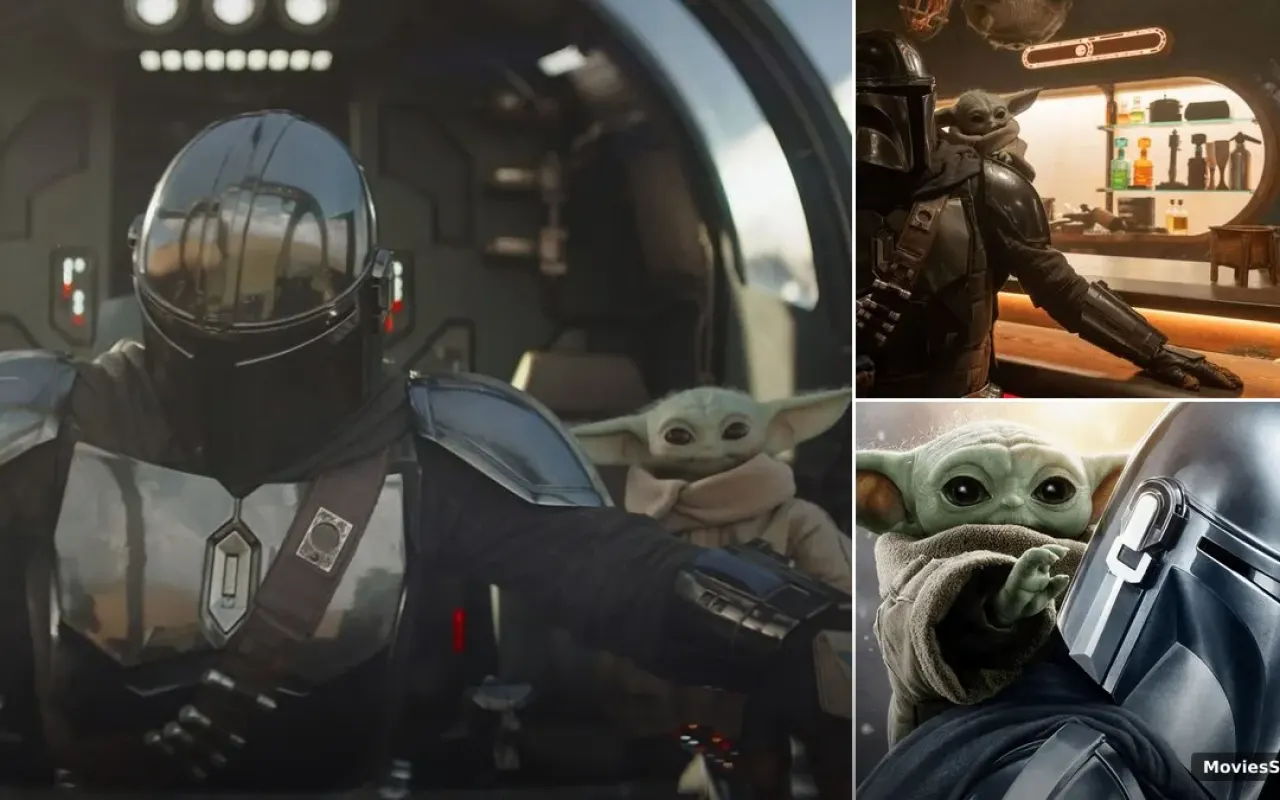
The vibe shift in a galaxy far, far away just hit a massive speed bump. After seven years of Star Wars being relegated to our living rooms, the franchise finally returned to the big screen with The Mandalorian and Grogu. But while the opening weekend felt like a victory lap, the second-weekend numbers are telling a much darker story. We’re looking at a historic 70% drop that has industry analysts and fans alike wondering if the Mando-verse has finally run out of fuel, or if the "Disney Plus-ification" of cinema has reached its breaking point.
Real talk: The Mandalorian and Grogu was supposed to be the grand homecoming for Din Djarin and his tiny, green apprentice. Instead, it’s fighting for air against low-budget horror movies and a growing sense of franchise fatigue. If you’ve been following the group chat discourse, you know the reviews are... complicated. We’ve read the data, listened to the score, and sat through the IMAX screenings to figure out if this is a temporary glitch or a fundamental system failure for Lucasfilm.
The Numbers: Analyzing the 70% Second-Weekend Drop
Let’s look at the receipts, because they are brutal. The Mandalorian and Grogu box office performance started strong with a $102 million debut, but it suffered a significant 69-70% drop in its second weekend, earning just $25 million. With a production budget of $165 million, the film faced stiff competition from low-budget horror films like Backrooms movie and Obsession horror movie, both of which managed to capture the younger demographic that Disney was clearly targeting.
The Star Wars box office drop is particularly stinging when you compare it to previous "failures." It’s a steeper fall than Solo: A Star Wars Story, which remains the franchise's most famous "bomb." While The Mandalorian and Grogu is benefiting from a much lower production cost than Solo's $275 million, the lack of momentum is concerning. Currently, the global total sits at roughly $246 million—$137 million domestic and $109 million internationally. While it’s on track to pass the domestic haul of Pokémon: Detective Pikachu, that’s a low bar for a franchise that used to print money by just existing.
The wild part? The movie lost its grip on IMAX screens almost immediately. Masters of the Universe (Mattel) moved in and snatched up the premium large-format screens, leaving Mando to settle for standard projectors. When you lose the "event" feel of a Star Wars movie, you lose the casual audience. The Mandalorian movie box office struggle suggests that while die-hard fans showed up for the premiere, the general public wasn't convinced they needed to see this in a theater when they could just wait for the The Mandalorian and Grogu Disney Plus release date.
Cast and Characters: Who is Sigourney Weaver's Colonel Ward?
One of the biggest draws for this theatrical jump was the addition of legendary sci-fi royalty. The Sigourney Weaver Star Wars debut as Colonel Ward was high on everyone’s watchlist. Ward isn't just another New Republic bureaucrat; she’s a high-ranking officer in the New Republic defense fleet who brings a much-needed gravity to the story. Her role focuses on the rising threat of the Imperial Remnant, specifically working alongside Commander Coin, a new tactical antagonist who feels like a bridge between the old Empire and the First Order.
But the biggest surprise—and perhaps the most divisive cameo—was the return of Rotta the Hutt. Yes, Jabba’s son from the Clone Wars movie is back, and he’s voiced by Jeremy Allen White. It’s a bizarre casting choice that somehow works, giving the "Stinky" we once knew a gritty, underworld edge. The Hutt subplot involves Din Djarin navigating the criminal underworld of the Outer Rim, which provides some of the film's best practical effects, including a massive animatronic Hutt that reminds us why Jon Favreau and Dave Filoni love this era of filmmaking.
For those wondering about the "must-watch" factor: The Mandalorian and Grogu acts as a bridge between Season 3 of the Disney Plus series and the future of the New Republic era. While you don’t strictly need to have seen every episode of Ahsoka or The Book of Boba Fett, the emotional stakes of the Din Djarin and Grogu relationship definitely land harder if you've been there since 2019.
The 'Toy Box' Problem: Creative Critique and the Gilroy Shadow
Here’s the thing: The Mandalorian and Grogu review scores have been hovering around a 5/10 or 6/10 for a reason. Critics are calling out the "TV-scale" of the adventure. Despite the IMAX footage looking crisp, the narrative often feels like three episodes of the show stitched together rather than a cohesive cinematic epic. This is the "Toy Box" problem—Jon Favreau and Dave Filoni are great at playing with their favorite action figures, but the story often lacks the "total art" feel of a true blockbuster.
The contrast is even sharper when you look at what Tony Gilroy did with Andor. While Andor felt like a prestige political thriller that happened to be set in space, The Mandalorian and Grogu feels like a feature-length commercial for Hasbro. The marketing is obvious, the toy quotient is high, and the stakes feel oddly low. Even a Mandalorian movie post-credits scene (which we won't spoil, but keep your eyes on the New Republic logos) feels more like a "tune in next time" teaser than a world-shaking reveal.
There was a rumored Razor Crest reunion scene that fans were buzzing about, but the final cut went in a different direction, opting for a nostalgia-heavy sequence involving the "Next Mission" theme. It’s cute, but is "cute" enough to sustain a $165 million movie? The audience demographics for opening weekend showed a heavy lean toward families, but the second-weekend drop suggests that kids are moving on to the next viral thing—like the Backrooms movie—faster than Disney can keep up.
Sonic Innovation: Ludwig Göransson's Score Explained
If there is one area where the film absolutely clears, it’s the music. The Ludwig Göransson Mandalorian score is, quite frankly, the best part of the movie. Göransson, fresh off his Oppenheimer win, returns to the franchise with a score that pushes the boundaries of what Star Wars music can be. He doesn't just recycle the flute theme; he evolves it.
The standout track, “Shakari,” is a masterclass in modern composition. It takes the classic Din Djarin motifs and layers them over a trap beat, giving the new planet of Shakari a gritty, urban energy that feels completely fresh. This use of "trap beat" influence isn't just a gimmick; it mirrors the chaotic, lawless nature of the post-Empire galaxy. Where the visuals sometimes feel like a Disney Plus series with a bigger budget, the music feels like a genuine theatrical experience. It’s the sonic glue holding a fragmented narrative together.
"Göransson’s work is a fine consolation prize for the substance that this story lacks: it can’t completely disguise the hollow core, but it almost singlehandedly gives this adventure the immersion it needs."
Parents Guide: Is 'The Mandalorian and Grogu' Suitable for Kids?
For the parents out there, here is The Mandalorian and Grogu age rating guide. The film is rated PG-13, but it’s a "soft" PG-13. There is plenty of blaster fire and droid destruction, but very little "human" gore. The violence is stylized and very much in line with the previous seasons of the show. However, there are a few sequences in the Imperial Remnant base that might be a bit intense for very young children, involving some darker imagery of Commander Coin's interrogation methods.
The real question for parents isn't the content, but the attention span. At nearly two hours, the middle act drags, and the heavy focus on New Republic politics might lose the younger Grogu fans who just want to see him eat snacks and use the Force. If your kids loved the show, they’ll love the movie, but don't expect it to be their new "personality" the way the first season was.
What's Next? Star Wars: Starfighter and the 2027 Slate
Where does Lucasfilm go from here? The Lucasfilm acquisition by Disney was supposed to lead to a decade of dominance, but the roadmap is looking a bit shaky. Despite the box office wobble, the film does heavy lifting to set up Star Wars: Starfighter, an upcoming project that focuses on the New Republic's elite pilots. Rumors are already swirling that Shawn Levy is attached to a future project, with names like Ryan Gosling being tossed around for a potential lead role.
The performance of this movie will also directly impact the Rey sequel starring Daisy Ridley. If the "Mando-verse" can't sustain a billion-dollar box office, Disney might pivot back to the traditional "Saga" format or double down on streaming. There’s also the question of Noah Kloor and other writers who are being brought in to sharpen the narrative for the 2027 slate. The Mandalorian movie filming locations (mostly in California and the UK) suggest a return to more traditional production methods, but the tech—like the Volume—is still the backbone of the franchise.
Key Takeaways
- The Mandalorian and Grogu suffered a massive 70% drop in its second weekend, earning only $25 million after a $102 million opening.
- The film faced heavy competition from Backrooms and Obsession, losing its IMAX screens to Masters of the Universe.
- Sigourney Weaver joins the cast as Colonel Ward, while Jeremy Allen White voices Rotta the Hutt.
- Ludwig Göransson delivers a standout score, incorporating trap beats into the traditional Star Wars soundscape.
- The movie acts as a bridge to future projects like Star Wars: Starfighter but has been criticized for feeling like "TV-scale" storytelling.
At the end of the day, The Mandalorian and Grogu is a transition piece. It’s the franchise trying to remember how to be a "movie" again after years of being "content." While the box office numbers are a wake-up call for Disney, the sheer love for these characters will likely keep them afloat until they hit Disney+. The Force is still there, but it might need a little more than just a cute puppet and a trap beat to conquer the box office in 2027. We’re watching the 2027 slate very closely—because if Mando can't hold the line, the New Republic might be in more trouble than we thought.