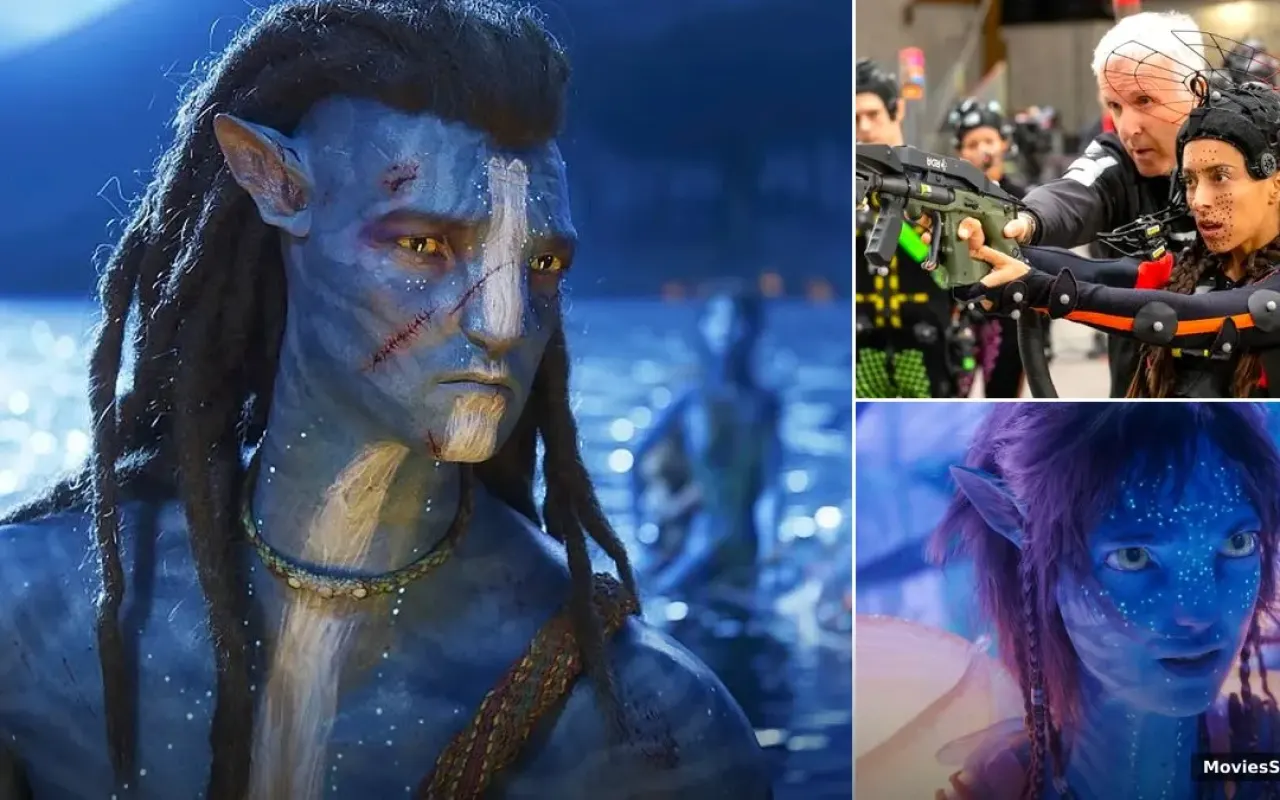
James Cameron has spent the last two decades convincing us that the world of Pandora is inevitable. But for the first time since 2009, the most successful director in history is sounding a little less like a conqueror and a bit more like a startup founder pitching for a bridge loan. Despite the massive scale of the franchise, the Avatar 4 and 5 status is currently "floating," according to Cameron, as he enters a high-stakes period of technological soul-searching.
Is Avatar 4 and 5 still happening?
James Cameron has confirmed that Avatar 4 and 5 are 'still floating out there' but their fate depends on a new production model. The director is currently in a year-long R&D phase to reduce costs by one-third and production time by half before Disney officially greenlights the final sequels.
The Math of Pandora: Why $1.49 Billion Isn't a Guaranteed Win
In any other corner of Hollywood, a box office gross of $1.49 billion would trigger an immediate ten-movie deal and a theme park expansion. But for Avatar: Fire and Ash, that number is actually a warning sign. While still a massive hit, it represents a significant "decay" compared to the $2.3 billion earned by The Way of Water. When you factor in a production budget that reportedly exceeds $400 million per film—plus hundreds of millions more in global marketing—the profit margins start to look surprisingly thin.
Here is the reality: the Avatar production cost has become "hideously expensive," even by Cameron's standards. Real talk? Disney is looking at the numbers and seeing diminishing returns. While the 2009 original benefited from a lower ticket price inflation environment and a "must-see" novelty, the 2026 landscape is different. Audiences are more selective, and the four-year gap between Fire and Ash and the proposed 2029 Avatar 4 release date is a lifetime in the current attention economy.
The "Two-Thirds" Efficiency Metric
Cameron’s new mission isn't just about better visual effects; it’s about survival math. He has publicly set a goal to make the next sequels in "half the time for two-thirds of the cost." If he can’t hit that metric during his current "year of R&D" (which should wrap up by late 2025 or early 2026), Disney may not be contractually obligated to move forward. The studio has the sequels on the calendar for 2029 and 2031, but those dates are written in pencil, not ink.
Technological Reinvention: Can AI Save the Avatar 4 and 5 Status?
To hit those aggressive cost-cutting goals, Cameron is looking at a complete technological reinvention of his pipeline. We aren't just talking about better cameras. The industry buzz suggests a heavy pivot toward Artificial Intelligence and real-time rendering engines like Unreal Engine to bypass the grueling, multi-year performance capture and post-production cycles that have defined the series so far.
The goal is to move away from the traditional "fix it in post" mentality and toward a more streamlined "live" digital environment. If Cameron can use AI to automate the more tedious aspects of Weta FX’s workflow—like rotoscoping or lighting complex underwater environments—he might actually hit that "half the time" target. This isn't just about saving money; it’s about making sure the cast, including Sam Worthington and Zoe Saldaña, don't age out of their roles before the story concludes.
The 'Landau Gap' and Disney’s New Strategy
One of the biggest hurdles facing the franchise isn't technical—it's personal. The passing of producer Jon Landau in 2024 left a massive void at Lightstorm Entertainment. Landau was the logistical engine that allowed Cameron to be the dreamer. Without his steady hand, the pressure on Cameron to manage both the creative and the corporate side of the franchise has doubled.
Meanwhile, Disney’s leadership has shifted. Under Disney CEO Josh D'Amaro, the company is prioritizing "efficiency and ROI" over "prestige at any cost." While Avatar: Fire and Ash is scheduled to hit Disney+ on June 24, 2026, to keep the momentum alive, the executive suite is likely watching the Avatar 4 production timeline with a skeptical eye. They need to know that Jake Sully’s story can be told without bankrupting the studio's entertainment division.
Contractual Limbo for the Cast
There’s also the human element. While much of Avatar 4 has reportedly been filmed to account for the child actors aging, the contract status for the lead actors for Avatar 5 remains a bit of a black box. If production drags on for another decade, keeping the core ensemble together becomes a logistical and financial nightmare. Cameron will be 75 by the time the fourth film is slated to hit theaters; his desire to pursue other passion projects by 2026 might eventually outweigh his commitment to Pandora if the tech doesn't get easier.
Key Takeaways for Avatar Fans
- The "Floating" Status: James Cameron has not yet secured a final greenlight for Avatar 4 and 5; they are currently in a "writing and development" phase.
- The Efficiency Goal: Cameron is spending the next year figuring out how to cut production time by 50% and costs by 33%.
- Fire and Ash Performance: Despite a $1.49B box office gross, the film's "softer" performance compared to its predecessor has made Disney more cautious.
- Disney+ Release: Fans can rewatch Fire and Ash on Disney+ starting June 24, 2026.
- The Tech Shift: Look for Cameron to integrate AI and real-time rendering to hit his new "metric" for sequel production.
The Future: Pandora or Bust?
The wild part about James Cameron is that you can never bet against him. He’s the guy who turned a "sinking ship movie" into the biggest hit of the 90s and made us care about blue aliens twice. But the James Cameron Avatar 4 news we're seeing now suggests even he realizes the old way of making movies is dead. The next year of R&D isn't just a technical exercise; it’s a fight to prove that Avatar is still a sustainable franchise and not just a "hideously expensive" relic of a different era in cinema.
If he succeeds, we get the most ambitious 10-year cinematic payoff in history. If he doesn't, Fire and Ash might be the last time we see Pandora on the big screen. Either way, the "King of the World" has one more mountain to climb—and this time, the obstacle isn't the ocean or the stars, but the bottom line.