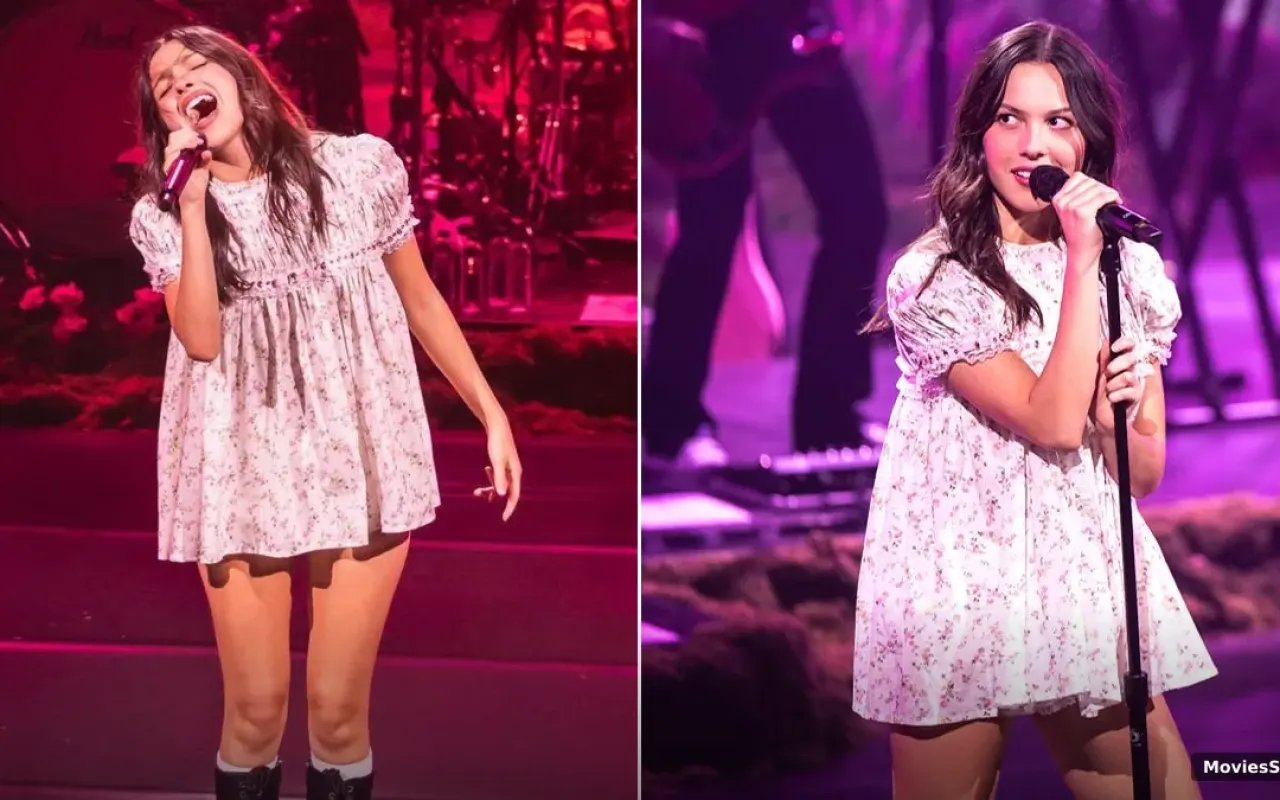
The internet is currently doing what it does best: taking a nuanced creative choice and turning it into a pitchfork-wielding discourse. If you’ve been on TikTok or X lately, you’ve likely seen the Olivia Rodrigo babydoll dress controversy bubbling up. What started as a vibe for her upcoming third album era has spiraled into a heated debate about the normalization of pedophilia, the "male gaze," and whether a 23-year-old woman can wear a dress without being accused of "pedo core."
In a recent appearance on the Olivia Rodrigo Popcast interview with The New York Times, the singer didn't just address the noise—she shut it down. Rodrigo called the backlash "disturbing" and pointed out a massive double standard in how we police women’s bodies. While critics claim her outfits are "infantilizing," Rodrigo argues that the real issue lies in a culture that looks at a fully covered woman and chooses to see something perverse.
Why did Olivia Rodrigo wear a babydoll dress?
Olivia Rodrigo wore babydoll dresses as an homage to 90s rock icons like Kathleen Hanna and Courtney Love. She addressed the controversy by stating that the criticism "shows how we really normalize pedophilia in our culture" and argued that women should not be responsible for being sexualized by others when wearing fully covered clothing.
The Popcast Interview: Olivia Rodrigo Slams the "Disturbing" Rhetoric
During the Popcast New York Times episode, Rodrigo was visibly frustrated by the "pedo core" discourse. She pointed out the irony of her stage history: for years, she’s performed in a sparkly bra and shorts without being labeled "inappropriate." Yet, the moment she stepped out in a high-neck, long-sleeve babydoll dress, the internet lost its mind.
“What’s really disturbing is I have worn outfits that are maybe revealing on stage... and that wasn’t inappropriate,” Rodrigo told host Jon Caramanica. “But me fully covered up in a dress that people deemed to be childlike was inappropriate.” Her Olivia Rodrigo sexualization response hits on a core feminist frustration: the idea that women are responsible for the "freaks" who might view them through a certain lens. Rodrigo was clear that she didn't feel "sexy" or "baby-like" in the outfits; she felt cool, comfortable, and connected to her musical lineage.
The "Kinderwhore" Legacy: Kathleen Hanna and Courtney Love
To understand why this is happening, we have to look at feminist fashion history. Rodrigo isn't inventing a new look; she’s tapping into the riot grrrl aesthetic of the 1990s. This style, famously dubbed "Kinderwhore," was pioneered by 90s rock icons like Courtney Love (Hole) and Kat Bjelland (Babes in Toyland), and championed by Kathleen Hanna of Bikini Kill.
The original point of the babydoll dress in the 90s was the subversion of patriarchal standards. By wearing torn, thrifted babydoll dresses with smeared lipstick and combat boots, these women were taking the symbols of forced "girlhood" and "innocence" and smashing them against the raw, ugly reality of female rage. It was a middle finger to the male gaze in the music industry.
When Rodrigo cites Olivia Rodrigo Kathleen Hanna Courtney Love as her primary inspirations, she’s signaling that she’s in her "unruly" era. However, the nuance of this subversion seems to be lost on a generation of critics who view any "childlike" silhouette as inherently predatory. This reflects a shift in Gen Z fashion trends 2026, where "purity culture" is ironically being repackaged as social justice concern.
Breaking Down the "Drop Dead" and Barcelona Outfits
The Olivia Rodrigo babydoll dress controversy really took off following three specific visual moments:
- The Album Cover: A flouncy pink dress for her upcoming LP, You Seem Pretty Sad for a Girl So in Love.
- The Drop Dead Music Video Outfits: A structured blue babydoll dress that perfectly matched the song’s moody, alt-rock energy.
- Teatro Greco Barcelona: For the Spotify Billions Club Live concert in late May 2026, Rodrigo wore a floral babydoll dress paired with matching bloomers.
In the Drop Dead single, the lyrics explore themes of being "dead" to a former lover and the exhaustion of performance. The fashion choice here acts as a costume of performative innocence being worn by someone who is clearly world-weary—a classic Riot Grrrl move. Yet, the social media engagement on the "pedo core" hashtag ignored this context, focusing instead on the length of the hemline and the "bloomer" style shorts.
The "Pedo Core" Accusations and the Infantilization of Women
The infantilization of women in pop music isn't a new topic, but the way it's being applied to Rodrigo feels particularly targeted. Critics argue that by wearing "child-adjacent" clothing, she is playing into a fetish. Rodrigo’s counter-argument is that this logic is exactly what’s wrong with society.
“It’s just this rhetoric we’re fed as girls since we’re so little, which is, ‘Don’t wear that because then a man is going to sexualize your body and it’s your fault,’” she explained. This is a sentiment echoed by other Gen Z artists like Billie Eilish, who famously wore baggy clothes for years to avoid being sexualized, only to face massive celebrity fashion backlash when she eventually posed for Vogue in a corset. Whether covered up or stripped down, young women in the industry find themselves in a "no-win" situation regarding the male gaze.
What’s Next: "You Seem Pretty Sad for a Girl So in Love"
Despite the noise, Rodrigo is moving full steam ahead. Her third album, You Seem Pretty Sad for a Girl So in Love album, is set to drop on June 12th. Fans are already speculating that the babydoll aesthetic will be the primary visual theme for her upcoming world tour, signaling a commitment to her "heroes" rather than the critics.
Rodrigo was also recently spotted in New York City filming a "secret project." While some speculate it’s a documentary, others think it’s a high-concept video for her next single, "The Cure." One thing is certain: she isn't letting the Olivia Rodrigo babydoll dress controversy dictate her creative direction. She remains "very protective" of younger girls and refuses to let them grow up thinking their clothing choices are responsible for the behavior of "freaks."
Key Takeaways
- The Inspiration: Rodrigo’s babydoll dresses are a direct homage to 90s Riot Grrrl icons like Kathleen Hanna and Courtney Love.
- The Response: On the Olivia Rodrigo Popcast interview, she called the "pedo core" accusations "disturbing" and a reflection of the normalization of pedophilia in culture.
- The Double Standard: Rodrigo pointed out she is criticized for being "fully covered" in a babydoll dress but not for wearing a sparkly bra and shorts.
- The Album: You Seem Pretty Sad for a Girl So in Love releases June 12th, followed by a world tour.
- The Stance: Rodrigo believes women shouldn't be responsible for how men sexualize them, regardless of their outfit.
Ultimately, the backlash against Rodrigo’s wardrobe says more about our current cultural anxieties than it does about her intentions. By reclaiming the "Kinderwhore" look, she is forcing a conversation about who gets to define "appropriate" and why we are so quick to sexualize a woman for wearing a dress that was originally designed to mock the very idea of the "perfect girl." As we head into the summer of 2026, it looks like Olivia is ready to trade the "sparkly shorts" for something a little more subversive—and she doesn't care if you're uncomfortable with it.