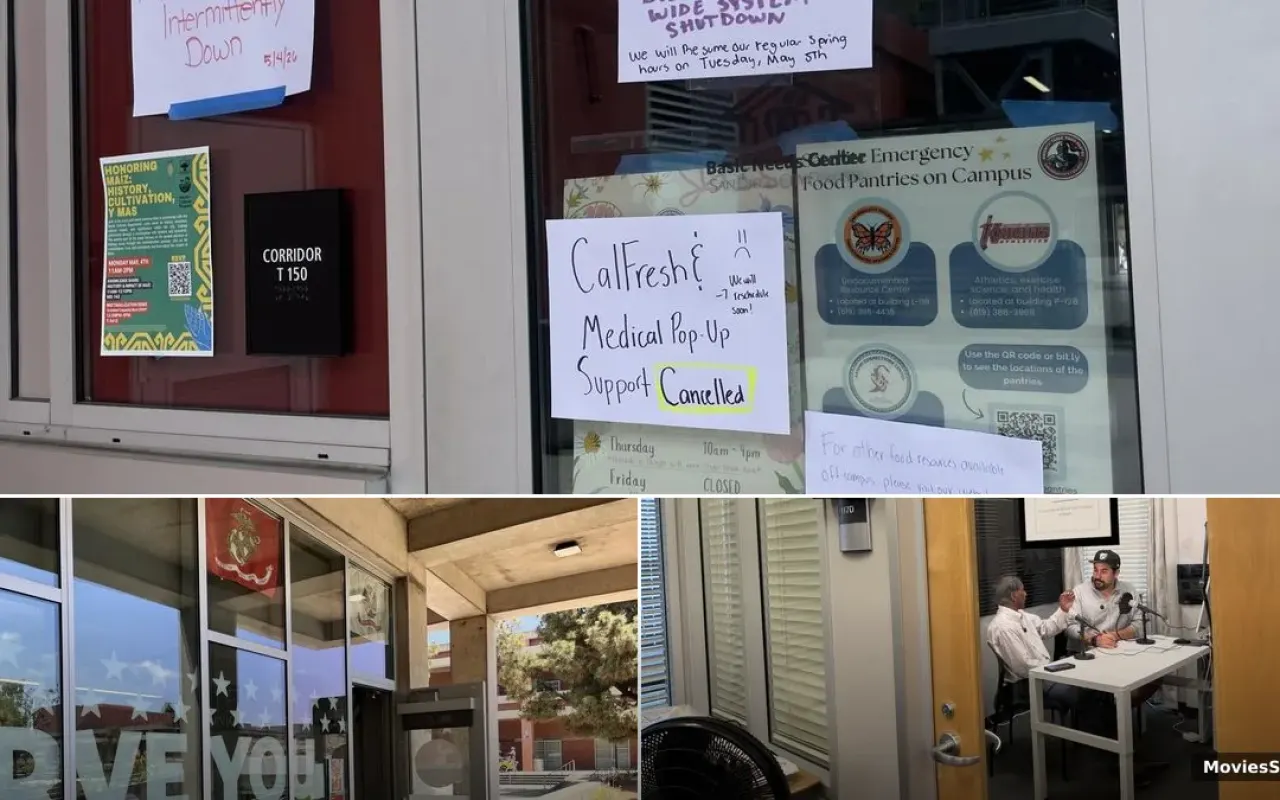
The San Diego Community College District (SDCCD) is currently navigating a major cybersecurity breach that has paralyzed digital infrastructure across its four main campuses. Since Saturday, May 2, 2026, students and faculty at San Diego City, Mesa, Miramar, and Continuing Education colleges have faced a total network disruption, affecting everything from campus Wi-Fi to cafeteria payment systems. As the district enters a critical recovery phase, administrators are working to restore services while balancing a separate, global data security threat involving the Canvas learning management system.
What is the status of the SDCCD cyberattack?
The SDCCD network has been down since Saturday, May 2, 2026, due to a sophisticated cyberattack. While the internal network is offline, the mySDCCD portal remains functional for registration from off-campus locations, and full restoration is expected by Friday afternoon. Chancellor Greg Smith has confirmed that IT teams are working around the clock to bring systems back online safely.
Current Status: When Will the SDCCD Network Be Back Online?
The SDCCD cyberattack has forced the district to take a defensive posture, intentionally shutting down internet, email, websites, and web-based phone systems to prevent further infiltration. According to the latest directives from the district’s information technology department, the target for full SDCCD network restoration is Friday afternoon. However, the recovery is being handled in stages to ensure that no "backdoors" remain for the attackers to exploit.
Currently, the following services remain impacted:
- Campus Wi-Fi: All local campus networks are offline.
- Printing and Copying: Library and lab printing services are unavailable.
- On-Campus Food Services: Digital payment screens were temporarily disabled, though some locations have moved to cash-only or manual processing.
- Transcript Ordering: Both incoming and outgoing transcript requests are currently paused.
- Web-based Phones: Many office lines remain non-functional.
Despite the San Diego Community College District hack, campus police dispatch and emergency services remain fully operational. These critical systems run on a separate, dedicated network, ensuring that student safety is not compromised during the technical outage. For emergencies, students are advised to call 911 or the direct dispatch line at 619-388-6405.
SDCCD vs. Canvas: Understanding the Two Separate Security Incidents
There is significant confusion among the student body regarding the nature of this attack. It is crucial to understand that the district is currently facing two distinct security challenges. The first is the "sophisticated and coordinated" overseas attack on the SDCCD local network. The second is a massive global breach involving Instructure, the parent company of the Canvas platform.
The hacking group known as ShinyHunters has issued a ShinyHunters ransom demand following an alleged breach of Instructure’s databases, claiming to have stolen data from 275 million users globally. This includes personally identifiable information such as names, email addresses, and student IDs. The group has reportedly set a May 12 deadline for payment before they begin leaking the data on the dark web.
While the Canvas data breach 2026 is a global event, its timing alongside the SDCCD internal outage has created a "perfect storm" for the district. Chancellor Greg Smith has reiterated that the district’s internal student databases remain secure, but the Canvas breach remains an external factor that students must monitor closely.
The "Failed Attack" Claim: An Analyst's Perspective
While the district initially described the incident as a "thwarted" or "failed" attack, external cybersecurity analysts suggest that the total shutdown of a network for nearly a week indicates a significant breach of the perimeter. In higher education, recovery costs for attacks of this scale often range from $500,000 to $2 million, depending on the extent of the forensic investigation required. The district’s decision to take systems offline is a standard "containment" strategy used to prevent the spread of ransomware.
Campus Impact Report: City, Mesa, and Miramar Colleges
The network disruption hit at a particularly high-stakes moment: summer enrollment and the lead-up to final exams. Students are currently navigating a campus environment that feels "unplugged," forcing both faculty and students to improvise.
Student Registration and Summer Enrollment
The mySDCCD portal outage only affects those trying to access the site while connected to campus Wi-Fi. Students can still complete summer enrollment and register for classes by using their home internet or cellular data. The portal itself is hosted on an external cloud network that was not compromised in the local attack.
Library and Tutoring Center Workarounds
At San Diego City College, the English Center in the L building remains open for in-person support. To mitigate the lack of internet, the district has deployed mobile hotspots to high-traffic areas. However, IT officials warn that these hotspots can become sluggish in densely populated areas like the library or the City Commons. Students are encouraged to download necessary course materials to USB drives while on home networks before coming to campus.
Financial Aid and Documentation
The Financial Aid & Scholarship office is currently operating with limited services. While staff are available for walk-ins, they cannot access certain real-time federal databases. This has raised concerns among international students regarding visa documentation (I-20 forms), which require active network access to the SEVIS system. Students on F-1 visas are encouraged to contact the International Student Office directly for status updates on their documentation.
Is Your Data Safe? What Students Need to Know About ShinyHunters
The primary concern for the 90,000 students across the district is the safety of their personally identifiable information. While the district maintains that its internal records are safe, the Canvas data breach 2026 poses a real threat of identity theft. ShinyHunters is a well-known entity in the cyber-underworld, previously linked to breaches at AT&T and Ticketmaster.
Step-by-Step Guide to Securing Your Accounts
If you are a student or staff member, you should take the following cybersecurity best practices for college students immediately:
- Change Your Password: As soon as the network is stable, update your mySDCCD and Canvas passwords. Use a unique passphrase of at least 16 characters.
- Enable Multi-Factor Authentication (MFA): If you haven't already, enable MFA on all school-related accounts. This is the single most effective way to stop unauthorized access.
- Monitor Your Credit: Because student IDs and emails may have been exposed in the Canvas breach, monitor your credit reports via the three major bureaus.
- Watch for Phishing: Hackers often follow up a breach with "phishing" emails that look like official college communications. Never click a link in an email asking for your login credentials.
From a legal standpoint, FERPA violations in data breaches are a serious concern. The Family Educational Rights and Privacy Act (FERPA) protects the privacy of student education records. If it is discovered that the district or its vendors failed to implement "reasonable" security measures, they could face federal oversight or class-action litigation under the California Consumer Privacy Act (CCPA).
The 2026 Higher Ed Breach Trend
The SDCCD cyberattack is not an isolated incident. In 2024 and 2025, there was a 30% increase in ransomware attacks targeting community colleges. These institutions are often viewed as "soft targets" because they hold vast amounts of data but sometimes have smaller IT security budgets than large research universities. The Federal Bureau of Investigation (FBI) has noted that "sophisticated overseas" groups often target schools during registration periods to maximize leverage for ransom payments.
Key Takeaways for SDCCD Students
- Restoration Target: Expect the campus network and Wi-Fi to be back online by Friday afternoon.
- Registration: You can still register for summer and fall classes via the mySDCCD portal, provided you are not on a campus network.
- Data Safety: While the local district data is reported safe, the Canvas breach by ShinyHunters is a separate threat. Change your passwords immediately.
- Campus Services: Cafeterias and the Basic Needs Center are reopening, but printing and transcript services remain down.
- Classes: Most classes are proceeding as scheduled. Check with your individual professors regarding adjusted due dates for assignments.
Conclusion: A Path Toward Digital Resilience
As the San Diego Community College District works toward full network restoration, this incident serves as a stark reminder of the vulnerabilities inherent in modern education. While the technical teams focus on the Friday deadline, the long-term focus must shift toward identity theft protection for students and hardening the district's digital perimeter. For now, students should remain vigilant, utilize off-campus networks for critical deadlines, and stay tuned to official district social media channels for the final "all-clear" signal.