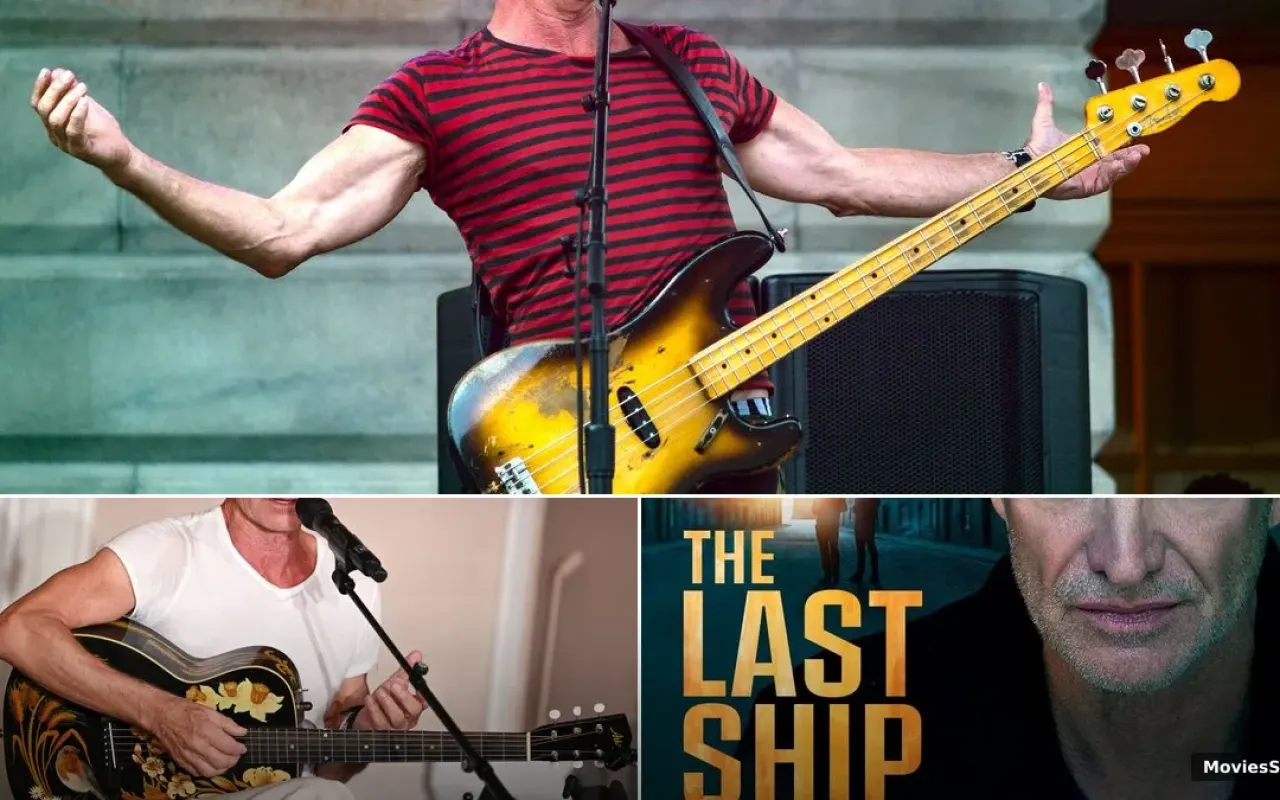
Sting is 74, has 17 Grammys, and a net worth that makes the "multimillion-pound estate" description feel like an understatement. Yet, the man formerly known as Gordon Sumner is heading to London this autumn to play a dying shipyard foreman in a town that hasn't built a ship in decades. Sting The Last Ship West End debut isn't just another legacy act victory lap; it’s a high-stakes, "reimagined" piece of musical therapy that attempts to diagnose why modern men are, quite frankly, struggling.
The production, which officially lands at the Theatre Royal Drury Lane Sting from September 22 to October 3, 2026, marks a full-circle moment for the Wallsend-born legend. After a decade of iterations—from a 2014 Broadway run that struggled to find its footing to an international tour that hit Paris and Brisbane—the show is returning to its roots with a new script and a very specific sociological bone to pick.
The West End Return: Dates, Venue, and the 2026 Reimagining
If you caught the original 2014 Broadway version, forget what you saw. The The Last Ship musical London 2026 run is being billed as a "newly-reimagined" production. The most significant shift? The "book" (the script between the songs) has been completely overhauled by Barney Norris. Norris, known for his sensitive portrayals of working-class life, has been tasked with grounding the story’s operatic scale in something more visceral and human.
The production features a massive company of more than 50 performers, a scale rarely seen in limited-run West End engagements. While the 2014 version was criticized by some for being overly nostalgic, the 2026 script aims for "truth over rose-tinted glasses." We’re looking at a grittier portrayal of the shipbuilding industry and the Swan Hunter shipyard, moving away from the "musical theater" polish toward something that feels like a Tyneside documentary set to music.
Key Dates and Ticket Intelligence
- Venue: Theatre Royal Drury Lane, London.
- Run Dates: September 22 – October 3, 2026.
- Pre-West End Stop: New York Metropolitan Opera (June 9 - June 17, 2026).
- The Last Ship West End ticket prices: Expect premium West End pricing, with top-tier stalls likely hitting the £150-£200 range, while "groundling" style gallery seats may start around £25-£30 to keep the show accessible to the demographic it depicts.
The 'Toxic Masculinity' Theory: Why Manual Labor Matters
The most viral takeaway from Sting’s recent press run isn't the music—it's his sociology. The singer has proposed a provocative Sting toxic masculinity theory, suggesting that the decline of manual labor is a primary driver of modern male aggression and "toxicity."
"I work with my hands every day as a musician," Sting noted, acknowledging his privilege while pointing to a larger societal void. He argues that the shift from a manufacturing-based economy to Margaret Thatcher’s service economy stripped men of a constructive outlet for their physical energy. When you aren't building a 50,000-ton vessel, where does that "male strength" go? According to Sting, it curdles.
The numbers back up the scale of the shift, if not the direct psychological link. Data shows a 35% decline in manufacturing sectors over the last few decades, leaving a hole in the identity of towns like Wallsend. In the musical, this is summed up by a devastating line: "For what are we men without a ship to complete?" It’s a question that resonates with the 10.8% of men who, according to recent studies, show clear signs of "toxic" traits linked to a lack of purpose and community identity.
From Wallsend to the Stage: Childhood as Therapy
To understand the show, you have to understand Gordon Sumner. Long before he was "Sting," he was a "sensitive, artistic child" growing up in a "surreal industrial environment." His Sting Wallsend childhood was defined by the literal shadow of the shipyard at the end of his street. He describes his upbringing as "unhappy," citing a difficult relationship with his parents—specifically his father, Ernest Sumner, an engineer who embodied the very stoicism the musical explores.
"In many ways it’s a kind of therapy... I was brought up in a surreal industrial environment with a difficult family, and so going back there was a little painful."
The show serves as a "reconciliation." Sting plays Jackie White, the shipyard’s foreman, a character who is essentially a composite of the men he grew up watching. One of the new songs in the 2026 version was even inspired by a childhood friend known as "the pugilist," a local "thug" who protected the young, artistic Sting from schoolyard bullies. It’s this blend of violence and loyalty that the musical tries to untangle.
The Music of The Last Ship: New Songs and Classics
The score is a masterclass in folk-inspired choral writing, leaning heavily on the "DNA" of the North East. While the 2014 version relied on the 1991 album The Soul Cages, the 2026 production integrates those tracks more seamlessly into the narrative. Fans can expect to hear:
- "Island of Souls": The haunting opening that sets the industrial stakes.
- "All This Time": A reimagined, more somber take on the radio hit.
- "When We Dance" and "Ghost Story": Solo-era tracks repurposed for theatrical storytelling.
- New Material: Sting has written a "raft of new songs" specifically for this reimagining to better fit Barney Norris’s updated book.
The sound is a far cry from the polished pop of The Police. It’s heavy on the melodeon, the Northumbrian pipes, and masculine, sea-shanty-adjacent harmonies. It's music that feels like it was forged in a furnace.
Sting on AI: Why Algorithms Can't Write Heartbreak
While discussing the "soul" of the shipbuilding community, Sting couldn't help but take a swipe at the current state of AI in the music industry. His critique is simple: AI is a "copyist" because it lacks a childhood.
"AI has never had its heart broken," he argued. For Sting, the "DNA" of a song comes from the "toxic chemicals" and "surreal environments" of real life—things an algorithm can simulate but never feel. He makes a sharp distinction between "hearing" a serviceable pop song and actually "listening" to something with human stakes. It's a sentiment that mirrors the themes of The Last Ship: you can't automate the pride of building something with your own two hands.
Critical Context: Will the 2026 Version Succeed?
The road to the West End hasn't been easy. The 2014 Broadway debut was a "Tony-nominated musical," but it struggled commercially, leading Sting to famously join the cast himself to boost ticket sales. The 2018 UK tour was better received, particularly in Newcastle, where local audiences felt the "civic pride" Sting talks about.
The 2026 Theatre Royal Drury Lane Sting run is a calculated gamble. By bringing in Barney Norris and focusing on the "toxic masculinity" angle, the production is pivoting from a nostalgic period piece to a contemporary social commentary. The "toxic chemicals" Sting mentions—the asbestos and the physical danger of the yards—are no longer just background details; they are metaphors for the cost of the industrial age.
Key Takeaways
- The West End Debut: Sting stars as Jackie White at Theatre Royal Drury Lane from Sept 22 to Oct 3, 2026.
- The Script: Reimagined by Barney Norris for a grittier, more modern feel compared to the 2014 Broadway version.
- Social Theory: Sting links the rise of toxic masculinity to the loss of manual labor and "male strength" in the post-Thatcher era.
- Personal Stakes: The musical is a form of "therapy" for Sting, addressing his "unhappy" Wallsend childhood and his relationship with his father.
- AI Skepticism: Sting dismisses AI as a "copyist" that lacks the "DNA" of human experience and heartbreak.
- The Music: A mix of The Soul Cages classics and brand-new tracks written for the 50+ member company.
Ultimately, The Last Ship is an attempt to bottle the "civic pride" of a lost era before it evaporates entirely. Whether the West End audience buys into Sting’s theory on masculinity remains to be seen, but as a piece of "honourable and truthful" storytelling, it’s clear the singer is finally ready to launch the vessel he’s been building for a lifetime.