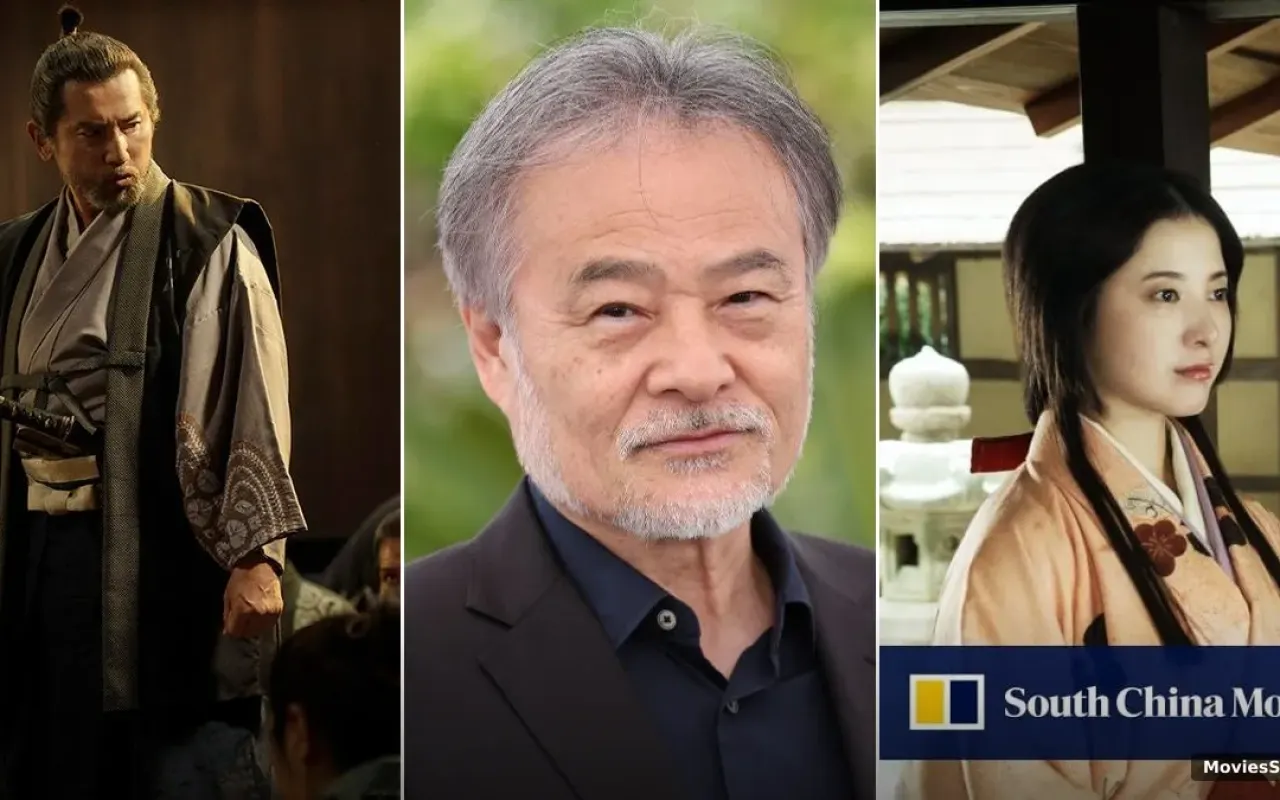
If there is a legitimate crime in modern cinema, it is that we haven’t given Kiyoshi Kurosawa a massive historical budget until now. At 70 years old, the Japanese master of dread has spent four decades making masterpieces out of pocket change. Whether it’s the hypnotic serial killer procedural Cure or the ghost-in-the-machine chills of Pulse, Kurosawa has always been the smartest person in the room with the smallest bank account. But with his latest feature, The Samurai and the Prisoner review cycles are finally catching up to the scale of his ambition. This isn't just another addition to the Cannes 2026 Japanese films lineup; it’s a total reimagining of the jidaigeki genre.
For his 30th feature, Kurosawa has delivered something that feels both ancient and startlingly contemporary. Adapted from Honobu Yonezawa’s Naoki Prize-winning 2021 novel Kokurojo, the film is a psychological thriller wrapped in the silk and steel of the Sengoku period. It’s a "locked-room" mystery where the room is a besieged fortress and the stakes are quite literally life, death, and the soul of Japan. The Samurai and the Prisoner cast is anchored by a career-defining performance from Masahiro Motoki, marking a massive return to form for the Departures star.
A New Kind of Jidaigeki: Plot and Premise
What is the plot of The Samurai and the Prisoner? The Samurai and the Prisoner is a 16th-century historical mystery directed by Kiyoshi Kurosawa, focusing on Lord Araki Murashige's rebellion against Oda Nobunaga and a series of impossible murders within Arioka Castle. As the siege tightens, Murashige must rely on a captive strategist to solve crimes that threaten his stronghold from within.
The film opens in 1578, during the height of the Siege of Arioka. Lord Araki Murashige (played by Motoki) has done the unthinkable: he has betrayed his master, the legendary and terrifying Oda Nobunaga. While Nobunaga’s massive army waits outside the gates, Murashige is dealing with a different kind of rot inside. A young samurai is found dead in a way that defies logic—a classic "impossible murder" that would make Agatha Christie sweat. With paranoia spreading through the ranks like a virus, Murashige turns to the only man who might be smarter than him: Kanbei Kuroda (Masaki Suda), a brilliant strategist who is currently rotting in Murashige’s own dungeon.
This Kokurojo movie adaptation thrives on the tension between these two men. One is a lord losing his grip on power; the other is a prisoner who holds all the answers. It’s a murder mystery that doubles as a philosophical debate on the nature of loyalty and the bushido code.
The Real History: The Siege of Arioka and Araki Murashige
To understand why this film hits so hard, you have to look at the Araki Murashige biography that history books often gloss over. The real-life Siege of Arioka lasted for roughly a year, and it was one of the most grueling stalemates of the era. Murashige wasn't just a random rebel; he was a high-ranking vassal who saw the writing on the wall. Nobunaga was a visionary, sure, but he was also a tyrant who burned monasteries and executed thousands.
In the Sengoku period, betrayal was a career move, but Murashige’s rebellion was particularly shocking because of how it ended. The film leans into the historical accuracy of the Tensho Era, capturing the stifling atmosphere of a castle that has become a gilded cage. While many jidaigeki films focus on the glory of the battlefield, Kurosawa is obsessed with the interiority of the fortress. He captures the strategic importance of Arioka Castle not through sweeping CGI battles, but through the claustrophobia of its corridors.
- The Rebellion: Murashige’s break from Nobunaga in 1578.
- The Siege: A year-long standoff that tested the limits of human endurance.
- The Strategist: The real Kanbei Kuroda was indeed imprisoned at Arioka, though the mystery elements are Yonezawa’s fictionalized genius.
Kiyoshi Kurosawa’s Vision: From J-Horror to History
If you’re wondering how the guy who made Cure ended up making a Kiyoshi Kurosawa samurai movie, the answer is in the pacing. Kurosawa has always been a master of the "slow-burn." In Cure, the horror came from the mundane; in The Samurai and the Prisoner, the tension comes from the silence between the dialogue. He avoids the flashy, "modernized" style of many contemporary Japanese period pieces, opting instead for a classical approach that mirrors 1950s masters like Mizoguchi and Kobayashi.
Working with Shochiku Studio—which is celebrating 130 years of history—Kurosawa had the resources to build a world that feels lived-in. The cinematography by Yasuyuki Sasaki uses a high-contrast color palette that feels like a nod to the black-and-white classics of the post-war era. The use of "European Vista" aspect ratio gives the film a theatrical, widescreen feel without the distortion of CinemaScope. It’s a deliberate choice that keeps the focus on the actors' faces and the intricate shadows of the castle interiors.
Look, the wild part is that Kurosawa’s influence is all over Cannes 2026. Two of his former students from Tokyo University of the Arts—Ryusuke Hamaguchi and Koji Fukada—are also in competition. It’s a "master and apprentice" moment that feels like something straight out of a bushido tale. But while his students are exploring modern drama, Kurosawa is busy deconstructing the very foundation of Japanese identity.
The Tea Ceremony as a Weapon of Peace
One of the most fascinating content gaps in previous reviews is the role of the Japanese tea ceremony in film. In The Samurai and the Prisoner, the tea ceremony isn't just a background detail; it’s a plot device. Murashige is a devotee of the tea arts, a student of the aesthetics that would later be codified by Sen no Rikyu.
In the 16th century, the tea room was one of the few places where samurai were required to leave their swords at the door. It was a space of enforced equality and radical peace in a world of constant slaughter. Kurosawa uses these scenes to highlight Murashige’s internal conflict. He is a man who loves beauty and poetry but is forced by his station to be a dealer of death. This "anti-samurai" sentiment is what elevates the film. It’s not about the bravery of dying for a lord; it’s about the courage of wanting to live for yourself.
Cast and Performances: Masahiro Motoki and Masaki Suda
The chemistry between Masahiro Motoki The Samurai and the Prisoner lead and Masaki Suda is electric. Motoki plays Murashige with a weary, intellectual grace. He isn't a warrior-king; he’s a man who has realized that the system he helped build is a meat grinder. Suda, as the prisoner Kanbei Kuroda, is the perfect foil. He’s sharp, dangerous, and seemingly always three steps ahead of everyone else, even from behind bars.
We also need to talk about the women in the film, specifically Yuriko Yoshitaka as Chiyoho. While jidaigeki can often feel like a boys' club, Yoshitaka brings a necessary groundedness to the castle's frantic energy. Her character represents the human cost of these "great men" and their power struggles. The supporting cast, including Joe Odagiri and Tasuku Emoto, rounds out an ensemble that makes the 130-minute runtime feel like a sprint.
Key Takeaways: Why You Need to Watch
- The Mystery: A genuine "whodunit" that uses 16th-century limitations to create impossible puzzles.
- The Deconstruction: It’s a firm "anti-samurai" film that questions the bushido code and the glorification of ritual suicide.
- The Craft: Kurosawa’s first big-budget period piece proves he can handle scale without losing his signature atmospheric dread.
- The History: A deep dive into the Siege of Arioka that feels relevant to our current era of global instability.
Is It Historically Accurate or a Total Fiction?
One of the biggest questions surrounding the The Samurai and the Prisoner review discourse is the balance of fact vs. fiction. The broad strokes are all true: the rebellion, the siege, and the imprisonment of Kanbei Kuroda are historical facts. However, the murder mystery elements are the invention of Honobu Yonezawa.
By blending a historical epic with a psychological thriller, Kurosawa has created something that feels more "real" than a dry documentary. He captures the vibe of the Sengoku period—the constant fear, the ritualized behavior, and the crushing weight of legacy. It’s a film that asks: if the world is ending outside your walls, does one murder still matter? The answer Kurosawa provides is both haunting and deeply human.
The Samurai and the Prisoner Review: The Verdict
Ultimately, The Samurai and the Prisoner is a masterclass in genre-blending. It takes the bones of a Shochiku Studio period piece and infuses it with the soul of a modern noir. It avoids the clichés of "fast-paced action" in favor of something much more rewarding: a dense, talky, and visually stunning exploration of what happens when a man decides he’s done with killing.
Will there be a wide theatrical release in the US? While a firm date hasn't been set, the buzz from Cannes 2026 suggests that a prestige distributor like the Criterion Collection or Janus Films will likely pick it up for a late 2026 or early 2027 run. For fans of Kurosawa’s earlier work, this is the culmination of a 40-year career. He hasn't just made a samurai movie; he’s made the samurai movie for a generation that is skeptical of old heroes.
Real talk: it’s rare to see a director at 70 still taking these kinds of risks. Kurosawa could have easily made another low-budget thriller and we all would have clapped. Instead, he swung for the fences with a historical epic that manages to be his most intimate film yet. Don't let the subtitles or the 150-minute runtime scare you off—this is the most "urgent" movie you'll see all year.