If you’ve been following the "Leo Woodall leading man" prophecy since The White Lotus season two, your moment has finally arrived. In the new crime thriller Tuner, Woodall swaps the Essex charm for a brooding, James Dean-esque intensity that anchors one of the most sonically ambitious films of the year. But while the internet is buzzing about his performance, there’s a lot more to unpack here than just a pretty face. From the devastating Tuner ending explained to the actual science behind Niki’s "noise allergy," we’re diving deep into the film that’s trying to be the Whiplash of heist movies.
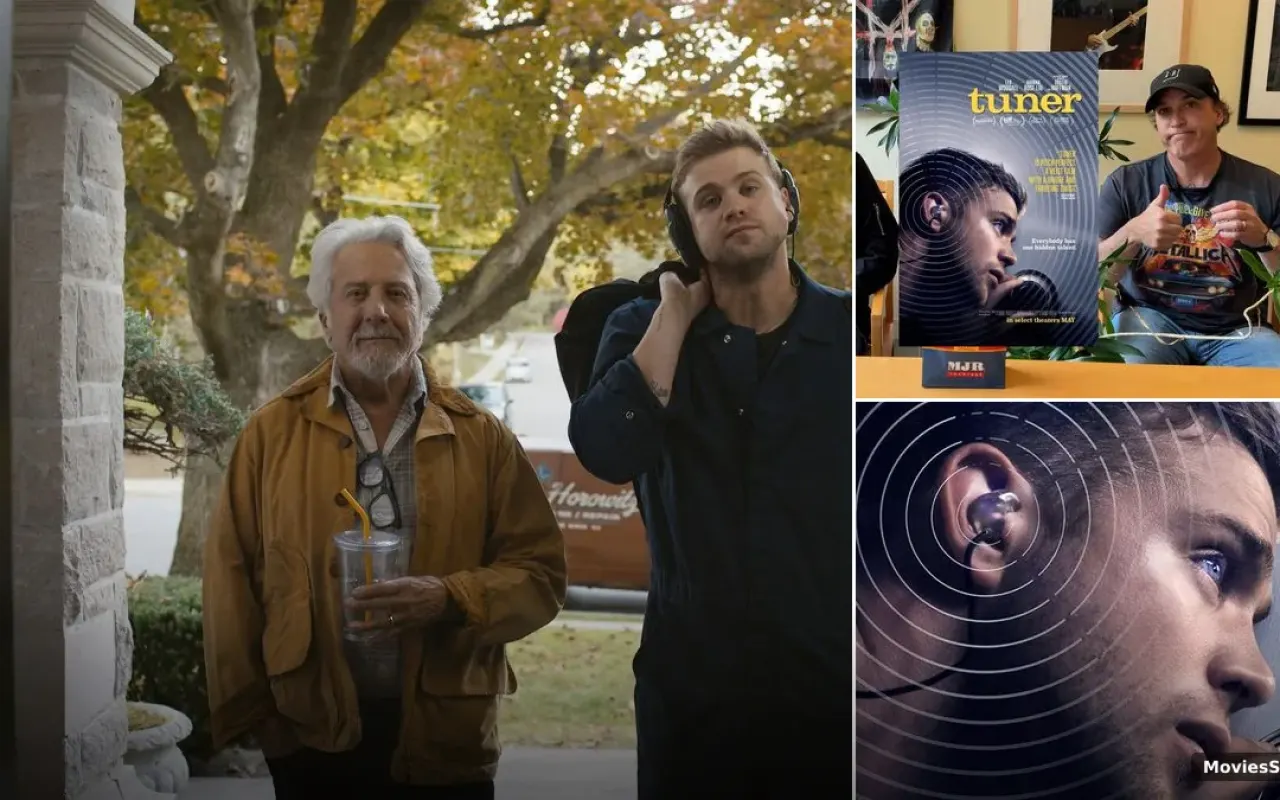
What is the movie Tuner about? Tuner is a 2025 crime thriller directed by Daniel Roher starring Leo Woodall as Niki White, a piano prodigy with hyperacusis (a debilitating sensitivity to sound). The plot follows Niki as he uses his extraordinary hearing to help a criminal crew crack safes to pay for his mentor's (Dustin Hoffman) medical bills.
Tuner Plot Summary: A Symphony of Crime and Sound
The film introduces us to Niki White (Leo Woodall), a man who lives his life in a state of perpetual acoustic defense. Niki is a piano prodigy whose career was cut short not by a lack of talent, but by hyperacusis—a rare condition that makes everyday sounds, from a clinking fork to a distant siren, feel like a physical assault on the eardrums. He spends his days working as an apprentice to Dustin Hoffman’s Harry Horowitz, a veteran piano tuner whose own hearing is failing, though for much more conventional, age-related reasons.
The vibe is cozy and "NPR-adjacent" until it isn't. When Harry suffers a stroke and the medical bills start piling up, Niki’s quiet life of tuning Steinways for the New York elite takes a dark turn. He realizes his heightened hearing allows him to hear the microscopic mechanical clicks inside a locking mechanism—essentially making him a human piano tuner safe cracker. This talent catches the eye of Lior Raz’s Uri, a security expert who moonlights as a high-end thief. Niki is pulled into the New York underworld, balancing a burgeoning romance with a piano student named Ruthie (Havana Rose Liu) while leading a double life as the ultimate "ear" for a crew of professional burglars.
Tuner Ending Explained: What Niki’s Final Choice Really Means
The climax of the film is where the "heist movie" tropes collide with the "tragic artist" narrative. If you’re looking for a Tuner ending explained, you have to look at the final job: a high-stakes break-in at a major concert hall. Niki is forced to crack a safe while a full orchestra performs nearby. The irony is heavy—the music he once loved is now the very thing that threatens to destroy him.
In the final moments, Niki makes a choice that feels like a symbolic sacrifice. To hear the final tumblers of the safe over the crescendo of the orchestra, he has to remove his protective earplugs. He cracks the safe, but the resulting "acoustic shock" leads to permanent hearing loss. The film ends with a bittersweet resolution. Niki has the money to save Harry, and he’s free from the criminal grip of Uri, but he has lost the very thing that made him a prodigy. His relationship with Ruthie remains open-ended; she sees him for who he is—a man who gave up his hearing to save his family—but the "happily ever after" is muffled by the reality of his new silence.
The Science of Sound: Tuner Movie Hyperacusis vs. Reality
One of the most frequent questions from audiences is: is hyperacusis a real condition? The answer is a resounding yes, though the film takes some cinematic liberties with how it’s used as a "superpower."
- Hyperacusis vs. Tinnitus: While many people confuse the two, they are different. Tinnitus is a constant ringing in the ears. Hyperacusis, as portrayed in the Leo Woodall Tuner performance, is an increased sensitivity to standard environmental sounds.
- The "Noise Allergy": Niki describes it as being "allergic to noise." Medically, this is often linked to damage in the auditory nerve or the brain's inability to process volume correctly.
- Safe-Cracking Realism: Can you actually crack a safe by listening to it? In the world of Black Bear Pictures’ thriller, Niki listens for "imperceptible clicks." While high-end safes are designed to be "silent," older or less sophisticated models do have mechanical tell-tales. However, doing this during a live concert is pure Hollywood magic.
The Johnnie Burn sound design is the real MVP here. Burn, who previously worked on The Zone of Interest, uses "aural extremes" to put the audience in Niki’s head. When Niki is overwhelmed, the sound becomes a distorted, jagged wall of noise; when he’s focused, the world falls away into a clinical, hyper-focused silence.
Tuner Movie Cast: Leo Woodall and Dustin Hoffman’s Dynamic
The chemistry between the Tuner movie cast is what prevents the film from feeling like a generic heist flick.
Leo Woodall as Niki White
Woodall proves he can carry a film without relying on his "pretty boy" image. He plays Niki with a reserved, low-energy vibe that makes his occasional outbursts of frustration feel earned. There’s been a lot of debate online about whether Leo Woodall actually plays the piano in the film. While he was coached for the role, the more complex pieces involved hand doubles and clever editing. His performance is less about the fingering and more about the pain of listening.
Dustin Hoffman as Harry Horowitz
Dustin Hoffman returns to form as the mentor, Harry. It’s a role that plays into his "senior citizen charm," but with an added layer of tragedy as his character battles early-onset dementia. The relationship between Niki and Harry is the emotional spine of the movie—it’s a story about a man who can hear everything trying to save a man who is losing his memory.
Havana Rose Liu as Ruthie
Havana Rose Liu brings a much-needed warmth to the film. As Ruthie, she represents the life Niki could have had. Their romance is understated and avoids the typical "Sound of Metal" tropes of trauma-bonding, opting instead for a quiet, mutual respect for the craft of music.
Critical Verdict: Does Daniel Roher’s Narrative Debut Hit the Right Notes?
Director Daniel Roher, the Navalny director, makes a massive leap from documentaries to narrative features with Tuner. You can see his documentary roots in the way he captures the gritty, unglamorous side of New York—this isn't the Gossip Girl version of the city; it’s a world of cramped apartments, dusty workshops, and cold hospital rooms.
However, the Tuner movie review consensus is somewhat split. On one hand, the technical execution—specifically the editing by Greg O’Bryant and the sound design—is top-tier. On the other hand, the crime thriller elements can feel a bit formulaic. The "one last job" trope is well-worn, and the villains, led by Uri, occasionally border on caricatures. Critics have also pointed out that the film’s socioeconomic commentary—the massive divide between the wealthy piano owners and the struggling tuners—is present but never fully explored.
By the Numbers: Ratings and Technical Specs
- Rotten Tomatoes: Currently hovering in the mid-70s, with praise for the acting but notes on the "predictable" script.
- Metacritic: A solid 68, reflecting a "generally favorable" reception.
- Soundtrack: Features a heavy jazz soundtrack and classical pieces by Chopin and Liszt.
- Age Rating: Rated R for language and some intense sequences of peril.
Fact vs. Fiction: The Piano Tuner's Life
To get a better sense of the film’s accuracy, we looked into the world of professional piano tuning. Actual tuners have noted that while "perfect pitch" (which Niki has) is a massive asset, tuning is as much about mechanical skill and "feeling" the vibrations as it is about hearing them. The film’s portrayal of the "Haves vs. Have-Nots" is also rooted in reality; a high-end piano tuner in New York can make a decent living, but they are often invisible to the elite clients they serve.
"Tuning a piano is about creating harmony out of chaos," Niki says in the film. It’s a metaphor for his own life, though by the end, the "harmony" he finds comes at a devastating personal cost.
Key Takeaways from the Tuner Movie Review
- Leo Woodall cements his status as a leading man with a quiet, intense performance.
- The Tuner ending explained reveals a tragic irony: Niki saves his mentor but loses his own hearing.
- Hyperacusis is the central plot device, portrayed with high technical accuracy through Johnnie Burn’s sound design.
- The film is a hybrid of a crime thriller and a character study, though it succeeds more as the latter.
- Dustin Hoffman and Havana Rose Liu provide the emotional grounding for the high-stakes heist plot.
Conclusion: Is Tuner Worth the Watch?
Look, the wild part about Tuner isn't the safe-cracking or the criminal underworld—it's the way it makes you listen. In a world of loud, CGI-heavy blockbusters, Daniel Roher has crafted a movie that demands you pay attention to the smallest sounds. While it might lean into some predictable heist tropes, the central performance by Leo Woodall and the incredible sound design make it a standout theatrical experience.
Whether you're there for the Leo Woodall Tuner hype or you're a fan of high-tension thrillers, this film offers a unique "aural experience" that few other movies can match. It’s a reminder that sometimes, the most dangerous thing you can do is simply open your ears. Tuner is currently in limited theatrical release, with a wider expansion expected soon. If you’re looking for a sleeper hit that doesn't involve capes or multiverses, this is the one to catch.