The Jersey Shore has always been more than just a collection of boardwalks and salt-water taffy; it is the spiritual home of a specific kind of American grit. That legacy just got a $50 million permanent address. The grand opening of the Bruce Springsteen Center for American Music at Monmouth University isn't just a win for the "Born to Run" faithful—it’s a massive statement on the state of our national culture. After years of anticipation, the 32,000-square-foot facility is finally pulling back the curtain, proving that the story of American music is far too big for any single archive to hold.
What is the Bruce Springsteen Center for American Music? The Bruce Springsteen Center for American Music is a 32,000-square-foot cultural venue and research hub located at Monmouth University. It preserves the legacy of Bruce Springsteen while celebrating the diversity of American music through exhibits, archives, a 250-seat theater, and interactive experiences.
A New Landmark for American Music: The $50M Vision
Real talk: projects of this scale don't just happen because someone found a box of old lyrics in a basement. The evolution from the initial 2017 archives to this sprawling American music history museum NJ landmark has been a decade-long masterclass in cultural preservation. Under the leadership of Executive Director Robert Santelli, the center has moved beyond being a "Springsteen museum" to become a comprehensive hub for the American songbook.
The $50 million investment represents a significant bet on the future of West Long Branch and the broader Monmouth County economy. Projections suggest that the center will draw tens of thousands of visitors annually, creating a ripple effect for local businesses, from the diners on Ocean Avenue to the boutique hotels in Asbury Park. But the mission here is deeper than tourism dollars. Santelli has been vocal about the center’s role as a "mirror of our national culture," especially as we approach the America 250 concert series milestones. In a time when everything feels polarized, the center is positioning music as the one thing that still has the power to bring us together.
The facility serves as a dual-purpose engine: it’s a high-tech playground for fans and a serious academic resource for scholars. While the public flocks to the galleries, researchers will have access to a staggering collection of 48,000 items, many of which have never been seen by the public. This isn't just about looking at old guitars; it’s about understanding the social and political DNA of the sounds that defined the 20th and 21st centuries.
Architectural Harmony: Inside the COOKFOX Design
The building itself is a vibe. Designed by the renowned COOKFOX Architects, the structure is a physical manifestation of the music it houses. It doesn't look like a sterile university building; it looks like it grew out of the Jersey soil. The architects leaned heavily into the "industrial heritage" of the region, using materials that tell a story of their own.
- Weathering Steel: The exterior features massive panels of weathering steel (think Corten), which will naturally oxidize over time. This choice is a direct nod to the rust-belt aesthetic and the industrial landscapes often found in Springsteen’s lyrics.
- End-Grain Wood Flooring: Inside, the floors are crafted from end-grain wood, a durable and historically significant material often used in old factories and warehouses. It gives the space a grounded, tactile feel.
- Boardwalk Inspiration: The layout includes subtle architectural cues that mimic the flow of a boardwalk, guiding visitors through a narrative journey rather than a series of disconnected rooms.
Sustainability was also a major pillar for the COOKFOX team. The building features high-performance glazing to maximize natural light while minimizing heat gain, and the landscaping utilizes native NJ species to manage stormwater runoff. It’s a 32,000-square-foot facility that manages to feel intimate, thanks to a "human-scale" design approach that prioritizes the visitor experience over architectural ego.
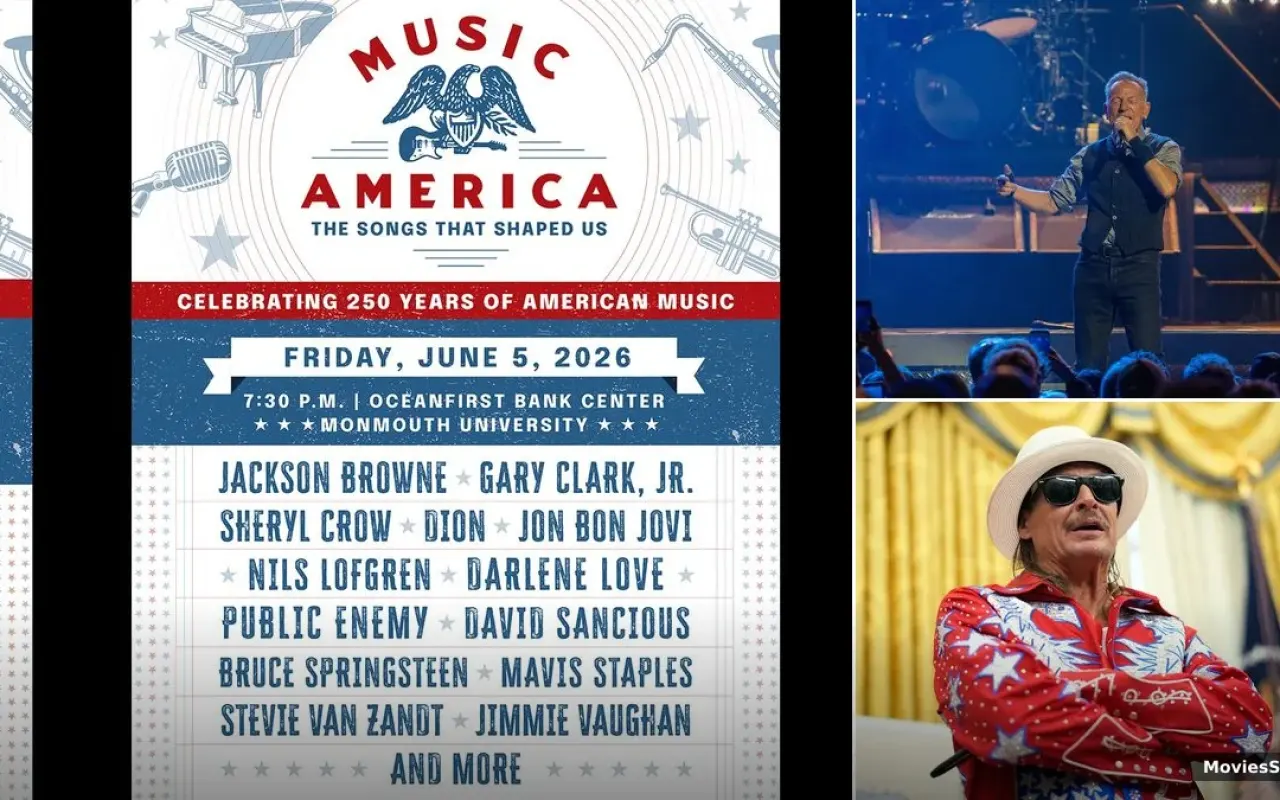
Music America: The Songs That Shaped Us – Concert Highlights
You can't open a music center without a literal bang. The Music America: The Songs That Shaped Us concert series at the OceanFirst Bank Center was the kind of star-studded lineup that usually only happens at the Rock & Roll Hall of Fame inductions. We’re talking over 20 legends converging on the Jersey Shore for a two-night celebration of 250 years of American music.
Night 1: The Roots and the Rhythm
The first night was a masterclass in genre-blending. Stevie Van Zandt and his Disciples of Soul served as the house band, providing a wall of sound that anchored the entire evening. The highlight for many was the unexpected pairing of Bruce Springsteen and Trombone Shorty. Seeing The Boss trade licks with the New Orleans brass icon during a second-line-inspired jam was a reminder that the Jersey Shore music heritage has always been more diverse than the radio suggests.
Rosanne Cash delivered a haunting performance that connected the dots back to her father's legacy while standing firmly in her own, and Kenny Chesney brought a stadium-level energy to the intimate university setting. The night was structured with narration that framed each artist and song within the larger context of American history, making it feel like a live-action documentary.
Night 2: The Legends and the Legacy
If Night 1 was about the roots, Night 2 was about the icons. The bill included everyone from Jon Bon Jovi and Jackson Browne to Mavis Staples and Public Enemy. The inclusion of hip-hop pioneers alongside folk and rock legends was a deliberate move by the Bruce Springsteen Center for American Music to signal that their definition of "American Music" is inclusive and evolving.
The setlist analysis reveals a fascinating trend: almost every artist chose to cover a song that wasn't their own, paying homage to the "Songs That Shaped Us" theme. Whether it was the Dropkick Murphys bringing their Celtic-punk energy to a Woody Guthrie classic or Valerie June's ethereal take on early blues, the message was clear: no artist is an island. We all stand on the shoulders of the giants who came before us.
Exploring the Exhibits: From Columbia Records to Interactive Tech
Once you step inside the Springsteen Center Monmouth University, the 12+ interactive experiences are where the "wow" factor really hits. This isn't a "don't touch the glass" kind of museum. It’s designed for what Santelli calls "sophisticated listeners"—people who want to deconstruct the music they love.
The Thom Zimny Documentary
The centerpiece of the visitor experience is an exclusive documentary produced by Thom Zimny, Springsteen’s long-time cinematic collaborator. The film, shown in a dedicated screening room, offers a deep dive into the creative process, featuring never-before-seen footage from the Columbia Records vaults. It’s a visceral, emotional experience that sets the tone for the rest of the galleries.
The Archives and Exclusive Items
While the center houses 48,000 items, the rotating exhibits ensure that the experience stays fresh. On opening day, visitors were treated to:
- The original 1975 Time and Newsweek covers that catapulted Bruce to national stardom.
- Handwritten lyrics with scribbled-out verses that offer a glimpse into the evolution of "Thunder Road."
- A rare field recording by Mary Parks of a Pine Barrens folk song, highlighting the local folk traditions that influenced the Jersey sound.
The 250-Seat Dolby Soundstage
One of the most impressive technical features is the 250-seat theater equipped with state-of-the-art Dolby soundstage technology. This isn't just for movies; it’s a living laboratory for sound. The center plans to host a permanent performance schedule here, ranging from intimate acoustic sets to scholarly lectures. The acoustics are so precise that you can hear the slide of a finger on a guitar string from the back row.
Education and the TeachRock Partnership
The Bruce Springsteen Center for American Music isn't just looking back; it’s looking forward. A major component of the center’s mission is its partnership with TeachRock, the national K-12 curriculum initiative founded by Stevie Van Zandt. This partnership ensures that the center’s resources are integrated into local school curriculums, providing students with a hands-on look at how music intersects with history, social studies, and language arts.
Beyond K-12, the center is a boon for Monmouth University music scholarship programs. Students will have the opportunity to intern at the archives, work with world-class curators, and participate in the production of live events. It’s a pipeline for the next generation of music historians and industry professionals. The center also offers a Bruce Springsteen Center for American Music membership program, which provides exclusive access to research materials and early bird tickets for the Pollak Theatre and OceanFirst Bank Center events.
Planning Your Visit: Location, Tickets, and Hours
If you're planning a pilgrimage to the Springsteen Center Monmouth University, here’s the logistical lowdown you need to know before you hit the Garden State Parkway.
- Location: The center is located on the Monmouth University campus in West Long Branch, NJ, specifically at the intersection of Cedar and Norwood avenues.
- Parking and Directions: Visitors should use the main university entrance. Dedicated parking for the center is available in the lots adjacent to the OceanFirst Bank Center.
- Opening Hours: The center is open Tuesday through Sunday, 10:00 AM to 5:00 PM. It is closed on Mondays and major holidays.
- Tickets: Tickets must be reserved in advance via the center’s official website. Pricing is tiered for adults, seniors, and students, with Monmouth University students and faculty receiving free admission.
- Archives Access: While the museum is open to the public, the research archives are available by appointment only. Scholars and serious researchers should contact the archival staff at least two weeks in advance to request specific materials.
For those making a weekend of it, the surrounding area of Long Branch and Asbury Park offers plenty of dining and lodging options. Pro tip: grab a slice at a local spot in West Long Branch before heading in—you’re going to want the energy for the 12+ interactive exhibits.
Key Takeaways
- Scale and Scope: The $50M, 32,000-square-foot facility is a major cultural landmark that houses 48,000 archival items.
- Architectural Significance: Designed by COOKFOX, the building uses weathering steel and end-grain wood to honor New Jersey’s industrial heritage.
- Musical Diversity: The opening concerts featured a massive range of artists from Public Enemy and Mavis Staples to Jon Bon Jovi and Kenny Chesney.
- Technical Edge: The center features a 250-seat Dolby soundstage and 12+ interactive experiences designed for "sophisticated listeners."
- Educational Mission: A strong partnership with Stevie Van Zandt’s TeachRock ensures the center serves as a K-12 and university-level educational hub.
- Economic Impact: The center is expected to be a major tourism driver for West Long Branch and Monmouth County.
The Bruce Springsteen Center for American Music is more than just a tribute to one man; it’s a living, breathing testament to the collective noise of a nation. By housing the Bruce Springsteen Archives alongside a broader celebration of the American songbook, Monmouth University has created a space where history isn't just stored—it’s heard. Whether you’re a die-hard E Street fan or just someone who appreciates a good story, the center offers a deep, immersive look at the songs that shaped us. As we look toward the 2026 celebrations, this facility stands as a reminder that the music of America is a work in progress, and the best parts of the story might still be unwritten.