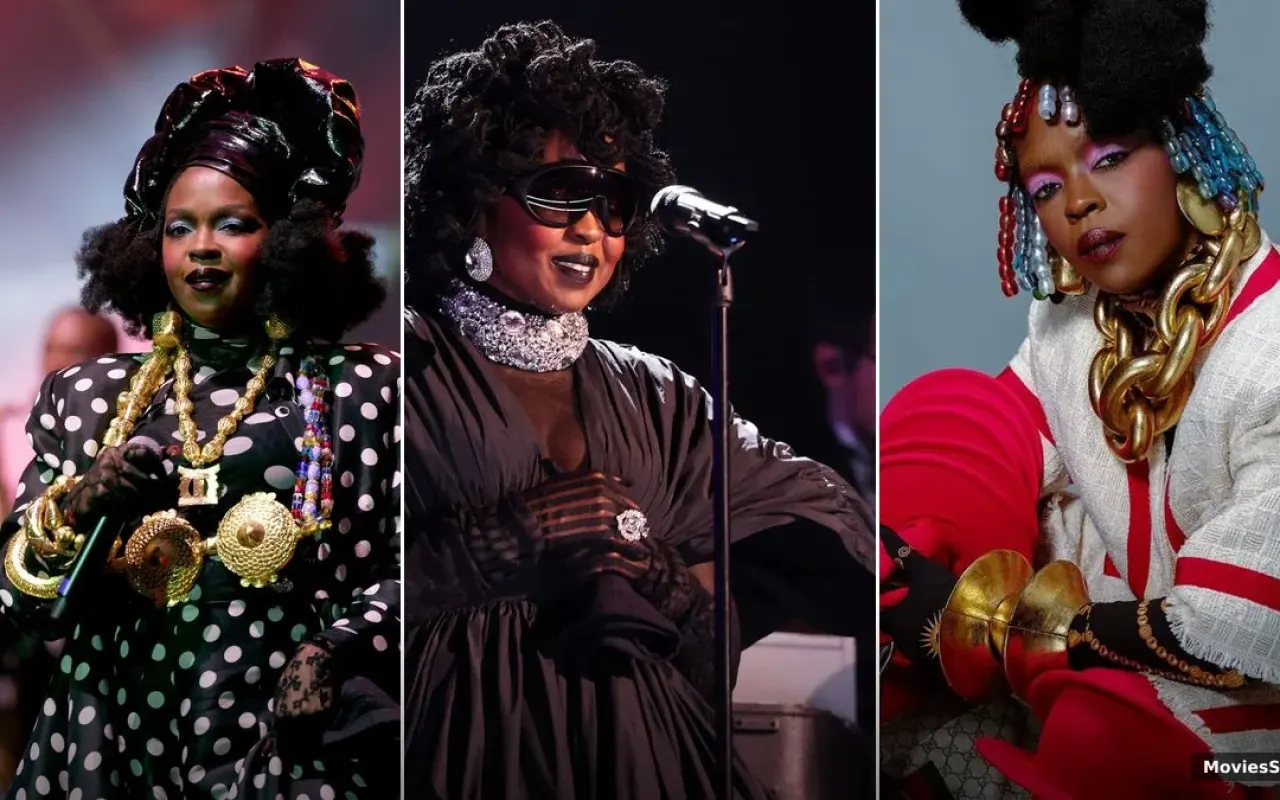
For over a quarter of a century, the music industry has treated the lack of a follow-up to The Miseducation of Lauryn Hill like a cold case. We’ve spent decades speculating about perfectionism, label disputes, and "erratic" behavior. But recently, Ms. Lauryn Hill decided to step into the comments and provide the Lauryn Hill second album explanation we’ve been waiting for, and it’s a lot deeper than just "writer's block."
The real reason why Lauryn Hill never released another album is a cocktail of what she calls "the drain," a lack of creative safety, and a systemic effort by "tentacled obstructionists" to sabotage her work. In her own words, the industry’s obsession with dollars over "sense" made it impossible to maintain her creative integrity while under the thumb of a system that fears what it cannot control.
The Instagram Comment That Set the Record Straight
The conversation reignited when the media platform Fraim World posted a gallery suggesting Hill’s hiatus was due to the pressure of topping a masterpiece, emotional exhaustion, and legal battles. It was the standard industry narrative we’ve heard for years. Then, the unexpected happened: Hill herself jumped into the comments.
“I disagree. [Smiley face],” she wrote, before dropping a multi-paragraph manifesto that dismantled the "struggling artist" trope. This Lauryn Hill Fraim World response shifted the narrative from one of personal failure to one of systemic resistance. She wasn't hiding; she was protecting the very thing that made her a legend in the first place.
Decoding 'The Drain': Lauryn Hill’s Second Album Explanation
When Hill talks about "the drain," she isn't just talking about being tired. She’s talking about the spiritual and emotional tax of being a Black female artist in a machine designed to prioritize profit over personhood. In a 2025 context, where the "hustle culture" of streaming demands a constant stream of content, Hill’s refusal to participate feels like an act of rebellion.
She noted that "the challenge to find safety so that you can create with integrity" is rarely discussed. For Hill, artistic freedom isn't just the ability to write a song; it’s the ability to exist in a space where her work isn't immediately denigrated for money. The music industry drain she describes is the result of success turning her into a commodity rather than a creator. After The Miseducation won the Grammy Award for Album of the Year—the first hip-hop album to ever do so—the stakes changed from making music to managing a brand, a shift she clearly rejected.
The Lauryn Hill Harriet Tubman Quote and Speaking Truth to Power
Perhaps the most polarizing part of her recent statement was her comparison to a historical icon. "I was like a Harriet Tubman figure in some respects," she wrote, "running to speak difficult truths to power before certain forces tried to close those doors."
This Lauryn Hill Harriet Tubman quote isn't about claiming she literally led people to freedom; it’s an abolitionist metaphor for the music industry. She views her work as a form of liberation from the "standards" of the time. By speaking truths that the "system" found uncomfortable, she became a target. Cultural critics have noted that this comparison highlights the "gatekeeping" of the late 90s, where Columbia Records and Sony Music held absolute power over an artist's distribution and image.
"Systems fear what they can’t control. Creativity is most potent when it’s free." — Ms. Lauryn Hill
Tentacled Obstructionists and Music Industry Politics
One of the most cryptic and fascinating terms Hill used was "tentacled obstructionists." While she hasn't named names, this likely refers to the "saboteurs" and "repressing agendas" she encountered following the 1998 release of her studio album. In a previous interview with Rolling Stone, she revealed a shocking detail: her label never actually called her to ask for a second album. Not once.
Instead of support, she faced:
- Politics: Competing interests within the label that wanted to replicate the "Doo Wop (That Thing)" formula rather than allow for experimentation.
- Unrealistic Expectations: The impossible task of following up a diamond-certified debut that defined a generation.
- Intellectual Property Battles: The late 90s were rife with creative ownership disputes, including the high-profile lawsuit from the New Ark production team over credits on Miseducation, which was settled in 2001.
When she didn't play ball with these "obstructionists," she was labeled "difficult" or an "enemy." This is a classic music industry politics tactic: if you can't control the artist, you destroy their reputation.
The Evolution of MTV Unplugged No. 2.0
The closest we ever got to a The Miseducation of Lauryn Hill follow up was 2002’s MTV Unplugged No. 2.0. At the time, it was panned. Critics called it "uncomfortable" and "raw." Commercially, it was a massive shift; while Miseducation debuted at No. 1 with 422,000 copies sold, Unplugged was a stripped-down, acoustic departure that focused on "spiritual honesty" over radio-friendly hooks.
However, in 2025, the narrative around Unplugged has shifted. It’s now seen as a precursor to the raw, vulnerable style of modern artists like SZA or Frank Ocean. Hill addressed this in her response, noting that while people "hated" it then, many "swear by its significance" today. It was her attempt to create outside the "support of the system," proving she was still creating, just not in the way the "tentacled obstructionists" wanted.
The Lauryn Hill Discography Timeline: Is There a Vault Album?
Despite the lack of a formal second studio album, Hill hasn't been silent. Her discography timeline is peppered with high-level features that prove her pen is still sharp.
- 2019: "Coming Home" with Pusha T.
- 2021: "Nobody" with Nas (earning her a Grammy nomination).
- 2024/2025: Headlining global tours and an exclusive 30th-anniversary concert for The Score Fugees album in Brazil.
The million-dollar question remains: Is there a finished album in a vault? While rumors of a "lost" album have circulated for years, Hill’s comments suggest that her "expression" is ongoing. She isn't interested in the "traditional album cycle" because that cycle is what caused the "drain" in the first place. She has chosen to be a "standard-bearer" rather than a content-machine.
Key Takeaways
- The "Drain" is Real: Hill attributes her hiatus to the emotional and spiritual exhaustion of fighting for creative integrity in a profit-driven industry.
- Systemic Sabotage: She claims "tentacled obstructionists" and "saboteurs" actively worked against her after the success of The Miseducation.
- Label Neglect: Despite the massive success of her debut, Hill claims her record label never reached out to help her produce a follow-up.
- The Tubman Metaphor: She views her career as a mission to speak "difficult truths to power," comparing her path to that of Harriet Tubman.
- Legacy Over Volume: Hill believes her one studio album set a standard for a generation, and her continued presence (including the upcoming Brazil show) proves her influence transcends the need for a "sophomore" project.
The Future of Ms. Lauryn Hill
As we head into the mid-2020s, Lauryn Hill seems more at peace with her legacy than ever. By responding to social media speculation, she’s taking back the narrative from the "systems" she’s spent 26 years avoiding. Whether we ever get a formal "second album" matters less than the fact that she’s still here, still vocal, and still refusing to let the "drain" win.
She isn't a "one-hit wonder" who faded away; she’s an artist who looked at the price of fame and decided it wasn't worth the cost of her soul. As she prepares for her upcoming performances in Brazil and beyond, it’s clear that while the industry may have tried to close the doors, Ms. Lauryn Hill is still the one holding the keys.