There is a specific kind of cinematic tension that only Léa Drucker can navigate. It’s the feeling of a woman holding a thousand glass plates in the air, knowing they’re about to shatter, but refusing to blink. In her latest Cannes Film Festival Competition entry, A Woman's Life review reveals a film that is as sharp and clinical as a scalpel, yet deeply, almost bruisingly, emotional. Directed by Charline Bourgeois-Tacquet, this is not just another midlife crisis movie; it is a meticulous French character study that asks what happens when a woman who literally reconstructs others' identities finally has to rebuild her own.
A Woman's Life (La vie d'une femme) is a 2026 French drama directed by Charline Bourgeois-Tacquet. It stars Léa Drucker as Gabrielle, a 55-year-old maxillofacial surgeon in Nice who faces a personal and professional crossroads. The film explores themes of midlife crisis, caregiving for a mother with Alzheimer's, and a transformative same-sex affair with a novelist named Frida.
Plot Overview: A Surgeon at the Crossroads
We meet Gabrielle in a moment of visceral contrast. One minute, she’s in the throes of a lush, sweat-drenched sex scene; the next, she’s scrubbing in at a resource-strapped hospital in Nice. As a top surgeon specializing in maxillofacial reconstruction, Gabrielle’s life is defined by high stakes and structural integrity. But outside the operating room, the architecture of her world is crumbling. Her husband Henri (Charles Berling) is loving but routinely sidelined; her teenage stepchildren are a constant source of friction; and her mother, Arlette (Marie-Christine Barrault), is slipping into the fog of Alzheimer's caregiving.
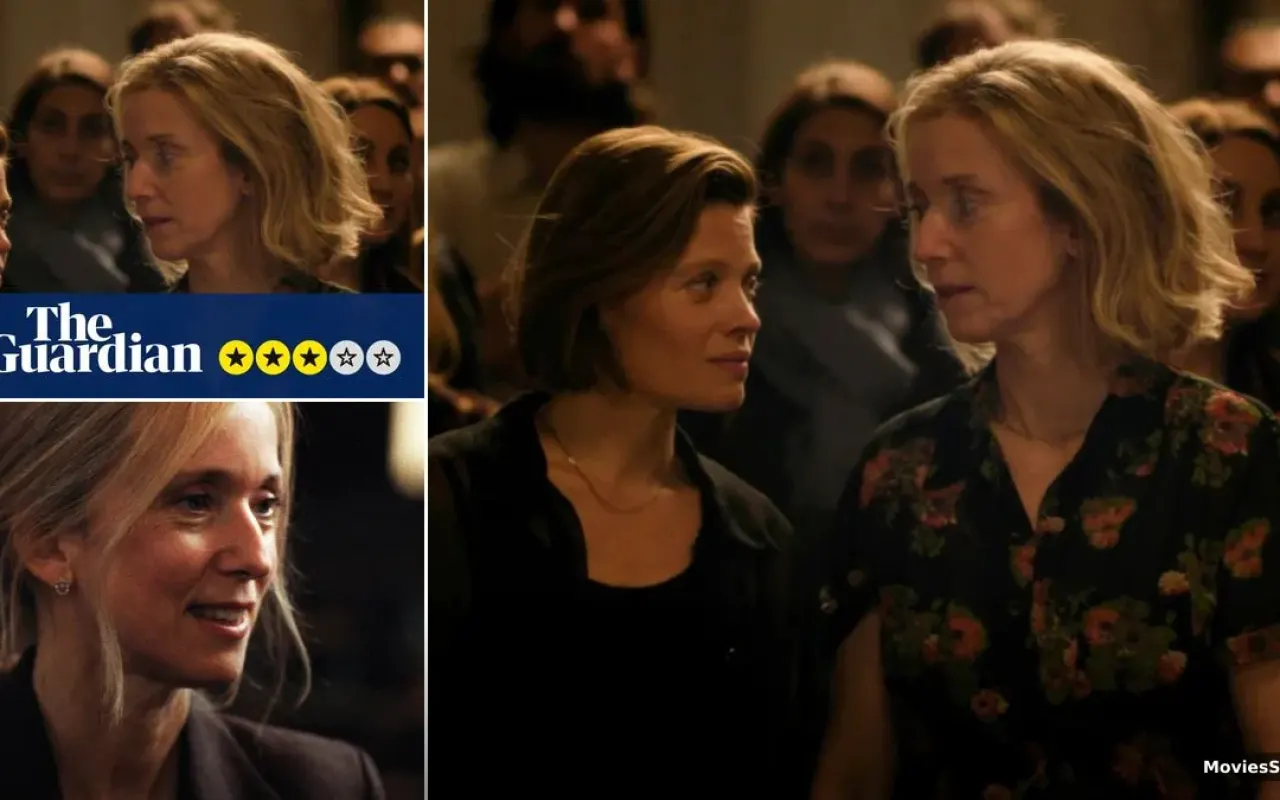
The catalyst for Gabrielle’s midlife emotional upheaval is Frida (Mélanie Thierry), a young novelist who enters Gabrielle's hospital unit to research a book. Frida is everything Gabrielle is not: flighty, unburdened, and seemingly unbothered by the weight of responsibility. What starts as a professional observation quickly pivots into a same-sex affair that threatens to derail Gabrielle’s carefully curated "Robocop" persona. As the Anaïs in Love director proves once again, Bourgeois-Tacquet has a gift for capturing the messy, inconvenient ways desire disrupts a well-ordered life.
The 12 Chapters of Gabrielle: A Structural Breakdown
One of the most distinctive elements of this French surgeon movie 2026 is its 12-chapter structure. Rather than a linear crawl, the film functions like a series of vignettes that mirror the fragmented nature of a life under pressure. This La vie d'une femme plot summary is best understood through these specific thematic shifts:
- "I Want It All": The opening chapter establishes Gabrielle’s refusal to compromise on her career or her autonomy, setting the stage for the midlife emotional upheaval to follow.
- "Alter Ego": The introduction of Frida, where the two women begin to mirror and contrast one another.
- "Pity": A harrowing look at Gabrielle’s relationship with her mother, Arlette, whose decline forces Gabrielle to confront her own mortality.
- "The End of a Relationship": A deceptive title that refers more to the death of an old self than a literal breakup.
- "Sentimental Symposium": The film’s final act, where the action moves from the sterile halls of a Parisian hospital drama to the open air of Turin.
This structure allows the 99-minute runtime to feel both expansive and concentrated. While some critics might find the chapter transitions "breezy," they serve a deeper purpose: they represent the "rolling rhythm and clatter" of a woman who doesn't have the luxury of a slow-burn breakdown. She has to schedule her crises between surgeries.
Léa Drucker and the Art of the 'Unlikable' Heroine
Léa Drucker is currently in a league of her own. Following her César-winning work in Custody and her provocative turn in Last Summer, her performance here as Gabrielle is a masterclass in "brisk and brusque" intensity. Gabrielle isn't always "likable" in the traditional sense. She’s rigid, she’s often cold to her co-workers—notably her friend Kamyar (Laurent Capelluto), whom she scolds for taking paternity leave—and she treats her husband’s feelings like an afterthought.
However, Drucker imbues Gabrielle with a "jaded wit" that makes her impossible to look away from. She isn't unravelling; she's recalibrating. The Léa Drucker Cannes 2026 buzz is well-deserved because she manages to show the vulnerability beneath the professional carapace without ever asking the audience for permission to be "difficult." It’s a French character study that respects its protagonist enough to let her be flawed.
Medical Accuracy: Reconstructing Faces vs. Reconstructing Identity
The choice of maxillofacial surgery as a profession is no accident. While recent medical dramas like The Pitt focus on the chaotic adrenaline of the ER, Charline Bourgeois-Tacquet’s new movie uses the surgical theater as a metaphor for identity. Gabrielle doesn't just save lives; she literally reshapes how people face the world. The film doesn't shy away from the "medical realism" of the job, including the constant construction noise of a hospital under renovation—a sonic reminder that everything, including Gabrielle’s life, is a work in progress.
Medical professionals will likely appreciate the film's take on burnout. Gabrielle’s rigid adherence to "austerely sacrificial principles" is a classic symptom of the high-pressure French public hospital system. When she clashes with her staff, it’s not just about ego; it’s about a woman who has overcorrected for the sexism of her field by becoming more "Robocop" than the men around her.
Soundtrack and Symbolism: The Mendelssohn Connection
The La vie d'une femme soundtrack Mendelssohn inclusion is a pivotal "untapped" detail that adds layers to the film’s atmosphere. Specifically, the use of the 'Hebrides' overture (Fingal's Cave) underscores the turbulent, wave-like nature of Gabrielle's internal state. Much like the sea-swept Scottish coast that inspired Mendelssohn, Gabrielle’s life is a mix of rugged strength and constant erosion.
The film also weaves in literary influences, most notably Rudyard Kipling's "If". The poem’s stoic demands—to "keep your head when all about you are losing theirs"—serves as Gabrielle’s unofficial mantra, one that she eventually realizes might be a cage rather than a shield.
A Woman's Life Ending Explained: What Happens in Turin?
For those looking for an A Woman's Life 2026 ending explained, the final act moves the narrative from Nice to the Italian Alps and eventually Turin. This geographical shift signals Gabrielle’s final departure from her old life. In Turin, she encounters a Japanese artist—a character who serves as a silent witness to her transformation.
The significance of this encounter lies in the artist's focus on "impermanence." Gabrielle, who has spent her life trying to fix things permanently through surgery, finally learns to accept the transient nature of her feelings for Frida. Does she stay with Henri? The film leaves this beautifully ambiguous. The real resolution isn't about which partner she chooses, but about the fact that she is no longer "Robocop." She is a woman who has, finally, allowed herself to be reconstructed by her own desires.
Key Takeaways
- Léa Drucker delivers a career-best performance as a high-powered surgeon at a personal crossroads.
- The film uses a 12-chapter structure to navigate a few transformative years in Gabrielle’s life.
- Maxillofacial reconstruction serves as a powerful metaphor for the rebuilding of a woman's identity in middle age.
- Filming locations in Nice, the Italian Alps, and Turin provide a visual journey from clinical confinement to emotional openness.
- The same-sex affair with Frida (Mélanie Thierry) is treated as a catalyst for self-discovery rather than just a plot point.
In a landscape of "lady on the edge" stories, A Woman's Life stands out for its precision. It doesn't rely on melodrama or grand gestures. Instead, it trusts the quiet power of a French character study to tell a universal story about the cost of holding it all together—and the liberation found in finally letting it go. With no confirmed US/UK release dates yet, this is the one to watch as it navigates the 2026 awards circuit.