The internet never forgets, but most of us spend our lives hoping it just ignores us. In the high-stakes world of the Cannes Film Festival official selection, director Léa Mysius has returned with a film that turns that digital anxiety into a visceral, slow-burn nightmare. If you’ve been looking for a The Birthday Party movie review that cuts through the festival hype to tell you if this thriller actually lands, you’re in the right place. This isn't just another home invasion flick; it’s a meditation on how our past identities are only one viral video away from catching up with us.
What is the movie The Birthday Party about? The Birthday Party is a 2026 French home invasion thriller directed by Léa Mysius, adapted from Laurent Mauvignier’s novel 'Histoires de la Nuit'. It stars Hafsia Herzi as Nora, a woman whose rural domestic life is upended when three mysterious men, led by Benoît Magimel, arrive during her surprise birthday celebration to confront her about a hidden past.
Plot Overview: A Viral Catalyst in the French Marshlands
The story kicks off in the isolated, atmospheric French marshlands, where the Bergogne family lives a life that looks idyllic on paper but feels brittle in reality. Thomas (Bastien Bouillon) is a dairy farmer struggling under the weight of debt and the legacy of his father’s suicide. His wife, Nora (Hafsia Herzi), is a corporate climber working on regional planning hubs—a sharp contrast to their rustic surroundings. They have a young daughter, Ida (Tawba El Gharchi), who, like any kid in 2026, just wants to be seen.
The inciting incident is a classic "platform capitalism" horror story. Ida posts a TikTok of the family dancing to A$AP Rocky’s "Praise the Lord." It’s a 15-second clip that garners 60,000 views overnight. While Thomas sees it as harmless fun, Nora’s reaction is pure, unfiltered panic. She forces Ida to delete it immediately, but as anyone who has ever been online knows: once it’s up, it’s out. This viral moment acts as a digital beacon, drawing three brothers—Franck (Benoît Magimel), Flo (Paul Hamy), and Stutt (Alane Delhaye)—to their remote farm.
The tension is amplified by their only neighbor, Cristina, played by Monica Bellucci. An Italian painter who serves as a surrogate grandmother to Ida, Cristina is the first to be intercepted by the brothers. The film effectively splits into two "chamber pieces": the psychological standoff at the Bergogne farmhouse and the eerie, quiet captivity of Cristina in her studio next door. As the home invasion thriller beats kick in, we realize this isn't a random robbery. These men aren't looking for money; they’re looking for "Leïla"—the woman Nora used to be.
The Birthday Party Ending Explained: The 3D Scan and the Past
If you’re looking for The Birthday Party ending explained, you have to look at the film's most controversial stylistic choice: the 3D scan sequence. As the confrontation reaches its peak, the film breaks its realistic visual language. We see the houses and the characters rendered in grey-toned static droplets, a CAD-rendering style that feels like a digital ghost haunting the screen. This sequence represents the "unknowability of evil" and the way Nora’s past has been reconstructed by those hunting her.
The "big reveal" is that Nora was once Leïla, an accomplice in a major trafficking ring. Franck, the menacing leader played with a "gargoyle of menace" energy by Benoît Magimel, isn't just a criminal; he’s a ghost from a life Nora thought she’d buried. The Histoires de la Nuit movie adaptation leans heavily into the idea that Nora’s current life is a fragile construct. The ending doesn't offer a clean resolution. Instead, it suggests that while the physical invaders might be repelled, the "Leïla" identity is now permanently fused with the "Nora" identity in the eyes of her husband and daughter.
The final moments lean into maternal rage. Nora isn't just fighting for her life; she’s fighting to preserve the lie that protected her daughter. The "unshocking" of the twist that some critics mentioned refers to the fact that Nora’s guilt is evident from the first frame. The real "twist" is the realization that her husband, Thomas, might have been more aware of her secrets than he let on, choosing the comfort of the lie over the harshness of the truth.
Histoires de la Nuit: How the Movie Differs from the Book
For literary fans, the Histoires de la Nuit movie adaptation is a fascinating study in "economical storytelling." Laurent Mauvignier’s novel is famous for its "long sentences"—winding, rhythmic prose that spends hundreds of pages on a single evening. Léa Mysius makes the bold choice to strip away the book's extensive flashbacks. Instead of *showing* us Nora’s past in the trafficking ring, she makes us feel it through Hafsia Herzi’s "flinty gaze" and pained delivery.
Key Differences: Book vs. Movie
| Feature | Mauvignier’s Novel | Mysius’ 2026 Film |
|---|---|---|
| Structure | Heavy use of internal monologues and flashbacks. | Linear "real-time" progression with no flashbacks. |
| The Catalyst | General passage of time and letters. | A viral TikTok video (A$AP Rocky soundtrack). |
| Character: Nora | Detailed backstory of her time as Leïla. | Past is kept ambiguous, revealed through dialogue. |
| The Visuals | Described through dense, atmospheric prose. | High-contrast, "Goya-inspired" cinematography. |
The removal of flashbacks was a deliberate choice by Mysius to favor "embodiment." By keeping the audience trapped in the present with the characters, the film mirrors the claustrophobia of the home invasion. However, this does mean some of the nuance regarding Nora's specific crimes is lost, leaving the audience to fill in the blanks of her "shady past."
Technical Mastery: Goya, Sound, and the Marshlands
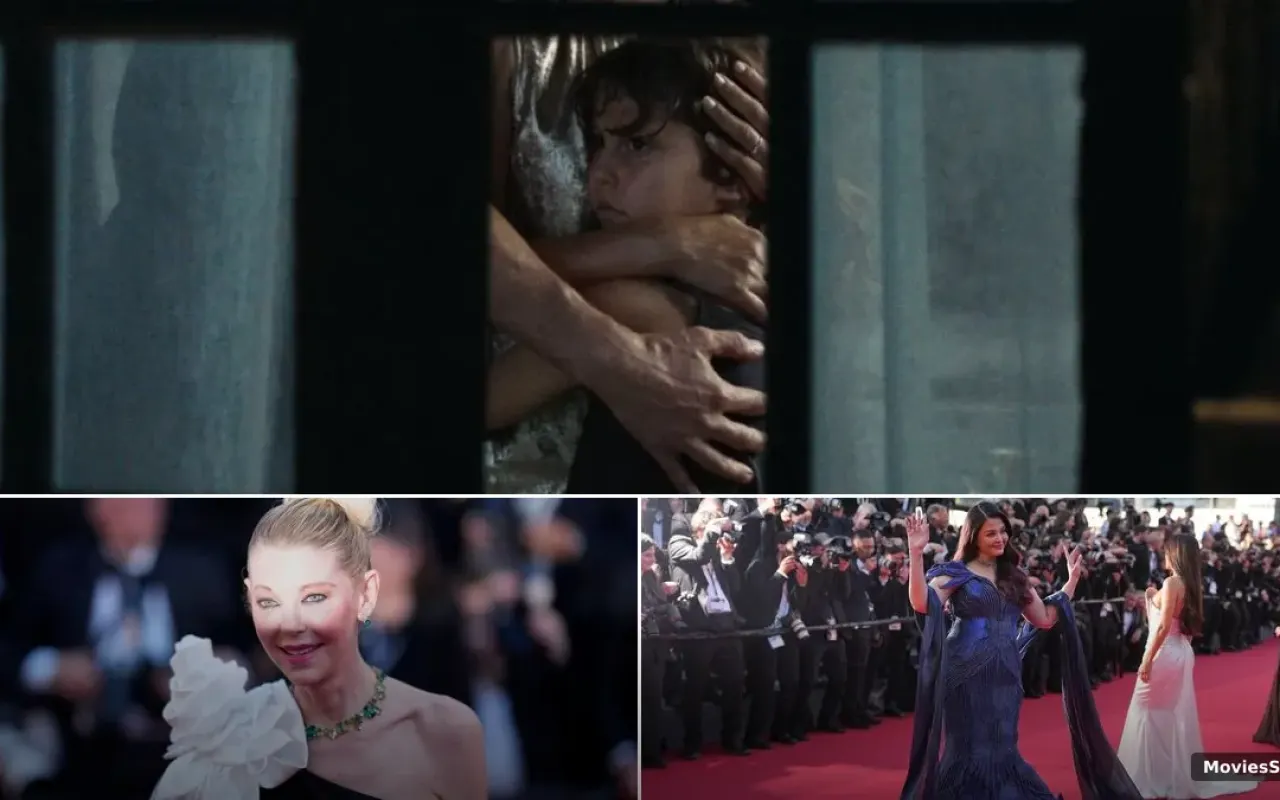
One area where this The Birthday Party movie review must give flowers is the technical craft. Cinematographer Paul Guilhaume uses a "low-lit and bluish" palette that feels heavily influenced by the "Black Paintings" of Francisco Goya. The French marshlands are shot to look less like a farm and more like a purgatory. Guilhaume frequently uses a handheld camera and voyeuristic blocking—like filming Nora from the backseat of her car—to make the viewer feel like a predator stalking the family.
The sound design by Alexis Meynet is equally "violent." When Nora’s coworkers pop confetti canons at her office, the sound is mixed like a shotgun blast. It’s a "foretaste of things to come," signaling that Nora’s world is already under attack before the brothers even arrive. The score by Florencia Di Concilio features thunderous crescendos and imposing strings that contrast with the serene landscape, creating a constant sense of dissonance. This isn't a "quiet" thriller; it’s an operatic one.
The "Dog" Question and Other Spoilers
Real talk: if you’re the type of viewer who checks "Does the Dog Die?", you might want to brace yourself. The Birthday Party 2026 movie features the family dog as the first casualty of the invasion. It’s a trope used to establish the "grimly compulsive" stakes, but it’s handled with a brutality that has already polarized audiences.
As for the The Birthday Party 2026 age rating, expect a hard R (or its international equivalent). Between the "gonzo shootouts" and the psychological intensity of the hostage situation, it’s not for the faint of heart. The film has drawn comparisons to Funny Games by Michael Haneke and A History of Violence, though it avoids the "torture porn" territory of the former, focusing more on the "shame and defiance" of its lead actress.
Key Takeaways
- The Catalyst: A viral TikTok video featuring an A$AP Rocky song exposes Nora’s hidden location to her past enemies.
- The Performance: Benoît Magimel is a standout, delivering a "gargoyle of menace" performance that anchors the film’s threat.
- The Visuals: The use of 3D scanning and CAD-rendering in the climax provides a unique, albeit polarizing, symbolic layer to the thriller.
- The Adaptation: Léa Mysius strips the novel of its flashbacks, focusing on a "real-time" tension that emphasizes the present crisis.
- The Theme: The film explores "platform capitalism" and the impossibility of escaping one's digital footprint.
Conclusion: A New Era of French Thrillers?
While some might find the pacing of The Birthday Party a bit "inert" in the third act, there’s no denying that Léa Mysius has crafted a Palme d'Or contender that feels intensely modern. By blending the classic "home invasion" tropes with the very real anxieties of the TikTok era, she’s made a movie that feels like a warning.
As of now, The Birthday Party movie 2026 release date for the US and UK is still being finalized following its Cannes Film Festival run, but expect a fall distribution deal. Whether you're a fan of the original Laurent Mauvignier novel or just here for the Monica Bellucci Cannes 2026 appearance, this is a film that demands to be seen on the big screen—if only to remind you to check your privacy settings one more time. The wild part isn't that Nora's past came back for her; it's how easily she made it for them to find her.