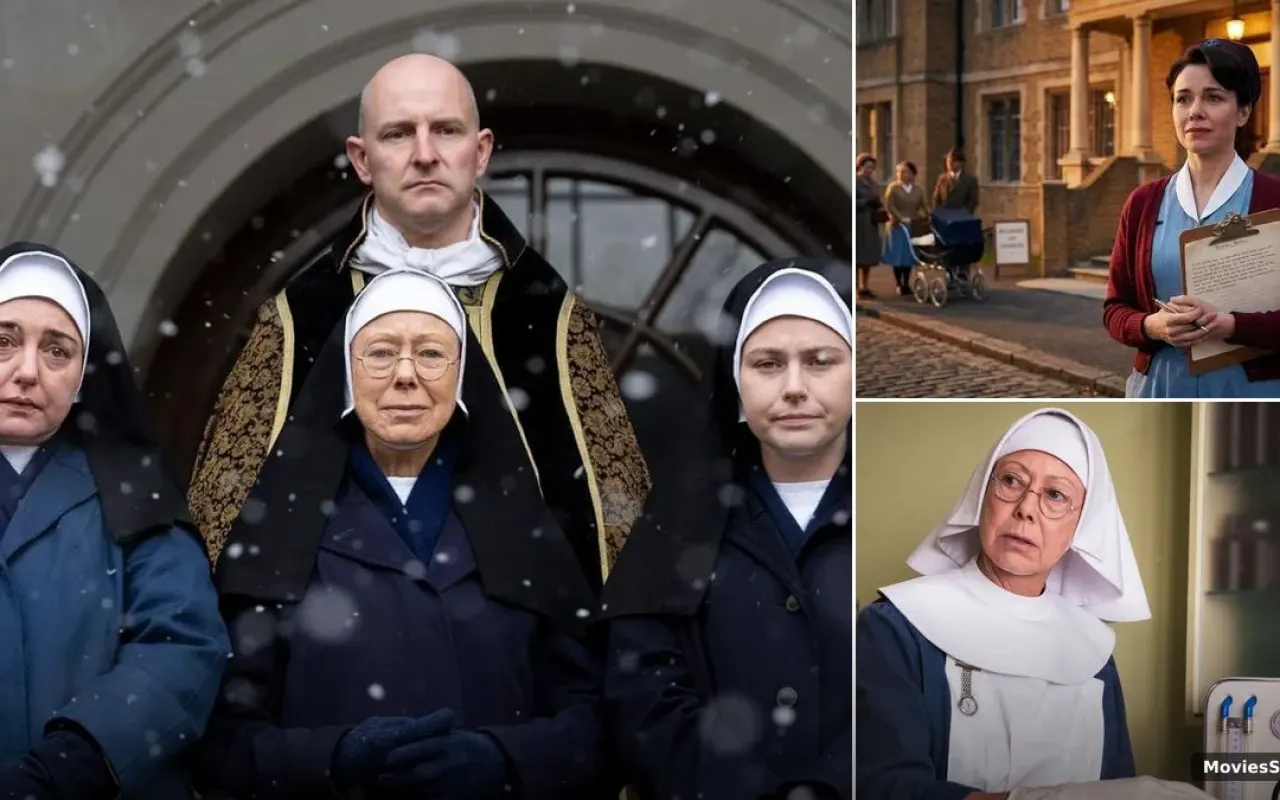
If you’ve been following the midwives of Poplar since the 1950s, the Call the Midwife Season 15 finale explained one thing very clearly: the "swinging sixties" are officially over, and the 1970s are bringing a cold dose of reality to Nonnatus House. We aren’t just looking at a season wrap-up; we’re looking at a total franchise pivot. Between a heartbreaking medical exit, the looming shadow of National Health Service reforms, and the announcement of a WWII-era prequel, the landscape of the East End is shifting under our feet. Here is the breakdown of everything that went down and what it means for the future of the show.
The End of an Era: What Happened in the Season 15 Finale?
The Call the Midwife Season 15 finale explained the stakes early on: Nonnatus House is fighting for its life. The primary antagonist this season wasn't a disease or a social stigma, but the National Health Service Reorganisation Act 1973 (which began its slow roll-out in 1971). Mr. Threapwood, the Board of Health chairman, finally dropped the hammer, refusing to renew the license for the maternity home. By 1974, all medical services were slated to move from local council hands directly to the NHS, effectively ending the era of the independent missionary midwife in Poplar.
But the real emotional gut-punch was the Sister Monica Joan death Season 15 speculation that has been haunting fan forums for months. While the beloved 90-year-old hasn't passed away yet, the finale confirmed she is facing chronic kidney disease. In a move that stayed true to her character’s fierce independence, she chose to stop medical treatment, opting to "prepare for what comes next" on her own terms. It’s a transition that signals the Sister Monica Joan legacy is nearing its final chapter, even as she remains the spiritual anchor of the convent.
On a brighter note, we finally got the Rosalind and Cyril wedding we’ve been rooting for. Despite the tension surrounding Rosalind’s unplanned pregnancy—a major plot point that highlighted the era's evolving views on "The Pill" and workplace expectations—the two tied the knot. It was a rare moment of pure joy in an episode otherwise defined by the Nonnatus House closure 1971 looming over the community.
Medical Casebook: The Science Behind the Finale’s Diagnoses
One of the things that sets this show apart is its unflinching look at medical history. The finale and its preceding episodes tackled three major conditions that were often misunderstood in 1971. Here is the breakdown of the medical reality the show depicted:
- Male Breast Cancer: The story of Tony Bianchi was a standout. While many in 1971 viewed it as a "woman’s disease," male breast cancer actually accounts for about 1% of all breast cancer cases. The show’s depiction of a radical mastectomy, including the removal of the pectoralis major muscle, was historically accurate for the surgical standards of the early 70s.
- Lupus Diagnosis: The "Harmony Savage" wrestling storyline introduced us to lupus, specifically the "butterfly rash" (malar rash) that Trixie identified. In the 1970s, lupus was often misdiagnosed as chronic fatigue or simple joint pain for years before a definitive diagnosis was reached.
- Postpartum Preeclampsia: Ruth Khan’s collapse after birth was a terrifying look at postpartum preeclampsia. While we often think of preeclampsia as a pregnancy-only condition, it can strike up to six weeks after delivery. In 1971, without the rapid intervention Dr. Turner provided, this frequently progressed to full eclampsia and seizures.
The return of the Thalidomide Susan Mullucks storyline also grounded the finale in the show's long-term history. By 1971, there were approximately 450 thalidomide survivors in the UK. The show brilliantly used the Mullucks family to illustrate the lifelong care requirements and the systemic failures these families faced long after the initial scandal broke in the early 60s.
Sisters in Arms: Everything We Know About the WWII Prequel
While the main series is going on hiatus, creator Heidi Thomas is taking us back to the beginning. The Sisters in Arms prequel cast is currently the hottest topic in the fandom. This limited series will be set during the London Blitz, chronicling the origins of Nonnatus House and how the order survived the devastation of the 1940s.
We’re expected to see younger versions of the "Big Three" nuns: Sister Julienne, Sister Monica Joan, and the late, great Sister Evangelina (originally played by Pam Ferris). While official casting hasn't been confirmed, rumors suggest the production is looking for actors who can capture the early missionary zeal of these characters before they became the seasoned veterans we know. The prequel is expected to consist of 4 to 6 episodes and will likely air around Christmas 2025 or early 2026.
This isn't just a nostalgia trip; it’s a chance to see the "missionary capacity" Sister Julienne mentioned in the finale. We’ll see how the midwives navigated the East End when it was literally burning down around them, providing a much-needed context for why they fight so hard to stay in Poplar thirty years later.
The Call the Midwife Movie 2026: Locations and Plot Rumors
If a prequel wasn't enough, we are also getting a Call the Midwife movie 2026 release. This feature film is rumored to bridge the gap between the 1971 finale and the eventual return of the series. The plot is expected to take the midwives out of the East End and into a global setting.
Based on Jennifer Worth’s memoirs and historical missions of the era, the film is rumored to follow Sister Julienne and a small team on a medical mission to the Gilbert and Ellice Islands (now Kiribati and Tuvalu). This reflects the real-world history of the Order of St. Raymond Nonnatus, which often sent sisters to remote Pacific outposts. Call the Midwife filming locations 2025 are reportedly being scouted in British Columbia and potentially Australia to recreate the tropical and coastal environments of the mission.
The movie will likely be a high-stakes medical drama that tests the midwives' skills without the safety net of the NHS. It also serves a practical purpose: it gives the production team a way to keep the franchise alive while the main sets in England undergo the necessary "70s-ification" for the next era of the show.
Call the Midwife Season 16 Release Date: Why the Long Wait?
Now for the news that might hurt a little: you’re going to need patience. If you’re looking for the Call the Midwife Season 16 release date, you might be looking as far ahead as 2027.
When does Call the Midwife Season 16 premiere?
Call the Midwife Season 16 is officially confirmed but expected to air in 2027 or 2028. The delay is due to a planned hiatus to accommodate a feature film and the 'Sisters in Arms' prequel series set during WWII. This break allows the production to reset the timeline as the show moves deeper into the mid-1970s.
The hiatus is a strategic move. By the time Season 16 returns, the show will likely jump forward to 1975 or 1976. This allows the writers to skip the immediate chaos of the 1973 NHS reorganization and start fresh in an era where Nonnatus House has either fully integrated into the hospital system or found a new way to exist as an outlier. It also gives veteran cast members like Jenny Agutter (Sister Julienne) and Helen George (Trixie Franklin) a break after over a decade of back-to-back filming.
Speaking of Trixie Franklin, her future remains one of the biggest question marks. While she turned down the matron role at the Lady Emily Clinic to stay and help Nonnatus through the closure, her marriage and her own recovery journey suggest she might be looking for a life beyond the habit. Whether she returns for Season 16 or transitions into a guest-star role remains to be seen.
Key Takeaways: The Future of the Midwife Universe
- The Finale: Nonnatus House’s maternity license was not renewed, marking the end of its 1950s-era independence due to NHS reforms.
- Sister Monica Joan: She is battling chronic kidney disease and has chosen to forgo treatment, setting up a very emotional final arc for the character.
- The Prequel: Sisters in Arms will take us back to the London Blitz (WWII) to see the origin story of the order.
- The Movie: A 2026 feature film is expected to take the team to a medical mission in the Gilbert and Ellice Islands.
- Season 16: The main show is on hiatus and likely won't return until 2027 or 2028, following a significant time jump into the mid-70s.
The Historical Accuracy of 1971: Why the Shift Matters
The Call the Midwife historical accuracy 1971 is actually the most depressing part of the finale. In the real East End, the early 70s saw a massive wave of convent closures. As the NHS became more centralized, the traditional "district nurse" model—where a midwife lived in the community and was available 24/7—was replaced by hospital-based rotas and clinic appointments.
While this was technically "progress" in terms of medical technology and standardized care, it destroyed the personal connection that Jennifer Worth wrote about in her original books. The show is effectively mourning the loss of its own premise. By moving into the mid-70s after the hiatus, the series will have to reinvent itself. It won't be about the "pioneers" of the NHS anymore; it will be about the midwives trying to maintain their humanity within a massive, bureaucratic machine.
The wild part? This mirrors the exact conversations we’re having today about healthcare burnout and the loss of the "family doctor" vibe. Even in 1971, the midwives were feeling the squeeze of a system that valued efficiency over empathy. As we wait for the prequel and the movie, we’re left with the image of Sister Monica Joan at peace with the end—perhaps a metaphor for the show itself as it prepares to be reborn in a new decade.