The 2026 biographical drama I Swear has become a lightning rod for conversation, blending a heart-wrenching portrayal of disability with a real-world media firestorm. While the film celebrates the life of Scottish activist John Davidson, its legacy has been complicated by a high-profile incident at the BAFTA awards. To understand the I Swear movie true story, one must look beyond the silver screen at the decades of advocacy, the medical realities of Tourette Syndrome, and the broadcasting failure that sparked a national debate on race and disability.
What is the movie I Swear about?
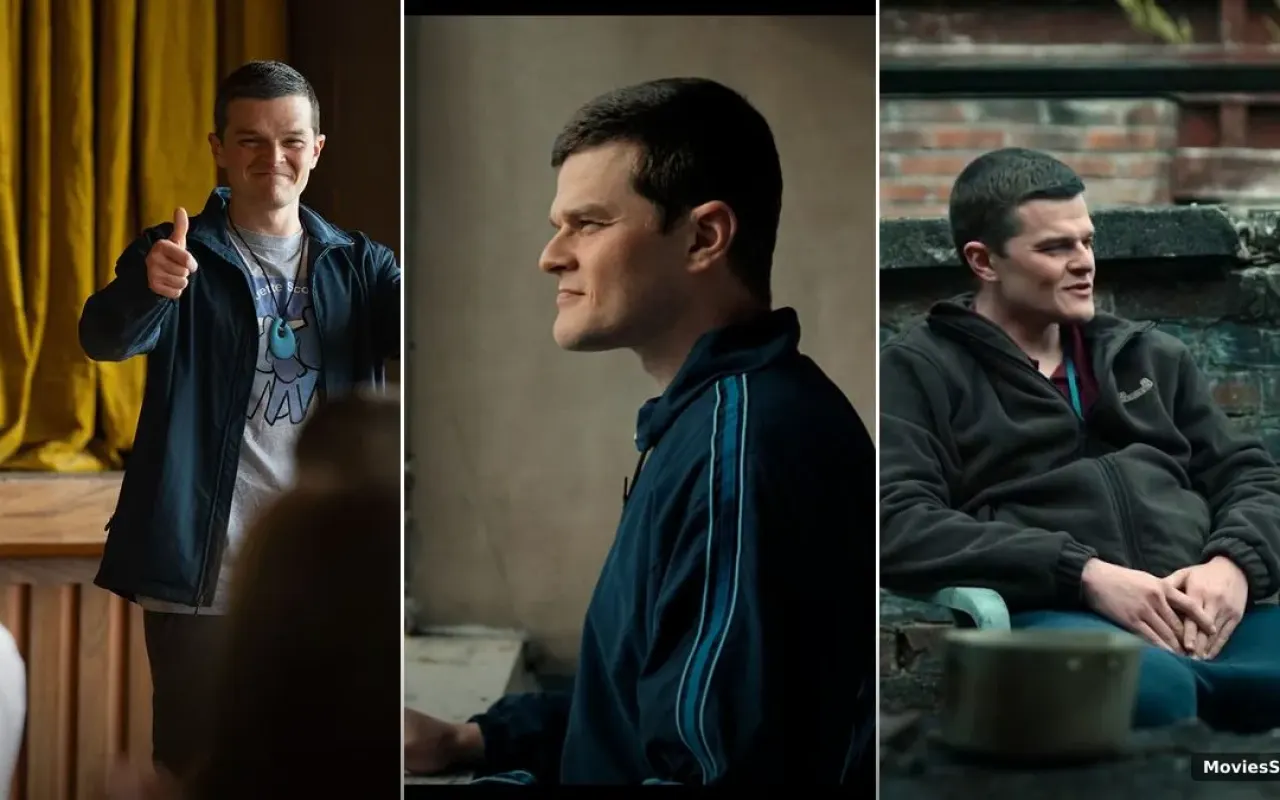
The 2026 film I Swear is a biographical drama directed by Kirk Jones, starring Robert Aramayo. It follows the true story of John Davidson, a Scottish activist who rose from a troubled childhood with Tourette Syndrome to become a nationally recognized educator and recipient of an OBE from Queen Elizabeth II for his services to the community.
Who is John Davidson? The Real Man Behind 'I Swear'
The I Swear movie true story begins in Galashiels, Scotland, in the early 1980s. John Davidson was a typical 12-year-old with dreams of a professional soccer career until the sudden onset of involuntary tics. What began as simple physical movements soon escalated into complex vocal tics and coprolalia—the involuntary utterance of obscene or socially inappropriate remarks.
In an era where Tourette Syndrome was poorly understood, Davidson’s symptoms were often mistaken for deliberate rebellion or poor parenting. The film accurately depicts the harsh realities of his youth:
- Educational Ostracization: Davidson was frequently punished by teachers and eventually expelled from school for outbursts he could not control.
- Family Strain: His mother, Heather (played by Shirley Henderson), struggled to cope with the condition, while his father eventually left the family, unable to handle the social stigma.
- Social Isolation: Simple tasks like grocery shopping or eating at a restaurant became gauntlets of judgment and, occasionally, physical violence.
Davidson first entered the public consciousness in the groundbreaking 1989 documentary John’s Not Mad. Broadcast when John was just 16, the film provided a raw look at his daily life and the impact of his condition on the Galashiels community. This was followed by two sequel documentaries when he was 30 and 37, creating a 30-year record of his life that served as the primary research material for the 2026 biopic.
Fact-Checking 'I Swear': What the Movie Changed
While I Swear is praised for its emotional honesty, director Kirk Jones took some creative liberties to fit Davidson's 50-year journey into a cinematic narrative. One of the most significant figures in the film is Dottie Achenbach, portrayed by Maxine Peake. In the movie, Dottie is a psychiatric nurse and the mother of John's friend Murray, who provides the unconditional acceptance John lacked at home.
In reality, Dottie is a composite of several mentors and healthcare professionals who supported Davidson through the Scottish Border Community Trust. The film’s portrayal of John’s "found family" highlights a critical truth: the most effective treatment for Tourette’s is often social acceptance rather than medication. During the 1990s, Davidson was prescribed various antipsychotics and sedatives, such as Haloperidol, which he found more debilitating than the tics themselves—a detail the film touches on through his strained relationship with his mother’s insistence on "curing" him.
John Davidson's Life vs. The Film Timeline
| Event | Real Life Date | Film Portrayal |
|---|---|---|
| Onset of Symptoms | 1983 (Age 12) | Depicted as a sudden shift at age 14/15. |
| 'John's Not Mad' Documentary | 1989 | Referenced as the catalyst for his public advocacy. |
| Receiving the OBE | 2019 | Used as the framing device for the entire movie. |
| The BAFTA Win | 2026 | The "meta-epilogue" that changed the film's legacy. |
The 2026 BAFTA Controversy Explained
The most significant modern development in the I Swear movie true story isn't in the film itself, but in the events surrounding its awards season success. During the 2026 BAFTA ceremony, John Davidson was an invited guest, seated near the stage to celebrate the film’s five nominations. However, a BBC iPlayer broadcast error turned a night of triumph into a national scandal.
As Michael B. Jordan and Delroy Lindo (stars of the film Sinners) took the stage to present an award, Davidson experienced a severe vocal tic, shouting a racial slur. Because Davidson was seated near a "hot" microphone intended to capture audience atmosphere, the word was broadcast clearly to millions of viewers.
The controversy was twofold:
- The BBC's Failure: The ceremony was pre-recorded and aired two hours later. Despite having ample time to edit the audio, the BBC broadcast the slur "pre-watershed" (before 9 p.m.). The incident remained on the BBC iPlayer for 14 hours before being removed.
- The Public Reaction: While the live audience had been briefed on Davidson’s condition, the home audience was not. This led to a viral wave of outrage, with many accusing Davidson of "hidden bigotry" despite the medical reality of his neurological condition.
Understanding Coprolalia: Why the Slur Occurred
To understand the BAFTA 2026 controversy explained, one must understand the medical mechanics of Coprolalia. Contrary to popular belief, only about 10% of people with Tourette Syndrome experience coprolalia. It is not a reflection of the person’s inner thoughts or prejudices. In fact, tics often manifest as the "worst possible thing" a person could say in a given environment—a phenomenon known as "ironic processing."
"The problem is not Tourette’s; the problem is that people don’t know enough about Tourette’s." — A central theme in I Swear and a sentiment echoed by Davidson himself.
Davidson later issued a personal apology, stating he was "deeply mortified" and reached out privately to Jordan and Lindo. While Michael B. Jordan has not issued a formal public response, industry insiders suggest the actors understood the involuntary nature of the incident, even if the broadcast was deeply painful for Black viewers.
Robert Aramayo I Swear Performance: Method and Mastery
At the center of the film's critical success is the Robert Aramayo I Swear performance. Aramayo, known for his roles in high-fantasy epics, underwent a rigorous physical transformation to play Davidson. He spent months working with Tourette Syndrome advocacy groups and studying the three documentaries of Davidson’s life to ensure his tics didn't look like "acting."
Critics have compared his performance to other notable portrayals of Tourette’s, such as Edward Norton in Motherless Brooklyn, but noted that Aramayo’s portrayal is uniquely grounded in the "grim-com" tradition of British cinema. Like The Full Monty or Pride, I Swear uses humor not to mock the condition, but as a survival mechanism for the characters. Aramayo’s ability to balance the "jittery, self-sabotaging energy" of a man trying to blend in with the warmth of Davidson’s real-life personality earned him the BAFTA for Best Actor.
Tourette Syndrome Medical Facts and Representation
For many viewers, I Swear is their first deep dive into the neurological condition. Beyond the tics, the film highlights the "waxing and waning" nature of the disorder—symptoms often worsen under stress (like meeting the Queen) but can recede when the individual is focused on a task they love, such as John’s work with the Scottish Border Community Trust.
Medical Facts to Consider:
- Prevalence: Tourette Syndrome affects approximately 1 in 100 school-aged children.
- Gender: It is three to four times more common in males than females.
- Comorbidities: Many individuals with Tourette’s also manage ADHD, OCD, or anxiety, which the film portrays through John's constant "social checking."
- Long-term Outlook: While there is no cure, many people see a significant decrease in tics as they reach late adolescence or adulthood.
Key Takeaways: The Legacy of 'I Swear'
- True Story Roots: The film is a faithful adaptation of John Davidson’s life, primarily informed by the 1989 documentary John's Not Mad.
- The BAFTA Incident: A BBC iPlayer broadcast error led to a slur being aired, highlighting the ongoing need for Tourette Syndrome advocacy and better media standards.
- Award-Winning Acting: Robert Aramayo won Best Actor for his committed, non-exploitative portrayal of Davidson.
- Medical Reality: Coprolalia affects only 10% of patients and is an involuntary vocalization, not a reflection of character.
- Release Date: Following its UK success, I Swear is scheduled for a US theatrical release on April 24, 2026.
Conclusion: A Moving Document of Resilience
The I Swear movie true story is ultimately one of triumph over misunderstanding. John Davidson’s journey from a bullied teenager in Galashiels to an OBE recipient is a testament to the power of community acceptance. While the 2026 BAFTA controversy cast a temporary shadow over the film, it also served as a painful but necessary reminder of the film’s central message: the world still has much to learn about the complexities of the human brain.
As I Swear moves to international streaming platforms later this year, it stands as more than just "BAFTA bait." It is a vital piece of disability representation that refuses to sanitize the difficult parts of John Davidson’s life, proving that even in our most involuntary moments, our humanity remains intact.