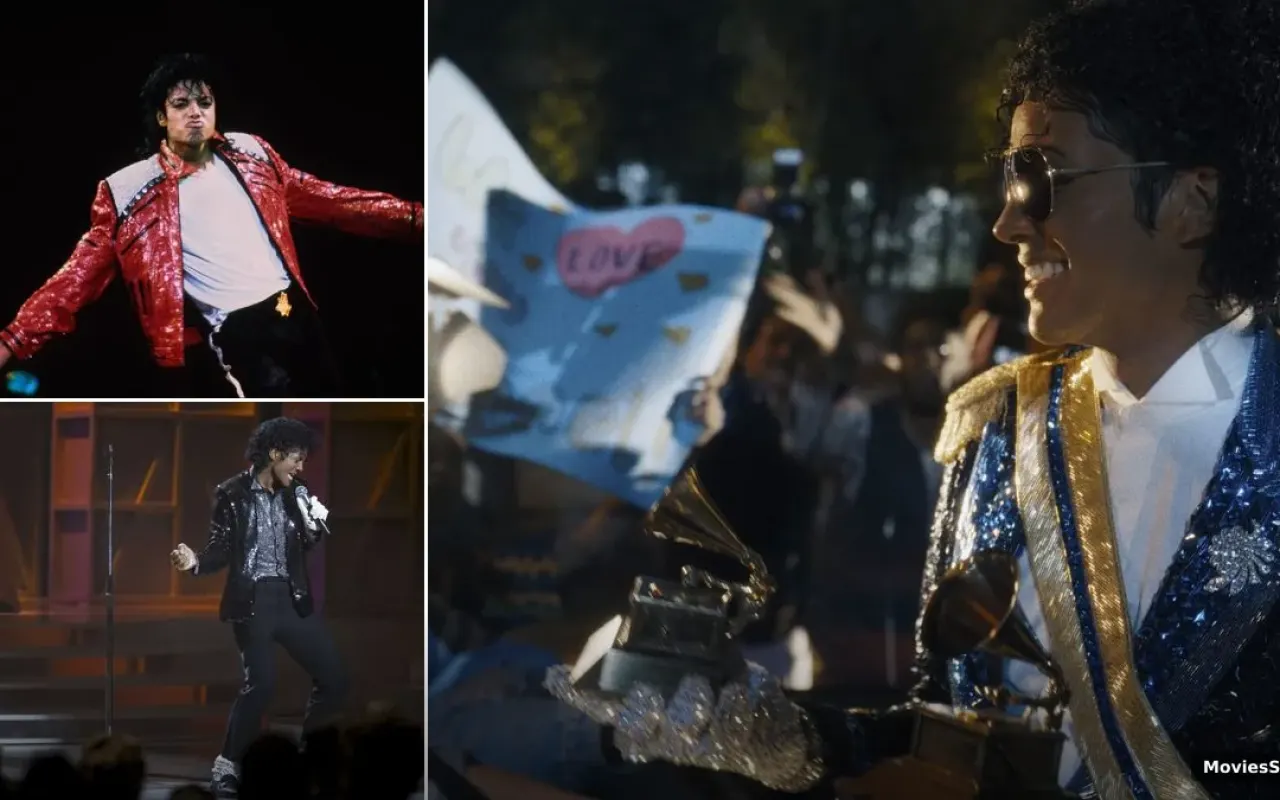
The lights dim, the iconic four-count beat of "Billie Jean" kicks in, and for a moment, the world forgets it is watching a movie. Since its record-breaking $217 million opening weekend in April 2026, Antoine Fuqua’s Michael has ignited a global conversation that transcends typical cinema. At the heart of this fervor is 29-year-old Jaafar Jackson, who takes on the impossible task of portraying his uncle, Michael Jackson. While his physical transformation is uncanny, the most debated element of the performance remains the audio: Is Jaafar Jackson singing in Michael, or are we simply hearing a ghost in the machine?
The Vocal Mystery: How Jaafar Jackson Recreated the MJ Sound
Is Jaafar Jackson really singing in the Michael movie? Yes and no. The film utilizes a sophisticated vocal blend that merges Jaafar Jackson’s live on-set singing with Michael Jackson’s original remastered recordings. While the high-energy stadium performances lean heavily on Michael’s iconic studio tracks, the intimate acapella moments and raw studio scenes are purely Jaafar’s natural voice.
Director Antoine Fuqua and producer Graham King—the man behind the Oscar-winning Freddie Mercury biopic Bohemian Rhapsody—made a definitive creative choice early in production: no artificial intelligence would be used to mimic Michael’s voice. Instead, the production relied on the technical mastery of Academy Award-winning sound editor John Warhurst. The goal was not to create a digital clone, but to allow Jaafar’s "spiritual connection" to the role to breathe through the music.
Behind the Scenes: The Technical Process of Blending Voices
To achieve the Michael Jackson biopic vocals, the sound team went back to the source. They utilized original multitrack recordings and vocal stems provided by the Jackson estate and Sony Music. These were then meticulously layered with Jaafar’s microphone feed from the set. This process, often mixed in a 360-degree Dolby Atmos sound mix, allows the audience to hear the "breathiness" and effort of a live performance while maintaining the unmistakable timber of the King of Pop.
In the first half of the film, which focuses on the Jackson 5 era, the vocal duties are shared by Juliano Krue Valdi. The transition between Juliano’s youthful energy and Jaafar’s mature register was handled through a seamless cross-fade of remastered tracks, ensuring that the evolution of Michael’s voice felt organic. Specifically, in the recreation of the Motown 25 performance, the team used the original 1983 vocal master but allowed Jaafar’s live "grunts" and footwork-induced breaths to sit higher in the mix, providing a "lived-in" texture that pure lip-syncing cannot achieve.
Comparison: Michael vs. Elvis and Bohemian Rhapsody
The vocal strategy in Michael represents a middle ground in the evolution of music biopics. Unlike Austin Butler in Elvis, who sang the early-era songs entirely himself, or Rami Malek in Bohemian Rhapsody, who relied on a mix of Freddie Mercury and sound-alike Marc Martel, Jaafar Jackson's Michael movie performance is unique because of the biological similarity. Because Jaafar is Michael’s nephew, his natural vocal register and inflection already share a genetic shorthand with the subject, making the "vocal blend" far more seamless than his predecessors.
Training at Hayvenhurst: How Jaafar Became His Uncle
Jaafar Jackson’s preparation was less about method acting and more about a three-year immersion into the family legacy. Much of this training took place at Hayvenhurst, the Jackson family’s historic estate in Encino. For two years of the audition process alone, Jaafar worked daily to prove he could handle the physical and vocal rigors of the role.
The production enlisted legendary choreographers Rich and Tone Talauega, who had worked with Michael himself. Their task was to "infuse the syllabus" of Michael’s movement into Jaafar’s DNA. This wasn’t just about the moonwalk; it was about the "needle-precise timing" and the emotional weight behind every gesture. To supplement the physical work, Jaafar trained with renowned vocal coach Eric Vetro (who has coached stars like Ariana Grande and Timothée Chalamet) to stretch his range into Michael’s higher "head voice" without losing the power required for the Bad-era anthems.
- Training Duration: 3 years of intensive rehearsal.
- Choreography: Daily sessions with Rich and Tone Talauega.
- Vocal Focus: Mastering the "hiccup," the falsetto transitions, and the grit of the 1980s rock-pop sound.
- Historical Immersion: Studying private home movies and unreleased rehearsal footage provided by the estate.
The Jackson Family Tree: Who is Jaafar Jackson?
While the world sees him as the "new Michael," Jaafar is a musician in his own right. Born on July 25, 1996, to Jermaine Jackson and Alejandra Genevieve Oaziaza, he grew up in the epicenter of music royalty. His father, Jermaine, was the second lead vocalist of the Jackson 5, and that heritage is evident in Jaafar’s 2019 debut single, "Got Me Singing."
The family dynamics behind the film are as complex as the man himself. While his father and brothers Jackie, Tito, and Marlon served as executive producers, other family members remained at a distance. Notably, Janet Jackson was asked to be involved but "kindly declined," leading to her absence from the film’s narrative. Meanwhile, the casting of Colman Domingo as the patriarch Joe Jackson and Nia Long as Katherine Jackson provides a powerhouse foundation for Jaafar’s debut performance.
The Controversy: Accuracy vs. The Estate-Approved Narrative
Despite the critical acclaim for the Michael movie soundtrack 2026 and Jaafar’s performance, the film has not escaped scrutiny. Because the project was produced in collaboration with the Jackson estate, critics like Leaving Neverland director Dan Reed have questioned the film's historical objectivity. Paris Jackson, Michael’s daughter, has been vocal about her lack of involvement, even calling the early scripts "sugar-coated."
The film addresses this by leaning into the "spiritual" and "human" side of the artist, focusing on the 1988 Bad World Tour as the emotional peak of his career. It attempts to balance the public's demand for the Billie Jean performance magic with the private pressures of a man who was, as the film suggests, "never allowed to be a child."
Critical Reception and Oscar Buzz: A New Star is Born?
The industry consensus is that Jaafar Jackson has achieved something rare: he has moved beyond imitation into embodiment. Early projections for the 2027 awards season place him as a frontrunner for Best Actor, drawing comparisons to the transformative turns of Joaquin Phoenix and Jamie Foxx. The Michael movie soundtrack 2026 is also expected to dominate the charts, featuring a mix of the original masters and new "live" versions that showcase the vocal blend of Jaafar and Michael.
Fact Check: The Vocal Breakdown
| Song / Sequence | Vocal Source | Technical Note |
|---|---|---|
| "I Want You Back" | Juliano Krue Valdi / MJ Original | Blended for "first-pass" energy. |
| "Don't Stop 'Til You Get Enough" | Jaafar Jackson (Solo) | Studio improvisation scene; 100% Jaafar. |
| "Billie Jean" (Motown 25) | MJ Original / Jaafar live grunts | Remastered 1983 stems used for fidelity. |
| "Man in the Mirror" (Ending) | Vocal Blend | High-energy mix for stadium scale. |
| Acapella "Human Nature" | Jaafar Jackson (Solo) | No backing track; captured live on set. |
Key Takeaways
- The Vocal Mix: The film uses a "vocal blend" of Jaafar Jackson and Michael Jackson; it is NOT 100% one or the other.
- No AI: Contrary to rumors, the production did not use artificial intelligence to recreate Michael’s voice.
- Acapella Moments: Scenes where Michael sings without music are almost exclusively Jaafar Jackson’s natural voice.
- Family Ties: Jaafar is the son of Jermaine Jackson and trained for three years to earn the role.
- Technical Mastery: Music supervisor John Warhurst used original vocal stems to ensure the "King of Pop" sound remained authentic.
Conclusion: The Legacy Carried Forward
As the credits roll on Michael, the lingering feeling isn't just one of nostalgia, but of a torch being passed. By choosing to blend the voices of the past and the present, the filmmakers have created a bridge between the legend of Michael Jackson and the burgeoning talent of Jaafar Jackson. Whether the film "sugar-coats" the history or not, the musical achievement is undeniable. Jaafar didn't just learn to moonwalk; he learned to find the soul within the sound, proving that while there will only ever be one King of Pop, his family is more than capable of keeping the music alive for a new generation.