The release of the Michael Jackson biopic, Michael, has shattered cinematic records, but the journey from the set to the screen was far from a smooth moonwalk. While the film’s $97 million domestic debut marks the biggest opening of all time for a musical biopic, the production was nearly derailed by a high-stakes legal oversight. To understand the Michael movie true story, one must look beyond the electrifying stage recreations and into the $50 million reshoot that fundamentally altered the film’s narrative arc and its depiction of the King of Pop’s complex legacy.
The $97 Million Moonwalk: Breaking Michael Movie Box Office Records
The commercial performance of Michael has defied critical skepticism, proving that the global appetite for the King of Pop remains insatiable. With a $217.4 million worldwide opening, the film easily eclipsed the previous record-holder, Straight Outta Compton ($60 million), and outpaced recent heavyweights like Bohemian Rhapsody and Elvis. For Lionsgate and Universal Pictures, the gamble on a $200 million production budget—unprecedented for the genre—has paid off, marking the studio’s most significant hit in over a decade.
The film’s success is driven by a stark divide between professional critics and the general public. While some reviewers labeled the film a "sanitized hagiography," audiences responded with a stellar CinemaScore of "A-." This disconnect highlights a significant cultural trend: mainstream audiences are increasingly seeking "concert-style" experiences in theaters. Much like the success of the MJ Broadway musical and the Cirque du Soleil show One, Michael prioritizes the "magic" of the performer over a forensic accounting of his controversies. This strategy secured massive turnouts in Imax and Premium Large Format (PLF) theaters, which accounted for over 14% of North American ticket sales.
The $50 Million Reshoot: Why the Third Act Was Rewritten
The most significant controversy surrounding the production involves a massive, late-stage pivot that cost the estate and the studio an additional $50 million. This was not a creative choice, but a legal necessity born from a decades-old document.
Why were there reshoots for the Michael movie?
The Michael biopic underwent $50 million in reshoots after producers discovered a clause in the 1994 Jordan Chandler settlement that barred the depiction or mention of the accuser in film. This forced director Antoine Fuqua to remove the 1993 allegations from the script and end the film in 1988.
The Jordan Chandler settlement clause is a piece of legal history that continues to shape Jackson’s public narrative. In 1994, a civil settlement was reached between Jackson and the Chandler family. Hidden within the dense legal language of that agreement was a "non-depiction" or "commercial exploitation" ban. This clause effectively prohibited any dramatization of the allegations or the individuals involved in a commercial film or television production.
The estate’s legal team, led by co-executor John Branca, reportedly realized the oversight only after Antoine Fuqua had already filmed a substantial portion of a third act that dealt with the 1993 allegations. This necessitated 20 days of intensive reshoots. The original script, penned by John Logan, reportedly included scenes of Jackson being "stripped naked and treated like an animal" by authorities during the 1993 investigation. All of this was excised, forcing the production to shift the film's climax to the 1988 Bad World Tour at Wembley Stadium.
Michael Movie Legal Analysis: The 1994 Settlement Language
Legal experts note that the enforceability of the Chandler clause is a rare example of a "permanent gag order" on a public figure's historical record. While most settlements focus on financial confidentiality, the specific prohibition of "dramatized representation" created a unique hurdle for Graham King and the production team. By including the allegations, the film would have breached the 1994 contract, potentially opening the estate to massive lawsuits from the original accusers or their legal representatives. This legal reality is the primary reason the film stops short of Jackson’s most turbulent years, creating what many have called a "sanitized" timeline.
Jaafar Jackson as Michael: The Truth About the Vocals
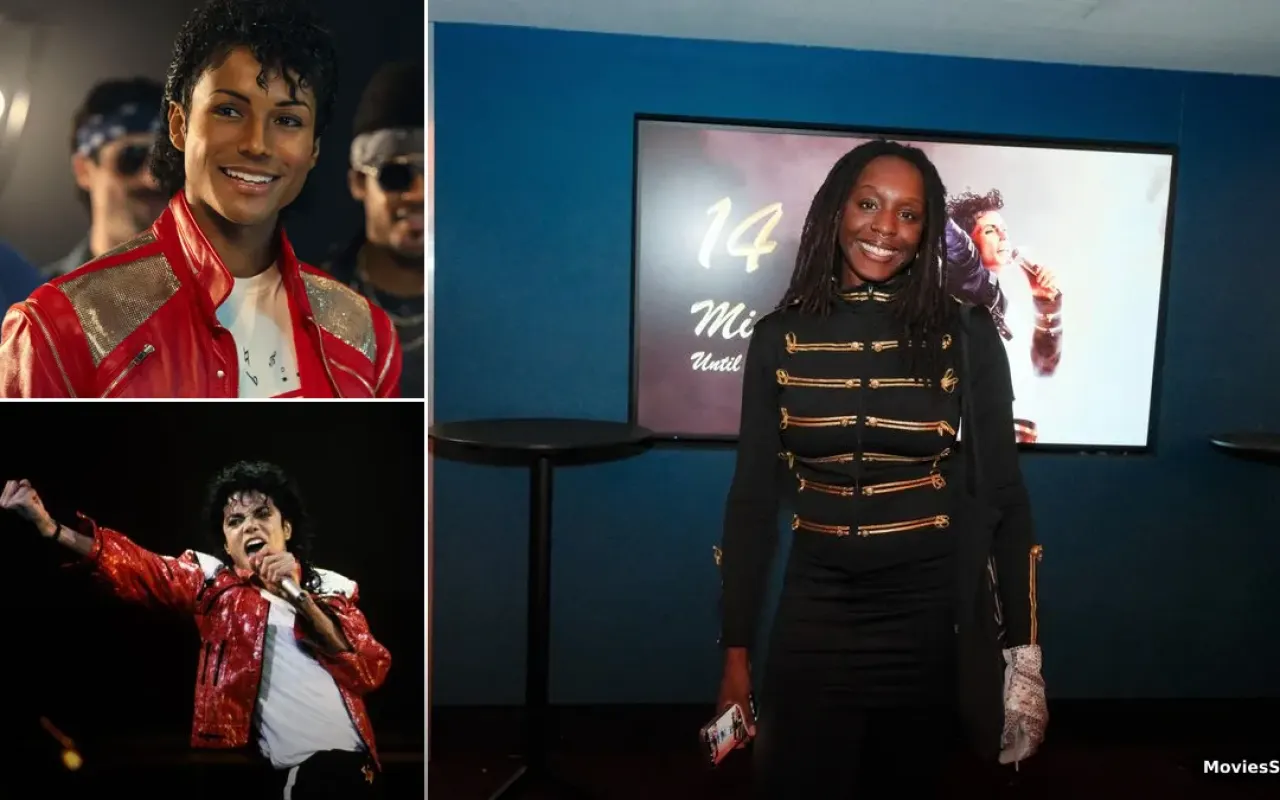
One of the most frequent questions from audiences is: is Jaafar Jackson really singing in the movie? The answer lies in a sophisticated technical process known as "vocal blending." To achieve the sonic authenticity required for a $200 million blockbuster, the sound team utilized a mix of Jaafar Jackson Michael Jackson vocals.
- Studio Sessions: For scenes where Michael is seen composing or recording in the studio (such as the Off the Wall sessions), the audio is predominantly Jaafar Jackson’s natural voice.
- Performance Tracks: During the massive concert recreations, like the Thriller music video or the 1988 Wembley show, the audio is a 70/30 blend. The "lead" vocal is often Michael Jackson’s original master recording, layered with Jaafar’s live vocal to capture the physical breathiness and effort of the dance moves.
- The Training: Jaafar spent over a year at Neverland Ranch and the family’s Encino estate, Havenhurst, undergoing rigorous Jaafar Jackson acting training. This involved studying thousands of hours of footage to replicate Michael’s "spiritual" presence, a feat that director Antoine Fuqua claims brought the crew to tears during screen tests.
While Jaafar’s resemblance to his uncle is uncanny, professional choreographers have noted subtle differences. While Jaafar captures the "spirit" of the movement, the film occasionally relies on rapid editing to mask the sheer athletic impossibility of Michael’s peak 1980s choreography. However, for most viewers, the illusion is seamless, particularly in the recreations of the Beat It and Billie Jean performances.
Fact vs. Fiction: The Portrayal of Joe Jackson and the Family
The Michael movie true story is heavily filtered through the lens of the Jackson estate, which naturally impacts the portrayal of the family patriarch, Joe Jackson. Played by Colman Domingo, Joe is depicted as a stern, often violent disciplinarian, yet the film stops short of the more harrowing accounts found in historical records.
The Real Joe Jackson vs. The Film
Historical accounts from the 1992 miniseries The Jacksons: An American Dream and Michael’s own 2003 interviews suggest a level of trauma that the film "soft-focuses." In reality, Joe Jackson’s regime in Gary, Indiana, involved not just rehearsals, but physical punishment with belts and switches—a fact the film acknowledges but frames as a "necessary evil" to produce greatness. The film also omits later allegations regarding Joe’s extramarital affairs and the deeper fractures within the Jackson 5.
The Absence of Janet Jackson
A notable content gap in the film is the virtual absence of Janet Jackson. While the film focuses on the brothers, Janet—who was a massive star in her own right during the 1980s—is largely sidelined. Reports suggest that Janet Jackson opted out of the Michael biopic to maintain control over her own narrative, as she is currently developing her own feature-length project. This decision prevented the film from exploring the sibling dynamic that was so central to the family's 1990s era.
The Role of Juliano Valdi
While Jaafar Jackson carries the second half of the film, 12-year-old Juliano Valdi has been hailed as the movie's "secret weapon." Valdi portrays Michael during the Motown era, capturing the haunting isolation of a child star. Child stardom psychologists note that Valdi’s performance accurately reflects the "regression" seen in many child performers who are denied a standard upbringing—a theme the film uses to explain Michael’s later fixation with Peter Pan and the creation of Neverland.
Technical Analysis: CGI and Production Design
With a production cost nearing $200 million, Michael is one of the most expensive biopics ever made. For comparison:
- Michael (2026): $200 million
- Elvis (2022): $85 million
- Rocketman (2019): $40 million
A significant portion of this budget was allocated to the CGI rendering of Bubbles, Michael’s pet chimpanzee. To avoid the ethical complications of using live primates, the production used high-end motion capture. While some critics found the CGI animal to be in the "uncanny valley," it allowed for scenes of emotional intimacy between Michael and the chimp that would have been impossible with a live animal. Additionally, the film used extensive digital set extensions to recreate the 1980s-era Neverland Ranch and the Jackson 5's early neighborhood in Gary, Indiana.
The Michael Movie Sequel: What "His Story Continues" Actually Means
The film ends with the title card "His Story Continues," a clear signal that a Michael movie sequel is already in development. Following the record-breaking Michael movie box office records, Lionsgate is moving forward with a multi-film franchise strategy.
The sequel is expected to cover the 1990s and the 2000s, including the 2005 criminal trial. However, the production faces the same legal hurdle: the Jordan Chandler settlement clause. To move forward, the estate’s legal team will likely need to renegotiate terms with the Chandler estate or find a creative way to address the era without violating the "non-depiction" agreement.
The "sequel" strategy is also a core part of the estate’s long-term PR plan. By splitting the life story into two parts, they have successfully monetized the "nostalgic" era of the King of Pop while deferring the more controversial and polarizing chapters to a later date. This allowed the first film to function as a "feel-good" blockbuster, maximizing its opening weekend profit—of which the estate reportedly takes a direct 25% cut of the gross.
Key Takeaways
- The $50M Oversight: A legal clause in the 1994 Jordan Chandler settlement forced 20 days of reshoots and a complete rewrite of the film's ending.
- Box Office King: Michael set a new record for musical biopics, driven by an "A-" CinemaScore and massive Imax turnout.
- Vocal Mastery: The film uses a "blended" audio technique, combining Jaafar Jackson's live singing with Michael's original master tracks.
- Sanitized History: The film omits the 1993 and 2005 allegations due to both legal restrictions and the estate's influence on the script.
- The Future: A sequel is in the works, though it must navigate the same complex legal "non-depiction" clauses that plagued the first film.
Conclusion: A Legacy Redefined
The Michael biopic is more than just a movie; it is a meticulously crafted piece of brand management that successfully separates the art from the artist for a new generation. By focusing on the "superhero" on stage and the "sensitive" man behind the scenes, Antoine Fuqua and Graham King have created a cinematic event that prioritizes empathy over investigation. Whether the upcoming sequel will offer a more honest reckoning with the King of Pop's darker chapters remains to be seen, but for now, Michael Jackson’s cultural and commercial dominance is once again undisputed.