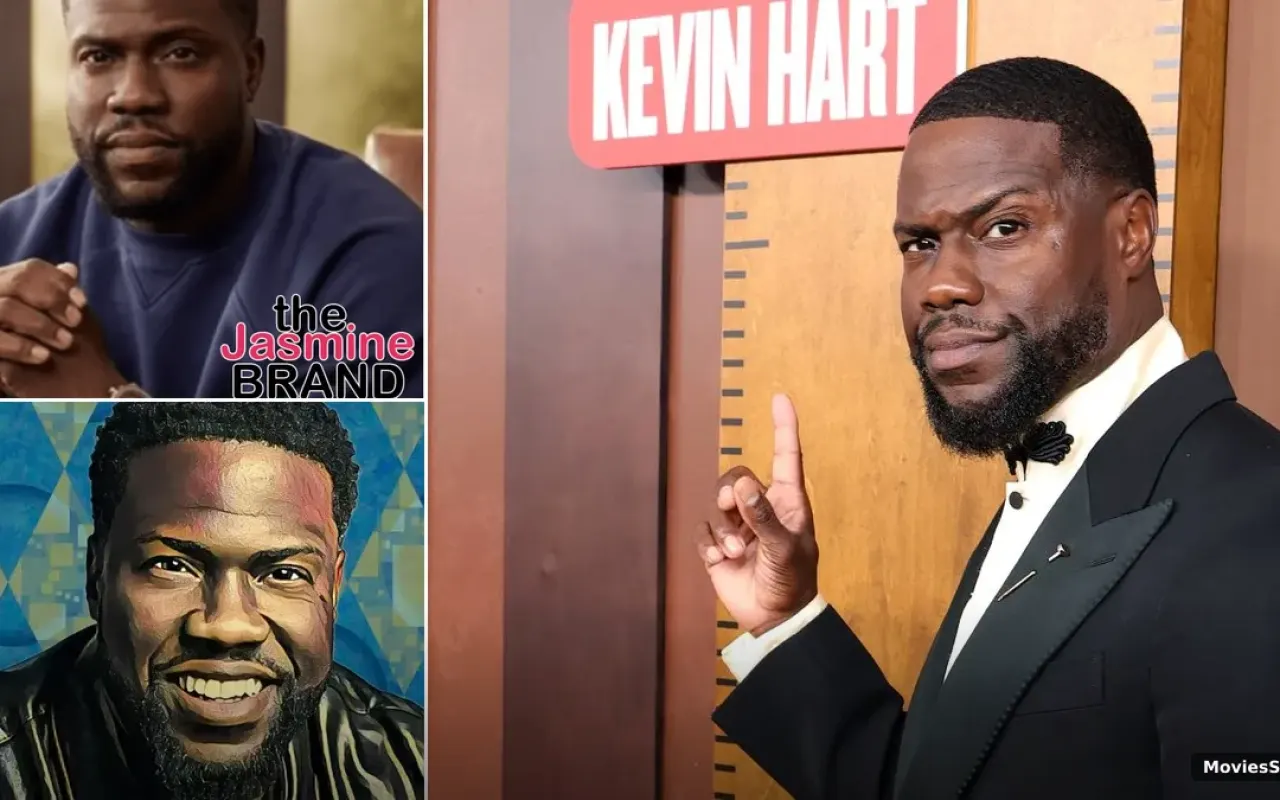
While the world was busy watching The Roast of Kevin Hart on Netflix in May 2026, the real heat wasn't coming from the stage—it was radiating from the internal collapse of his media empire. Behind the scenes of the comedy specials and high-octane movies, Hart’s multi-platform company, Hartbeat, is currently navigating a period of unprecedented instability that has left employees questioning if the "Boss Man" is actually looking for an exit strategy.
What is happening with Kevin Hart's company Hartbeat?
Kevin Hart's media company, Hartbeat, is currently facing a significant crisis characterized by multiple rounds of layoffs, the departure of three CEOs in under two years, and a strategic pivot toward brand licensing. Following a valuation of $650 million in 2022, the company has downsized its workforce by approximately 25% and entered a deal with Authentic Brands Group, leading to concerns that the company is transitioning away from original content production.
The Bloomberg Investigation: A Company in 'Chaos'
The narrative of the Kevin Hart Hartbeat layoffs isn't just about a few pink slips; it’s a story of a massive 25% staff reduction that has gutted the company’s creative core. In late 2024, just days before Thanksgiving, Hartbeat terminated roughly 20 of its 80 employees. The bleeding didn't stop there. By December 2025, another wave of cuts targeted the scripted television division, marketing, social media, and the podcasting wing.
The "vibe shift" inside the office has been described by insiders as nothing short of chaotic. The company, which once aggressively expanded into a 40,000-square-foot luxury office in West Hollywood—formerly occupied by Oprah Winfrey—is now shuttering its New York outposts and scaling back its ambitions. Employees who survived the cuts describe a culture that shifted overnight from a creative powerhouse to a corporate shell. The lavish headquarters, once filled with high-end African art and designer furniture, now feels like a ghost town where staff meetings are routinely canceled and development has slowed to a crawl.
The most jarring part of the Hartbeat media company crisis is the reported absence of its founder. While Kevin Hart remains the face of the brand, employees claim he went "MIA" for weeks or even months at a time. After one particularly brutal round of layoffs, Hart reportedly appeared briefly on a Zoom call, spoke for a few minutes without taking questions, and then changed his phone number, making himself virtually inaccessible to everyone but his top lieutenants.
The Revolving Door: A Timeline of Leadership Failures
To understand how a company valued at $650 million in 2022 began to unravel, you have to look at the C-suite. Hartbeat has seen three CEOs in less than two years—a turnover rate that would make even a tech startup blush.
The CEO Timeline:
- Thai Randolph (2022 – Late 2023): The former CEO of Laugh Out Loud Productions, Randolph was instrumental in the merger that created Hartbeat. Her departure signaled the first crack in the foundation.
- Jay Levine (Late 2023 – Late 2024): A veteran from Warner Bros. Discovery, Levine was brought in to professionalize the operation but lasted less than a year before negotiating his exit.
- Kevin Hart (January 2025 – Present): Hart stepped back into the CEO role out of necessity, but his involvement has been characterized as largely ceremonial by those on the ground.
The exodus hasn't been limited to the top spot. The Chief Financial Officer, Eric Stoneburner, and the Chief Content Officer also resigned during this period. In their wake, Jeff Clanagan, the President and Chief Distribution Officer, has emerged as the primary power broker. However, Clanagan’s leadership has been polarizing. Reports suggest he has pushed the company toward AI-generated projects and outside ventures that benefit his personal business interests, leading to a deep rift between the old creative guard and the new corporate strategy.
The Kevin Hart Authentic Brands Group Deal: Lifeline or Exit Strategy?
In January 2026, Hart made a move that many insiders saw as the final nail in the coffin for Hartbeat’s original mission. He struck a massive deal with Authentic Brands Group (ABG), the licensing giant that manages the estates of Marilyn Monroe and Elvis Presley, as well as the brands of Shaquille O’Neal and David Beckham.
On paper, the deal provided the capital to buy out Abry Partners, the private equity firm that owned a 15% stake in Hartbeat. But the Kevin Hart Authentic Brands Group deal also shifted Hart’s endorsement business and the rights to his name, image, and likeness (NIL) away from Hartbeat and into the hands of ABG. This move effectively turned Hartbeat from a production house into a brand licensing vehicle.
For the staff, the message was clear: Hart was reclaiming his personal brand while distancing himself from the overhead of a full-scale media company. The Authentic Brands Group celebrity portfolio is built on longevity and licensing, not the risky, high-cost world of scripted television. This pivot suggests that the future of Hartbeat isn't about making the next great sitcom—it’s about putting Hart’s face on as many products as possible with minimal operational cost.
Stalled Projects: What Happened to Barbershop and Lil Kev?
The collateral damage of this corporate restructuring is a graveyard of "frozen" or canceled projects. Hartbeat’s original vision was to build a platform that could survive without Kevin Hart’s physical presence in every frame. That vision has failed.
The casualty list includes:
- Barbershop TV Series: A highly anticipated adaptation for Amazon that was midway through production when the scripted division was gutted.
- Lil Kev Season 2: The animated series for BET+ has been shelved indefinitely.
- The Podcast Division: Once a primary focus, the division is now a legal battlefield.
The trade secret lawsuit involving former podcast executives Eric Eddings and Lesley Gwam has become a symbol of the company's internal friction. Hartbeat sued the duo for allegedly planning to launch a competing venture, but a judge recently threw out a preliminary injunction, calling Hartbeat’s claims "vague, ambiguous, and overly broad." This legal warfare has drained resources and further tanked employee morale during the Kevin Hart business struggles.
The Bigger Picture: The Bursting of the Celebrity Studio Bubble
Hartbeat is not an isolated case; it’s a symptom of a larger celebrity media company bubble that is currently popping. During the mid-2010s streaming boom, it seemed like every A-lister was launching a studio. We saw Reese Witherspoon’s Hello Sunshine and LeBron James’s SpringHill Company secure massive valuations based on the promise of "content ecosystems."
But the content spending slowdown of 2024 and 2025 changed the math. As streamers like Netflix and Max pulled back on spending, they stopped buying projects that didn't have a guaranteed "main character" attached. For Hartbeat, this meant if Kevin Hart wasn't starring in it, nobody was buying it. Unlike Gran Coramino Tequila, which hit $200 million in sales by February 2026 because it’s a physical product people can buy at a store, a media company requires a constant pipeline of sales to streamers who are no longer writing blank checks.
In a Hartbeat vs SpringHill Company comparison, the struggle is the same: how do you scale a business beyond the celebrity founder? The Hartbeat revenue 2025 figures haven't been made public, but the shift to brand licensing via ABG suggests that the "studio" model is no longer sustainable for Hart. He is choosing the "Brand" over the "Content," a move that protects his personal wealth but leaves his media empire in a state of permanent "restructuring."
Key Takeaways
- Massive Downsizing: The Kevin Hart Hartbeat layoffs have reduced the staff by 25%, with the most recent cuts hitting in December 2025.
- Leadership Vacuum: Three CEOs in less than two years have left the company without a clear creative direction, with Hart often described as "MIA."
- Licensing Pivot: The deal with Authentic Brands Group signals a move away from original production and toward brand licensing.
- Project Fallout: High-profile projects like the Barbershop TV series and Lil Kev have been stalled or canceled.
- Industry Trend: Hartbeat’s struggle reflects the wider collapse of the celebrity-backed production model in a post-streaming boom economy.
The Future of Hartbeat
Is Hartbeat shutting down? Not officially. But it is certainly shrinking. The transition to a brand licensing vehicle under the ABG umbrella suggests that the version of Hartbeat that produced original scripted content is effectively over. Kevin Hart remains one of the most successful entertainers on the planet, but his attempt to build a "mini-major" studio has hit a wall of economic reality.
As the company moves forward, the focus will likely remain on Hart-centric projects—specials, roasts, and films where he is the star—while the broader dream of a platform for "diverse voices" becomes a secondary priority. For the employees who remain, the "Boss Man" might still be writing the emails, but the vision they signed up for has clearly left the building.