Real talk: there was a time when a new Star Wars movie felt like a global holiday. You’d book your tickets months in advance, argue about fan theories in the group chat, and treat the theater like a cathedral. But after seven years of big-screen silence, The Mandalorian and Grogu box office failure has signaled a glitch in the Matrix. What was supposed to be a triumphant return to cinemas has instead become a $246 million cautionary tale about what happens when a "cultural event" turns into a "content obligation."
The numbers are, frankly, brutal. Despite a solid $81 million domestic opening weekend ($102 million over the Memorial Day stretch), the film cratered in its second and third weeks. With a global haul sitting at roughly $246.9 million against a reported $165 million production budget, the math simply isn't mathing. When you factor in the massive Mandalorian movie P&A costs (prints and advertising), which industry analysts peg at an additional $100 million plus, this film needs to clear $500 million just to see a cent of profit. Right now, it’s not even halfway there.
The Numbers: A $246 Million 'Disaster' in Context
To understand the scale of this Disney Star Wars box office bomb, we have to look at the ghosts of Star Wars past. For years, Solo: A Star Wars Story was the franchise’s punching bag, ending its run with $213 million domestically. At its current trajectory, The Mandalorian and Grogu is struggling to even match that "failure," despite having the most recognizable character in the world (Grogu) on every poster.
The wild part? The film actually surpassed the $154 million domestic haul of Mad Max: Fury Road. In any other universe, beating a stone-cold sci-fi classic would be a win. But Star Wars isn't "any other" franchise. It’s a titan that demands billion-dollar returns to justify its existence. While the production budget was leaner than Solo’s $275 million, the Star Wars 2026 release schedule impact cannot be ignored. The movie was cannibalized by original, mid-budget horror hits like Backrooms and Obsession, which proved that audiences are currently more interested in fresh nightmares than recycled space adventures.
Featured Snippet: Why did The Mandalorian and Grogu struggle at the box office?
- Streaming Perception: Audiences viewed the film as "Disney Plus content" rather than a must-see theatrical event.
- Critical Reception: A 62% Rotten Tomatoes score cited a "threadbare narrative" and "episodic structure."
- Intense Competition: Original horror hits like Backrooms and Obsession captured the Gen Z and Millennial demographic.
- Star Wars Fatigue: A decade of high-frequency streaming releases eroded the "event" status of the brand.
The 'Frankenstein' Script: Was This Just Season 4 Repurposed?
One of the loudest complaints from fans and critics alike involves the "Frankenstein" nature of the film's narrative. There is a growing consensus—the "Frankenstein Theory"—that this movie was never intended to be a movie. Following the 2023 Hollywood strikes, which ground production to a halt, there’s heavy evidence that Lucasfilm took the scripts for a cancelled Mandalorian Season 4 and stitched them together into a 132-minute feature.
The episodic structure is impossible to ignore. The film feels like three distinct TV episodes forced into a trench coat. You have the "side quest" energy of Din Djarin and Grogu rescuing Rotta the Hutt (Jabba’s son, voiced by Jeremy Allen White) from a gladiator pit, followed by a mission for the New Republic under a new employer played by Sigourney Weaver. It lacks the cohesive "A-to-B" momentum of a cinematic epic, instead opting for a "slack" pacing that feels like it’s waiting for a commercial break that never comes.
Furthermore, the physical absence of Pedro Pascal is palpable. While he provides the voice and appeared for "face scenes," much of the heavy lifting was done by stunt doubles. For a theatrical film, audiences expected more of the man behind the mask, not just a voice-over performance that could have been recorded in a home studio.
Grogu Fatigue: When the 'Baby Yoda' Bubble Burst
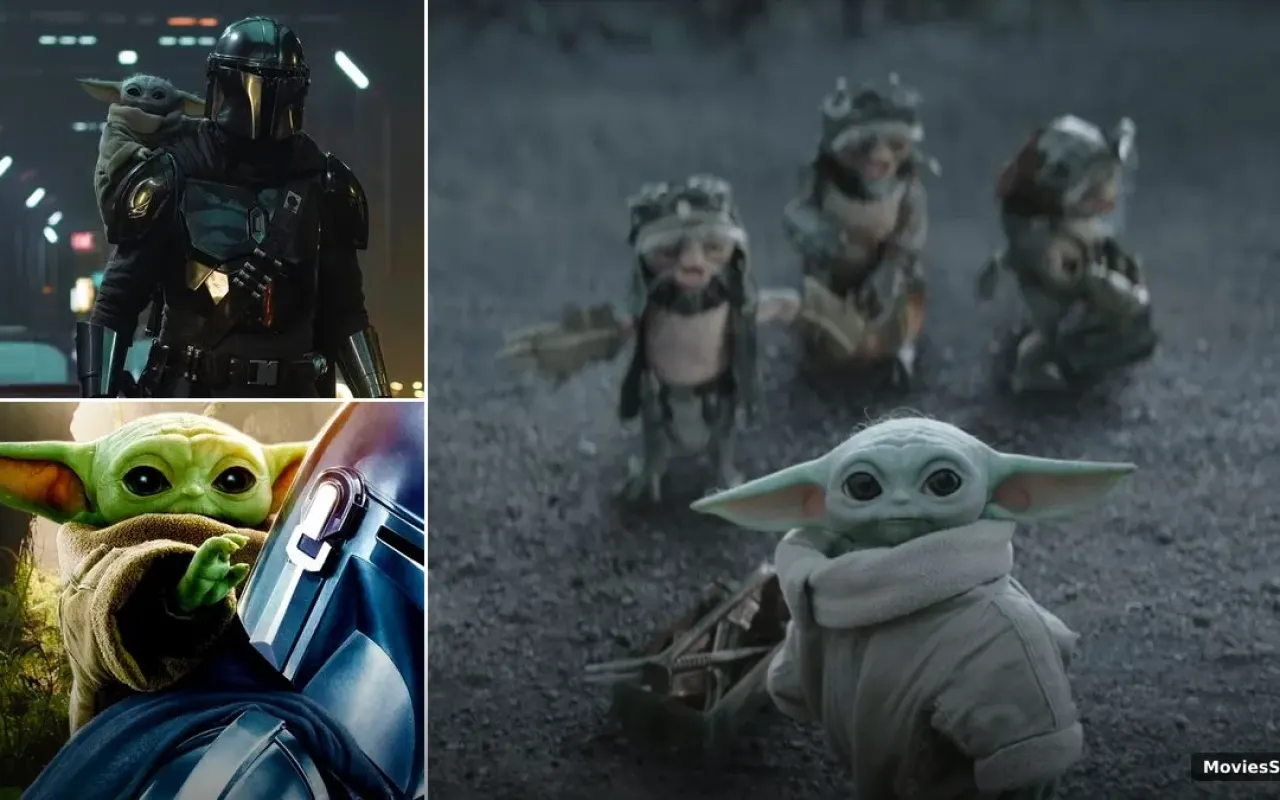
Let’s talk about the child in the room. In 2019, Grogu (then "Baby Yoda") was a cultural reset. He was everywhere—from your grandma’s Facebook feed to the Baby Yoda merchandise aisles at Target. But seven years later, the Grogu fatigue analysis suggests the bubble has finally burst.
The problem is that Grogu, while adorable, is a static character. He doesn't speak, his motivations are purely reactive, and his "cute" factor has a shelf life. In a 30-minute TV episode, he’s a great scene-stealer. In a two-hour movie, he’s a prop. Jon Favreau and Dave Filoni leaned so heavily into the "toy factory" aspect of the character—introducing new Force powers and "adorable" antics—that they forgot to give him a reason to exist beyond selling plushies. Recent 2025-2026 merchandise trends show a sharp decline in Grogu-related sales, suggesting that even the most loyal collectors have reached their limit.
Technical Analysis: The Volume vs. The Big Screen
A major point of contention in Jon Favreau Star Wars movie reviews is the visual aesthetic. The Mandalorian pioneered StageCraft (The Volume), an LED wall technology that revolutionized TV production. However, what looks revolutionary on a 55-inch OLED TV can look flat and claustrophobic on an IMAX screen.
The film’s streaming-to-film transition suffered because it relied too heavily on the "small-scale" visual language of the show. While ILM and VFX supervisor John Knoll integrated more practical puppetry and Grogu animatronics to offset the CGI, the "Volume" look often lacks the depth and "epic" scale of on-location shooting. Compared to the sweeping vistas of The Force Awakens or even Rogue One, The Mandalorian and Grogu felt visually contained. Theater owners have noted that audiences are increasingly savvy about "TV-looking" movies, and they aren't willing to pay $20 for a visual experience they can get at home with a Disney Plus subscription.
The Future of Star Wars: Where Does Lucasfilm Go Now?
The Mandalorian movie vs Solo box office comparison is going to haunt Bob Iger and Kathleen Kennedy for the foreseeable future. This failure puts the entire Filoni-verse cinematic roadmap in jeopardy. Originally, this film was supposed to be the first step toward a massive "New Republic" crossover event—a sort of *Avengers* for the Star Wars TV world.
Now, the questions are piling up:
- Does this cancel Dave Filoni’s planned crossover film?
- Will we ever get a Mandalorian Season 4, or is the brand too tarnished for a return to streaming?
- What happens to the Rey Skywalker film? If the "sure bet" of Mando and Grogu failed, is a sequel to the divisive sequel trilogy even viable?
The New Republic era, which was supposed to be the backbone of the franchise’s future, now feels shaky. Even the return of the Razor Crest and a cameo-heavy plotline involving Rotta the Hutt couldn't save the film from a lukewarm CinemaScore and PostTrak data that showed a significant drop-off in the under-25 demographic. Younger viewers, it seems, have moved on to original IP and creator-driven content.
Key Takeaways
- The Financials: A $246M global haul is a massive disappointment for a $165M film that needed $500M to break even.
- The 'Frankenstein' Factor: Strong evidence suggests the film was a repurposed Season 4, leading to a disjointed, episodic feel.
- Visual Fatigue: The use of "The Volume" (LED walls) failed to translate to the "event" scale required for IMAX and the big screen.
- Competition: The movie lost its "event" status to original horror films, marking a shift in how Gen Z consumes theatrical cinema.
- The Roadmap: This failure likely forces a pivot in the Star Wars theatrical strategy 2026, potentially delaying other "Mando-verse" projects.
Conclusion: A Galaxy Far, Far Too Familiar
At the end of the day, The Mandalorian and Grogu didn't fail because people hate Star Wars. It failed because it stopped being special. When you treat a legendary franchise like a "content farm," you eventually run out of fertile soil. The "lone wolf and cub" dynamic that captured our hearts in 2019 has been stretched thin, replaced by a mandate to sell toys and prop up a streaming service.
If Lucasfilm wants to save the cinematic side of the galaxy, they need to stop looking backward at what worked on TV and start looking forward at what makes a movie a movie. Otherwise, the next time we see a Star Wars logo on the big screen, the only thing people will be feeling is the urge to check their phones. The Mando-era might not be over, but the honeymoon definitely is.