If you thought the superhero fatigue was terminal, Nicolas Cage just walked into the room wearing a trench coat and a fedora to prove us all wrong. Spider-Noir isn't just another multiverse cash-grab; it’s a high-concept, live-action swing into 1930s New York that trades neon portals for rainy alleyways and moral ambiguity. But while Cage’s Ben Reilly is the draw, the real story lies in the Spider-Noir villains who have been reimagined as tragic, grit-caked relics of the Great Depression.
Forget the "monster of the week" formula. This series, overseen by Oren Uziel alongside Phil Lord and Chris Miller, is leaning into a vibe described as "70% Humphrey Bogart and 30% Bugs Bunny." We’re looking at a world where the bad guys aren't just trying to blow up the city—they’re trying to survive a system that already chewed them up and spat them out. From a philosopher mob boss to a war veteran whose powers are literally a death sentence, here is everything you need to know about the rogue’s gallery coming to Prime Video and MGM+.
Who are the villains in Spider-Noir?
The series features a reimagined rogue’s gallery of classic Marvel characters and original threats tailored for a 1930s setting. The primary Spider-Noir villains include:
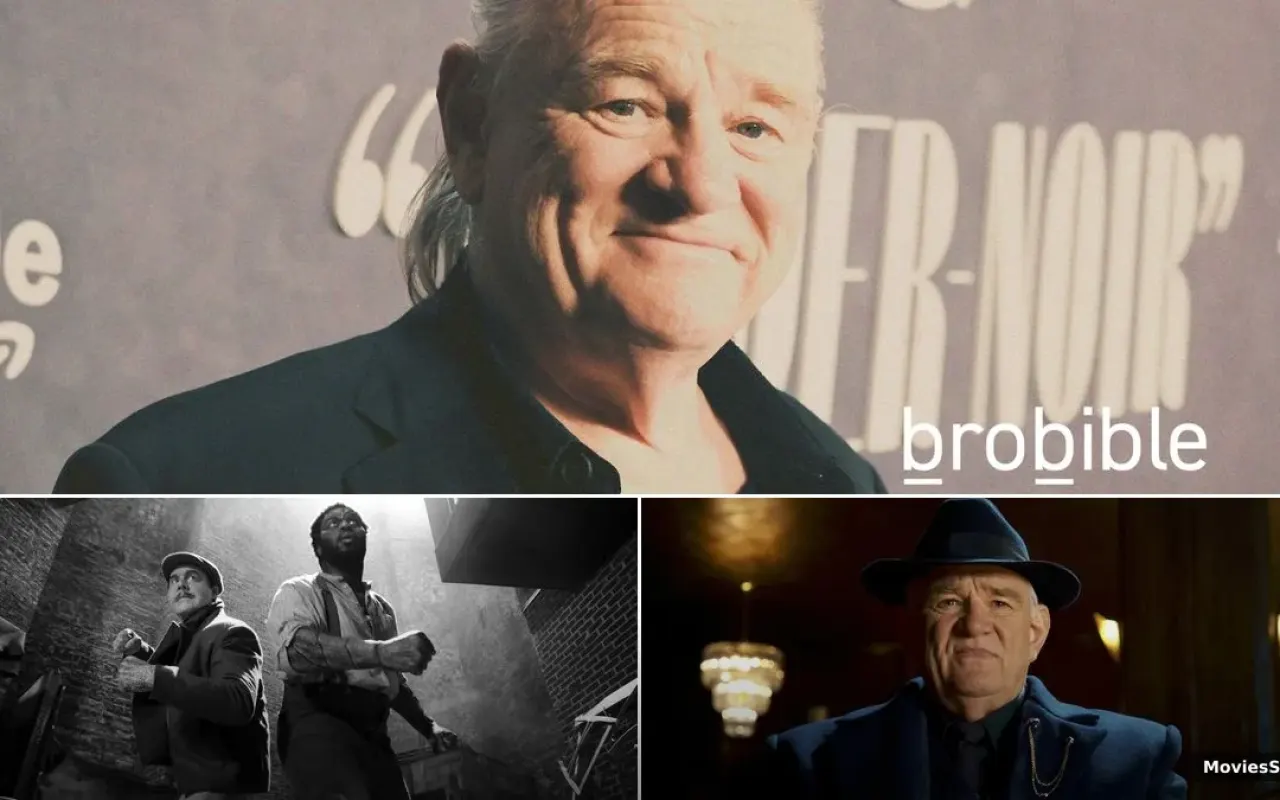
- Silvermane (Brendan Gleeson): The philosophical Irish mob boss.
- Sandman (Jack Huston): A tragic war veteran with deteriorating powers.
- Tombstone (Abraham Popoola): A grounded enforcer and "monster" of the slums.
- Cat Hardy (Li Jun Li): A nightclub singer and classic femme fatale.
- Megawatt (Andrew Lewis Caldwell): An electricity-manipulating threat.
- James Addison (Jack Mikesell): A mysterious pyrokinetic character.
Silvermane (Silvio Manfredi): The Philosophical Kingpin
In the mainstream Marvel comics, Silvio Manfredi is often depicted as a cyborg obsessed with immortality. In Spider-Noir, Brendan Gleeson strips away the metal and replaces it with the "streetwise instincts of a Dublin cabbie." This version of Spider-Noir Silvermane is the undisputed heavyweight of the New York criminal underworld, having run the city’s organized crime for 30 years.
Gleeson describes the character as a "philosopher who self-justifies." He’s not a villain because he wants to see the world burn; he’s a villain because he’s perceptive enough to understand human nature and cynical enough to exploit it. He fills the power vacuum left by the absence of Kingpin in this universe, operating as the head of a Maggia crime family-style hierarchy. The central mystery of the series kicks off when someone burns down his mansion—an assassination attempt that suggests even the top dog isn't safe in Prohibition-era New York.
Sandman (Flint Marko): The Tragic War Veteran
Perhaps the most radical departure from the source material is Jack Huston’s take on Flint Marko. While we’ve seen sympathetic versions of Sandman before (notably Thomas Haden Church in Spider-Man 3), Spider-Noir Sandman is steeped in the trauma of the Great War. He isn’t a career criminal by choice; he’s a veteran returning to a city that has no place for him.
The wild part? His powers aren't a gift. Huston has noted that the ability to turn into sand is "what's killing him." It’s a physical manifestation of his instability, a body literally falling apart under the weight of his circumstances. His romantic connection to Cat Hardy adds a layer of humanity that makes him less of a "villain" and more of a victim of a desperate era. This is a massive shift in Spider-Noir villain power levels—where the very thing that makes him formidable is also his expiration date.
Tombstone (Lonnie Lincoln): From Enforcer to Propaganda
Debuting in Episode 3, Abraham Popoola brings Lonnie Lincoln to life in a way that feels worlds away from the hulking, grey-skinned enforcer voiced by Marvin Jones III in the animated Spider-Verse films. This Spider-Noir Tombstone is a "grounded" iteration of the character first created by Gerry Conway and Alex Saviuk in 1988.
In this universe, Tombstone is tied to the "Hoovervilles"—the shanty towns built by homeless people during the Great Depression. The show uses him to explore the concept of "monster" propaganda. Is he actually a villain, or is he a man protecting the only community that hasn't turned its back on him? By linking his criminal activities to survival in the slums, the show challenges the audience to question who the real monsters are: the guys with the powers, or the system that created the Hoovervilles in the first place.
The Femme Fatale: Cat Hardy
Every noir needs a dame, and Li Jun Li plays Cat Hardy, this universe’s version of Felicia Hardy (Black Cat). However, don't expect a carbon copy of the comic book cat burglar. Li describes her character as a "blank canvas," created specifically by Oren Uziel to fit the 1930s aesthetic. She’s a nightclub singer who serves as the employer for Flint Marko, acting as the connective tissue between the underworld and the high-society clubs of the Prohibition Era.
Her role is the classic femme fatale—a woman navigating a dangerous man’s world with her own agenda. While she shares a name and a certain moral flexibility with Black Cat, her "brand-new biography" makes her one of the most unpredictable elements in the Spider-Noir cast.
New Threats: Megawatt and James "Jimmy" Addison
The series isn't just playing the hits; it’s digging into the deep cuts and creating new lore. Andrew Lewis Caldwell debuts as Megawatt, a character who had a blink-and-you’ll-miss-it appearance in the comics but is getting a major upgrade here. As a villain who can absorb and expel electricity, he’s a walking blackout in a city that’s already struggling to keep the lights on.
Then there’s James "Jimmy" Addison, played by Jack Mikesell. Addison appears to be a pyrokinetic original character, though fans are already speculating if "Jimmy" is a cover for a more famous Marvel identity. Is he a proto-Human Torch? A version of Molten Man? Or something entirely new? His ability to light himself on fire is a stark visual contrast to the shadowy, rainy streets of the city.
Spider-Noir Villain Comparison: Comics vs. Prime Video
To help you keep track of how these rogues have changed, here is a breakdown of the Spider-Noir comic accuracy guide for the main players.
| Character | Comic Origin | Spider-Noir Reinvention | Primary Vibe |
|---|---|---|---|
| Silvermane | Cyborg Maggia Leader | Irish Mob Boss / Philosopher | Ruthless Intellectual |
| Sandman | Career Criminal | Tragic War Veteran | Dying Romantic |
| Tombstone | Albinism-powered Mobster | Hooverville Protector/Enforcer | Grounded Muscle |
| Cat Hardy | Super-thief (Black Cat) | Nightclub Singer | Classic Femme Fatale |
Technical Lore: 'True Hue' vs. 'Black & White'
One of the most unique aspects of this production is the viewing experience. Spider-Noir was shot with a specific intent to honor the cinematography of the 1930s. Viewers will have two options when the series drops:
- Authentic Black & White: This isn't just a "desaturate" filter. It’s a high-contrast mode designed to mimic the lighting and shadow (chiaroscuro) of classic noir films like The Maltese Falcon.
- True Hue: A stylized color version that maintains the period-accurate palette of the Great Depression—muted browns, deep greens, and the occasional splash of "superhero" color.
The choice of viewing mode reportedly changes the "feel" of the villains. In black and white, characters like Silvermane look like they stepped out of a 1940s gangster flick. In "True Hue," the tragic elements of Sandman’s deteriorating body are much more visceral.
The Big Picture: Is Kingpin Coming?
The short answer? Not yet. While Kingpin was the heavy hitter in the Spider-Verse films, Spider-Noir is intentionally carving its own path. By making Silvermane the apex predator of NYC, the show avoids the "multiverse fatigue" of seeing the same villains across every reality. There are also no current plans for this series to directly crossover with Beyond the Spider-Verse, as this is a standalone live-action experiment.
Key Takeaways
- The Tone: Expect a mix of grounded tragedy and "Bugs Bunny" theatricality.
- The Leads: Nicolas Cage’s Ben Reilly faces a rogue’s gallery that is more "human" than "super-powered."
- The Release: Spider-Noir premieres on Monday, May 25, 2026, on MGM+, with a full 8-episode drop on Prime Video on May 27.
- The Villains: Silvermane, Sandman, and Tombstone are all reimagined as products of the 1930s economic collapse.
Real talk: Spider-Noir is looking like the most "adult" thing Sony has done with the Spider-IP in years. By grounding the Spider-Noir villains in the historical reality of 1930s NYC crime, they’re moving away from the "bad guy wants to rule the world" trope and into something much more interesting: bad guys who are just trying to get through the day. Look for the full series to hit your screens in May 2026—just make sure you watch it in black and white for the full effect.