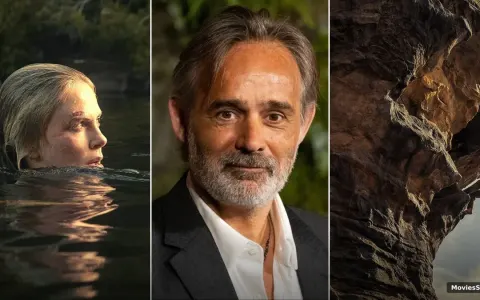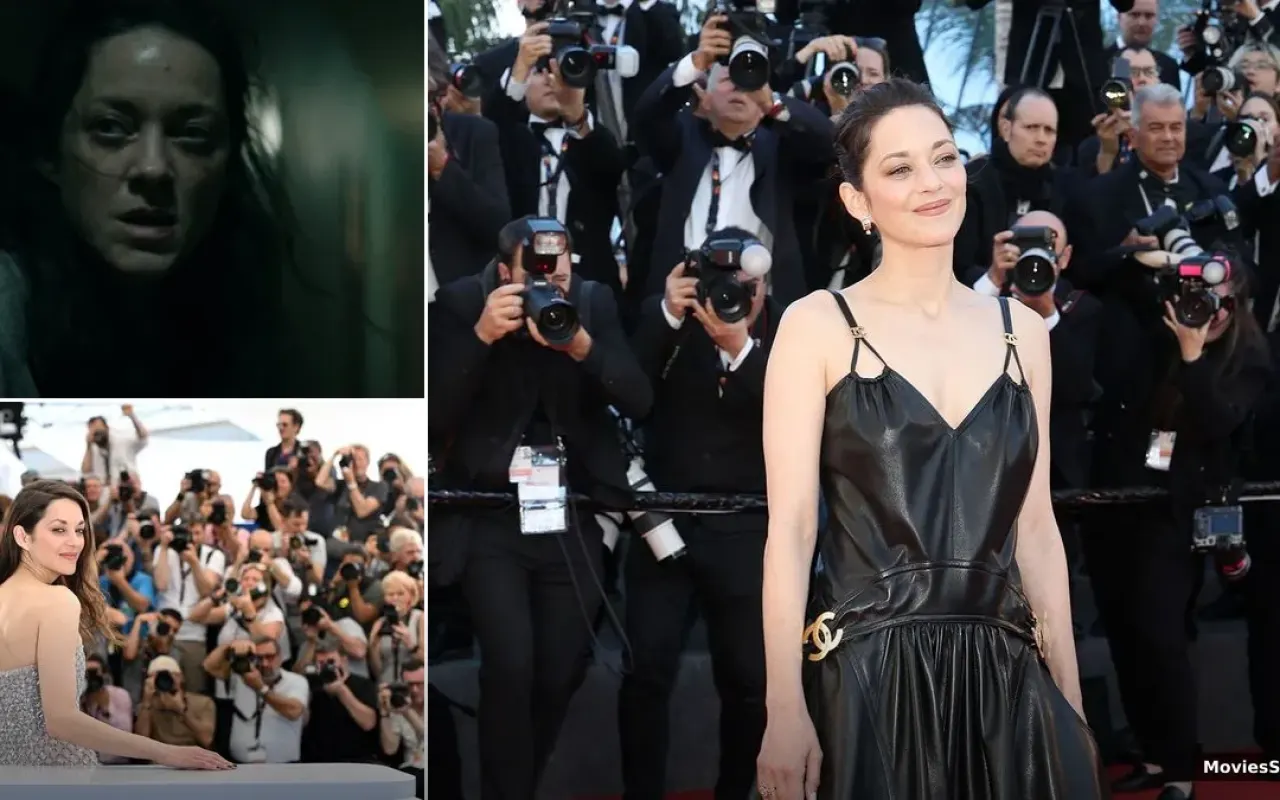
The lights finally came up at the Palais des Festivals on May 23, 2026, marking the end of a screening that felt less like a movie premiere and more like a collective exorcism. As the credits rolled on the Marion Cotillard Karma movie, the audience didn't just clap; they erupted. For six minutes, the Cannes 2026 standing ovation echoed through the hall, a thunderous validation of a star who had spent years intentionally stepping out of the global spotlight. This wasn't just a win for a French thriller; it was the definitive signal of the Marion Cotillard Hollywood return we’ve been waiting for.
Directed by Guillaume Canet, Karma is a jagged, high-stakes religious cult thriller that reminds us why Cotillard remains our most effective emotional surgeon. She doesn't just play a role; she dissects it. The film, an Iconoclast production with Pathé international sales backing it, is already being hailed as the peak of the Cotillard-Canet cinematic universe, which has spanned nearly two decades of personal and professional entanglement.
What is the movie Karma about?
Karma is a 2026 religious cult thriller directed by Guillaume Canet and starring Marion Cotillard. The plot follows Jeanne, a woman who flees to the dangerous cult she escaped as a child after being accused of her godson's disappearance. The film premiered at the Cannes Film Festival to a six-minute standing ovation.
The Dark World of Jeanne and the Saint-Céré Cult
The Marion Cotillard Karma movie centers on Jeanne, a woman living a frayed existence in coastal Spain, working at a sardine factory and self-medicating with vodka. Her life is a series of "blackouts" and erratic choices until the unthinkable happens: her missing godson, Mateo, vanishes under her watch. With a blood-alcohol level that spells "guilty" to the local police and a memory full of holes, Jeanne does the only thing that makes sense in her fractured mind—she runs.
But she doesn't run to safety. She runs back to Saint-Céré, a medieval commune housing the religious sect she escaped a decade prior. This isn't your typical cinematic cult; Canet and co-writer Simon Jacquet have crafted a fictional religion that feels disturbingly plausible. It’s a "best-of" compilation of fundamentalist control, built on what the film calls the "12 rules of karma." These rules aren't about cosmic balance; they are about total subjugation.
The commune’s leader, Marc—played with a terrifying, quiet intensity by Denis Ménochet—runs the group like a spiritual prison. When Jeanne arrives, she is forced to perform brutal penance, holding heavy stones in her palms in the pouring rain until her body gives out. It’s a visceral, intense role that required Cotillard to tap into the same raw, physical vulnerability that won her an Academy Award for La Vie en Rose.
The Psychology of the Blackout
From a psychological perspective, the film’s depiction of Jeanne’s "blackout" trauma is one of its most sophisticated elements. Rather than using it as a cheap plot device, Karma explores the "dissociative fugue" common in survivors of childhood cult abuse. Jeanne isn't just an unreliable narrator; she is a woman whose psychological barriers are so thick she can't distinguish between her own guilt and the trauma projected onto her by Marc’s followers. This adds a layer of psychological impact rarely seen in standard thrillers, forcing the audience to question if the "truth" even matters in a world built on manufactured faith.
Why Marion Cotillard Left Hollywood (and Why She’s Back)
To understand why the Marion Cotillard Karma movie feels like such a moment, you have to look at where she’s been. For the better part of the last five years, the Academy Award winner has been noticeably absent from the Hollywood blockbuster machine. After a decade of Inception, The Dark Knight Rises, and Contagion, Cotillard made a conscious pivot.
The reason? It’s the ultimate "real talk" move: she chose her kids. Balancing the demands of raising her son, Marcel, and her daughter with the grueling schedule of "intense roles" became a zero-sum game. Cotillard has been open about her methodology—she doesn't just "act"; she hosts the character. For years, she found it difficult to shake off the heavy emotional residue of her characters when she went home to her family. This led her to prioritize "local shoots" in France and indie projects over the three-month-long US press tours and soundstage marathons of the MCU or prestige dramas like The Morning Show.
However, Karma represents a shift. It’s a film that demands the same "all-in" energy of her early career but within the creative safety net of her most trusted collaborator. This is her 15th Cannes appearance, but it feels like her first "comeback." With upcoming projects like Milo (slated for late 2026) and Job (2027) on the horizon, the Marion Cotillard Hollywood return is officially in full swing.
Guillaume Canet and the 'Tell No One' Energy
Critics are already drawing heavy comparisons between Guillaume Canet’s Karma and his 2006 breakout hit, Tell No One. While Canet has spent the last few years on lighter fare—like the big-budget Asterix & Obelix: The Middle Kingdom—Karma is a return to the "anxiety thriller" genre where he thrives.
Canet’s directing style in Karma is clinical yet claustrophobic. He uses the stark contrast between the sun-drenched, open coast of Spain and the grey, stone-walled shadows of Saint-Céré to mirror Jeanne’s internal state. The cinematography by Christophe Offenstein emphasizes the isolation of the cult, making the commune feel like a character in its own right.
The production, while keeping its exact budget under wraps, clearly had significant resources, evidenced by the seamless transition between Spanish and French locations. Industry insiders suggest the budget likely sits in the €20-25 million range, a heavy lift for a European thriller, but one that Pathé and Iconoclast were willing to bet on given the star power involved.
Collaborating with an Ex: The 18-Year Relationship
The "elephant in the room" at the Karma Cannes review screenings was the personal dynamic between the lead and the director. Cotillard and Canet were the "it" couple of French cinema for 18 years, starting their relationship in 2007. While they have recently separated, Karma marks their ninth collaboration overall (and sixth major film together).
During the Cannes press conference, the mutual respect was palpable. Canet admitted he wrote the script specifically for Cotillard, frustrated that he hadn't yet given her a role that fully utilized her "absolutely amazing talent." Cotillard, for her part, noted that she followed the creative process from the first draft, trusting Canet to push her into the dark places the role of Jeanne required. It’s a testament to their professional bond that they can produce their most "vibrant" work after the end of their romantic partnership.
From 'Contagion' to Hantavirus: A Prescient Return
One of the more unsettling aspects of the Marion Cotillard Karma movie press cycle has been the real-world context surrounding it. During interviews, Cotillard reflected on the second life her 2011 film Contagion found during the COVID-19 pandemic. That film, directed by Steven Soderbergh and written by Scott Z. Burns, became a blueprint for reality.
Now, as Karma hits theaters, there is a bubbling anxiety in Europe—specifically around Juan-les-Pins—regarding a localized Hantavirus outbreak. While Karma is a cult thriller, not a medical one, Cotillard’s involvement in films that tap into collective societal dread is becoming a bit of a pattern. The "anxiety thriller" genre is having a moment, and Karma fits perfectly into that niche, exploring how fear makes people vulnerable to the kind of "spiritual protection" Marc offers.
Is the Karma Movie on Netflix? Distribution and Future
One of the biggest questions following the Cannes 2026 standing ovation is where audiences can actually watch the film. Currently, Pathé Films is handling French distribution, with a theatrical release set for late 2026.
As for the Karma movie US distribution status, the industry is watching closely. While many expected a direct-to-streaming deal given the global popularity of "cult content," the film’s producers are reportedly pushing for a traditional theatrical window. There is significant interest from A24 and Neon, though Netflix remains a dark horse in the bidding war. The consensus? This is a film that needs the scale of a cinema screen to capture the "lurid, potboiler temperature" Canet has created.
Key Takeaways: Why 'Karma' Matters
- The Performance: Marion Cotillard delivers a career-best turn as Jeanne, navigating an "unreliable narrator" arc with devastating precision.
- The Director: Guillaume Canet returns to the tense, twisty roots of Tell No One, proving he is France’s master of the high-stakes thriller.
- The Cult: The fictional religion in Karma is a chillingly realistic look at how powerful men use "karma" to justify sexual violence and control.
- The Comeback: This film marks the end of Cotillard’s semi-hiatus from "intense" global cinema, setting the stage for a busy 2027.
- The Reception: A six-minute standing ovation at Cannes puts Karma in the top tier of 2026's festival circuit, outperforming many of its Hollywood-backed competitors.
The Final Verdict: A House on Fire
Karma isn't just a movie; it’s a reckoning. It tackles the psychological impact of cults in film without the usual clichés, opting instead for a "juicy melodrama" that feels both operatic and grounded. While some might find the 150-minute runtime indulgent, every minute is used to build the "psychological barriers" that Jeanne must eventually burn down.
As we look toward the 2027 awards season, expect to see the Marion Cotillard Karma movie at the center of the conversation. Whether she’s running from a cult, a missing godson, or her own past, one thing is clear: Cotillard is no longer hiding. She’s back, and she’s brought the fire with her. The only question left is who will be brave enough to watch it burn.