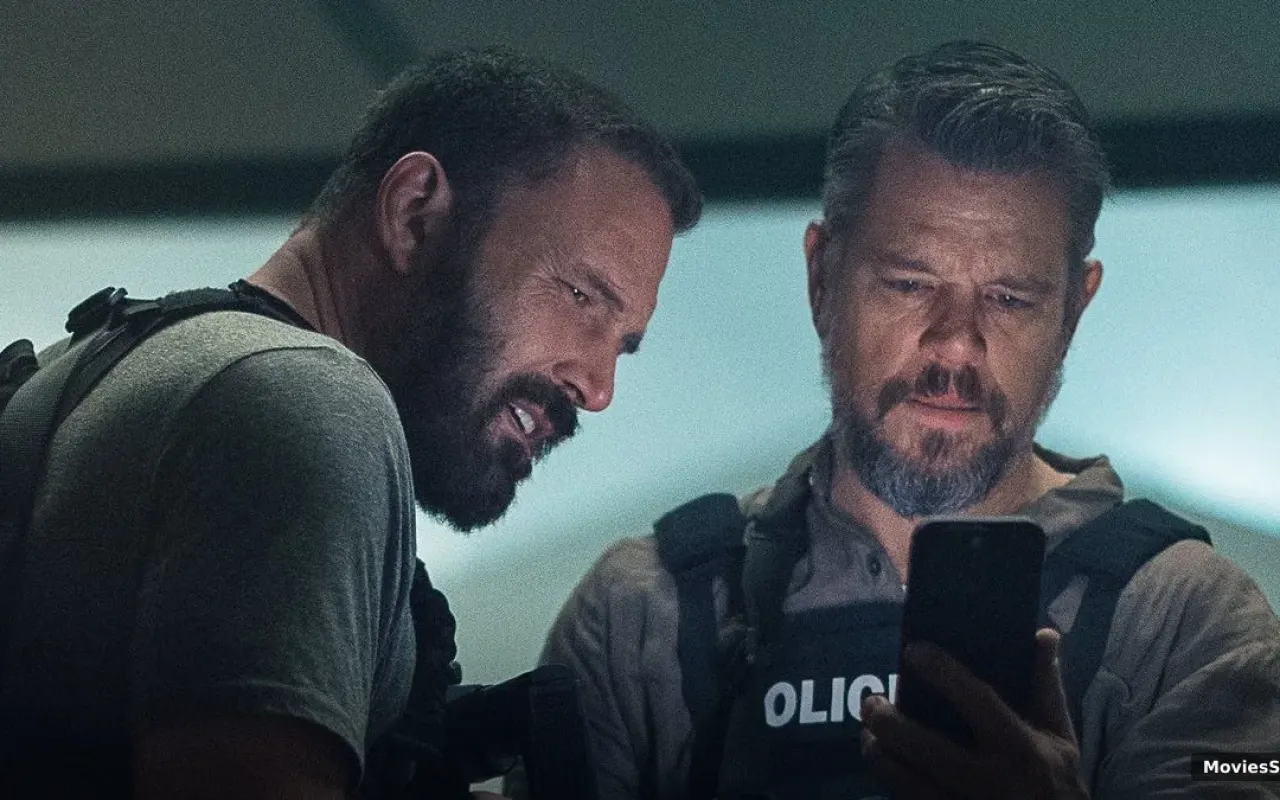
Hollywood heavyweights Matt Damon and Ben Affleck find themselves at the center of a high-stakes legal battle following the release of their latest Netflix crime thriller, The Rip. A group of Miami law enforcement officers has filed a lawsuit against the actors and their production company, Artists Equity, alleging that the film’s portrayal of a historic 2016 narcotics raid has caused them severe professional and personal damage.
Why are Matt Damon and Ben Affleck being sued? Matt Damon and Ben Affleck are being sued by Miami police officers for "reputational harm" and "false depiction" in their Netflix film The Rip, which is inspired by a real 2016 narcotics raid but allegedly portrays the officers as corrupt or "dirty."
The Artists Equity Lawsuit: Allegations of 'Dirty' Depictions
The Matt Damon Ben Affleck Miami lawsuit centers on claims that the film crosses the line from creative dramatization into defamation. Lead detective Jonathan Santana, who headed the actual 2016 investigation, is among the primary plaintiffs. The legal complaint argues that while the film opens with an "inspired by true events" disclaimer, it specifically targets the reputations of the officers involved in the original bust by depicting them as "dirty cops."
According to Ignacio Alvarez, the lawyer representing the officers, the film’s narrative suggests that the team engaged in police corruption, maintained direct contact with drug cartels, and even committed murder to cover their tracks. "They portrayed my clients as dirty," Alvarez stated, noting that the officers now face lifelong scrutiny and mockery from the public. Detective Santana reported that since the premiere of The Rip on Netflix, he has been frequently asked by acquaintances "how many buckets of money" he actually stole during the raid.
The Real 2016 Miami Lakes Narcotics Raid: Fact vs. Fiction
To understand the gravity of the Artists Equity lawsuit, one must look at the historical event that served as the film's blueprint. In June 2016, the Miami-Dade Police Department—which has since undergone a Miami-Dade Police vs Sheriff Department name change—executed a massive raid in Miami Lakes. This operation resulted in the largest money laundering forfeiture in the department's history.
The raid targeted the home of Luis Hernandez-Gonzalez, where detectives discovered $24 million in cash. The money was not hidden in a traditional safe but was famously found stuffed into 24 orange five-gallon buckets hidden within a secret attic compartment. While the real-life operation was hailed as a massive success for the Miami-Dade Sheriff’s Department, the cinematic version directed by Joe Carnahan paints a much darker picture.
Comparison: The 2016 Raid vs. The Rip Movie Plot
| Feature | Real 2016 Miami Lakes Raid | Netflix's 'The Rip' Plot |
|---|---|---|
| Total Seizure | $24 Million (Largest in Miami-Dade history) | Massive sum used as a catalyst for betrayal |
| Officer Conduct | Commended for integrity and professional execution | Depicted as "dirty," considering theft and murder |
| Location | Miami Lakes (Suburban Miami-Dade) | Hialeah (Portrayed as a high-crime district) |
| Legal Outcome | Successful prosecution of money laundering | Internal police warfare and cartel entanglement |
The Hialeah Controversy and Mayor Bryan Calvo
The Matt Damon Ben Affleck Miami lawsuit isn't the only backlash the film has faced. Hialeah Mayor Bryan Calvo has been a vocal critic since the film’s January release. Although the real-life events occurred in Miami Lakes, the movie shifts the setting to Hialeah, a move Calvo claims unfairly characterizes his city as a hub for violence and corruption.
During a press conference, Calvo described the film as a "slap in the face" to local law enforcement. The Mayor argued that the police corruption depiction in the film damages the morale of officers who work to protect the community. This local resentment has added fuel to the legal fire, as the plaintiffs argue the film’s choice of setting and tone was designed to exploit local stigmas for entertainment value.
Legal Analysis: Libel-in-Fiction and the First Amendment
Winning a defamation lawsuit against a major film studio is a notoriously difficult legal hurdle. Under libel-in-fiction legal standards, plaintiffs must prove the "of and concerning" requirement—that a reasonable viewer would believe the fictional characters are intended to be the actual real-life individuals.
Because the officers are considered public figures, they must also meet the "actual malice" standard, proving that Joe Carnahan and the producers at Artists Equity acted with reckless disregard for the truth. Filmmakers often rely on First Amendment protection for filmmakers, arguing that "inspired by" stories are protected creative expressions rather than factual reporting. However, the specific mention of the 2016 raid in the film's promotional cycle may provide the plaintiffs with the leverage needed to argue that the "fictional" characters are directly linked to their real-world identities.
Inside Artists Equity: Damon and Affleck’s Production Vision
The Artists Equity production history reveals a company founded on the principle of profit-sharing and creative freedom for artists. Launched by Damon and Affleck in late 2022, the company aimed to disrupt the traditional Hollywood model. Following the success of their first feature, Air, the duo moved into grittier territory with The Rip.
The film features a high-profile ensemble cast, including:
- Steven Yeun: Playing a pivotal role in the tactical team.
- Teyana Taylor: Bringing a raw intensity to the undercover operations.
- Sasha Calle: Portraying an officer caught in the moral crossfire.
Despite the star power, the controversy surrounding The Rip Netflix true story has overshadowed its technical achievements. Critics of Joe Carnahan's work have often noted his penchant for the "dirty cop" trope, but this is the first time his narrative choices have resulted in a direct legal challenge from the subjects who inspired the work.
Key Takeaways: The Matt Damon Ben Affleck Miami Lawsuit
- The Core Conflict: Miami-Dade officers allege The Rip falsely portrays them as corrupt, citing specific scenes of theft and murder.
- The Real Event: The film is based on the 2016 Miami Lakes raid that seized $24 million in cash from 24 orange buckets.
- The Legal Stakes: Detective Jonathan Santana and others are seeking damages for reputational harm and emotional distress.
- Political Pushback: Hialeah Mayor Bryan Calvo has condemned the film for its negative portrayal of the city.
- Production Defense: Artists Equity and Netflix have traditionally relied on "inspired by" disclaimers to shield against libel claims.
The Future of 'The Rip' on Netflix
As of now, Netflix has not removed The Rip from its platform, and the film remains available to global audiences. Legal experts suggest that while a full removal is unlikely, the Artists Equity lawsuit could result in a settlement or a more prominent disclaimer regarding the fictional nature of the characters.
The case serves as a cautionary tale for the burgeoning "true crime" dramatization genre. As audiences crave more "true story" content, the line between creative liberty and character assassination becomes increasingly thin. For Matt Damon and Ben Affleck, the outcome of this lawsuit may dictate how Artists Equity approaches real-world adaptations in the future.