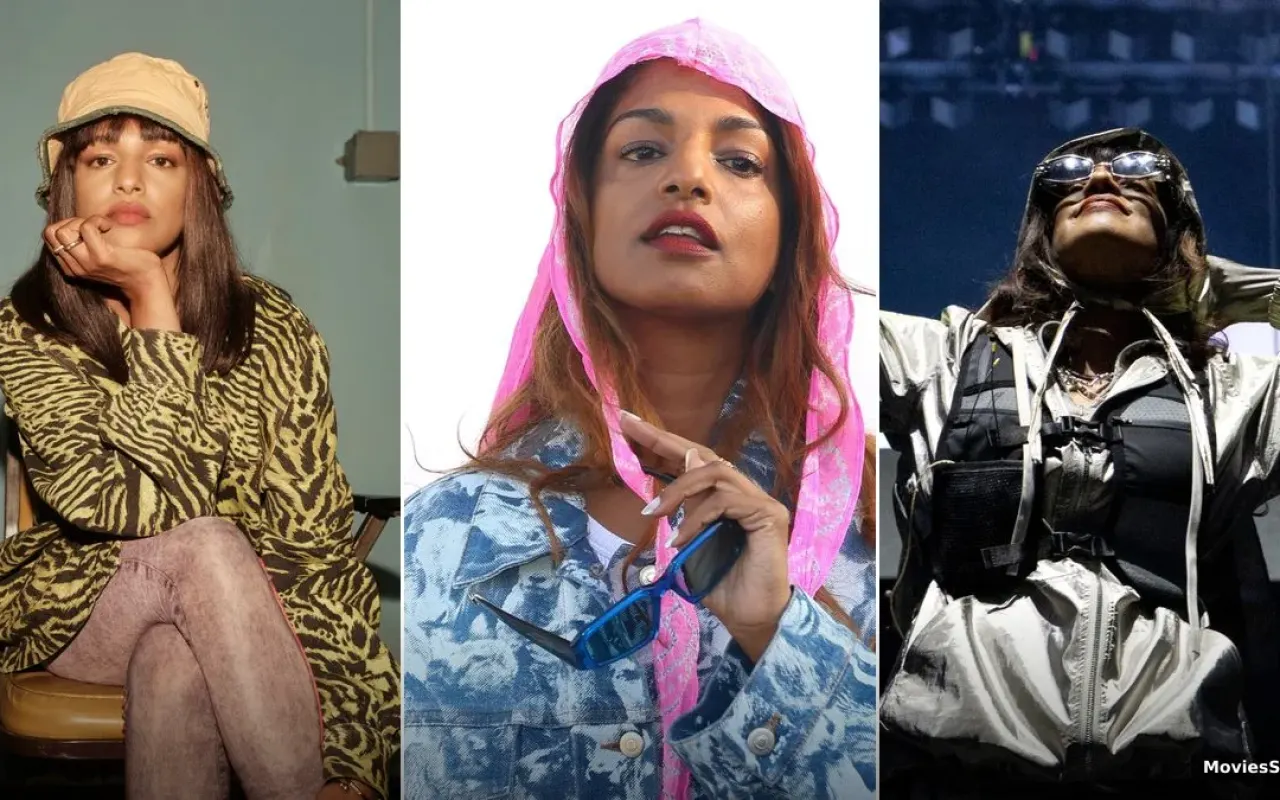
The M.I.A. Kid Cudi lawsuit has officially turned the "Rebel Ragers Tour" into a legal battlefield. What started as a viral moment in Dallas has escalated into a $2.8 million federal court case that pits the "Paper Planes" rapper against the "Day 'n' Nite" singer. At the heart of the dispute isn't just a canceled opening slot, but a high-stakes argument over whether a headliner can silence an opener when their politics get "offensive"—especially when that opener has a contract that allegedly gives them the right to say whatever they want.
Why is M.I.A. suing Kid Cudi? M.I.A. is suing Kid Cudi for $2.8 million following her removal from the Rebel Ragers Tour. The lawsuit alleges breach of contract and intentional interference, claiming Cudi fired her to generate publicity for struggling ticket sales, despite a contract that guaranteed her creative control regardless of her on-stage remarks.
The Dallas Incident: What Really Happened Onstage?
To understand the Kid Cudi M.I.A. controversy, you have to look at the May 2 performance at the Dos Equis Pavilion in Dallas. In the middle of her set, Mathangi Arulpragasam (the artist known as M.I.A.) took a detour from her hits to address the crowd. The "Dallas rant" wasn't just a quick comment; it was a reflection on her status in the industry.
She told the audience she had been "cancelled for many reasons," but added, "I never thought I would be cancelled for being a brown Republican voter." The comment was met with immediate boos from the crowd. She also teased her song "Illygirl," but stopped herself, telling the audience, "I can’t do Illygirl - let’s just say some of you out there might not love that choice."
While the internet focused on the "Republican" label, M.I.A. later clarified that her comments were about the visa issues and immigrant rights struggles her team was facing behind the scenes. She argued that she was highlighting the hypocrisy of the industry, but the damage was done. Two days later, Scott Ramon Seguro Mescudi (Kid Cudi) took to Instagram to announce her removal from the tour, citing "offensive remarks" that upset his fanbase.
Inside the $2.8 Million Lawsuit: Breach of Contract vs. Creative Control
The Neet Touring LLP lawsuit, filed in a California federal court on May 29, paints a much more calculated picture than a simple disagreement between artists. M.I.A.’s legal team, representing her company Neet Touring LLP, argues that Kid Cudi didn't just fire her—he induced Live Nation Worldwide Inc to breach a very specific agreement.
Here is the kicker: M.I.A. claims her contract included a creative control clause that is almost unheard of for an opening act. According to the filing, she was guaranteed a $2.805 million payment for the tour "regardless of what she said on stage." In the music industry, openers are usually subject to "morals clauses" or "headliner approval" regarding their sets. M.I.A. asserts that she negotiated the exact opposite: the total freedom to be her authentic, controversial self.
The Legal Distinction: Why Cudi is the Target
You might wonder why she isn't suing Live Nation directly for the full amount. The strategy here is tortious interference. The lawsuit alleges that Kid Cudi used his power as the headliner to force Live Nation’s hand. By "directing Live Nation to fire M.I.A.," Cudi allegedly interfered with a contract he knew existed, making him personally liable for the financial fallout.
- The Guarantee: $2,805,000 for the full tour run.
- Compensatory Damages: Seeking over $75,000 for additional losses.
- Punitive Damages: Requested to punish what her team calls "bad faith" actions.
The 'Publicity Stunt' Allegation: Is the Rebel Ragers Tour Struggling?
One of the most aggressive claims in the M.I.A. Kid Cudi lawsuit is that the firing was a "desperate attempt to sell tickets." M.I.A.’s team alleges that the Rebel Ragers Tour was "drastically underselling" and playing to "a lot of empty seats" before the controversy erupted.
While Kid Cudi framed the firing as protecting his fans, M.I.A. claims he used her as a sacrificial lamb to generate headlines and boost ticket sales. This is a common tactic in the "attention economy"—a manufactured feud to get a tour back in the trending topics. However, M.I.A. argues this backfired, destroying her reputation and business opportunities in the process.
Before being cut, M.I.A. was scheduled for 30 shows across the U.S. She was removed after only the first few dates, leaving 29 shows on the table. The lawsuit claims that Cudi’s public explanation was "riddled with falsehoods," specifically the idea that she had "understood" she couldn't say anything offensive. Her team argues that Cudi knew exactly who she was—a provocateur—when he booked her.
Financial Fallout: Beyond the $2.8M Guarantee
The loss of the tour guarantee is only the tip of the iceberg. The Rebel Ragers Tour firing triggered a domino effect on M.I.A.’s other income streams. The lawsuit details several specific financial hits that could push the final settlement even higher.
The $290,000 "Lost" Private Event
Perhaps the most concrete "content gap" in the initial reporting was the mention of a specific private event in Los Angeles. M.I.A. claims that following Cudi’s public "firing" and the subsequent "offensive" label he placed on her, a private booking worth $290,000 was rescinded. The organizers reportedly cited the controversy as the reason for the cancellation, proving that Cudi’s words had immediate market consequences.
Merchandise and VIP Revenue
Opening for a major tour isn't just about the nightly fee; it's about the "ancillary revenue." M.I.A. lost out on:
- Merchandise sales across 29 major venues.
- VIP-package revenue sharing.
- Sync licensing deals that often follow the visibility of a national tour.
Beyond the money, M.I.A. has spoken out about the personal toll. She claims the backlash fueled by Cudi’s statements led to death threats against her and her son, turning a contract dispute into a safety issue.
M.I.A.'s Political Evolution: From Radical to Republican?
To understand why the M.I.A. Republican comments landed with such a thud, you have to look at her history. This is the woman who gave the middle finger at the Super Bowl and wrote "Borders," a song that basically invented the modern pro-refugee anthem. For years, she was the darling of the radical left.
However, her 2024 alignment looks very different. She has moved into a space she calls "truth-seeking," which involves endorsing Donald Trump and supporting figures like RFK Jr. and Republican congressman Thomas Massie. In her social media responses to Cudi, she argued that she is still the same artist who wrote "Paper Planes" before "immigrant rights were cool," but that she now sees the establishment as the primary enemy—regardless of party lines.
Her team argues that Kid Cudi’s "claimed shock" over her comments is disingenuous. M.I.A. has been a lightning rod for controversy since Arular dropped in 2005. The lawsuit suggests that Cudi didn't suddenly find her views "offensive"; he simply found them inconvenient once the tour's bottom line was at risk.
Key Takeaways
- The Core Claim: M.I.A. is suing for a $2.8 million tour guarantee, alleging Kid Cudi forced Live Nation to fire her in breach of her contract.
- The "Creative Control" Defense: M.I.A. asserts her contract specifically allowed her to say whatever she wanted on stage, making her firing a legal violation.
- The Publicity Angle: The lawsuit claims Cudi used the firing as a "publicity stunt" to save a tour that was struggling with low ticket sales.
- Collateral Damage: Beyond the tour fee, M.I.A. claims she lost a $290,000 private event and faced death threats due to Cudi's public statements.
- Political Context: The dispute stems from M.I.A.'s "brown Republican voter" comments in Dallas, which she claims were taken out of context regarding her team's visa issues.
The Future of the Rebel Ragers Tour
As the Rebel Ragers Tour continues toward its June 27 conclusion, the legal fallout is just beginning. While Kid Cudi has replaced M.I.A. with other Rebel Ragers Tour guests, the shadow of the $2.8 million filing looms over the remaining dates. No formal response has been filed by Cudi’s legal team yet, but the case could set a massive precedent for live nation performance agreement analysis.
If M.I.A. wins, it sends a message that "Creative Control" clauses are ironclad, even for openers. If Cudi wins, it reinforces the idea that the headliner’s brand—and the comfort of their fanbase—trumps any contract an opener might sign. For now, the "Paper Planes" rapper is standing her ground, proving that even if she's off the stage, she's still the one making the most noise.