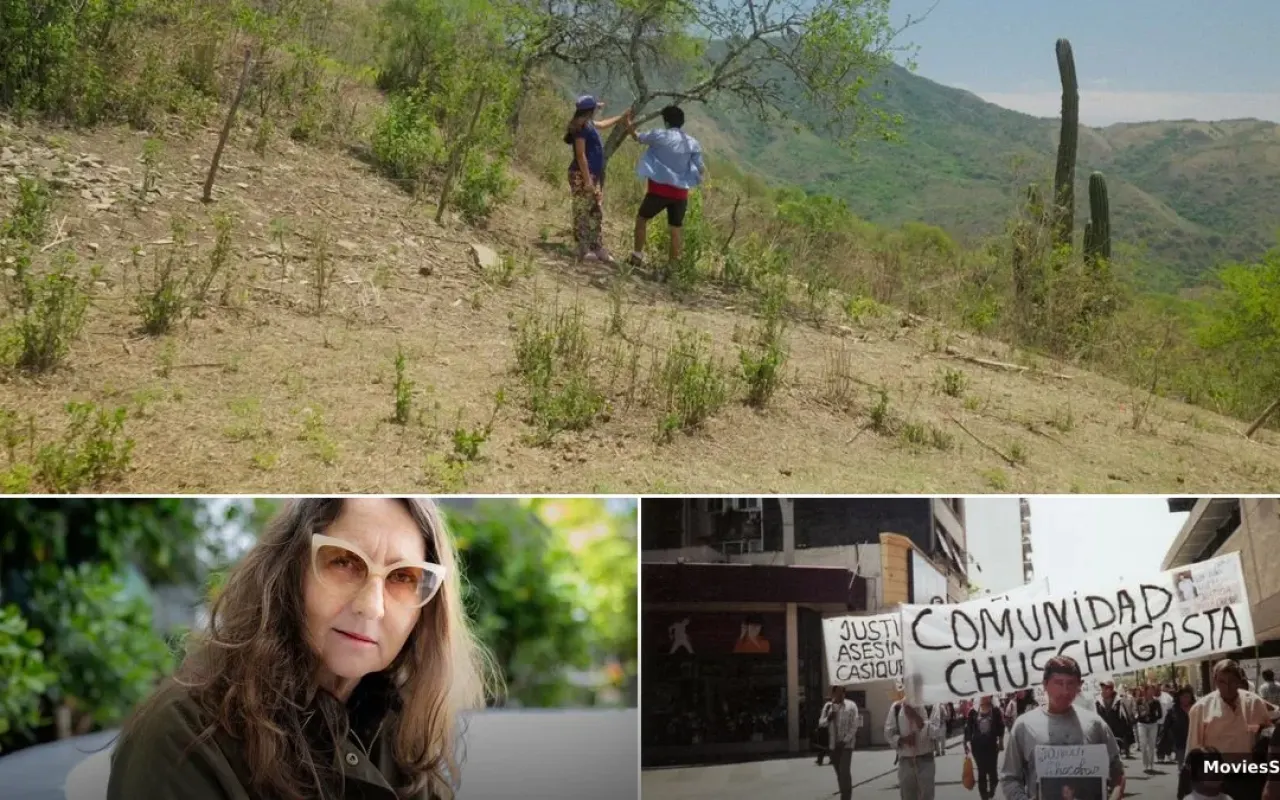
In October 2025, a decade-long cycle of judicial impunity in Argentina finally fractured. Following the high-profile premiere of the documentary Our Land Lucrecia Martel at the Venice Film Festival, the Argentine judiciary upheld the sentences for the 2009 murder of Javier Chocobar. This landmark ruling saw Dario Amin and two former police officers return to prison, proving that cinema can function as more than a witness—it can be a catalyst for institutional accountability. For Martel, the acclaimed Zama director, this film represents a 14-year journey into the heart of settler colonialism and the Chuschagasta community Tucumán land struggle.
What is Lucrecia Martel's Our Land about?
Our Land (Nuestra Tierra) is a 2025 documentary by Lucrecia Martel that investigates the 2009 murder of Javier Chocobar, an Indigenous activist in Argentina. The film explores the Chuschagasta community's struggle for ancestral land rights against corporate interests and a biased judicial system, blending courtroom footage with drone cinematography and personal archives.
The 2009 Shooting: A Flashpoint in the Javier Chocobar Murder Story
The Javier Chocobar murder story began on October 12, 2009, in the rugged terrain of Tucumán province. Chocobar, a 68-year-old leader of the Chuschagasta—part of the Diaguita-Calchaquí people—was participating in a peaceful protest to prevent a local landowner and businessman, Dario Amin, from seizing ancestral territory. Amin arrived accompanied by two former police officers, Luis Humberto Gómez and José Eduardo Valdivieso, who were allegedly providing private security for his interests in the local extractive industries Tucumán relies upon.
The confrontation was captured on a digital camera by one of the attackers, a piece of evidence intended to frame the Indigenous community as aggressors. Instead, the footage revealed a cold-blooded execution. Chocobar was shot while unarmed, and two other community members, including Delfín Cata, were wounded. Despite this video evidence, the path to justice was obstructed by a legal system that appeared designed to protect the landed elite. The Dario Amin trial did not even begin until 2018, nine years after the crime, a delay that legal experts attribute to the deep-seated influence of provincial oligarchies and the deliberate misinterpretation of land restitution laws Argentina has struggled to enforce.
From 'Chocobar' to 'Our Land': A 14-Year Cinematic Journey
The production of Our Land Lucrecia Martel was as protracted as the legal battle itself. Initially titled Chocobar, the project evolved as Martel realized that the story was not merely about a single murder, but about the "slow, ongoing murder" of Indigenous identity through bureaucracy. Working alongside screenwriter María Alché, Martel spent over a decade archiving documents, attending hearings, and building a relationship of trust with the Chuschagasta people.
During this period, Martel also directed Zama (2017), a fictional exploration of 18th-century colonialism. She views the two films as a thematic diptych: while Zama looks at the psychological rot of the colonizer, Our Land examines the physical and legal displacement of the colonized. This extensive Lucrecia Martel book research process has also culminated in a forthcoming book, tentatively titled The Invisible Path, which details the historical sleights of hand used to declare Indigenous communities "extinct" in official records to facilitate land grabs for mining and quarry access.
- 2009: Murder of Javier Chocobar.
- 2011-2017: Martel collects over 500 hours of footage and archival data.
- 2018: The first trial results in convictions, but defendants remain free pending appeal.
- 2020: Convictions are overturned on a technicality; defendants are released.
- 2025: Our Land premieres at Venice; public pressure leads to a sentencing reversal in October.
The 2025 Verdict: How Cinema Secured Justice
The Lucrecia Martel interview 2026 circuit has frequently touched upon the "concrete utility" of the film. In 2020, the killers were set free, a move that devastated the Chuschagasta. However, the film's premiere at the Venice Film Festival 2025 and its subsequent screening at the New York Film Festival—where Martel delivered the Amos Vogel Lecture—refocused international eyes on the case. The shame of global exposure likely played a role in the Tucumán court's decision to finally uphold the life sentences on October 24, 2025.
Currently, Dario Amin and Valdivieso are serving their sentences in a maximum-security facility in Tucumán (Gómez passed away during the appeals process). This victory is rare in a region where Law 26.160—which should prevent the eviction of Indigenous people—is frequently ignored. Statistics suggest that over 150 Indigenous communities in Northern Argentina currently face similar eviction threats from mining companies seeking to expand quarry access for lithium and other minerals.
Visual Language: Drones, Ghosts, and Soundscapes
In any Nuestra Tierra documentary review, critics point to Martel’s radical departure from traditional documentary aesthetics. She rejects the "hero narrative" and the use of non-diegetic sound, which she believes manipulates the audience into "lazy" emotional responses. Instead, the film relies on a haunting, atmospheric soundscape. A significant technical achievement was the SIM card audio restoration process. Martel’s team took old cell phones from community members, creating digital backups of ambient recordings—children playing, wind in the valleys, and traditional songs—to build a "background sound of life" that counters the sterile silence of the courtroom.
The film’s drone cinematography serves a specific ideological purpose. Rather than the "surveyor's gaze" typical of corporate mining interests, Martel uses high-altitude shots to evoke a "divine" or "ghostly" perspective. These shots suggest that the land existed long before the Argentine state and will outlast the bureaucratic "rigmarole" used to claim it. This visual strategy places Our Land alongside other contemporary Latin American works like Patricio Guzmán’s The Pearl Button, which use the physical landscape to store memories of state violence.
The Role of Extractive Industries
A critical content gap in previous reporting is the specific role of the mining companies. The Chocobar case was not just a dispute between neighbors; it was about quarry access details. The land claimed by Amin is rich in minerals used for construction and industrial applications. By removing the Chuschagasta, the path would be cleared for large-scale extractive industries Tucumán officials have historically courted. The film exposes how "adding color" to historical reports—such as a historian claiming the community was extinct in the 1800s—was a calculated move to benefit these corporate interests.
E-E-A-T: The Chuschagasta Legal Defense
The Indigenous land rights Argentina movement has found a new rallying cry in this film. Martel has donated the film's research archive to the Chuschagasta legal defense fund, providing them with documentation that can be used in future land restitution cases. Community leaders like Delfín Cata have noted that the film’s existence prevented the case from being "buried in the basement of the court." This intersection of Argentine cinema and grassroots activism sets a new standard for the "impact producer" model in documentary filmmaking.
Key Takeaways: Why 'Our Land' Matters in 2026
- Legal Precedent: The 2025 sentencing reversal is a landmark for Indigenous land rights Argentina, potentially protecting other Diaguita-Calchaquí territories.
- Artistic Innovation: Martel’s use of restored SIM card audio and the rejection of non-diegetic sound redefines the documentary form.
- Colonial Critique: The film links 18th-century bureaucracy to modern-day corporate violence, showing that settler colonialism is an active, ongoing process.
- Institutional Impact: The film directly contributed to the re-imprisonment of Javier Chocobar’s killers after 14 years of legal delays.
- Restoration: Coinciding with the film's release, Martel's La Ciénaga 4K restoration is also touring, highlighting her career-long focus on the decay of the Argentine ruling class.
Conclusion: A Forward-Looking Perspective
As Our Land Lucrecia Martel moves toward its 2026 theatrical and streaming release via Strand Releasing, its legacy is already secure. It is no longer just a "movie about a murder"; it is a digital archive of resistance. Martel’s refusal to "soothe the rich" with a simple message has instead provided a roadmap for how cinema can dismantle the "crazy" logic of racism and land theft. For international audiences, the film will be available on major streaming platforms in the Summer of 2026, accompanied by the release of Martel's book on the research process. While the killers are behind bars, the struggle for the land continues, but the Chuschagasta now have a powerful, "divine" witness on their side.
To support the community, viewers are encouraged to donate to the Chuschagasta legal defense fund, which continues to fight for the formal titling of their ancestral lands under International Labour Organization Convention 169.