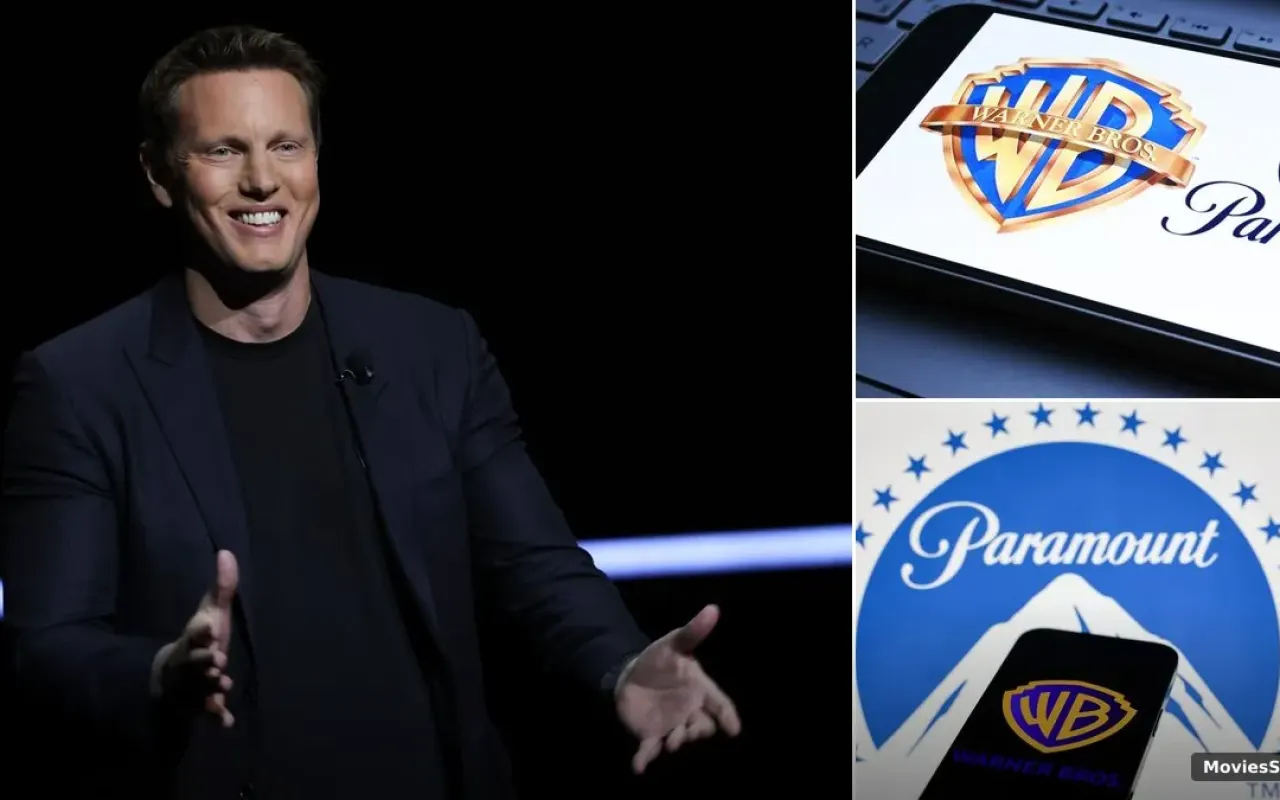
The skyline of Hollywood just shifted, and it wasn’t because of a new blockbuster. The U.S. Department of Justice (DOJ) just gave the green light to the Paramount Warner Bros merger, a $111 billion mega-deal that effectively hands the keys of the kingdom to David Ellison. This isn't just another corporate consolidation; it is the birth of a media titan designed to stare down Netflix and Amazon without blinking. But while the federal government is waving the checkered flag, the road to the finish line is still covered in regulatory spikes and a staggering $79 billion mountain of debt.
The U.S. Department of Justice (DOJ) officially approved Paramount Skydance’s $111 billion acquisition of Warner Bros. Discovery on June 2026. While federal regulators cleared the deal without requiring divestitures, the merger still faces significant hurdles, including potential lawsuits from state attorneys general in California and New York, as well as ongoing antitrust reviews in the United Kingdom and the European Union.
The $111 Billion Green Light: Why the DOJ Approved the Merger
Real talk: the DOJ Paramount WBD approval came as a shock to some, but the logic from the Antitrust Division is surprisingly simple. In the eyes of federal investigators, Paramount and Warner Bros. Discovery (WBD) aren't the giants they used to be. They are "historically late entrants" to the streaming wars. By allowing Paramount Skydance to absorb WBD, the DOJ argues it is creating a "stronger alternative" to the current monopolistic grip held by Netflix and Disney.
The Department of Justice essentially decided that the old-school studio model is dead. In their statement, they noted that the "disruptors of the recent past"—meaning the big tech platforms—have become the "entrenched monopolists of the present." By letting these two legacy studios combine, the government believes it is actually increasing SVOD competition. They pointed to the rise of independent powerhouses like A24 and Blumhouse as proof that theatrical distribution is still a healthy, competitive market that won't be killed by one giant studio merger.
The wild part? The DOJ didn't demand a single divestiture. No selling off cable channels, no spinning off film libraries. It’s a total "as-is" approval, which is almost unheard of for a deal of this magnitude. This hands-off approach from the Antitrust Division signals a massive shift in how the government views "media consolidation" in the age of TikTok and YouTube.
The Ellison Empire: David and Larry Ellison’s Vision for Media
To understand the David Ellison Paramount Skydance era, you have to look at the bank account behind it. David Ellison isn't just a "nepo baby" with a film degree; he’s now the architect of a media portfolio that rivals Disney. But the real muscle comes from his father, Larry Ellison, the Oracle founder who is reportedly chipping in $45.7 billion in equity to float this deal.
This isn't just a family business; it’s a global consortium. While the Ellisons are the face of the deal, a massive chunk of the Warner Bros Discovery sale Paramount is being funded by Sovereign Wealth Funds from the Middle East. We are talking about $24 billion in equity from:
- Saudi Arabia’s Public Investment Fund (PIF)
- Qatar Investment Authority (QIA)
- Abu Dhabi’s L’IMAD Holding
While Paramount insists these are "passive investors," the sheer scale of Middle Eastern equity in Hollywood is raising eyebrows in D.C. Treasury Secretary Scott Bessent is already being pressured to review the deal for national security risks, specifically looking at the 25% cap on foreign ownership of American broadcast stations like CBS. If the Ellisons want to keep the "American" in American media, they’re going to have to prove that L’IMAD and PIF aren't calling the shots from the sidelines.
The 'Scorched-Earth' Rivalry: Paramount vs. Netflix
If you want to know why this deal moved so fast, look at the beef. Before Paramount Skydance won the bid, WBD was actually in talks to sell its studio and streaming assets to Netflix for $27.75 per share. David Ellison saw the move and essentially said, "Bet." He countered with $30 per share and included the whole kitchen sink—CNN, HGTV, and the linear TV assets that Netflix didn't want.
The legal battle that followed was legendary. Makan Delrahim, the former DOJ official turned Paramount lawyer, led a campaign to convince regulators that a Netflix-WBD deal would be a disaster for competition. Netflix fired back, calling Paramount’s bid "absurd" and an attempt to cling to the dying world of linear television.
Ultimately, the WBD board chose the Ellison offer in February because it offered more value and a "cleaner" regulatory path. By positioning themselves as the "underdog" fighting against the Netflix juggernaut, Paramount used the government's own antitrust fears against their rivals. It was a masterclass in corporate chess.
Regulatory Roadblocks: Why the Deal Isn't Done Yet
Don't pop the champagne just yet. The Paramount WBD regulatory hurdles are still very real. While the feds said yes, California Attorney General Rob Bonta is still breathing down their necks. Bonta has been vocal that this is "not a done deal" and is currently leading a multi-state investigation that could result in a lawsuit to block the merger on the grounds of labor protection and consumer pricing.
Then there’s the "ticking fee." Because David Ellison is so confident, he agreed to a Warner Bros Discovery shareholder ticking fee. If the deal doesn't close by September 30, Paramount has to pay WBD shareholders roughly $7 million per day. That’s a massive incentive for the Ellison team to steamroll through any remaining opposition.
Overseas, the vibe is even more tense. The UK CMA and the European Commission are both deep into "Phase 1" investigations. The UK has a deadline of August 7 to decide if this deal will "substantially lessen competition." If they move to "Phase 2," the deal could be tied up for another five months, which would trigger that $7 million-a-day fee and potentially bleed the company dry before it even officially launches.
Editorial Fallout: The Future of CNN, CBS News, and HBO
Here is where things get messy for the people actually making the content. The Bari Weiss CBS News controversy has sent shockwaves through the industry. Since Weiss was installed as the head of CBS News under the Ellison influence, the vibes have been... grim. We’ve seen the firing of 60 Minutes veteran Scott Pelley and correspondent Cecelia Vega, leading to accusations that the newsroom is being "murdered" to appease political interests.
The big question now: What happens to CNN? David Zaslav has already struggled to steer the CNN ship, and with Larry Ellison’s ties to Donald Trump, staffers are terrified of a "right-wing pivot." There is genuine fear that CNN will be gutted just like CBS News, with high-profile anchors replaced by "opinion-led" programming that fits the new owners' worldview.
The labor side is just as stressed. Over 5,500 industry pros—including names like Glenn Close and Joaquin Phoenix—signed an open letter warning that this merger threatens the "sustainability of the creative community." The International Brotherhood of Teamsters and SAG-AFTRA are already demanding "safeguards" against the projected job losses. With a $6 billion cost-saving target, analysts expect at least 15% of the combined workforce to be laid off. That’s thousands of people losing their jobs so the balance sheet looks better for the Ellisons.
Financial Reality Check: $79 Billion in Debt
Let’s talk about the numbers no one wants to bring up at the afterparty. The Paramount WBD debt restructuring is going to be the defining challenge of this new company. When you combine the existing debt of WBD with the acquisition costs, the new entity is sitting on a $79 billion debt load.
To put that in perspective, when Disney bought Fox for $71.3 billion, they had a much cleaner path to profitability. This new Paramount-WBD entity is entering the room already underwater. Here is how that debt breaks down:
- WBD Legacy Debt: Roughly $43 billion.
- Acquisition Financing: Approximately $30 billion.
- Operational Deficits: The remaining $6 billion tied to the transition and "ticking fee" risks.
This debt means the company has almost zero room for error. We will likely see a massive reduction in "prestige" content spending. If a show isn't a guaranteed hit, it’s getting the axe. We might also see the HBO Max Paramount Plus merger happen faster than expected—likely by 2027—simply to save on server costs and marketing spend. They need to hit that $6 billion "synergy" target, or the interest on that $79 billion will eat them alive.
The Sports Powerhouse: TNT Sports + CBS Sports
One area where this merger actually makes a ton of sense is the Paramount WBD sports rights consolidation. By combining the portfolios of TNT Sports and CBS Sports, the new company becomes an absolute juggernaut. They will control:
- The NFL (via CBS)
- The NBA (assuming they keep the rights)
- The NHL
- The NCAA March Madness (which they already shared)
- The Olympic Games
- UEFA Champions League
This gives them massive leverage against cable providers and makes their combined streaming app a "must-have" for sports fans. If you want to watch the Super Bowl and the Stanley Cup, you’re going to be paying the Ellisons.
Key Takeaways
- The DOJ Approval: The feds cleared the $111 billion deal without concessions, viewing it as a way to create a viable Netflix competitor.
- The Ellison Power Move: David and Larry Ellison (with $24B in Middle Eastern backing) now control a media empire that rivals Disney.
- State & Global Resistance: California AG Rob Bonta and regulators in the UK/EU are the last lines of defense, with a $7M/day "ticking fee" looming after Sept 30.
- The Debt Burden: The new company starts with $79 billion in debt, necessitating a $6 billion cost-cutting plan that will likely lead to massive layoffs.
- Editorial Shift: The "Bari Weiss effect" at CBS News has sparked fears that CNN and other news outlets will face similar gutting and political pivots.
- Streaming Future: HBO Max and Paramount+ are expected to merge into a single "super-app" by 2027 to compete for SVOD dominance.
The Paramount Warner Bros merger is the ultimate "all-in" bet on the future of entertainment. David Ellison is gambling that he can manage a nearly $80 billion debt load while fighting off state attorneys general and a skeptical creative class. Whether this results in a "Netflix killer" or just a more expensive, more consolidated version of the same old Hollywood remains to be seen. But for now, the Ellisons are the new main characters of the industry, and everyone else is just waiting to see if their show gets renewed.