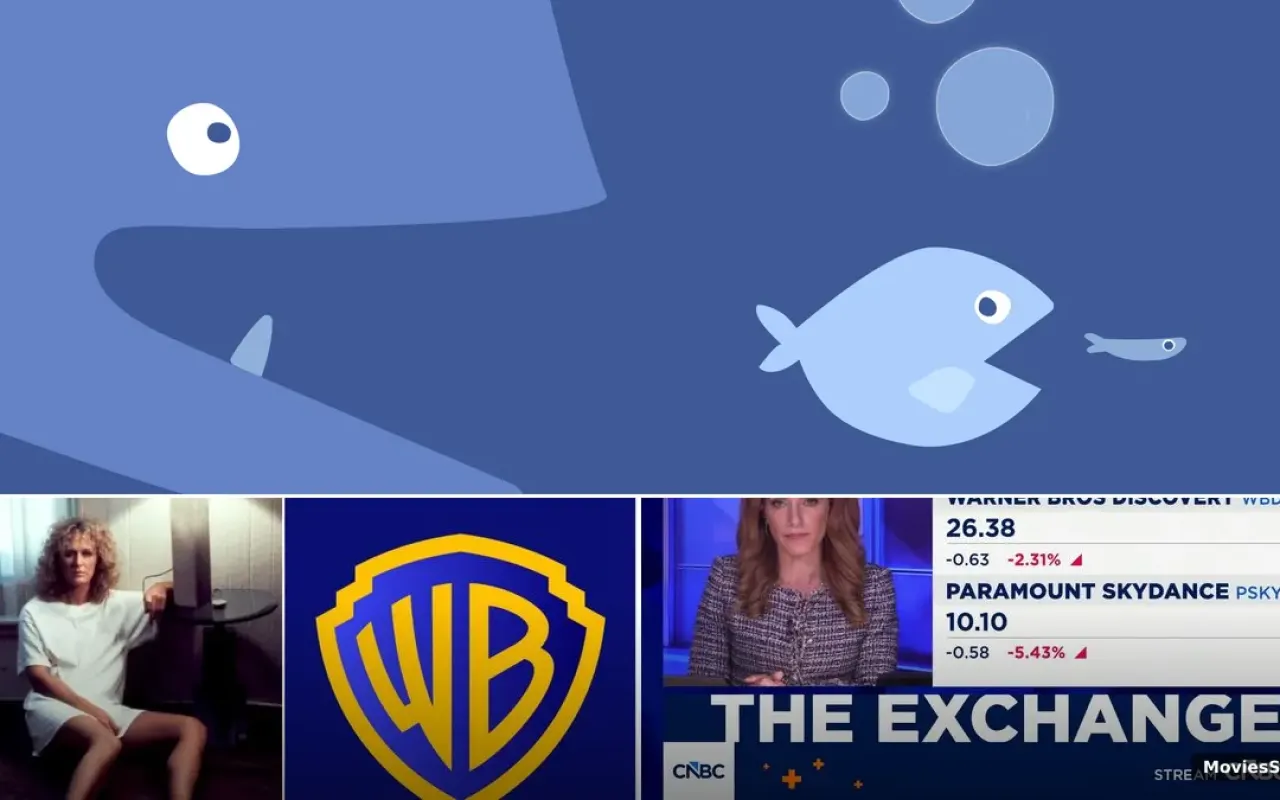
The era of peak TV is officially over, and the era of the "Mega-Studio" is knocking on the door. The proposed Paramount Warner Bros merger is currently the most chaotic storyline in entertainment, a $111 billion gamble that aims to fuse two of the world’s most iconic film lots into a single, streaming-first titan. But as the ink dries on the deal between Skydance Media and Warner Bros. Discovery (WBD), a massive wall of regulatory and legal resistance is forming. From state attorneys general to national security hawks in D.C., everyone has a reason to hate this deal—or at least, a reason to try and stop it.
If you’re wondering where things stand right now, here is the bottom line: The Paramount Warner Bros merger is currently facing a multi-state antitrust investigation led by California, a potential CFIUS review over 49.5% foreign ownership, and a formal EU regulatory process. While shareholders approved the $111 billion deal in April 2026, a lawsuit from up to 10 U.S. states is expected by late June 2026.
The State-Led Antitrust Siege: Why California and 9 Other States are Suing
While federal regulators at the Department of Justice (DOJ) and the Federal Communications Commission (FCC) have been relatively quiet, state leaders are making a lot of noise. California Attorney General Rob Bonta is leading a coalition of 10 states—including heavy hitters like New York and Pennsylvania—that are preparing a Paramount WBD antitrust lawsuit. Their argument isn't just that the company will be "too big," but that it will exert "monopsony" power over the industry.
In plain English? A monopsony happens when there are too few buyers for a product. In Hollywood, the "product" is labor. If Paramount and Warner Bros. merge, there is one less door for a screenwriter to knock on, one less studio for SAG-AFTRA members to negotiate with, and one less buyer for independent filmmakers. Bonta has signaled that his office sees "red flags" everywhere, specifically regarding how this consolidation could suppress wages for the Writers Guild of America (WGA) and other below-the-line workers who are already feeling the squeeze of the "streaming correction."
The states are also looking at the impact on local production hubs. Beyond the Hollywood hills, states like Georgia and New York have built entire economies around film tax credits. A combined entity would almost certainly look to "optimize" (read: cut) its production footprint, potentially gutting soundstages in Atlanta or post-production houses in London to save on overhead. For Bonta and his peers, this isn't just about movies—it’s about protecting thousands of middle-class jobs that depend on a competitive production environment.
National Security or Political Posturing? The CFIUS Foreign Ownership Review
The deal’s biggest hurdle might not be antitrust law, but rather a letter from Elizabeth Warren. The Massachusetts Senator is sounding the alarm over the David Ellison Paramount deal, specifically the 49.5% foreign ownership stake involved in the financing. The money behind the Skydance-led acquisition includes significant capital from sovereign wealth funds in Saudi Arabia, Qatar, and Abu Dhabi.
Warren is calling for a CFIUS media merger review (the Committee on Foreign Investment in the United States). The concern? Data privacy and propaganda. A combined WBD-Paramount would control HBO Max, Paramount+, CNN, and CBS News. That is a staggering amount of influence over the American information diet. Critics argue that allowing foreign entities—even "friendly" ones—to hold a nearly 50% stake in a company that owns two of the three major U.S. news networks is a national security risk.
Treasury Secretary Scott Bessent, who chairs CFIUS, is under intense pressure to treat this with the same level of scrutiny applied to TikTok. There’s also the "Team Telecom" factor—the group that reviews foreign participation in U.S. telecommunications assets. Since Paramount owns CBS and various broadcast licenses, the FCC will have to weigh in on whether this level of foreign capital violates the public interest. For the Ellisons, this means their $111 billion dream is currently sitting in a black box of federal bureaucracy.
The Streaming Super-App: Merging HBO Max and Paramount+
For the average person who just wants to watch The Last of Us or Yellowstone, the HBO Max Paramount+ merger is the most tangible part of this deal. The plan is to kill the individual apps and launch a single, "everything" platform. On paper, the combined library IP analysis is terrifyingly dominant:
- Warner Bros. Discovery: DC Comics (Batman, Superman), Harry Potter, Game of Thrones, Sesame Street, and the entire Discovery unscripted catalog.
- Paramount Global: Star Trek, Mission: Impossible, SpongeBob SquarePants, Top Gun, and the NFL on CBS.
This would create a "prestige TV" powerhouse that rivals Netflix in sheer volume. However, the consumer price impact of media mergers is almost always negative. Real talk: you aren't getting two services for the price of one. Analysts expect a "Mega-App" subscription to land north of $20 per month for the ad-free tier, as the new company tries to pay down the massive debt load inherited from the deal. There’s also the technical nightmare of merging two massive tech stacks. Warner’s transition from HBO Max to "Max" was already buggy; trying to fold in the Paramount+ infrastructure without losing millions of user profiles and watchlists is a Herculean task.
Financials and the "Ellison Factor": Can the Deal Survive Wall Street?
At the center of this hurricane is David Ellison, the CEO of Skydance Media and son of Oracle billionaire Larry Ellison. The Skydance Warner Bros Discovery acquisition is being framed as a "next-generation" move, but Wall Street is skeptical. While WBD recently reported streaming profitability—a rare feat in this climate—the company is still lugging around a mountain of debt.
The deal offers $31 per share in cash for WBD shareholders, but the vertical integration risks 2026 are real. David Ellison has promised $6 billion in cost-cutting, which is a polite way of saying job cuts Hollywood hasn't seen since the 2008 recession. We are talking about massive layoffs in marketing, distribution, and corporate back-office roles. Investors are also worried about the projected debt-to-equity ratio of the combined entity, which could make it difficult for the studio to "greenlight" expensive original content in the future.
There is also the "ghost of AOL-Time Warner" hanging over the room. That 2000 merger is widely considered the worst in corporate history—a case of two giants merging just as the market shifted under their feet. Some analysts fear that by the time this Paramount Warner Bros merger actually closes in late 2026, the industry will have moved so far toward short-form video (TikTok/YouTube) that a traditional "content fortress" will already be obsolete.
The "Antisemitism" Controversy: Paramount's Legal Strategy
In a wild twist, the legal battle has taken a turn into cultural politics. Makan Delrahim, Paramount’s Chief Legal Officer and former DOJ Antitrust Chief, has reportedly suggested that opposition to the deal might be fueled by "anti-Ellison" sentiment that borders on antisemitism. This claim stems from the Ellisons' high-profile support for Israel and their pro-Israel philanthropic efforts.
While this might sound like a "4-D chess" move to make regulators hesitate, it has backfired internally. Some employees at CNN and CBS News have expressed concern that the new owners will bring a specific political bias to their newsrooms. The fear is that if the deal goes through, the "Discovery" side of the business—known for its apolitical, reality-based content—will be sidelined in favor of a more ideologically driven media strategy. Whether this is a legitimate legal defense or just high-stakes PR remains to be seen, but it adds a layer of toxicity to an already messy antitrust enforcement battle.
Key Takeaways: What’s Actually at Stake?
- The Lawsuit: Up to 10 states led by California are preparing to sue to block the deal by late June 2026, citing monopsony power in Hollywood labor.
- National Security: Elizabeth Warren is pushing for a CFIUS media merger review due to nearly 50% of the funding coming from Middle Eastern sovereign wealth funds.
- The App: HBO Max and Paramount+ will likely merge into one service, leading to higher subscription prices and a massive combined IP library (DC + Star Trek).
- Job Losses: David Ellison’s $6 billion cost-cutting plan targets significant job cuts Hollywood-wide, specifically in marketing and production.
- The News: Regulators are weighing whether CBS News and CNN can coexist under one roof or if one must be divested to satisfy antitrust enforcement.
The Final Verdict
The Paramount Warner Bros merger is a desperate play for scale in a world where Netflix has already won the first round of the streaming wars. By combining Batman with Star Trek, David Ellison hopes to create a company big enough to survive the tech giants. But in doing so, he has invited a level of scrutiny that could pick the deal apart before it ever reaches the finish line.
Between the state lawsuits, the national security concerns, and the internal cultural friction, this isn't a simple corporate marriage—it's a three-front war. If the deal fails, Warner Bros. Discovery might be forced to split into pieces, and Paramount could find itself back on the auction block. One thing is certain: the Hollywood we knew is gone, and whatever comes out of this merger—or its collapse—will look nothing like the "Big Six" studios of the past. Keep your eyes on the late June filing deadline; that’s when we’ll know if this $111 billion ship is actually going to sail or if it’s destined to hit the regulatory iceberg.