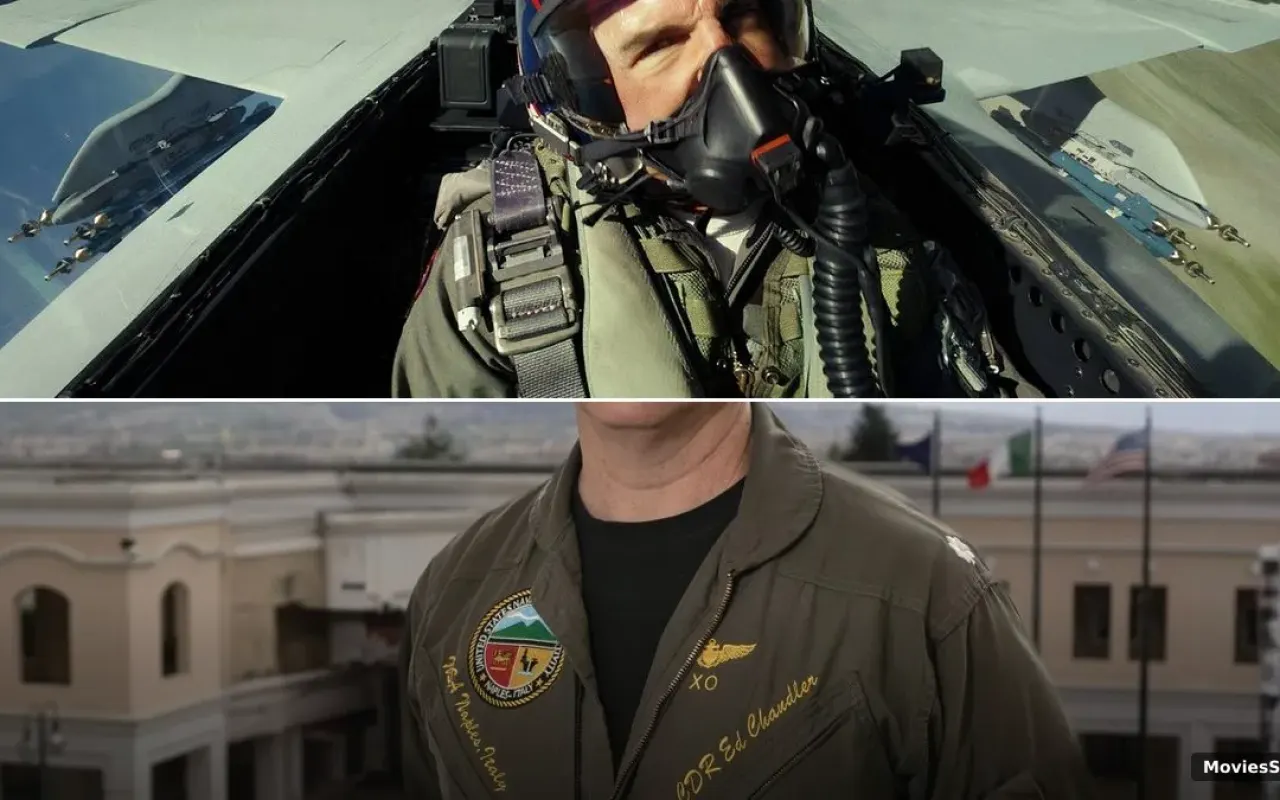
Let’s be real: we all walked out of the theater after Top Gun: Maverick feeling like we could personally land an F-18 on a moving postage stamp in the middle of the ocean. The G-force, the sweat, the "need for speed"—it’s the ultimate cinematic adrenaline shot. But if you ask a real top gun pilot how much of that movie is actually grounded in reality, you’re going to get a very different story. While the franchise is the greatest recruiting tool the U.S. Navy ever had, the gap between Hollywood’s Maverick and a real-life Naval Aviator is wider than the canyon in the final mission.
We’ve spent hours dissecting the flight logs and interviewing the people who actually wear the patch—including legendary instructors like Dave Berke and Ed Chandler—to figure out where the movie magic ends and the actual physics begin. From the "Ault Report" that started it all to the physiological impossibility of surviving a Mach 10 ejection, here is the definitive audit of the Top Gun reality.
Is the TOPGUN school real?
Yes, TOPGUN is a real US Navy program officially known as the United States Navy Strike Fighter Tactics Instructor program (SFTI). Originally founded at NAS Miramar and now located at NAS Fallon, the school was established in 1969 to improve air-to-air combat skills during the Vietnam War.
The Origin Story: The "Ault Report" and the Birth of a Legend
In the movie, TOPGUN is framed as a place for the "best of the best" to compete for a trophy. In reality, it was born out of a crisis. During the early years of the Vietnam War, the U.S. Navy was losing planes at an alarming rate. The kill-to-loss ratio had dropped to a dismal 2.4:1. The Pentagon’s solution at the time was more technology—specifically, missiles—but the missiles were failing, and pilots had forgotten how to actually dogfight.
Enter Captain Frank Ault. In 1968, he released what became known as the Ault Report, which basically told the Navy they were doing everything wrong. He recommended a dedicated "Advanced Fighter Weapons School" to teach dogfight tactics. The school opened in 1969 in a trailer at NAS Miramar with almost no budget. The results were instant: by the end of the war, the Navy’s kill ratio jumped to 12:1.
Today, the school has moved to NAS Fallon in Nevada, and the NFWS curriculum is less about ego and more about becoming a "teacher of teachers." Graduates don't just go back to the fleet to brag; they go back to overhaul the training of every other pilot in their squadron.
Training Reality: From "Cessna Tweets" to the F-14 Beast
Becoming a real top gun pilot isn't just about having "the look." It is a grueling, years-long pipeline that filters out anyone who isn't obsessed with perfection. Ed Chandler, a retired Navy Commander who lived the transition from the F-14 to the F-18, describes the initial training as a "kid in a candy store" moment that quickly turns into a survival test.
- The "Tweet" Phase: Every pilot starts small. The Cessna T-37 "Tweet" is where you learn the basics of not crashing. If you can’t handle a stall here, you aren’t getting anywhere near a $100 million jet.
- Water Survival: This is the part the movies skip. Pilots have to undergo "Dunker" training—being strapped into a simulated cockpit, dropped into a pool, flipped upside down, and forced to escape while blindfolded.
- The F-14 Tomcat: Chandler calls the F-14 Tomcat a "beast of an airplane." It was twice the size of the trainers, a 19-meter-long monster that required a RIO (Radar Intercept Officer) in the back seat to manage the complex weapon systems. In the real world, the RIO isn't just a "backup"—they are the tactical brain of the aircraft.
The cost of this training is astronomical. Operating an F-14 cost roughly $40,000 to $60,000 per flight hour in its prime (adjusted for inflation, that’s even higher). The modern F/A-18E/F Super Hornet is more "efficient," but you’re still burning through thousands of gallons of fuel just to practice a single catapult launch.
Carrier Operations: The "2-Second" Controlled Crash
If you think carrier landing difficulty is exaggerated for the screen, talk to anyone who has actually done it. Dave Berke and Ed Chandler both agree: it is the most stressful thing a human can do with their clothes on.
A carrier deck is only about 330 meters long. To stop a jet moving at 150 mph, you have to snag one of four steel cables with a tailhook. It’s not a "landing"; it’s a "controlled crash." Pilots have to manage three things simultaneously: angle of attack, lineup, and the glide slope.
The wild part? You are graded on every single landing. These grades are posted on the "Greenie Board" in the ready room for everyone to see. A "Perfect Pass" gets you a green mark; a "No Grade" or a "Bolter" (missing the wires) is a mark of shame. In the real Navy, if your Greenie Board looks like a Christmas tree (too much red), your career as a carrier pilot is effectively over. No one cares how many "cool" stunts you did if you can't land the plane safely.
Fact-Checking Maverick: Mach 10 and the Darkstar
The opening of Top Gun: Maverick features the "Darkstar," a hypersonic test plane that looks suspiciously like the real-world SR-72 Darkstar project by Lockheed Martin. While the cockpit realism in the film was high, the physics of that scene are pure fiction.
The Mach 10 Ejection
Maverick reaches Mach 10 (roughly 7,600 mph) and then the plane disintegrates. He somehow survives the ejection seat launch and walks into a diner. Real talk: at Mach 10, the friction with the air creates temperatures high enough to melt titanium. If you ejected at that speed, the dynamic pressure would instantly shred a human body into confetti. There is no flight suit on earth—not even the pressurized ones used by U-2 pilots—that could protect you from the physiological effects of Mach 10 air resistance.
The "Stealing the Plane" Trope
In the movie, Maverick steals the Darkstar to prove it can hit the mark. In the real Navy? That is an immediate court-martial, a dishonorable discharge, and likely a stint in a military prison. As Dave Berke pointed out, Maverick’s ego makes for a great 120-minute movie, but in a naval aviation environment, he’s a liability. A $100 million jet isn't a toy; it's a strategic asset. Recklessness isn't "cool"—it's expensive and dangerous.
The Physiological Toll: G-Force and Greyouts
One thing the sequel got exactly right was the physical strain on the pilots. Those weren't CGI faces; the actors were actually pulling G-force in the back of F-18s.
A real top gun pilot in a Super Hornet can pull up to 7.5 or 9 Gs. At 9 Gs, your body weighs nine times its normal weight. The blood is physically pulled out of your brain and into your legs. Without a "G-suit" (which inflates to squeeze your legs) and a specialized breathing technique, a pilot will experience "G-LOC" (G-induced Loss of Consciousness).
"The anticipation and the buildup culminate at the moment you launch off the deck. The communications, the language—they got that exactly right." — Dave Berke, Retired TOPGUN Instructor
The "pop-up" maneuver seen in the film’s climax is a real tactic used to avoid surface-to-air missiles. However, the fuel consumption during such high-intensity maneuvers is massive. In a real mission, a pilot is constantly doing "bingo fuel" math—calculating exactly how many seconds of afterburner they have left before they don't have enough gas to get back to the carrier.
The Maverick Personality: Would He Last?
The biggest "fiction" in the franchise isn't the planes—it's the man. Maverick is the ultimate "lone wolf," but the real TOPGUN is built on the "Stalker" mentality: precision, teamwork, and leadership.
Content Gap: What happens if you "buzz the tower"?
In 1986, it was a slap on the wrist. In the modern Navy, buzzing a tower or a carrier bridge without authorization would lead to an immediate "Flight Suit Cocktail Party" (where you are fired) and your wings would be "yanked." The Navy has zero tolerance for "cowboy" antics that risk the lives of the 5,000 people working on a carrier deck.
Furthermore, the movie depicts a very male-dominated world. While the sequel introduced "Phoenix," it’s worth noting that female pilots have been part of the real TOPGUN instructor cadre for years. The real school is a meritocracy—the jet doesn't know your gender; it only knows your angle of attack.
Key Takeaways: Fact vs. Fiction
- The School: Real. Founded in 1969 at NAS Miramar, now at NAS Fallon.
- The Mission: Semi-realistic. Low-level flying to avoid radar is a real dogfight tactic, but flying under bridges is pure CGI.
- The Plane: The F-18 is the current workhorse, but the F-14 was a "beast" that required two people (Pilot and RIO) to operate effectively.
- The Physics: Mach 10 ejection is 100% fatal. No exceptions.
- The Culture: Real TOPGUN is about teaching, not trophies. Recklessness gets you fired, not promoted.
The Future: Top Gun 3 and the F-35 Era
With Top Gun 3 officially in development, the franchise faces a new challenge: modern stealth fighter tactics. The F-35 Lightning II is a "fifth-generation" fighter, meaning it’s designed to kill enemies before they even see it on radar.
As Dave Berke (who has flown both the F-22 and F-35) notes, the "dogfight" as we know it is changing. Future movies will have to balance the visual spectacle of close-quarters combat with the reality of beyond-visual-range missile exchanges. Whether Maverick can adapt to a world of stealth and drones remains to be seen, but one thing is certain: the real top gun pilots at NAS Fallon will be watching, probably with a skeptical eye and a Greenie Board ready.