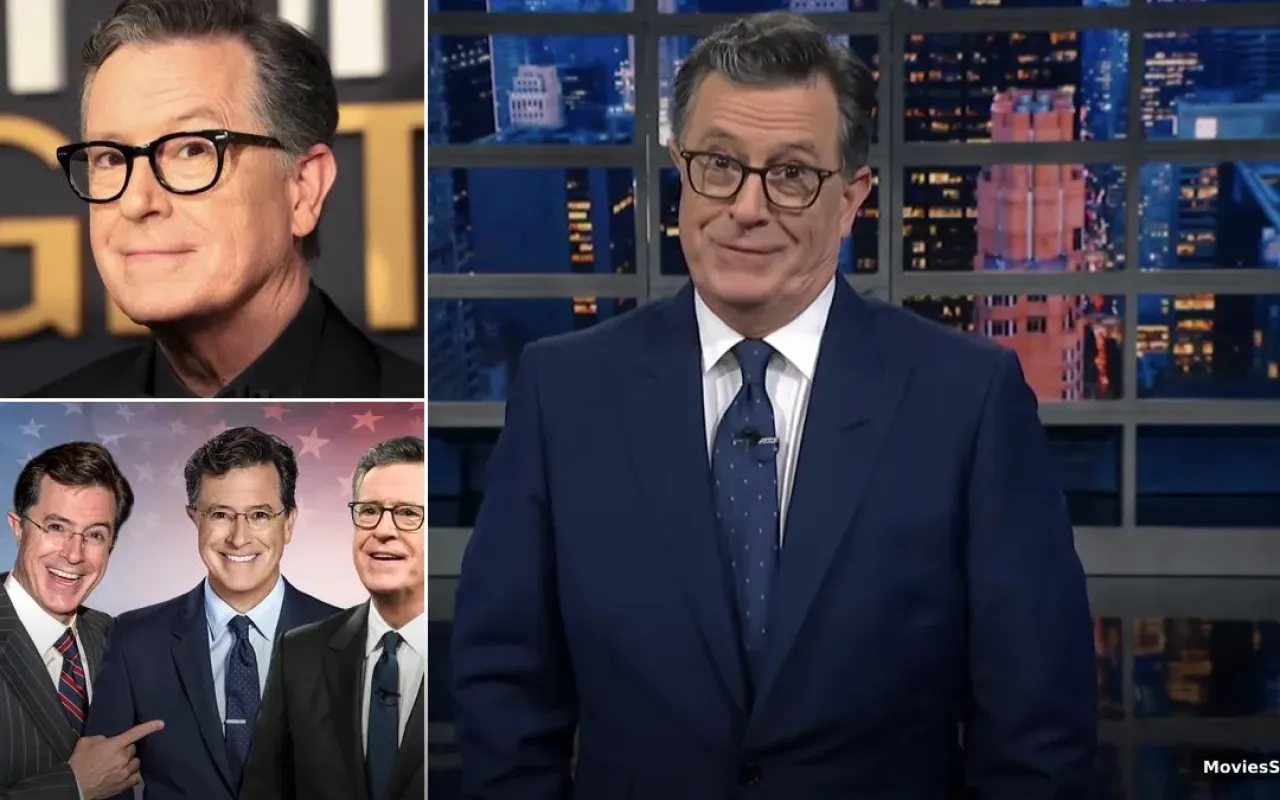
After 11 years, 1,800 episodes, and enough Catholic-guilt-fueled monologues to fill a cathedral, the Stephen Colbert Late Show finale has officially aired, marking the end of an era for CBS and the late-night landscape. While the final episode on May 21 was billed as a "joyous wake," the atmosphere surrounding the Ed Sullivan Theater was anything but simple. Behind the star-studded cameos and the emotional "Joy Machine" speech lies a messy intersection of corporate mergers, a $20 billion legal settlement, and a direct clash with the returning Trump administration that effectively ended the last "big tent" show in broadcast television.
Why was The Late Show with Stephen Colbert canceled?
While CBS officially cited "purely financial" reasons and a decline in linear ratings as Late Show cancellation reasons, the move is widely viewed as a political pivot. Following the Paramount-Skydance merger, new leadership under David Ellison sought to settle a $20 billion dispute with the Trump administration, leading to the removal of Colbert—the network’s most vocal critic of the president.
The 'Joy Machine' Signs Off: Inside the Stephen Colbert Final Episode Guests and Gags
The finale didn't open with a punchline, but with a confession. Standing before his audience one last time, Colbert ditched the satire to explain the "Joy Machine" philosophy. "We call it the Joy Machine because to do this many shows, it has to be a machine," he said. "But if you choose to do it with joy, it doesn’t hurt as much when your fingers get caught in the gears." It was a rare moment of sincerity from a host who spent a decade "feeling the news" at us.
The Stephen Colbert final episode guests list felt like a fever dream of A-listers and deep-cut references. Paul McCartney took the stage for the final interview, a poetic bookend for a studio that hosted the Beatles’ American debut in 1964. McCartney, ever the pro, offered a cheeky "Still is" when discussing America as the "greatest democracy," a line that landed with a heavy wink to the political climate outside the theater doors.
The night was packed with Late Show series finale easter eggs and high-concept sketches:
- The Inter-dimensional Wormhole: A pre-taped VFX extravaganza featured Colbert investigating a black hole spawned by the show's cancellation. The sketch featured the "Strike Force Five"—Jon Stewart, Jimmy Kimmel, Jimmy Fallon, and Seth Meyers—all joking about the "Paramount black hole" that consumes everything in its path.
- The Peanuts Prank: In a final act of rebellion, Colbert had Louis Cato and the band play Vince Guaraldi Peanuts music (specifically "Linus and Lucy"). Colbert mock-panicked about the copyright costs, hoping to "cost CBS money," only for the joke to reveal that CBS actually holds the license.
- The Star-Studded Crowd: The camera panned to "random" audience members who turned out to be Bryan Cranston, Paul Rudd, and Ryan Reynolds, all playing along with the "just another night" vibe of the series finale.
The $20 Billion Question: Was the Cancellation Political?
To understand why the top-rated show in late-night was suddenly axed, you have to look at the Paramount Global balance sheet and the Skydance Media takeover. David Ellison, the new CEO of the merged entity, is known for a more "middle-of-the-road" corporate strategy. More importantly, the cancellation came just days after Colbert labeled a $20 billion settlement between Paramount and the Trump administration a "big, fat bribe."
The role of the FCC cannot be ignored here. Chairman Brendan Carr has been vocal about "reining in" late-night hosts who use public airwaves for partisan attacks. Insiders suggest that removing Colbert was a "peace offering" to the administration to ensure the Paramount-Skydance merger cleared regulatory hurdles without a hitch. While CBS points to the fact that late-night ratings have dipped—Colbert went from 3.1 million nightly viewers in 2017 to roughly 1.3 million in 2025—the show remained #1 in the 18-49 demographic and held a massive 10-million-subscriber footprint on YouTube.
"This wasn't about the numbers; it was about the noise. In the new Paramount era, Colbert was a $20 million-a-year liability that the new owners couldn't afford to keep if they wanted a seat at the table in D.C." — Late-night media analyst.
Colbert vs. Letterman: A Tale of Two Finales
When you compare the Stephen Colbert vs David Letterman finale, the vibes are polar opposites. Letterman’s 2015 exit was a victory lap—he chose the date, he chose the successor, and the network threw him a month-long party. Colbert’s exit felt like a "forced retirement."
Letterman’s finale was about the history of the medium; Colbert’s was about the survival of the soul. While Letterman had the "Top Ten List" of presidents, Colbert had a "wormhole" sketch that questioned the very existence of network television. Letterman left a thriving monoculture; Colbert is leaving a fragmented digital landscape where his clips will live on TikTok longer than they did on the CBS airwaves.
The CBS Comics Unleashed Replacement: What Happens Now?
In perhaps the most "corporate" move possible, the CBS Comics Unleashed replacement has been confirmed. CBS is pivoting away from the high-cost, high-production talk show format in favor of a lower-budget, panel-style show hosted by Byron Allen.
Comics Unleashed represents a massive shift in strategy:
- Cost-Cutting: The show costs a fraction of the $50 million annual budget of The Late Show.
- De-politicization: Allen’s format is strictly "jokes only," avoiding the monologue-heavy political commentary that defined the Colbert era.
- Syndication Focus: The show is designed to be evergreen, making it easier to sell to international markets and streaming platforms without the "expiration date" of daily news satire.
The Ed Sullivan Theater, a landmark of American broadcasting, currently faces an uncertain future. While Byron Allen’s production will utilize the space for now, rumors suggest Paramount is looking to lease the theater for live Broadway events to maximize revenue, ending its 30-plus-year run as a dedicated late-night home.
What’s Next for Stephen Colbert? From CBS to Middle-earth
If you thought Colbert was going to fade into a quiet retirement of sailing and Sunday Mass, you haven't been paying attention. The Stephen Colbert Lord of the Rings movie is officially in development. Titled The Lord of the Rings: Shadow of the Past, the project is a collaboration with Warner Bros. and is rumored to be a deep-dive into the Second Age—a period Colbert has geeked out over for decades.
Stephen Colbert LOTR screenplay details suggest the film will focus on the lore of the Blue Wizards, a niche area of Tolkien’s legendarium that has never been explored on screen. Production is slated to begin in New Zealand in late 2026. Beyond the big screen, there is heavy speculation about a move to a streaming giant. Both Netflix and Apple TV+ have reportedly reached out to Colbert’s team for a weekly "topical" show or a high-end interview series similar to My Next Guest Needs No Introduction.
As for his old crew, the future is mixed. While Jon Batiste made a surprise appearance for the finale, he is focused on his solo musical career. However, sources say the Late Show writing staff—many of whom have been with Colbert since The Colbert Report—are being courted for a new project under the Jon Stewart production banner.
Key Takeaways from the Late Show Finale
- The End of the Monoculture: Colbert’s exit marks the end of the "big tent" late-night show that attempts to speak to the entire nation.
- Political Pressures: The Paramount-Skydance merger and a $20 billion settlement with the Trump administration are the primary drivers behind the cancellation.
- Ratings Reality: Despite a decline in linear viewers, Colbert remained a digital powerhouse with over 10 million YouTube subscribers.
- The Future is Tolkien: Colbert is pivoting to film, with a Lord of the Rings project already in the works at Warner Bros.
- Byron Allen Steps In: CBS is replacing high-budget satire with the more cost-effective Comics Unleashed.
The Legacy of the Sincerest Host in Late-Night
The wild part about Colbert’s 11-year run is that he managed to be both the most satirical and the most sincere person on television. He didn't just tell jokes; he "felt the news" with us through some of the most turbulent years in American history. Whether he was interviewing a world leader or geeking out with Paul McCartney, Colbert brought a level of intellectual rigor to the 11:35 PM slot that we likely won't see again on broadcast TV.
As the 2026 election approaches, the absence of Colbert’s nightly "Meanwhile" segment will leave a massive hole in the media landscape. Liberals have lost their "chief evangelist," and the establishment has lost its most effective translator. Colbert might be heading to Middle-earth, but the "Joy Machine" he built at CBS will be remembered as the last time late-night truly felt like it mattered.
Look, late-night isn't dying; it's just moving. The Stephen Colbert Late Show finale wasn't just a goodbye to a man in a suit; it was a goodbye to the idea that we all have to watch the same thing at the same time. And in the words of the man himself: "Have a good show. Thanks for being here."