The lights finally went out at the Ed Sullivan Theater last week, marking the end of the Stephen Colbert era and, for many, the end of late-night TV as we knew it. But while the network giants are flickering out, a new kind of signal is broadcasting from a living room in Los Angeles. Ben Gleib Good Night is the first major attempt to prove that the late-night format isn't dead—it just needed to move out of the studio and into the creator economy. By ditching the $100 million overhead for a leaner, $1.5 million independent model, Gleib is betting that the future of the YouTube late night show is uncensored, interactive, and surprisingly intimate.
What is Good Night with Ben Gleib?
Good Night with Ben Gleib is the world's first YouTube-native late-night talk show. Launched in May 2026, the show is produced independently from Gleib's home in Los Angeles for approximately $1.5 million per season. It features traditional elements like a monologue and house band alongside digital innovations like a virtual Zoom audience and uncensored content.
The Death of the $100 Million Talk Show
Let’s look at the receipts: linear television is in a freefall. In 2025, ad spend for late-night TV plummeted to $209 million—an 85% decline from just eight years ago. When Stephen Colbert signed off from The Late Show, he wasn’t just leaving a job; he was exiting a business model that no longer makes sense. Networks are spending nine figures to maintain massive crews and Midtown Manhattan real estate for an audience that mostly watches three-minute clips on their phones the next morning.
Data from Guideline shows that roughly 20% of those "lost" late-night ad dollars are flowing directly into the creator economy. Advertisers aren't quitting the format; they’re just moving to where the attention is. While network ratings for the first quarter of 2026 actually saw a 20% "nostalgia bump" during Colbert’s farewell tour, the underlying math remains "unsustainable," as Gleib puts it. The evolution of late night is being driven by a simple reality: you can’t run a 20th-century factory to produce 21st-century content.
Enter ‘Good Night with Ben Gleib’: Late-Night from a Living Room
The wild part about Ben Gleib Good Night isn't just that it's on YouTube—it's how it's being made. Gleib has assembled a heavyweight team, including Stewart Bailey producer (an alum of The Daily Show) and bandleader Keith Harris (the legendary drummer for the Black Eyed Peas). But instead of a 200-person network staff, they’re running a lean crew of about 30 people.
The production budget for a full 42-episode season—plus 42 "Nightcap" after-shows—is roughly $1.5 million. For context, that’s about what a network show spends on craft services and parking in a month. By filming in his own home, Gleib eliminates the "middleman" of network executives and broadcast standards. This is an uncensored talk show where the conversations can actually breathe. While a traditional TV interview is chopped into a 7-minute segment to fit commercial breaks, Gleib’s sit-down with his first guest, Kevin Smith, can run for 30 minutes if the vibe is right.
The "home studio" aesthetic isn't just a cost-saving measure; it's a vibe shift. In an era of polished, PR-managed celebrity appearances, there is something inherently more authentic about a host sitting in his actual house. It mirrors the success of "Hot Ones" and "Call Her Daddy"—shows that feel like a conversation you're eavesdropping on, rather than a performance for a 2,000-seat theater.
The Tech Stack: Zoom Walls and Nowhere Studios
One of the biggest content gaps in current late-night coverage is how these independent shows actually handle the "live" energy of a studio audience. Gleib isn't just talking to a camera in an empty room. He’s using a sophisticated virtual audience setup powered by Nowhere Studios and Zoom Video Communications.
How the Zoom Wall Works
- The Integration: A massive "Zoom wall" is built into the set, allowing hundreds of fans from around the world to be visible to Gleib and the guests in real-time.
- Interactive Features: Unlike a passive TV audience, these viewers can use Zoom’s chat functionality to ask questions or react to the late night monologue.
- Global Participation: International viewers can join the taping regardless of their time zone, solving the geographic gatekeeping of traditional NYC/LA tapings.
- The Post-Show: After the main episode wraps, "ticket holders" transition into a digital after-party, creating a community layer that broadcast TV literally cannot replicate.
This tech stack allows the show to maintain the high-energy "feedback loop" that comedians need, without the logistical nightmare of bussing tourists into a studio. It’s a home studio setup that feels like a command center for the independent media era.
The 8 Revenue Streams: How YouTube Late-Night Makes Money
The most common question skeptics ask is: "How do you pay for a bandleader like Keith Harris without CBS's checkbook?" The answer lies in YouTube-native talk show monetization. Gleib isn't relying on a single ad-buy; he’s running a diversified business. Here is the breakdown of the eight revenue streams Good Night with Ben Gleib is utilizing:
- Virtual Tickets: Fans pay between $10 and $40 for "seats" in the virtual audience, offering different levels of interaction.
- Direct Brand Integration: Instead of generic commercials, brands are woven into "desk reads" and segments, similar to the podcast model.
- YouTube AdSense: The baseline revenue from the platform’s own ad network.
- Memberships/Subscriptions: Recurring monthly revenue from "super-fans" who get exclusive perks and early access.
- Merchandise: High-margin apparel and lifestyle products branded to the show.
- Spinoff Content: Slicing the 42 main episodes into hundreds of Shorts, Reels, and TikToks that generate their own micro-revenue.
- Live Touring: Taking the Ben Gleib Good Night experience on the road for live stand-up and talk show hybrids.
- Syndication/Licensing: Potential deals with streamers like Netflix or Spotify to host the library, much like Jay Shetty or Jake Shane have done.
Gleib’s goal is to scale this into a "multi-hundred million dollar brand." By owning the IP entirely, he doesn't need 2.7 million viewers to be profitable. He just needs a dedicated, engaged community.
The Creatorverse: Julian Shapiro-Barnum and the New Guard
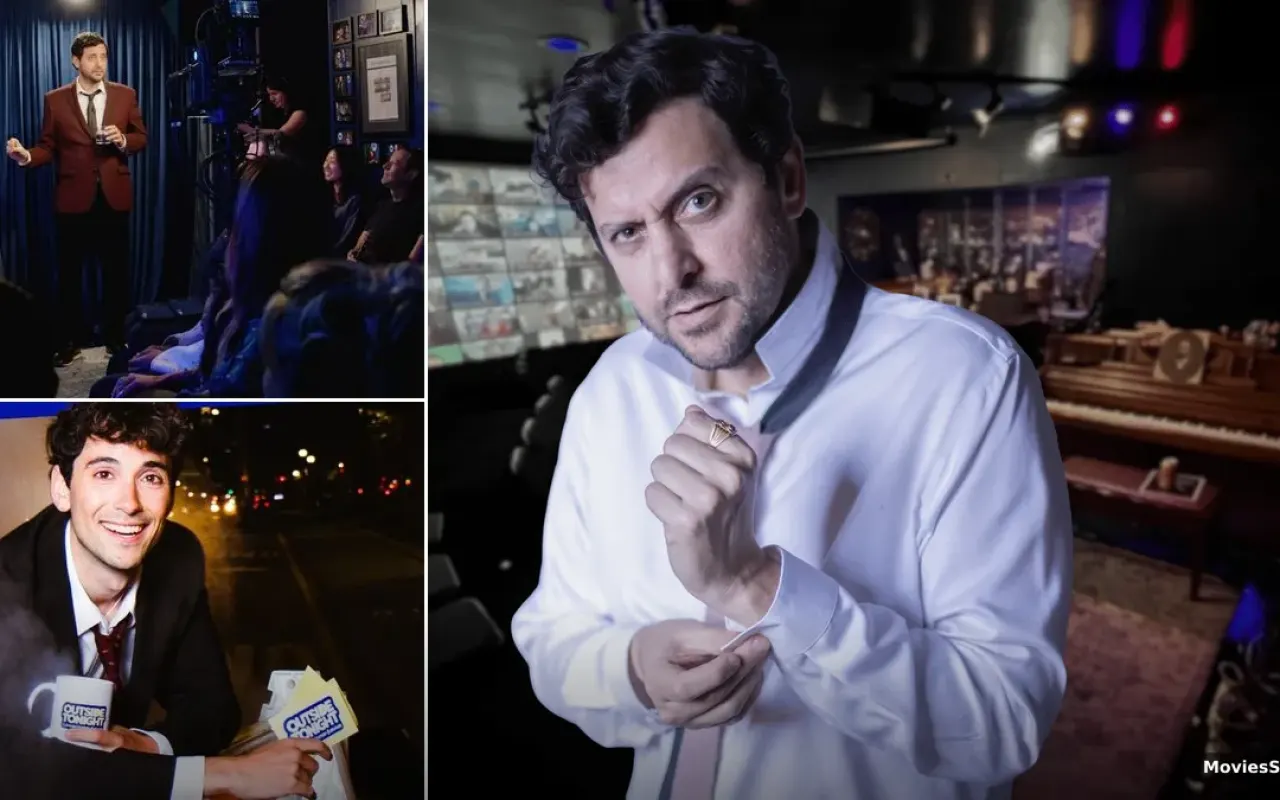
Gleib isn't the only one trying to fill the void. On June 17, Julian Shapiro-Barnum Outside Tonight will launch on YouTube, bringing a different flavor to the evolution of late night. While Gleib is leaning into the traditional-but-evolved studio format, Shapiro-Barnum (the mastermind behind Recess Therapy) is taking the show to the streets of New York.
Julian Shapiro-Barnum is focusing on the "variety" aspect of late-night. His show acts as a curated collection of segments from other creators, essentially becoming a hub for the best talent on the internet. It’s a "Last Week Tonight" style deep-dive into specific themes rather than a nightly news roundup.
This shift from "celebrity fluff" to "thought leaders" is a recurring theme. Gleib has stated his show will cover "life-changing" topics, bringing on wellness experts, psychologists, and entrepreneurs alongside the usual comedians. The future of late night comedy 2026 is less about a movie star promoting a blockbuster and more about creators providing actual value or authentic connection to their audience.
Is the 'Home Studio' Vibe Actually Working?
The skepticism is real: Can a show filmed in a house ever have the "weight" of a show filmed at 30 Rock? From an advertiser perspective, the answer is a resounding yes. Brands are fleeing the "brand safety" bureaucracy of networks for the direct, high-intent audiences of creators like Alex Cooper or Sean Evans. Cooper’s Call Her Daddy now rivals the total watch-time of Seth Meyers, proving that the platform matters less than the personality.
From an audience perspective, the intimacy is the point. We are in a "post-polish" era of media. The "Zoom wall" and the occasional glimpse of Gleib’s actual hallway make the viewer feel like they are part of an inner circle, not just a number in a Nielsen rating. However, the technical perspective remains a challenge. Live-streaming high-fidelity audio and video from a residential connection requires industrial-grade backup systems and a specialized tech team to ensure the "virtual audience" doesn't lag or drop.
Key Takeaways
- The Budget Gap: Ben Gleib Good Night costs $1.5M per season, compared to the $100M+ required for network shows like Colbert's.
- The Tech: Use of "Zoom walls" and Nowhere Studios allows for a global, interactive audience that pays $10-$40 for "virtual tickets."
- The Shift: Late-night is moving from "celebrity promotion" to "creator-led authenticity," with guests ranging from Kevin Smith to wellness experts.
- The Revenue: Gleib is utilizing 8 distinct revenue streams, including merch, subscriptions, and brand integrations, to remain independent of network pressure.
- The Competition: Creators like Julian Shapiro-Barnum and Alex Cooper are redefining the talk show as a "curated" or "intimate" experience rather than a broadcast staple.
The Future of Late Night
The transition from linear TV to the creator economy is no longer a theory; it’s a settled reality. While Stephen Colbert and his peers defined an era of broad, "center of the road" cultural relevance, Ben Gleib Good Night represents the fragmentation of that culture into something more specialized and sustainable.
Will the show eventually move to a "real" studio? Gleib seems uninterested in returning to the old ways. The freedom to be uncensored, the ability to own his own data, and the direct line to his fans are more valuable than a marquee on Broadway. As we move further into 2026, the question isn't whether late-night is dying—it's whether the networks can figure out how to be as nimble as a guy in his living room with a Zoom wall and a dream.