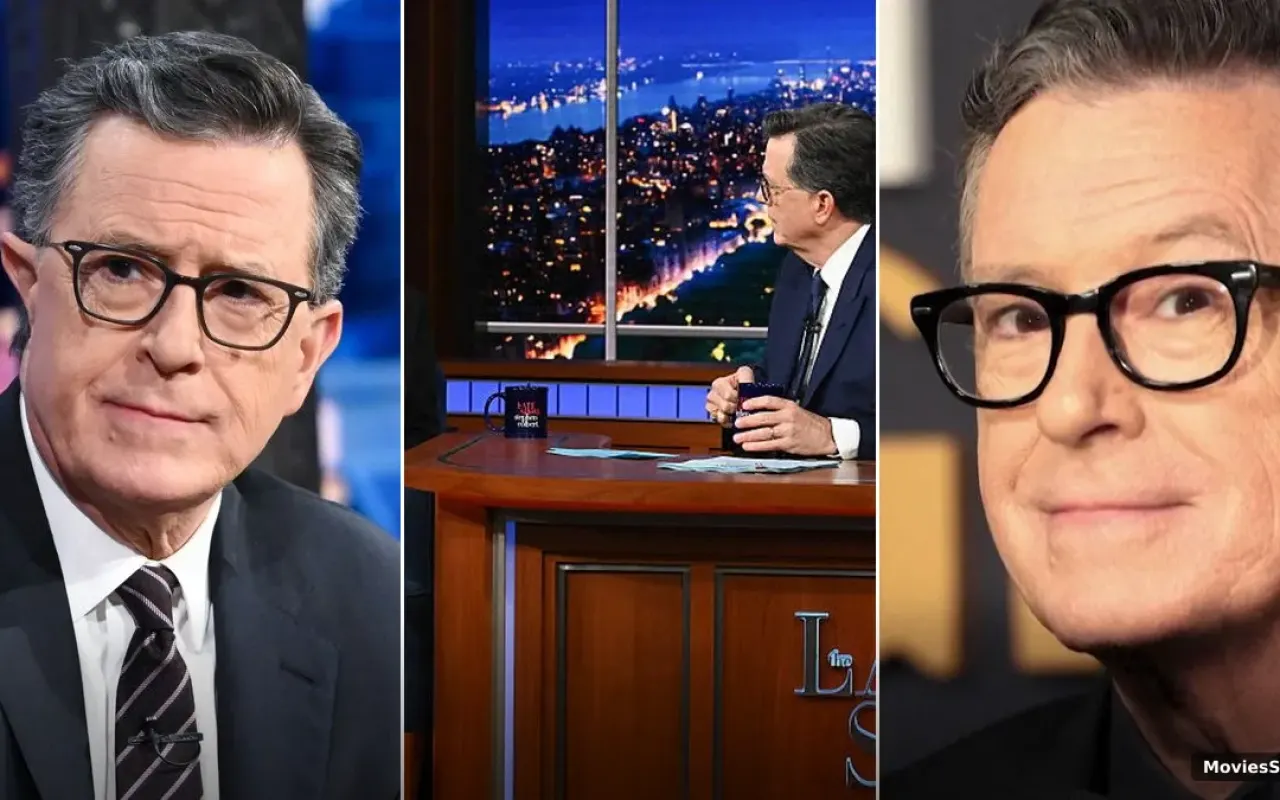
The lights have officially dimmed at the Ed Sullivan Theater, and with them, an era of late-night television that felt like the last line of defense for a certain kind of sanity has come to an abrupt, messy, and deeply emotional end. The Stephen Colbert Late Show finale wasn't just a goodbye to a host; it was a 1,800-episode victory lap that crashed head-first into the cold reality of corporate mergers and political warfare. While the broadcast itself was a masterclass in "feeling the news" one last time, the story happening behind the scenes is arguably more dramatic than anything that made it to air.
The Grand Finale: McCartney, Cameos, and a Surreal Goodbye
If you’re going to go out, you might as well go out with a Beatle. The final episode was less of a traditional talk show and more of a fever dream of A-list validation. Paul McCartney served as the final guest, gifting Colbert a photo of The Beatles in that very same theater from 1964. It was a full-circle moment that underscored the weight of the Ed Sullivan Theater's history—a history that Colbert has been the steward of for 11 years.
The energy peaked with a massive Hello Goodbye performance. It wasn't just McCartney; it was a "who's who" of musical and comedic heavyweights. We saw the Jon Batiste return, joined by Elvis Costello and the current band leader Louis Cato, turning the stage into a chaotic, joyful mosh pit of late-night royalty. But the real "internet-breaking" moment was the interdimensional wormhole. In a segment that felt like a nod to his sci-fi nerd roots, a literal rift in space-time opened up to swallow the show, featuring cameos from the "competitors" who have become his closest allies: Jimmy Kimmel, Jimmy Fallon, Seth Meyers, and John Oliver.
The cameos didn't stop there. The "audience" was stacked with disgruntled stars pretending to be mad they weren't the final guest:
- Bryan Cranston: Barged out and tossed his "Late Show" hat into the crowd in a faux huff.
- Paul Rudd: Tried to offer a "retirement gift" of six bananas before being told he wasn't the closer.
- Tina Fey: Claimed she didn't even know it was the final show and was only there for "historic events."
- Ryan Reynolds: Handed Rudd’s bananas to keyboardist Corey Bernhard, claiming he was actually there to see the band.
It was a perfect encapsulation of what Colbert called his "joy machine." He spoke directly to the camera, sans monologue, to thank his crew—the "great Achilles whom we knew"—and the audience for a "reciprocal emotional relationship." But the most "Colbert" moment of the night? A calculated legal middle finger. He intentionally had the band play copyrighted Peanuts music by Vince Guaraldi, joking, "I hope this doesn't cost CBS any money!" while acknowledging that the estate is notoriously litigious. It was a cheeky parting shot at a network he clearly feels burned by.
Why Was Stephen Colbert's Late Show Canceled?
Why was Stephen Colbert's Late Show canceled? Officially, CBS cited a "financial decision" driven by a late-night TV decline and a shrinking ad market. However, the move is inseparable from the Paramount Skydance merger and Colbert’s vocal criticism of a $16M Trump lawsuit settlement, which he notoriously labeled a "big fat bribe" on air to secure regulatory favor.
The timeline is almost too clean to be a coincidence. Paramount Global, the parent company of CBS, was desperate for the FCC (Federal Communications Commission) to approve its merger with Skydance Media. Brendan Carr, the Trump-appointed FCC Chair, hasn't been shy about his distaste for "fake news" and vocal critics. Just one week after CBS announced Colbert was being ousted, the Paramount-Skydance merger received the green light.
The Trump lawsuit settlement remains the smoking gun for many insiders. When CBS agreed to pay $16 million to settle a $20 billion lawsuit from Donald Trump regarding a 60 Minutes interview, Colbert didn't hold back. He suggested the payment was less about legal merit and more about "kissing the ring" to ensure the billionaire Ellison family (who control Skydance) got their $100 billion megamerger with Warner Bros. Discovery. Even Bruce Springsteen weighed in during the final week, calling the decision the work of "small-minded people" who couldn't take a joke.
By the Numbers: A Ratings Record for the Ages
If the cancellation was purely financial, the numbers tell a confusing story. The Stephen Colbert Late Show finale pulled in a staggering 6.74 million viewers, setting a Nielsen ratings record for a weeknight broadcast in the modern era. To put that in perspective, it’s the highest viewership for a late-night exit since David Letterman signed off in 2015.
However, the late-night TV decline is a real monster. In its prime, the show was a cash cow, but ad revenue across the board has plummeted. In a streaming era transition, the math has changed:
- Peak Ad Revenue: Late-night used to pull in over $519M annually for top shows.
- The Colbert Era Reality: Ad revenue had dipped to approximately $209M by the time of the cancellation.
- The Replacement Factor: Replacing a high-budget production with a "time-buy" model (where the host pays the network) virtually guarantees profit, even with 1/10th of the viewers.
The Colbert vs Letterman finale ratings comparison shows that while Colbert captured the zeitgeist, the "linear TV" audience is simply a fraction of what it once was. CBS is betting that a cheaper, less controversial block will be more "financially sustainable," even if it lacks the cultural impact.
What’s Next for Stephen Colbert? From Late Night to Middle-earth
If you think Colbert is going to spend his retirement gardening, you haven't been paying attention. The man is pivoting from the Ed Sullivan Theater to the Shire. He has officially confirmed he is co-writing and producing a new film, tentatively titled Stephen Colbert Lord of the Rings movie: The Lord of the Rings: Shadow of the Past.
This isn't just a vanity project. He’s joined forces with Philippa Boyens, the Oscar-winning screenwriter behind the original trilogy, and his son, Peter McGee. Rumors suggest the film will explore the "gap years" between The Hobbit and The Fellowship of the Ring, focusing on the hunt for Gollum—a subject Colbert has geeked out about for decades.
Beyond Middle-earth, Colbert is reportedly in talks with Netflix and HBO Max for a potential "unfiltered" political series that wouldn't be beholden to broadcast standards or FCC-pressured corporate bosses. He also remains deeply involved with Second City Chicago, the improv mecca where he got his start, potentially taking on a larger mentorship or board role to protect the next generation of satirists.
The Replacement: Who is Byron Allen and What is Comics Unleashed?
Starting May 22, the 11:35 PM slot will look very different. Enter Byron Allen Comics Unleashed CBS. This isn't a traditional network-produced show. It’s a "time-buy" model, a move that has sent shockwaves through the NYC production economy.
In a time-buy deal, Byron Allen’s Entertainment Studios essentially leases the airtime from CBS. Allen pays for the slot and keeps the ad revenue he generates, while CBS gets a guaranteed check without the headache of a $100M+ annual production budget.
- The Vibe: Comics Unleashed is a panel-style show featuring stand-up comedians.
- The Content: It is notably "apolitical." Unlike Colbert’s nightly roasts, Allen’s programming is designed to be evergreen and "safe" for all advertisers.
- The Ed Sullivan Theater Future Use: This is the big question. While Comics Unleashed is currently taped in Los Angeles, there are whispers that the historic theater may be converted into a multi-use venue for live events or leased out for high-end Broadway rehearsals.
The human cost of this transition is significant. The Late Show staff layoffs have affected over 200 employees, from writers and producers to the specialized stagehands who kept the Ed Sullivan Theater running. Many of these staffers have been with the show since the Letterman transition, and their exit marks a massive brain drain for the New York comedy scene.
Key Takeaways: The End of The Late Show
- The Ratings Peak: The finale drew 6.74 million viewers, the highest since 2015, proving the audience was still there, even if the network wasn't.
- The "Bribe" Controversy: Colbert’s exit is inextricably linked to the Paramount Skydance merger and his criticism of the $16M Trump settlement.
- The New Model: CBS is moving to a "time-buy" model with Byron Allen, prioritizing guaranteed profit over cultural prestige.
- Middle-earth Bound: Colbert’s next major project is the film Lord of the Rings: Shadow of the Past with Philippa Boyens.
- The Peanuts Stunt: Colbert used unauthorized music in the finale as a final, defiant "gift" to CBS’s legal department.
The Stephen Colbert Late Show finale was a reminder that in the current media landscape, being "number one" isn't always enough to save you from the "big fat bribe" of corporate consolidation. Colbert walked away with his head high, a Beatle by his side, and a wormhole waiting to take him to his next chapter. Whether that chapter is in a streaming studio or a hobbit hole, the "joy machine" isn't broken—it’s just moving to a different dimension.