The Cannes Film Festival has a reputation for being a bit extra, but when the lights came up for Emmanuel Marre’s latest feature, the atmosphere was different. This wasn’t just the usual festival hype. After the credits rolled on Notre Salut (released internationally as A Man of His Time), the audience stayed on their feet for 11 minutes. While an 11-minute standing ovation is standard operating procedure for the Croisette, the weight of this particular story—a chillingly quiet look at how "normal" people facilitate atrocities—felt like a direct signal to the current political temperature in Europe. If you’ve been following the Swann Arlaud Cannes 2026 buzz, you know this isn't your typical period piece. This A Man of His Time movie review breaks down why this film is the most uncomfortable mirror France has looked into in years.
What is A Man of His Time movie about? A Man of His Time (Notre Salut) is a 2026 historical drama directed by Emmanuel Marre. Based on the director's own family letters, it follows Henri Marre (Swann Arlaud), a mediocre bureaucrat who climbs the ranks of the Vichy collaborationist government in 1940s France, exploring the 'banality of evil' through administrative complicity in Nazi atrocities.
The True Story: From Family Letters to the Big Screen
The most haunting thing about A Man of His Time isn't what’s on the screen—it’s where the script came from. This is an A Man of His Time true story in the most literal sense. Director Emmanuel Marre didn’t just research the archives; he went through his own attic. The film is built on the actual wartime letters exchanged between his great-grandfather, Henri Marre, and his great-grandmother, Paulette.
The Henri Marre biography isn't one of a mustache-twirling villain. He was an out-of-work engineer who saw the fall of France in 1940 not as a tragedy, but as a career opportunity. The film’s original title, Notre Salut (Our Salvation), comes directly from a nationalist manifesto Henri self-published, nearly bankrupting his family in the process. He wasn't a soldier; he was a "carpetbagger" who wheedled his way into the Vichy ministry of labour.
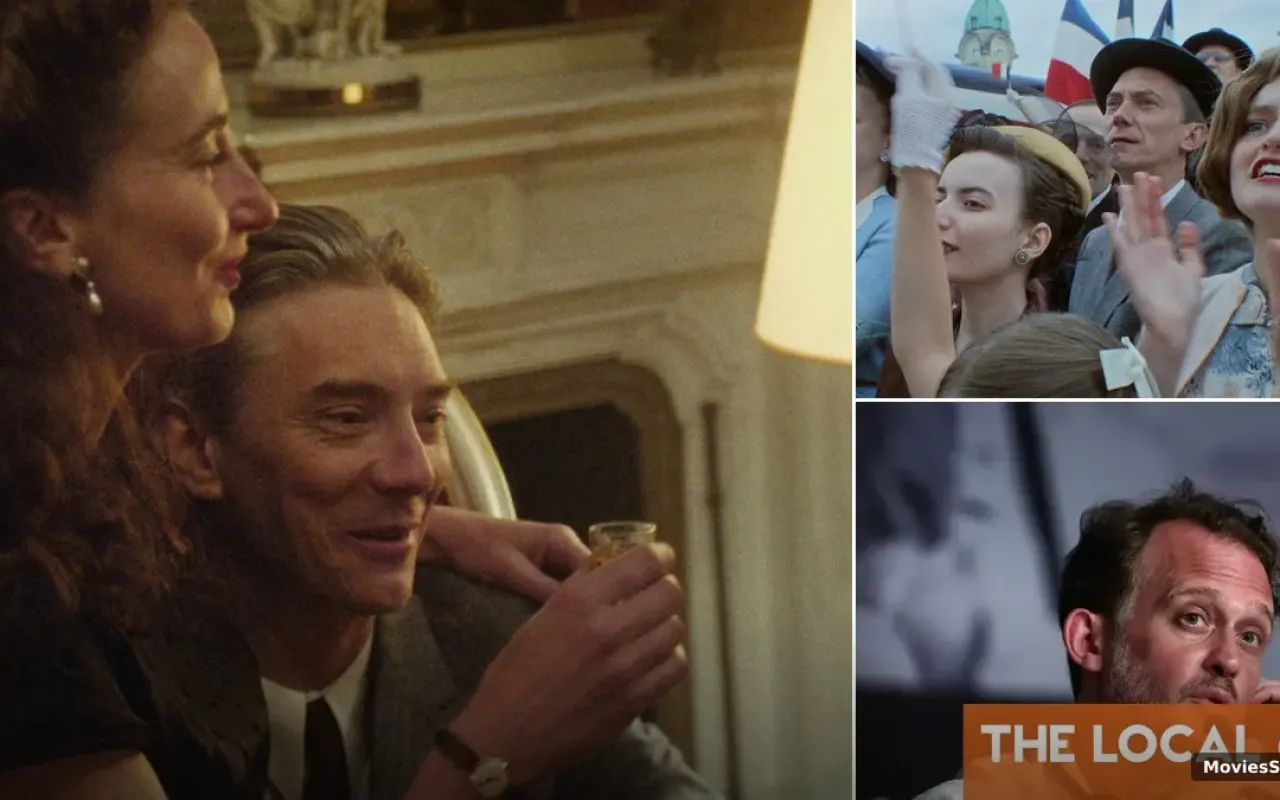
The letters, dated between June 1940 and the Allied liberation in September 1944, reveal a man obsessed with "efficiency" and "order" while his wife, Paulette (played with simmering resentment by Sandrine Blancke), struggled with hunger and cold in the occupied zone. When Henri finally moves the family into a "beautiful" home in Limoges, the gut-punch comes from the realization that the house was seized from a Jewish family. The film handles this with a terrifying lack of melodrama, reflecting the actual historical record where these transitions were treated as mere paperwork.
Swann Arlaud as Henri Marre: A Study in Mediocrity
If you recognize Swann Arlaud, it’s probably as the sharp-edged lawyer from Anatomy of a Fall. Here, he undergoes a total transformation into a man who is aggressively unremarkable. Arlaud plays Henri as a "milquetoast" collaborator—a man whose greatest sin is his desire to be liked by his superiors.
This is the banality of evil in a three-piece suit. Arlaud’s performance has been compared to Cillian Murphy’s turn in Oppenheimer, but instead of the "father of the atomic bomb," he’s the "father of the filing cabinet." He isn't out for blood; he’s out for a promotion. He navigates the collaborationist government with a polite, sad-eyed determination that makes his actions even more repulsive.
In one of the film's most revealing sequences, Henri demotes a Jewish clerk named Maux (played by Jean-Baptiste Marre) under the guise of "protecting" him. By making the man a manual laborer, Henri argues he will be "less visible" to the Nazis. It’s a classic move of a weak man trying to frame his complicity as a moral compromise. The film never lets him off the hook, portraying him as a dignified but ultimately hollow vessel for fascist bureaucracy.
Stylistic Risks: Anachronisms and Handheld Fascism
One of the biggest talking points in every A Man of His Time movie review is the film’s bizarre tonal shifts. Emmanuel Marre, known for his "party-shoot" aesthetic in Zero Fucks Given, brings that same energy to 1940s Vichy. Working with DP Olivier Boonjing, the film uses handheld cameras and natural lighting that feels more like a modern workplace mockumentary than a prestige war drama. Think The Zone of Interest meets The Office.
Then there’s the music. The A Man of His Time soundtrack is intentionally jarring, featuring anachronistic tracks that rip you out of the 1940s.
- "Popcorn" by Hot Butter: Used during a surreal office sequence.
- 1980s Electropop: Frequently underscores the "social" gatherings of the Vichy elite.
- Modern Dance Acts: A sequence at a mayor’s house where Paulette leads a dance that feels decidedly post-punk.
Historical Accuracy: Life in the Vichy 'Free Zone'
For those looking into Vichy France film 2026 trends, historical accuracy is a major draw. The film doesn't just show the war; it shows the Vichy France administrative history. It captures the shambolic nature of the "Free Zone," where the government was crammed into tiny hotel corridors in the resort town of Vichy.
The film highlights the role of the Organisation Todt and the Ministry of Labour in the deportation of workers. A key historical detail the film explores is the linguistic shift from "Ramassage" (collection) to "Rassemblement" (gathering)—a semantic trick used to make the forced labor of thousands of French citizens sound like a voluntary civic duty.
Marshal Pétain is portrayed not as a grand leader, but as an "out of touch dinosaur." The film uses rare archive footage of Pétain being greeted by "Riefenstahl-esque" crowds, emphasizing how easily the public was swayed by the image of a savior. Meanwhile, the real work of the Holocaust was being done in offices like Henri’s, where he would argue over the cost of straw and chamber pots for the cattle cars—and eventually fine his subordinates for "unnecessary" compassion.
Cannes 2026 Reception and the 2027 Election
It’s impossible to separate this Notre Salut Emmanuel Marre project from the French cinema political influence 2027 election. With the National Rally (Rassemblement National) and Marine Le Pen leading in current polls, A Man of His Time feels like a warning shot.
Marre himself has been vocal about this, signing petitions against the "growing grip of the far right" on the film industry. During the premiere, he told the crowd, "Never again!"—a sentiment that resonated deeply given the film’s themes of how "inner neuroses" and "resentments" can lead ordinary people to support extremist movements.
While some critics found the 155-minute runtime "languid" or "protracted," the consensus is that the film’s "prosaic" nature is the point. Evil isn't always a dramatic explosion; sometimes, it’s a two-hour meeting about labor quotas. The film stood out in a competitive year alongside other war-themed heavyweights like Fatherland and Moulin, but its personal, familial connection gave it an edge in authenticity.
Key Takeaways
- Personal Stakes: The film is a direct excavation of the director's family history, using real letters from 1940-1944.
- The Anti-Hero: Swann Arlaud delivers a masterclass in "administrative evil," portraying Henri Marre as a man who chose career over conscience.
- Technical Style: Olivier Boonjing’s handheld cinematography and the anachronistic soundtrack (including "Popcorn") break the period-drama mold.
- Historical Depth: The movie offers a granular look at the Vichy ministry of labour and the logistical side of collaboration.
- Modern Warning: The film acts as a "Never Again" manifesto aimed at the rising far-right sentiment in modern France.
Conclusion: The Ghost of Henri Marre
So, what happened to the real Henri Marre? The film ends with a sense of mystery, but history tells us that men like Henri often just... blended back in. After the war, many Vichy officials navigated the reunification of France by claiming they were "just following rules" or "trying to help from the inside." Paulette Marre survived the war, but the family was forever marked by the "salvation" Henri tried to build on the backs of others.
A Man of His Time is a difficult watch, not because of graphic violence, but because of how recognizable Henri’s excuses feel. As we head toward 2027, the film asks a question that transcends the 1940s: in a system that demands your complicity, what is your "salvation" worth? It’s a Vichy France film 2026 will be remembered for, not as a history lesson, but as a mirror.