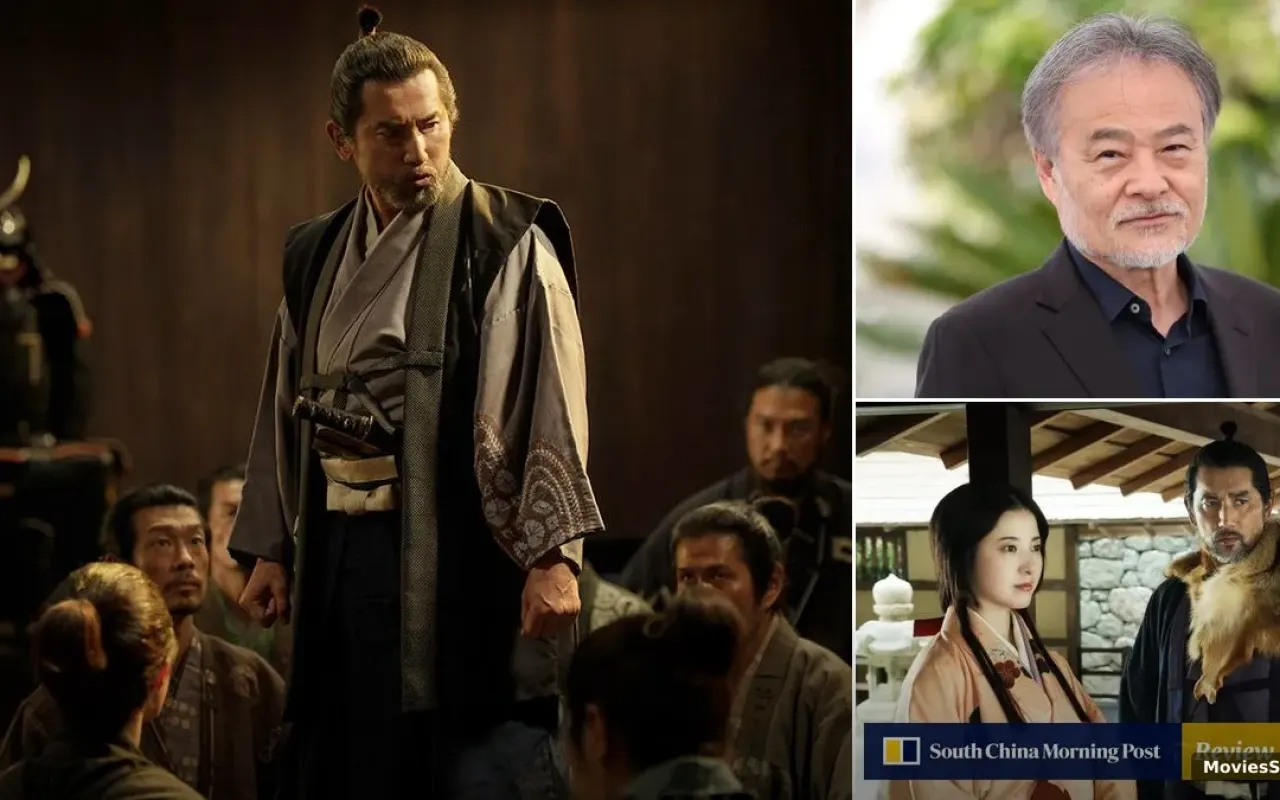
If you were expecting 147 minutes of non-stop katana duels and blood-sprayed cherry blossoms, you might want to adjust your settings. The Samurai and the Prisoner review reveals that Kiyoshi Kurosawa’s latest venture isn’t your typical jidaigeki hack-and-slash. Instead, the director of Cure and Pulse has delivered something far more cerebral: a "locked-room" murder mystery set inside a 16th-century fortress that’s literally falling apart. It’s Silence of the Lambs meets Shogun, and honestly, the result is the most refreshing take on the Kiyoshi Kurosawa samurai movie we’ve seen in years.
The Plot: A Locked-Room Mystery in a Besieged Castle
What is The Samurai and the Prisoner about? The Samurai and the Prisoner is a 2026 historical mystery film directed by Kiyoshi Kurosawa. Based on Honobu Yonezawa's novel 'Kokurojo', it follows the real-life daimyo Araki Murashige during the 1578 Siege of Arioka Castle. The plot centers on Murashige consulting a brilliant strategist prisoner, Kuroda Kanbei, to solve a series of 'locked-room' murders occurring within the besieged fortress.
The film is structured into four distinct chapters—Spring, Summer, Autumn, and Winter—each presenting a new "impossible" crime. As Oda Nobunaga’s massive army circles Arioka Castle like a tightening noose, Araki Murashige (played with a weary, magnetic intensity by Masahiro Motoki) finds himself dealing with internal chaos. When a hostage child is killed by an invisible arrow and a decapitated war trophy goes missing, Murashige realizes he can’t trust his own advisors. He turns to the one man who has no stake in the castle's politics: Kuroda Kanbei, a rival strategist he has chained in the dungeon.
The dynamic between the two is pure psychological chess. Masaki Suda portrays Kanbei as a "Hannibal Lecter" figure—filthy, shackled, yet intellectually superior. He doesn't just solve the crimes for Murashige; he uses them to dismantle Murashige’s faith in the bushido code and the very rebellion he’s leading.
Historical Accuracy: The Real Siege of Arioka Castle (1578)
For the history nerds in the group chat, The Samurai and the Prisoner true story is actually rooted in deep Sengoku Jidai (Warring States period) lore. The 1578 Siege of Arioka Castle was a pivotal moment in the unification of Japan. The real Araki Murashige was a trusted general of Oda Nobunaga who suddenly, and somewhat inexplicably, turned traitor.
The film captures the suffocating reality of this rebellion. While many samurai films focus on the glory of battle, Kurosawa focuses on the solitude of command. The stakes weren't just political; they were personal. In real life, when Arioka finally fell, Nobunaga’s retribution was legendary in its cruelty—executing hundreds of Murashige’s family members and retainers.
The Fate of the Real Araki Murashige
One major content gap in most reviews is what actually happened to Murashige after the credits roll. History tells a wilder story than the film dares to show. Unlike the "honorable death" often associated with his era, the real Murashige escaped the castle under the cover of night, leaving his family behind to face Nobunaga’s wrath. He eventually resurfaced as a tea master under the name Araki Shoan, serving under Toyotomi Hideyoshi. This transition from a warlord to a practitioner of Chanoyu (the Tea Ceremony) underscores the film’s theme: that the "way of the warrior" was often a mask for survival and reinvention.
Adapting 'Kokurojo': From Honobu Yonezawa’s Novel to the Screen
The film is a Kokurojo Honobu Yonezawa adaptation, bringing the 2021 Naoki Prize-winning novel to a global audience. For those wondering about the Kokurojo novel summary, the title literally translates to "The Black Prison Castle." Yonezawa, primarily known for his YA mysteries (like Hyouka), performed a brilliant genre-mashup here. He took the "Golden Age" detective tropes of Agatha Christie and John Dickson Carr and dropped them into the Azuchi-Momoyama period.
- The Mystery Mechanics: The film answers the "supernatural vs. rational" question early on. While the characters fear divine retribution, the solutions are always grounded in cold, hard logic.
- The Publication Factor: Since its release in late 2021, Kokurojo has sold over 500,000 copies in Japan. While an official English translation is still pending, the film’s international distribution by Janus Films is expected to fast-track a book deal.
- The Sherlock Tropes: Kanbei functions as the "consulting detective," while Murashige is the "Inspector Lestrade" figure who brings him the clues. It’s a brilliant way to make a 500-year-old setting feel accessible to modern mystery fans.
The Philosophy: 'Advance to Paradise, Retreat into Hell'
A recurring motif in the film is the Buddhist slogan: "Advance to paradise, retreat into hell." This wasn't just a vibe; it was the actual battle cry of the Ikko-ikki (warrior monks) who opposed Nobunaga. In the context of the The Samurai and the Prisoner review, this philosophy serves as the film’s moral backbone.
Murashige is a man caught between two hells. If he advances, he continues a bloody rebellion he no longer believes in; if he retreats (surrenders), he faces certain execution. Kurosawa uses the murder mysteries to explore this deadlock. Each crime solved by the Kuroda Kanbei prisoner reveals another layer of rot within the samurai social structure. The film argues that in a world governed by a death-obsessed code like bushido, the only way to find "paradise" is to reject the game entirely.
Technical Mastery: European Vista and the Play of Shadows
Visually, Kurosawa makes some bold choices that differentiate this from your standard Netflix period drama. Shot by DP Yasuyuki Sasaki, the film utilizes the European Vista (1.66:1) aspect ratio. This narrower frame enhances the feeling of being trapped within the castle walls.
While many expected a black-and-white aesthetic—a nod to Akira Kurosawa—Kiyoshi opts for a "muddy" color palette. We’re talking 1,000 shades of brown, grey, and deep indigo. The lighting in the dungeon is particularly striking; shafts of light pierce the darkness like blades, illuminating Masaki Suda’s grime-streaked face. At 147 minutes, the runtime is long, but it’s intentional. Kurosawa wants you to feel the weight of the seasons passing. It’s a slow-burn that rewards patience, much like his previous 40-year career evolution from J-horror to high-concept drama.
Cast Spotlight: Masahiro Motoki and Masaki Suda
The success of the film hinges entirely on the chemistry between the two leads. Masahiro Motoki (best known globally for Departures) plays Murashige as a man who is physically present but spiritually checked out. He portrays the "anti-bushido" leader with a subtle vulnerability—a man who would rather save a child than uphold a tradition of ritual suicide.
Masaki Suda, however, is the scene-stealer. Reuniting with Kurosawa after 2024’s Cloud, Suda’s Kanbei is a masterclass in stillness. Even while shackled to a post, he feels like the most dangerous person in the room. The supporting cast, including Yuriko Yoshitaka as the steely Chiyoho and Joe Odagiri in a brief but impactful role, rounds out a production that feels massive despite its confined setting.
How It Compares to 'Shogun' (2024)
Naturally, everyone wants to know: How does this compare to the 2024 Shogun series? While both are set in the same era of Japanese history, they couldn't be more different in execution.
| Feature | Shogun (2024) | The Samurai and the Prisoner |
|---|---|---|
| Focus | Grand political strategy and Western contact. | Internal psychological mystery and moral crisis. |
| Action | High-budget battles and ship sequences. | Intense dialogue and "locked-room" deductions. |
| Tone | Epic and sprawling. | Claustrophobic and "talky." |
| Perspective | The rise of the Tokugawa era. | The brutal middle of the Sengoku Jidai. |
If Shogun is a sprawling historical epic, The Samurai and the Prisoner is a chamber piece. You don't need a PhD in Japanese history to enjoy it, but a basic understanding of the Honno-ji Incident and the ruthlessness of Oda Nobunaga certainly adds flavor to the experience.
Key Takeaways
- Genre Fusion: A masterful blend of jidaigeki (period drama) and classic whodunnit.
- Director’s Pivot: Kiyoshi Kurosawa moves away from his horror roots toward a more "classical" but subversive style.
- Historical Depth: Uses the 1578 Araki Murashige Arioka Castle rebellion to critique the futility of war.
- Performance Driven: Masaki Suda and Masahiro Motoki deliver some of the best work of their careers.
- Visual Language: The European Vista ratio and shadow-heavy lighting create an atmosphere of dread.
Conclusion: A New Standard for the Samurai Mystery
The Samurai and the Prisoner review confirms that Kurosawa has successfully "hacked" the samurai genre. By focusing on the intellectual and moral decay inside a besieged castle rather than the glory on the battlefield, he’s created something that feels remarkably modern. The film doesn't just ask "who killed the hostage?"—it asks why anyone is killing at all.
With a Cannes Premiere 2026 slot and a confirmed US release via Janus Films, this is poised to be a major awards contender. Whether you’re a fan of the original Honobu Yonezawa novel or just a cinephile looking for something deeper than a standard action flick, The Samurai and the Prisoner is essential viewing. It’s a reminder that sometimes the most effective weapon isn't a sword, but a question.
The Samurai and the Prisoner age rating is expected to be a "Mature" (R or TV-MA equivalent) due to scenes of ritualized violence and the psychological intensity of the "Spring" and "Autumn" chapters. Look for it on the Criterion Channel following its theatrical run.