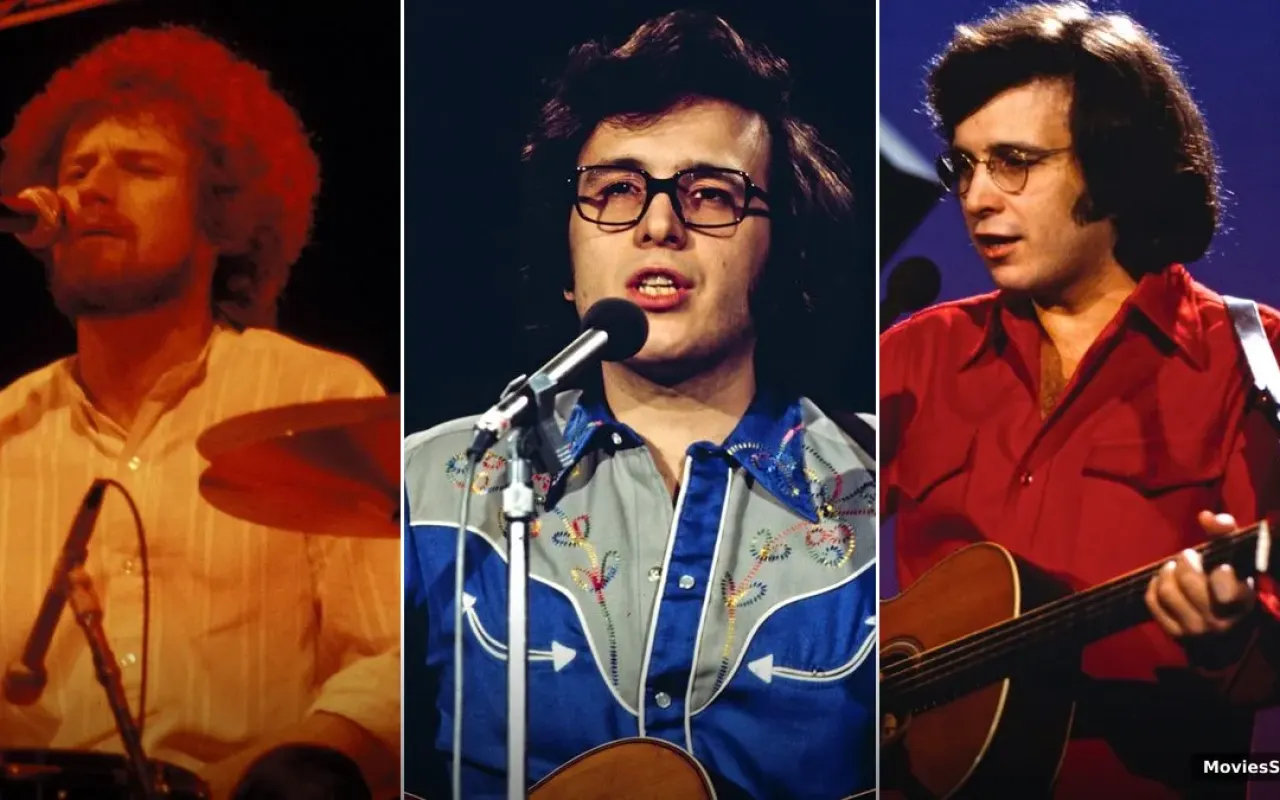
If you look at the DNA of your favorite playlist today, there is a high probability that its most load-bearing tracks were all born in the same 12-month span. We are talking about 1971—a year so stacked with masterpieces that it feels less like a point on a timeline and more like a musical "Big Bang." From the cryptic storytelling of Don McLean to the stadium-shaking synths of The Who, 1971 classic rock hits didn't just top the charts; they redefined what a song could actually be.
1971 is widely considered the greatest year for rock music due to the simultaneous release of era-defining albums like Led Zeppelin IV, Carole King's Tapestry, and The Who's Who's Next. The year marked a unique cultural convergence where folk, hard rock, and soul fused into a sophisticated, album-oriented sound that still dominates airwaves today.
The Cultural Cauldron: Why 1971 Was a Perfect Storm
To understand why the best year in music history happened when it did, you have to look at the wreckage of the 1960s. The "Peace and Love" era was officially over. The optimism of Woodstock had curdled into the gritty reality of the Vietnam War era music, and the counterculture movement was looking for something deeper than bubble-gum pop. Young people were grappling with a world that felt increasingly heavy, and the recording industry was finally ready to let artists get weird.
The business was also shifting. This was the year the recording industry pivoted hard toward the LP (Long Play). Before 1971, the 45rpm single was king. But as 1971 rock albums began to outsell singles, record labels realized that fans wanted "the experience"—they wanted to sit in their rooms, look at vinyl records, and listen to a 40-minute conceptual journey. This gave birth to the Album-Oriented Rock (AOR) radio format, which prioritized deep cuts over three-minute radio edits.
Technically, the game changed too. Studios like Trident Studios and Abbey Road Studios were moving from 8-track to 16-track recording. This allowed for the massive, layered soundscapes we hear in songs like "Baba O'Riley" or "Stairway to Heaven." It was the first time technology actually caught up to the ambition of the artists. Meanwhile, the rock world was mourning the loss of icons; the death of Jim Morrison in July 1971 signaled the end of the psychedelic 60s and forced the genre to evolve or die. Rock chose to evolve.
The Anthem of a Generation: Decoding the American Pie Song Meaning
If 1971 had a thesis statement, it was "American Pie." Don McLean’s eight-minute-and-forty-two-second epic didn’t just break the rules of the Billboard Hot 100—it set them on fire. At the time, radio stations rarely played anything over three minutes, yet McLean’s sprawling narrative about the "day the music died" became a cultural obsession.
The American Pie song meaning is a deep-dive into the loss of American innocence. The core of the song is the 1959 Buddy Holly plane crash, which also took the lives of Ritchie Valens and The Big Bopper. For McLean, who was just 13 at the time of the crash, that event represented the moment the world lost its color. But the song goes further, using cryptic lyrical analysis to trace the decade that followed:
- "The King" and "The Jester": Most historians agree "The King" is Elvis Presley and "The Jester" is Bob Dylan, who famously "borrowed" the crown of rock influence.
- "A Generation Lost in Space": A nod to both the literal Space Race and the feeling of alienation felt by the 1971 youth.
- "Satan Laughing with Delight": Many believe this refers to the tragic events at the Altamont Free Concert in late 1969, which many saw as the "end of the 60s."
The wild part? The song was so long it had to be split across both sides of a 7-inch vinyl record. Despite its length, it hit No. 1 and stayed there for four weeks in early 1972, proving that audiences were hungry for classic rock backstories they could chew on for years.
From Folk to Hard Rock: The 1971 Sound Evolution
While Don McLean was mourning the past, other artists were inventing the future. 1971 was the year of the folk rock transition into something heavier and more theatrical. The Who released Who's Next, an album that basically invented the use of the synthesizer in rock. The opening track, "Baba O'Riley," is famous for its "teenage wasteland" refrain. Contrary to popular belief, Pete Townshend didn't write it as a party anthem; it was a skeptical reaction to the "strung-out" kids he saw at Woodstock.
Then there’s Led Zeppelin. The Led Zeppelin IV release date of November 8, 1971, changed the trajectory of stadium rock forever. With iconic guitar riffs and the mystical aura of "Stairway to Heaven," the band moved away from being just another blues-rock group and became a global myth. To date, Led Zeppelin IV has been certified 24x Platinum by the RIAA, making it one of the best-selling albums of all time.
We also saw the birth of Glam Rock through David Bowie’s Hunky Dory. The song "Changes" was Bowie’s manifesto for the decade. While it wasn't an immediate smash, its lyrics about children being "immune to your consultations" became the definitive anthem for teens trying to find their identity in a post-60s vacuum. Bowie, ever the skeptic, initially thought the track was "throwaway," but its musical revolution was just beginning.
The Singer-Songwriter Revolution: Carole King and James Taylor
If the boys were busy building stadium rock, the "gentle revolution" was happening in the living rooms of America. The singer-songwriter era peaked in 1971 with the release of Carole King’s Tapestry album. This record wasn't just a hit; it was a phenomenon, spending 15 consecutive weeks at No. 1. King, who had been a behind-the-scenes songwriter for years, finally stepped into the spotlight, bringing a raw, vulnerable honesty to the Billboard Hot 100.
The synergy between King and James Taylor defined the year's softer side. King wrote "You've Got a Friend" for Taylor, and his version became a massive hit. It was a pivotal moment for 70s rock songs for beginners—it proved that you didn't need a wall of Marshall amps to be "rock." You just needed a piano, an acoustic guitar, and the truth. This era of music was a direct response to the political chaos of the time; it was "comfort music" for a generation that had seen too many protests and too much war.
The Soul Connection: Marvin Gaye’s Masterpiece
You cannot talk about 1971 classic rock hits without acknowledging how Soul and R&B were bleeding into the rock consciousness. Marvin Gaye released What's Going On in May 1971, and its impact was nuclear. It was one of the first "concept albums" in soul music, tackling the Vietnam War, poverty, and environmentalism.
Gaye's influence on rock artists of the time was massive. The Rolling Stones were leaning into a grittier, soul-infused sound with Sticky Fingers (released in April 1971), featuring the legendary "Brown Sugar." The cross-pollination of genres in 1971 created a sophisticated musical landscape where the lines between "rock," "folk," and "soul" were beautifully blurred.
1971 Technical Deep Dive: The Sound of the Year
| Song Title | Artist | Studio | Key Innovation |
|---|---|---|---|
| "Baba O'Riley" | The Who | Olympic Studios | Lowrey TBO-1 organ through a VCS3 synth |
| "American Pie" | Don McLean | The Record Plant | 8:42 runtime (longest No. 1 at the time) |
| "Changes" | David Bowie | Trident Studios | Sophisticated 16-track layering and sax solos |
| "Maggie May" | Rod Stewart | Morgan Studios | Mandolin-led folk-rock structure |
1971 Hits in 2024: The Streaming Longevity
Real talk: these songs aren't just for your parents’ nostalgia trips. In the age of TikTok and the MCU, 1971 classic rock hits are more relevant than ever. "Baba O'Riley" has racked up over 800 million streams on Spotify, fueled by its use in everything from Stranger Things to Guardians of the Galaxy.
Modern artists like Harry Styles and Haim constantly cite the singer-songwriter era of 1971 as their primary influence. The "analog warmth" of those 16-track recordings has become the gold standard for Gen Z producers looking to escape the sterile sound of modern digital software. There is a reason why 1971 rock albums still sell thousands of copies on vinyl every year—they possess a "vibe" that is impossible to replicate with an AI prompt.
Key Takeaways: Why 1971 Still Matters
- The Album Became Art: 1971 marked the shift from the 45rpm single to the LP as the primary way people consumed music, leading to the rise of AOR radio.
- The 8-Minute Breakthrough: Don McLean’s "American Pie" proved that audiences had the attention span for complex, long-form storytelling, breaking the "3-minute rule" of radio.
- Technological Leap: The move to 16-track recording allowed for the massive, layered sounds of Led Zeppelin and The Who.
- Cultural Reflection: The music of 1971 was a direct response to the end of 60s idealism and the ongoing weight of the Vietnam War.
- Genre Fusion: 1971 saw the peak of the singer-songwriter era while simultaneously birthing stadium rock and glam rock.
Look, the "best year" debate will always be subjective. But when you look at the sheer density of 1971 classic rock hits, the argument for any other year starts to look pretty weak. 1971 was the moment rock and roll grew up. It stopped being just music for "kids" and started being the literature of a new age. Whether you’re listening to the mandolin on Rod Stewart’s "Maggie May" or the crashing drums of "Levee Breaks," you’re hearing the sound of a revolution that hasn't stopped spinning.
As we move further into a world of 15-second soundbites, the sprawling, ambitious, and deeply human songs of 1971 serve as a reminder: sometimes the best way to move forward is to drive your Chevy to the levee and see what's actually there.